IsoEnergy & DISA Technologies Form New US Uranium Platform


IsoEnergy contributes its Utah uranium assets to new venture DISA Uranium, backed by $105M financing and proprietary ore-upgrading HPSA technology.
- IsoEnergy has entered into a definitive agreement with DISA Technologies to form DISA Uranium Corporation, a new technology-enabled uranium company that combines IsoEnergy's Utah mine portfolio with DISA's proprietary ore-processing and remediation businesses.
- DISA Uranium has secured commitments for a US$105 million private placement led by Tembo Capital, with IsoEnergy contributing US$33 million to the round and retaining approximately 33% ownership as the company's single largest shareholder.
- The transaction implies a pro forma fully diluted equity value of approximately US$505 million for DISA Uranium, a figure IsoEnergy's management says exceeds the value currently ascribed to the underlying Utah assets in the public market.
- Preliminary testing of DISA's High-Pressure Slurry Ablation technology at the Tony M Mine indicated the potential to reduce feedstock mass by roughly 78% while recovering approximately 88% of the contained uranium, pointing to meaningful trucking and processing cost savings.
- DISA Uranium holds the only US Nuclear Regulatory Commission license authorising uranium recovery from legacy mine waste across multiple sites, positioning the company to address more than 15,000 abandoned uranium mine locations across the western United States.
Introduction to IsoEnergy's Global Uranium Platform
IsoEnergy Ltd. (NYSE American: ISOU; TSX: ISO) has spent the past two years assembling one of the sector's broadest asset bases, spanning early-stage exploration through to permitted, past-producing mines awaiting restart. Its portfolio stretches from the high-grade Hurricane deposit in Saskatchewan's Athabasca Basin to a suite of conventional Utah mines that have already produced uranium in past cycles, giving the company leverage to both near-term and long-term uranium price scenarios. Chief Executive Officer Philip Williams describes the company:
"We're a globally diversified uranium explorer, developer, and near term producer with assets in the top three jurisdictions in the world for uranium being Canada, the United States, and Australia."
That diversified footprint sets the stage for the company's most significant announcement in recent months. On August 4, 2026, IsoEnergy revealed a definitive agreement with DISA Technologies, Inc. to create DISA Uranium Corporation, a new US-focused entity combining conventional mining assets with a proprietary processing and remediation platform. The news follows a period of steady technical progress in Utah, including a completed bulk sampling program at the Tony M Mine that has fed into the company's evaluation of a production restart.
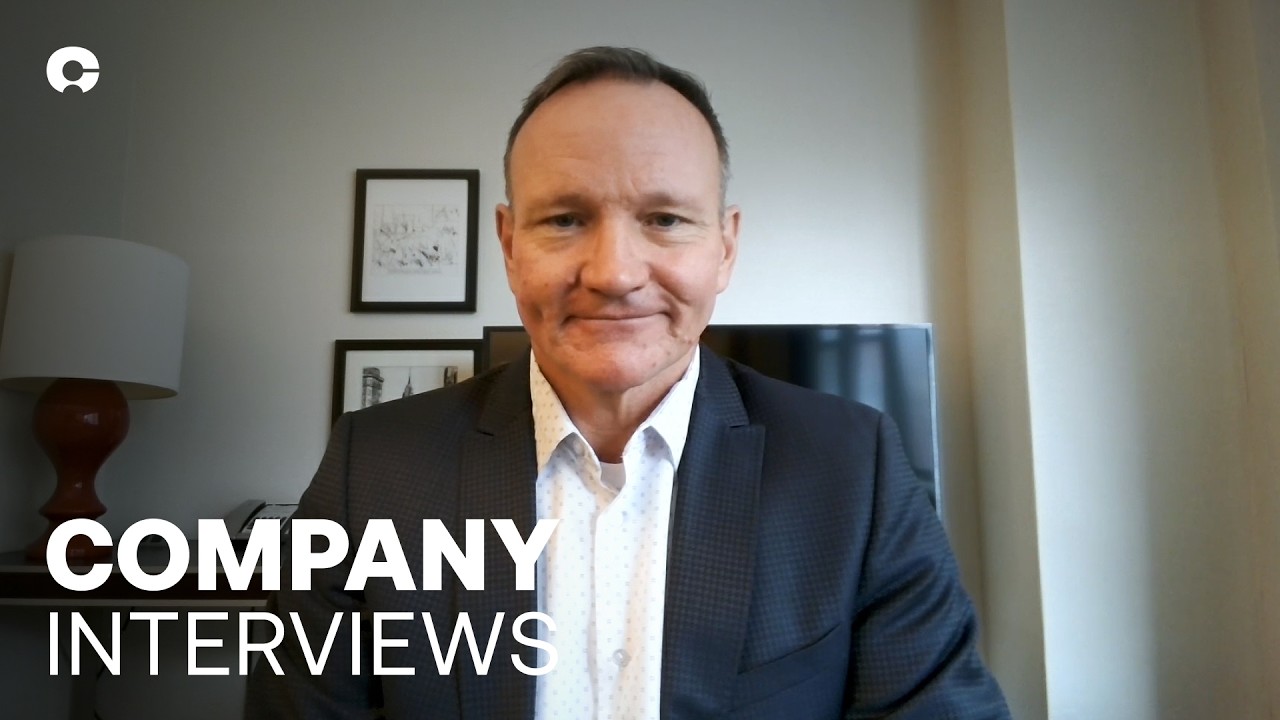
Interview with Chief Executive Officer, Phil Williams
Transaction Overview: DISA Uranium Formation
Williams summed up the logic behind the deal in straightforward terms:
"The combination of these businesses, we think, is going to create one of the most formidable conventional uranium companies in the United States."
Under the agreement, IsoEnergy will contribute its Utah Portfolio, comprising the Tony M Mine, Daneros Mine, Rim Mine, Sage Plain Project, and Flatiron Project, to DISA Uranium in exchange for 1,677,350 shares of common stock in the new company. DISA Uranium will combine that portfolio with DISA's High-Pressure Slurry Ablation processing technology, branded HPSA, together with DISA's existing uranium remediation and recovery business.
Ahead of closing, DISA will complete a spin-out of its non-uranium and vanadium processing operations into a separate entity, DISA Tech, Inc., leaving DISA Uranium focused exclusively on uranium-related applications of the technology. TD Securities is acting as financial advisor to IsoEnergy on the deal, with Stifel advising DISA. The transaction and its associated financing are targeted to close in August 2026, subject to completion of the spin-out, the financing round closing, and customary regulatory approvals.
Strategic Benefits of the DISA Partnership
Asked why IsoEnergy chose to spin the Utah assets into a jointly owned platform rather than license the HPSA technology outright or retain full ownership of a standalone processing business, Williams pointed to capital and management discipline. Housing the assets in a separately funded company, he said, lets IsoEnergy keep its balance sheet and technical resources focused on its core Canadian and Australian projects while still capturing the upside from Utah.
"Again, we see this as a doubling down on US uranium. We think this platform is a great place to consolidate additional opportunities in conventional US uranium."
As part of the arrangement, IsoEnergy will hold two seats on DISA Uranium's board of directors, expected to be filled by Chairman Richard Patricio and Williams himself, alongside a designee from lead investor Tembo Capital and DISA's existing board, which includes former US NRC Commissioner Jeffrey Merrifield. The Utah technical team, including personnel who worked on Tony M's underground infrastructure and permitting, is expected to transition with the assets, preserving institutional knowledge through the ownership change. On the value of that governance position, Williams noted:
"Being the biggest shareholder and having two board seats is tremendous. There's some other rights that come along. We certainly want to maintain our position and be part of investing in the company going forward, or having that option."
Valuation Insights & Investor Confidence
DISA Uranium's US$105 million financing implies a pro forma fully diluted equity value of approximately US$505 million. Williams was careful to distinguish between IsoEnergy's own internal estimates and the price ultimately set by the market, pointing to the independence of the process:
"We came to it ourselves on a number of different metrics, NPV calculations, per-pound metrics, and so on. But it was really about what value external capital was willing to pay for this, and that's how that mark was set."
Independent analyst commentary has since suggested the transaction values the contributed Utah assets at a multiple of what the market had previously ascribed to them, framing the deal as an early realisation of value for IsoEnergy shareholders. The financing round was anchored by Tembo Capital, a London-based private equity investor with a prior track record backing uranium restructurings, alongside strategic participants including BHP Ventures, Galvanize Climate Solutions, Valor Equity Partners, Evok Innovations, Halliburton Labs, and Veriten.
Capital Allocation & Future Plans
Proceeds from the US$105 million financing are earmarked across three broad priorities: advancing the contributed Utah assets toward a restart decision, funding remediation and recovery programs at legacy waste sites, and undertaking preliminary work on a potential new uranium processing facility. Williams laid out how the money would be deployed:
"A certain chunk of it will be focused on our assets and advancing them, for example continuing the PEA on Tony M and getting those numbers completed by the end of the year. The remediation business, looking at other opportunities to do consolidation, and then doing the up-front work on a potential new processing facility."
An updated preliminary economic assessment for the Tony M Mine is targeted for completion by the end of 2026, with a potential restart decision to follow. Pressed on the timing of cash flow, Williams was cautiously optimistic: "We could see cash flow starting next year," he said, adding that a restart could occur in 2027 depending on the outcome of the economic study. The pace of remediation revenue is less certain, with initial pilot projects at legacy waste piles expected to serve as the test cases for how quickly the broader pipeline can be developed.
Technology Advantages in Uranium Processing
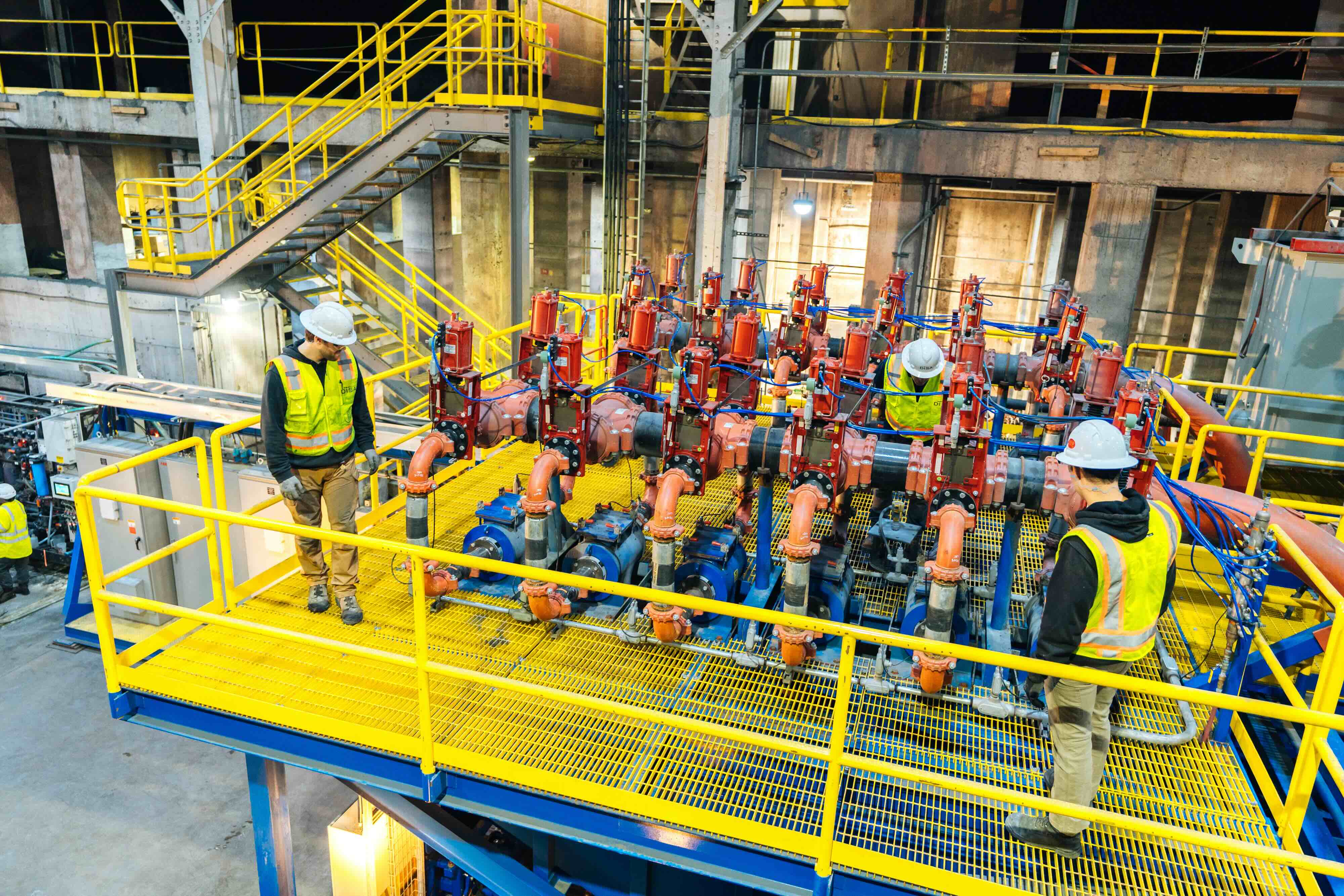
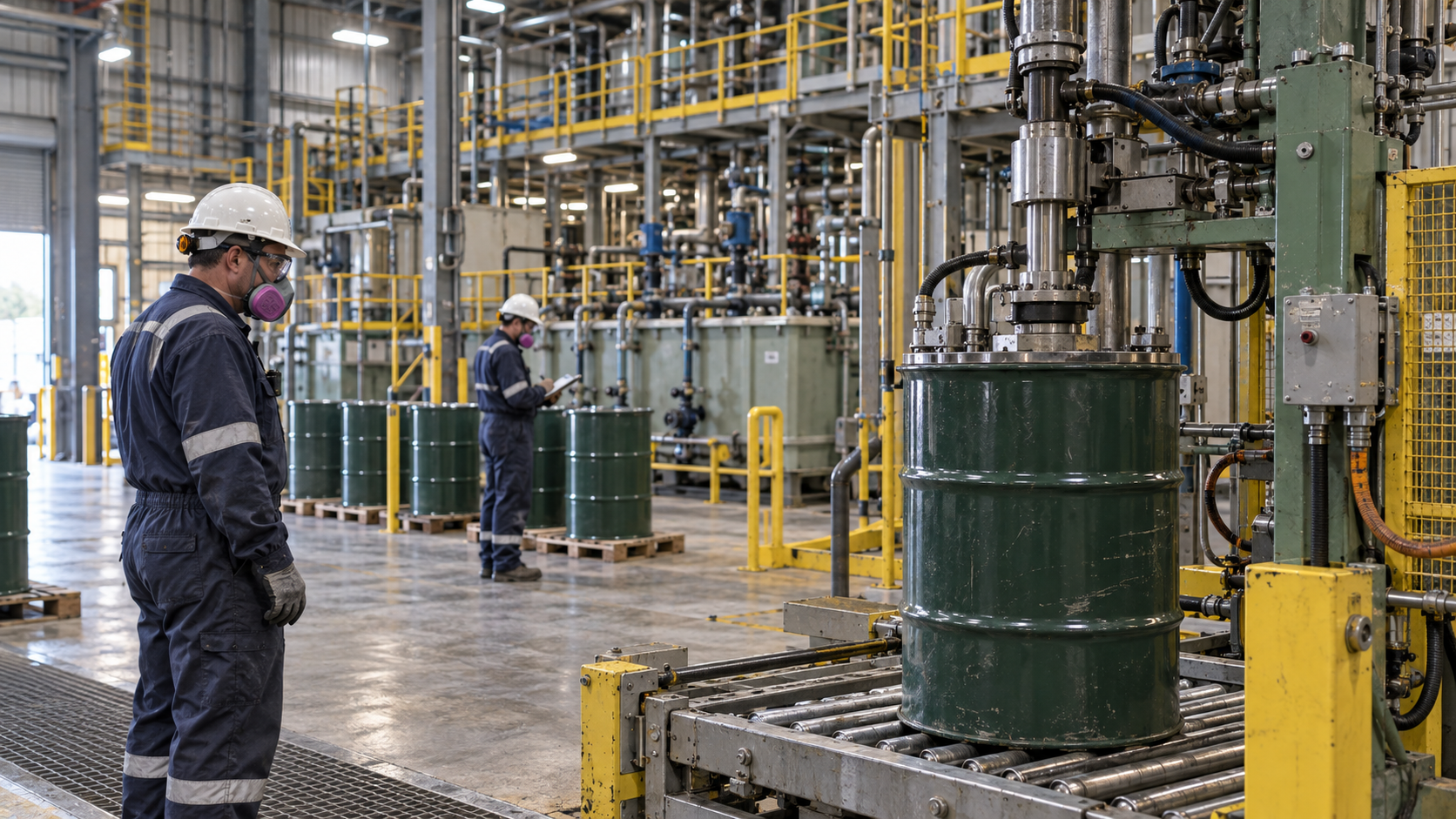
HPSA is a modular mineral liberation technology that uses high-velocity slurry streams to fracture material along natural mineral grain boundaries, upgrading feedstock at the mine site before it is transported to a central mill. Preliminary test work at the Tony M Mine indicated an approximate four-times grade uplift, a 78% reduction in material volumes requiring transportation, and roughly 88% uranium recovery, with some other deposits DISA has tested showing uplifts as high as six times.
"We looked at ore sorting, and it just didn't get the upgrade that you get here. What's unique about it as well is it's very portable, so these machines can be put on the back of trucks and taken to the sites. We just haven't seen anything out there that has comparable results to the HPSA technology."
The technology has moved beyond pilot stage, with eight continuous HPSA units reported in commercial mining applications across four continents, including deployments for nickel, copper, and phosphate. Williams said that operating history, together with independent sampling of other uranium projects and site visits by IsoEnergy's own technical team, formed the basis of its due diligence ahead of the transaction. He also noted the modularity of the system: fixed units may serve a single mine like Tony M, while portable units can be moved between the thousands of legacy waste piles the remediation business is targeting.
Remediation & Extraction Opportunities
Alongside conventional mining, DISA Uranium's remediation and recovery business targets uranium and vanadium contained in legacy mine waste piles scattered across the western United States. The business holds the only US Nuclear Regulatory Commission Source Materials License authorising recovery from such waste across multiple sites, a position management views as a structural advantage over unlicensed competitors.
More than 15,000 sites associated with abandoned uranium mine waste have been identified across the region, including over 4,200 defense-related uranium mines, according to the companies. Access arrangements with underlying landowners, which can include federal, tribal, and private parties, are typically structured around a royalty retained by the counterparty, with the balance of recovered uranium value accruing to DISA Uranium. On the scale of the resource contained in that waste, Williams told Crux Investor:
"I can't give you an exact number of how much uranium is contained in all of these fifteen thousand piles, but it's significant. It could be one of the largest sources of uranium in the United States, and it already sits above ground. It's already mined."
Exploring New Conventional Uranium Mills
Beyond its mining and remediation assets, DISA Uranium is evaluating the development of a new centralised uranium processing facility, which management says would be the first new conventional uranium mill built in the United States in more than four decades. The White Mesa Mill in Utah remains the only operating conventional uranium mill in the country, with a licensed capacity Williams estimated at roughly eight million pounds per year against a domestic production requirement he placed closer to fifty million pounds annually.
"We absolutely think that the US needs another production facility, and why shouldn't we be the ones to do it, particularly if we can build up the feedstock."
Management said site selection work would draw on existing knowledge of regional deposits, historic waste piles, and prior mill locations, with the HPSA technology potentially widening the practical sourcing radius for feedstock. Williams was also asked whether DISA Uranium intends to move further downstream into conversion or enrichment, an area attracting significant capital elsewhere in the nuclear fuel cycle. He said that is not the current focus: with numerous other companies already pursuing conversion and enrichment capacity, DISA Uranium's priority is securing the mine-to-mill feedstock that remains the more constrained part of the supply chain. No formal timeline or site for a new mill has been confirmed, and management characterised the effort as an early-stage, multi-year undertaking.
Market Dynamics & Future Outlook
The announcement arrives during a period Williams described as volatile for uranium equities despite steady underlying commodity price appreciation, with broader risk-off sentiment and a pullback in AI-related trades weighing on sector valuations even as investor engagement has increased.
"Honestly, it's interesting, because getting enough love. We have not talked to more investors about the space than we have in the last three to six months, notwithstanding the extreme volatility on the day-to-day."
Williams suggested much of the current selling reflects risk-off positioning rather than a change in fundamentals, noting that some uranium equities are down significantly from recent highs even as spot and term prices have continued to firm. He pointed to the World Nuclear Association's annual symposium, typically held in September, as a period when uranium buyers and sellers often clarify their positioning for the year ahead. With DISA Uranium's financing and transaction targeted to close in August 2026, the coming months are expected to bring further disclosure on the combined entity's operating plans.
The Investment Thesis for IsoEnergy
- Retains approximately 33% ownership and single-largest-shareholder status in DISA Uranium, a newly capitalised US uranium platform, while redirecting management time and balance sheet capacity toward its core Canadian and Australian assets.
- The Utah Portfolio is being recontributed at a valuation management describes as materially above current market ascriptions, an early realisation of value for shareholders ahead of any restart decision at Tony M.
- Exposure to DISA's HPSA processing technology, which preliminary testing suggests can materially cut trucking and milling costs and which has already been commercially validated at operating mine sites for other commodities.
- Access to a differentiated remediation and recovery business backed by an exclusive NRC license covering thousands of legacy uranium waste sites across the western United States.
- Optionality on a proposed new domestic uranium processing mill, which would be the first built in the US in more than four decades, subject to feedstock consolidation and permitting timelines.
- US$105 million in committed financing from strategic investors, including Tembo Capital, BHP Ventures, and Halliburton Labs, funds DISA Uranium through closing, targeted for August 2026.
- Two IsoEnergy board designees retain governance influence over DISA Uranium's strategic direction, alongside continuity of the existing Utah technical and permitting team.
The DISA Uranium transaction represents a structural change in how IsoEnergy is choosing to unlock value from its US conventional mining assets. Rather than fund a standalone restart of the Utah Portfolio, the company has opted to contribute those projects into a separately capitalised platform alongside a processing technology it believes materially improves project economics, while retaining a substantial minority stake and board representation. For shareholders, the appeal rests on two distinct value drivers: an implied uplift in the market value of the Utah assets at the point of contribution, and longer-term exposure to DISA Uranium's broader ambitions in remediation and domestic milling infrastructure. Both of those drivers depend on execution that remains largely ahead of the company, including completion of the financing and spin-out conditions, an updated economic assessment at Tony M, and the pace at which remediation and new mill opportunities are developed. As with any early-stage platform transaction, investors should weigh the potential for a re-rating against the execution risk inherent in a newly formed company scaling a still-developing technology and licensing regime. IsoEnergy's retained 33% stake and two board seats provide a mechanism for oversight, but the outcome will ultimately be determined by DISA Uranium's ability to deliver on the operational milestones management has outlined.
Macro Thematic Analysis
The DISA Uranium transaction sits within a broader reshaping of how the uranium sector is approaching domestic US supply. Years of underinvestment in conventional mining and milling capacity, combined with a single operating mill at White Mesa, have left a wide gap between what the country produces and what its reactor fleet, and prospective new demand from data centres and artificial intelligence infrastructure, is expected to require. Policymakers have increasingly treated that gap as a national security question rather than a purely commercial one, accelerating permitting support for domestic uranium projects.
Against that backdrop, the emergence of technology-enabled platforms such as DISA Uranium reflects an industry attempting to solve the economics of restarting older, lower-grade conventional assets rather than waiting solely on higher uranium prices. Ore-upgrading technology that reduces the volume of material trucked to a central mill addresses one of the more persistent cost barriers in US conventional uranium production, where deposits are often geographically dispersed and mills are decades old. Equally, the formalisation of a remediation and recovery industry around thousands of legacy waste piles introduces a source of domestic uranium supply that requires no new mining, only regulatory access and processing capacity.
Structurally, the transaction also illustrates a financing pattern likely to recur across the sector: established producers and developers spinning out non-core or capital-intensive initiatives into separately funded vehicles, retaining upside through minority ownership rather than diluting their core balance sheets. Whether that model scales will depend on execution at DISA Uranium and on broader uranium price trends, but the underlying thesis, that the US needs meaningfully more domestic production and processing capacity, is one shared widely across the sector. Williams summarised the scale of the opportunity succinctly:
"There's a massive disconnect between the domestic requirements and domestic production. And the gap is not gonna be filled by just one processing facility."
TL;DR
IsoEnergy has agreed to contribute its Utah uranium mine portfolio, Tony M, Daneros, Rim, Sage Plain, and Flatiron, into a new company, DISA Uranium, alongside DISA Technologies' proprietary HPSA ore-processing technology and its legacy waste remediation business. DISA Uranium has secured US$105 million in financing from investors including Tembo Capital, BHP Ventures, and Halliburton Labs, implying a pro forma valuation of roughly US$505 million. IsoEnergy will own about 33% of the new company and hold two board seats. Management frames the deal as unlocking value from the Utah assets while retaining exposure to a technology-driven platform targeting conventional mining, remediation, and a potential new domestic uranium mill. The transaction is expected to close in August 2026.
FAQ's (AI-Generated)
Analyst's Notes





Subscribe to Our Channel




Stay Informed