




How i-80 Gold's Nevada Strategy Reframes Scale, Margins & Re-Rating Potential


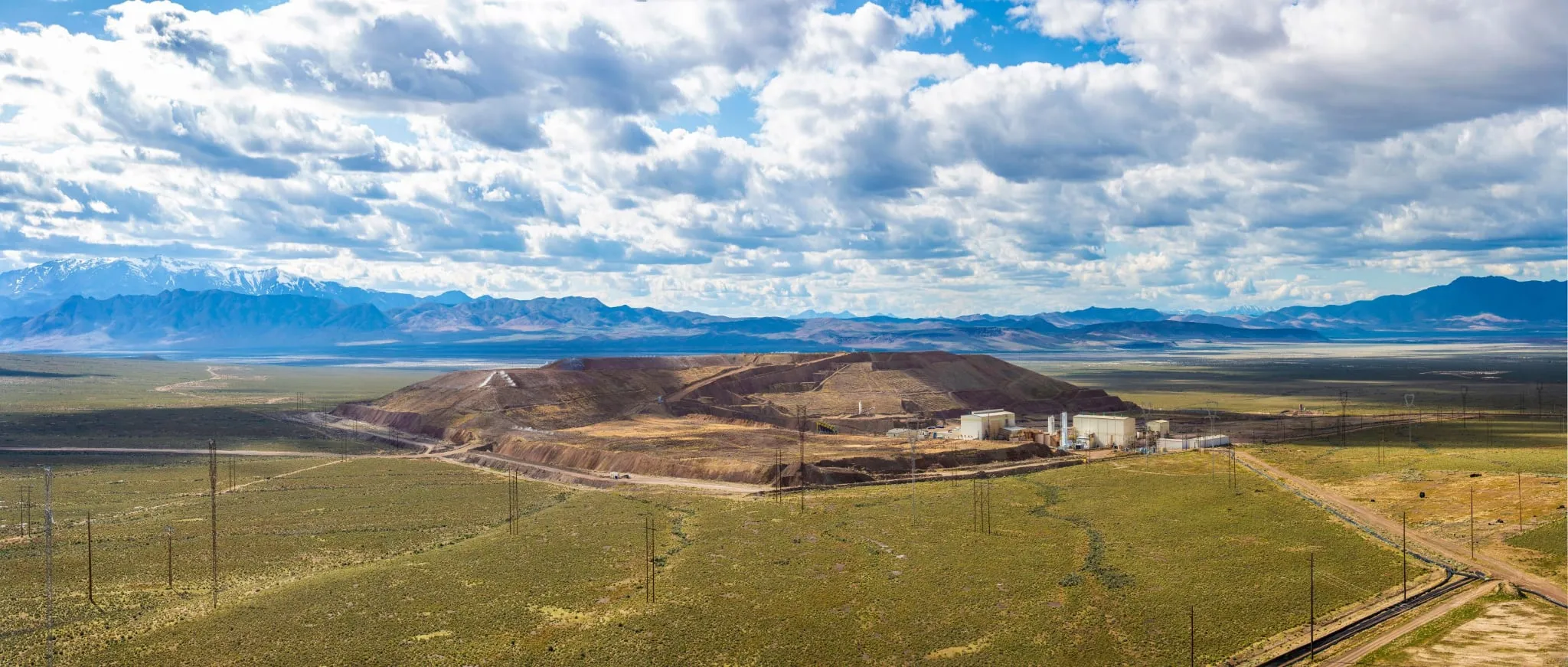
i-80 Gold's three-phase Nevada plan targets 600,000+ oz/year by early 2030s via Lone Tree autoclave, eliminating toll milling to unlock margin growth.
- i-80 Gold's three-phase development plan represents a structural shift from sub-scale producer to multi-asset Nevada growth platform, targeting more than 600,000 ounces per year in the early 2030s.
- The transition from toll milling to processing independence via the Lone Tree autoclave is a significant potential driver of margin improvement.
- Near-term operational de-risking at Granite Creek and Archimedes establishes a credible production base ahead of capital-intensive expansion.
- A rolling pipeline of three feasibility studies between 2026 and 2027 reframes reserve quality, mine life, and valuation metrics including enterprise value per ounce and net present value relative to capital expenditure.
- The recapitalisation strategy and experienced owner's team reduce execution risk in a jurisdiction that offers regulatory stability.
Why Production Scale Matters Again in Gold Equities
The gold equity landscape has undergone a meaningful shift in investor preference. Rising input costs, inflationary pressures on labour and consumables, and a renewed focus on capital discipline have refocused institutional capital away from pure optionality plays toward operators capable of demonstrating production growth visibility, margin control, and jurisdictional stability. This transition has created a widening valuation gap between companies with execution credibility and those still reliant on gold price leverage alone.
From Optionality to Throughput
Gold equity performance has increasingly diverged between option-style explorers with leverage to price movements and operators capable of scaling ounces, margins, and free cash flow. Capital costs for new mine development have risen materially, making existing infrastructure more valuable. Permitting timelines have extended across most jurisdictions, increasing the premium on development-ready assets. Investors have grown more sceptical of theoretical resource estimates without clear pathways to reserve conversion and production.
Nevada's Strategic Premium in a Fragmenting Jurisdictional Landscape
Nevada currently offers low sovereign risk, established permitting frameworks with regulatory transparency, and access to a skilled underground workforce developed over decades of mining activity. Investors increasingly apply lower discount rates to United States-based assets when modelling net present value and internal rate of return.
Richard Young, Chief Executive Officer of i-80 Gold, frames the jurisdictional advantage in terms of workforce quality:
"We've been able to hire really good people. That's one of the things that makes Nevada one of the best places globally to operate: the quality of the workforce."
The Three-Phase Development Plan as a Capital Allocation Framework
The three-phase development plan announced by i-80 Gold in late 2024 represents more than a production roadmap. It functions as a capital allocation framework designed to sequence risk reduction, margin improvement, and scale expansion in a manner that aligns with institutional investor expectations.
Richard Young outlined the scale of the transformation during the company's Q3 2025 reporting:
"We announced 12 months ago a three-phase development plan that would take production from less than 50,000 ounces of gold per year to over 600,000 ounces of gold production annually."
Phase 1: Establishing a Reliable Underground Production Base
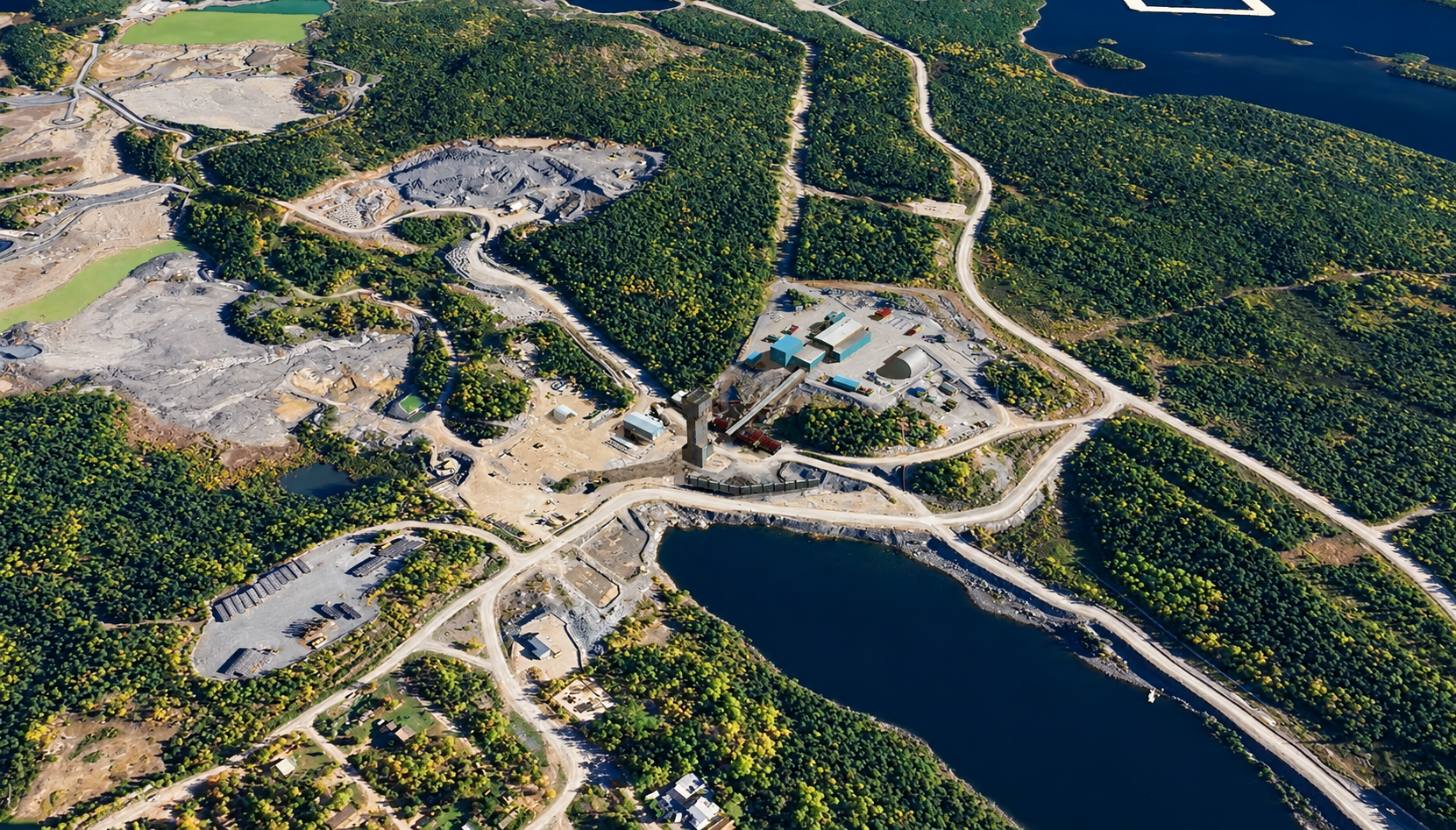
The first phase focuses on removing operational bottlenecks and stabilising output before pursuing scale. At Granite Creek, the installation of a permanent dewatering system during Q3 2025 addresses depth-related constraints that previously limited access to higher-grade zones. A second expanded water treatment plant is on track for completion in Q1 2026, further improving operational consistency.
Richard Young describes the operational significance of the dewatering solution:
"During the third quarter we installed a permanent dewatering system that is able to remove the water to surface. The water issue will no longer be a challenge... Once that's done, that allows us to accelerate development at depth, and that's important because grades improve, ground conditions improve, and our production levels will rise."
At Archimedes, construction of the underground mine commenced in Q3 2025, with development currently advancing ahead of expectations. The second underground operation diversifies operational risk and creates a multi-year ramp-up profile that smooths capital deployment.
Why Phase Sequencing Matters to Valuation
Investors tend to penalise simultaneous build strategies that create competing demands on capital, management attention, and operational resources. The sequencing approach adopted by i-80 Gold reduces near-term all-in sustaining cost volatility, preserves balance sheet optionality, and allows feasibility studies to reset technical and economic assumptions after operational de-risking has been demonstrated.
Toll Milling Versus Processing Independence
The economics of gold production are fundamentally shaped by processing arrangements. For companies reliant on toll milling, the margin structure creates a persistent drag on profitability that often proves difficult for the market to properly evaluate.
Toll Milling as a Structural Constraint on Gold Equities
Toll milling arrangements create several structural challenges for gold producers. Beyond direct costs, toll milling limits scheduling control, creates dependency on third-party capacity, and compresses earnings before interest, taxes, depreciation, and amortisation regardless of gold price movements.
Richard Young quantifies the current cost burden:
"Right now the toll milling is costing us between $1,000 and $1,500 an ounce... It's a bit of a red herring, and you can see how high those costs are and why it's limiting the gross profit."
Lone Tree Autoclave: The Margin Inflection Point
The planned refurbishment of the Lone Tree autoclave, estimated at approximately $400 million, represents a significant potential driver of margin improvement. The autoclave restores sulphide processing optionality and centralises metallurgy across the asset portfolio, eliminating reliance on third-party processing. Board-approved early spending on long-lead equipment and permitting timelines reduces execution slippage risk.
Management is targeting first gold pour through the company's own autoclave before the end of 2027. Processing independence would reframe unit costs, improve earnings before interest, taxes, depreciation, and amortisation conversion, and enhance cash flow durability.
Richard Young outlined the production and financial targets associated with processing independence:
"By 2028 we expect to produce about 200,000 ounces per year and generate EBITDA somewhere between $200 and $300 million depending on the price of gold."
EBITDA Sensitivity & Net Present Value Implications
At approximately 200,000 ounces per year of production through owned processing infrastructure, the earnings before interest, taxes, depreciation, and amortisation guidance of $200 to $300 million represents a material uplift to net present value relative to capital expenditure ratios. The sensitivity of these metrics to gold price movements increases meaningfully once toll milling costs are eliminated.
Feasibility Studies as a Catalyst for Reserve Conversion
Resource estimates, while indicative of mineralisation potential, carry significant uncertainty until converted to reserves through feasibility-level engineering studies. The transition from inferred resources to proven and probable reserves improves mine life confidence, enables discounted cash flow credibility with institutional investors, and typically precedes valuation re-rating.
Feasibility Timing & Reserve Reporting
Between Q1 2026 and Q1 2027, i-80 Gold is targeting delivery of three feasibility studies covering Granite Creek, Archimedes, and Cove Underground. The Granite Creek Underground feasibility study is listed as an upcoming catalyst with a Q1 2026 target release date.
Richard Young emphasises the significance of reserve reporting for market perception:
"Between the first quarter of 2026 and the first quarter of 2027, we'll have three feasibility studies out, and you'll see us report reserves for the first time for all three operations, and it will be significant... We believe the cost and the capex will largely be in line with what we've laid out."
Cove Underground: Resource Expansion Through Infill Drilling
At Cove Underground, recent infill drilling has shown that the mineralised envelope is 10 to 20 percent larger than previous estimates. Underground development at Cove offers improved grade control and reduced strip ratio sensitivity compared to open-pit alternatives.
Richard Young notes the resource expansion achieved:
"As we completed that infill program, the total mineralised envelope is up between 10 and 20 percent."
Permitting & the Value of Optionality
Permitting has emerged as one of the most significant constraints on gold project development globally. Extended permitting timelines, regulatory uncertainty, and community opposition have delayed or cancelled projects across multiple jurisdictions, increasing the scarcity value of permitted assets.
Permitting Status Across the Asset Portfolio
The company is advancing permits across multiple assets on differentiated timelines. At Archimedes, permitting for the upper zone above the 5100-level is complete, with approvals for the lower zone Ruby Deeps being finalised. Granite Creek open-pit permitting is targeting completion within approximately three years. At Cove, permitting for an Environmental Impact Statement is underway, with an expected timeline of roughly three years from the technical report's effective date. Mineral Point approvals are anticipated by late 2029.
Permits create embedded option value that allows expansion without immediate dilution and provides flexibility across gold price regimes. Institutional investors increasingly value permitted ounces over theoretical resources.
Financing, Recapitalisation & Execution Discipline
Capital structure and financing strategy have become increasingly important factors in gold equity valuation as interest rates have risen and credit conditions have tightened.
Liquidity Position & Financing Progress
The company raised approximately $200 million through bought-deal and private placement financings during 2025. As of 30 September 2025, i-80 Gold held a cash balance of $103 million. Approximately $92 million of the 2025 raise is specifically allocated to fund growth activities including construction, drilling, and permitting through to Q2 2026.
The company has received six term sheets for long-term debt financing and is working toward presenting final options to the board.
Richard Young describes the financing progress:
"We've got half a dozen term sheets... We're working with the six parties, moving everything forward, and we'll be able to present the board with a couple of different options."
The Team & Execution Risk Mitigation
Autoclave refurbishment represents significant technical and execution risk. The mitigation strategy centres on the owner's team, comprising personnel with direct experience operating the Lone Tree autoclave during its previous operational period.
Richard Young highlights the team assembled:
"We've now hired our owner's team, and they all have experience with this autoclave, including running it."
The Investment Thesis for i-80 Gold
- Production growth visibility through a phased pathway from less than 50,000 ounces per year toward more than 600,000 ounces per year in the early 2030s reframes long-term scale assumptions.
- Margin expansion leverage through processing independence materially improves earnings before interest, taxes, depreciation, and amortisation sensitivity to gold prices.
- Feasibility-driven re-rating potential as reserve conversion and cost clarity reset valuation benchmarks including enterprise value per ounce and net present value.
- Jurisdictional positioning with Nevada assets that currently command lower risk discounts amid global permitting challenges.
- Strategic optionality with permitted, centrally processed assets that increase merger and acquisition relevance in a consolidating gold sector.
The three-phase development plan represents a capital discipline framework that aligns scale, margin expansion, and timing with investor expectations in the current gold cycle. By prioritising underground stability first, processing independence second, and large-scale expansion last, i-80 Gold presents a structured approach to execution risk management and long-term value creation in Nevada-focused gold development.
As feasibility studies convert resources into reserves and the Lone Tree autoclave advances toward commissioning, the company's narrative shifts from optionality to potential cash-flow generation. For investors seeking exposure to production growth in a stable jurisdiction, the strategy offers a staged path that balances growth ambition with the capital discipline that institutional investors increasingly require.
TL;DR
i-80 Gold's three-phase development plan represents a structural transformation from sub-scale producer to multi-asset Nevada platform targeting over 600,000 ounces annually by the early 2030s. The strategy prioritizes near-term operational de-risking at Granite Creek and Archimedes, followed by processing independence through the Lone Tree autoclave refurbishment—eliminating toll milling costs of $1,000–$1,500 per ounce. Three feasibility studies between Q1 2026 and Q1 2027 will convert resources to reserves, resetting valuation metrics. Management targets approximately 200,000 ounces and $200–$300 million EBITDA by 2028. The sequenced approach balances growth ambition with capital discipline in a jurisdiction offering regulatory stability and skilled workforce access.
FAQs (AI-Generated)
The company aims to grow from less than 50,000 ounces per year to over 600,000 ounces annually by the early 2030s, with an intermediate target of approximately 200,000 ounces by 2028.
Processing independence through the refurbished autoclave eliminates toll milling costs currently running $1,000–$1,500 per ounce, significantly improving EBITDA conversion and cash flow durability.
Three feasibility studies covering Granite Creek, Archimedes, and Cove Underground are scheduled between Q1 2026 and Q1 2027, marking the company's first reserve reporting across all three operations.
Nevada offers low sovereign risk, established permitting frameworks, and access to a skilled underground workforce—factors that allow institutional investors to apply lower discount rates when modelling project economics.
As of September 30, 2025, the company held $103 million in cash following approximately $200 million raised through 2025 financings, with roughly $92 million allocated to growth activities through Q2 2026.
Analyst's Notes





Subscribe to Our Channel



Stay Informed






















