




Sovereign Metals' Kasiya Resource Upgrade Moves the Project Toward Execution


Sovereign Metals' Kasiya update lifts confidence ahead of feasibility study completion, strengthens mine planning, and improves financing and offtake visibility.
- Sovereign Metals released an updated mineral resource estimate for its Kasiya project, lifting Measured and Indicated tonnes by 38% to 1,652 million tonnes and total contained rutile by 13% to 20.24 million tonnes, replacing the April 2023 estimate for direct use in the definitive feasibility study (DFS) mine schedule.
- The first Measured Resource declared at Kasiya covers 107 million tonnes at 1.05% rutile and is designated for the first six years of planned operations, providing the highest confidence classification available under the Joint Ore Reserves Committee (JORC) code at the point in the mine sequence that lenders and offtake counterparties evaluate most closely.
- Kasiya is a primary rutile project with graphite as a by-product, the only known deposit of its configuration, which allows graphite to generate additional revenue at an incremental production cost of US$241 per tonne without requiring separate capital allocation or a downstream processing strategy.
- The Optimised Pre-Feasibility Study (OPFS), completed in January 2025, models a pre-tax net present value at an 8% discount rate (NPV8%) of US$2,322 million, an internal rate of return (IRR) of 27%, and average annual earnings before interest, tax, depreciation and amortisation (EBITDA) of US$409 million on a 64% margin.
- Near-term milestones include completion of the DFS, a mining licence application, an environmental impact assessment, and transition to funded offtake and project finance agreements, with the International Finance Corporation collaboration and a Traxys memorandum of understanding already in place.
The Updated MRE & Its Significance for the DFS
Sovereign Metals announced an updated mineral resource estimate (MRE) for the Kasiya rutile and graphite project in Malawi. The result replaces the April 2023 MRE and feeds directly into the mine schedule for the definitive feasibility study (DFS), making classification confidence as consequential as aggregate tonnage.
The total MRE now stands at 2,105 million tonnes (Mt) at 0.96% rutile and 0.95% total graphitic carbon (TGC), containing 20.24 Mt of rutile and 19.95 Mt of graphite within the rutile-optimised resource classification, with additional graphite resource material reported in the project's combined pit shell estimate. Measured and Indicated (M&I) tonnes increased 38% to 1,652 Mt, and M&I contained rutile rose 32% to 16.1 Mt. At 77% of the total resource, the M&I proportion reflects a resource base increasingly suited to external financing and commercial negotiation, rather than merely to exploration scale.
Resource Confidence & Early Mine Planning
The March 2026 update announced the first Measured Resource at Kasiya: 107 Mt at 1.05% rutile and 1.56% TGC. Under the Joint Ore Reserves Committee (JORC) code, Measured material represents the highest confidence classification. It requires a denser sampling pattern and a stronger understanding of geological continuity than Indicated material. Sovereign has designated this block for the first six years of planned operations.
For lenders evaluating project finance and for counterparties negotiating long-term offtake agreements, the early mine schedule carries disproportionate weight. It determines initial cash flow projections, debt service coverage, and the production baseline against which commitments are structured. A Measured-classification foundation for that period reduces the geological uncertainty that external parties scrutinise most carefully and directly supports the bankability of the DFS output.
Kasiya's Production Base & By-Product Structure
Kasiya spans a 201-square-kilometre mineralised area in Malawi and is ranked as the world's largest known rutile resource and the second-largest known flake graphite resource, a ranking established under the prior MRE. The project is structured as a primary rutile operation with graphite produced as a by-product. It is the only known deposit where that configuration applies, thereby removing the need for a separate graphite development decision or for capital allocation dedicated to graphite alone.
Managing Director & Chief Executive Officer of Sovereign Metals, Frank Eagar, addressed the project's cost position in graphite markets in February 2026:
"The market knows that this is obviously a primary rutile project, but we do have graphite coming out as well. Graphite coming out at the bottom of the cost curve, $240 a tonne, incremental cost delivered onto a vessel."
Rutile produced at Kasiya grades above 95% titanium dioxide with low impurities. Graphite concentrate grades 96% to 98% carbon with very low sulphur content, a direct consequence of the weathered saprolite host rock. Because the ore body is fully weathered rather than fresh, the processing route is substantially simpler than comparable hard-rock graphite operations, with direct implications for both product quality and operating costs.
Mining Method, Processing Simplicity & Operating Structure
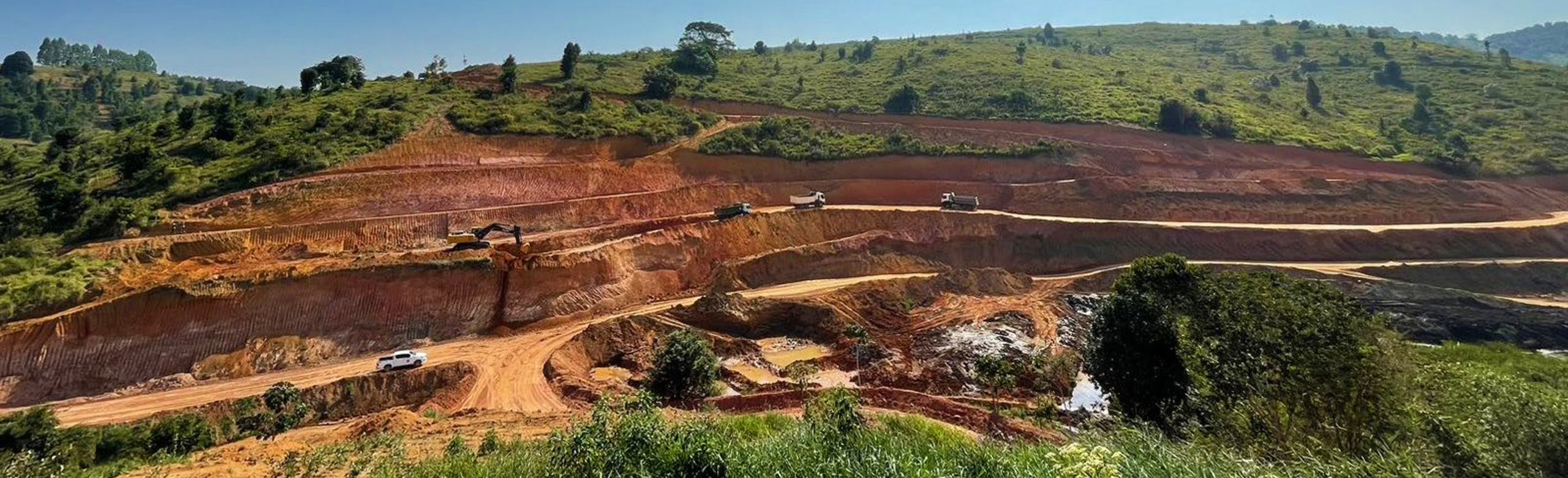
The Kasiya deposit sits in flat, near-surface saprolite with blanket-style mineralisation. That geometry means excavation requires no drilling, blasting, crushing, or grinding. The strip ratio is zero or near zero. The operating sequence runs from loading and hauling through scrubbing and wet concentration. Fewer processing steps compress the maintenance and energy cost base and reduce the number of mechanical failure points in the flow sheet relative to hard-rock operations.
Hard-rock graphite producers typically generate a concentrate grading 94% to 95% carbon. Kasiya's less intensive processing preserves flake integrity, producing 96% to 98% carbon concentrate with approximately 68% of output in the medium, large, and jumbo flake sizes. Flake size carries direct price consequences: large and jumbo flakes achieved benchmark prices of US$1,140 to US$1,193 per tonne in the refractory and expanded graphite markets in the fourth quarter of 2024, compared to US$564 per tonne for small flake used in battery anodes. Kasiya's flake distribution positions its graphite basket toward the higher-value end of the market without requiring any downstream processing investment to capture that differential.
Economics, Cost Position & Margin Drivers
The Optimised Pre-Feasibility Study (OPFS) completed in January 2025 models a pre-tax net present value at an 8% discount rate (NPV) of US$2,322 million, an internal rate of return (IRR) of 27%, average annual earnings before interest, tax, depreciation and amortisation (EBITDA) of US$409 million, and an EBITDA margin of 64%. Capital expenditure (capex) to first production is US$665 million.
Steady-state rutile production averages 246,000 tonnes per annum, and graphite averages 265,000 tonnes per annum. The combined operating cost is US$423 per tonne. The incremental cost of graphite production, which captures only the costs incurred above primary rutile production to deliver a tonne of graphite concentrate to port, is US$241 per tonne.
That figure sits below the China weighted average C1 direct cash cost of approximately US$257 per tonne, placing Kasiya below the Chinese cost benchmark among all ex-China graphite projects at the pre-feasibility study stage or later. No comparable ex-China project in that study cohort achieves a cost position in that range. Graphite's by-product cost structure means it adds revenue to the project without carrying a proportionate share of fixed capital or operating overhead, generating margin on the primary rutile cost base rather than requiring a separate economic justification.
Production Visibility, Commercial Scale & Market Position
Kasiya's graphite output ramps from approximately 140,000 tonnes per annum in the first five years to approximately 250,000 tonnes per annum from year six onwards, when full steady-state operations are reached.
On production volumes across the mine's operating phases, Eagar stated:
"So at full scale production, which will start in year six, we will be producing around 250,000 tonnes of flake graphite; for the first five years, it will be about half of that, so call it 140,000 tonnes."
At steady state, Kasiya would rank as the world's largest single-site producer of natural flake graphite. That scale supports the duration and volume commitments increasingly sought by ex-China buyers building supply chain alternatives. In February 2026, Sovereign signed a memorandum of understanding (MoU) with Traxys for up to 80,000 tonnes of graphite per annum. Traxys has also been selected as a partner under the US government's Project Vault program, which Eagar described as a US$12 billion initiative aimed at securing a non-Chinese supply of critical minerals. The Traxys MoU covers a portion of Kasiya's projected steady-state output, with discussions continuing for the remaining production volume.
Strategic Backing, Offtake Pathways & Financing Readiness
Rio Tinto holds a 19.9% strategic interest in Sovereign Metals, acquired for A$60 million. Rio Tinto subject matter experts participate in a joint technical committee that oversees the DFS process and provides technical validation at the study level. A six-month pilot mining and processing program covering 10 hectares and 170,000 cubic metres of material was completed on schedule and within budget ahead of the OPFS, confirming operational assumptions in the field.
On the project finance side, Sovereign has a collaboration agreement with the International Finance Corporation (IFC). With the resource classification upgrade, the Traxys MoU, and the IFC workstream running concurrently with DFS completion, the project is advancing the components that project finance providers and offtake counterparties require before formal commitments can be structured.
The Next Steps for Kasiya
The DFS is the immediate priority. Eagar recently indicated that completion is expected within one to two quarters, with permitting work already advancing in parallel:
"Mining license application, environmental impact assessment, and permitting. And then, really, it is into the funded agreements."
Baseline field work in Malawi is underway to support the licence and environmental processes. Transition to funded agreements, covering both project finance and offtake, represents the final step before construction decisions. The March 2026 resource upgrade strengthens Sovereign's position across each of those workstreams by improving the evidentiary quality of the asset at the point where external parties are being asked to commit capital.
The Investment Thesis for Sovereign Metals
- The recent update improves classification confidence, not just aggregate scale, with Measured and Indicated tonnes rising 38% to 1,652 million tonnes and total contained rutile rising 13% to 20.24 million tonnes, providing the geological foundation required for the definitive feasibility study, mine schedule, and project financing discussions.
- The first Measured Resource of 107 million tonnes, designated for the first six years of planned operations, establishes the highest confidence classification available under the Joint Ore Reserves Committee code at the portion of the mine schedule that lenders and offtake counterparties assign the most weight to.
- Flat, near-surface saprolite ore and a load-scrub-concentrate flow sheet support a low-cost operating structure without drilling, blasting, crushing, or grinding, reducing capital intensity and operational execution risk relative to hard-rock peers.
- Graphite contributes margin at an incremental cost of US$241 per tonne, below the China weighted average of US$257 per tonne, without requiring separate capital or a downstream processing strategy, thereby generating additional returns on the primary rutile capital base.
- Rio Tinto's 19.9% strategic stake, the Traxys memorandum of understanding for up to 80,000 tonnes per annum linked to the US government's Project Vault program, and the International Finance Corporation project finance collaboration provide external validation across technical, commercial, and financing dimensions.
- Near-term catalysts, including the completion of a definitive feasibility study, the mining licence application, the environmental impact assessment, and the transition to funded agreements, define a visible execution sequence for 2026 and constitute the critical path from the study phase to the construction decision.
The March 2026 resource upgrade consolidates the asset base ahead of the definitive feasibility study and positions Kasiya more firmly within the financing and offtake discussions that will determine the project's path to construction.
TL;DR
Sovereign Metals' March 2026 mineral resource update for Kasiya declared the first Measured Resource of 107 million tonnes for the first six years of planned operations, lifted Measured and Indicated tonnes 38% to 1,652 million tonnes, and increased total contained rutile 13% to 20.24 million tonnes, strengthening the geological foundation for the definitive feasibility study mine schedule. The Optimised Pre-Feasibility Study models a pre-tax net present value of US$2,322 million and a 27% internal rate of return, supported by a by-product graphite cost of US$241 per tonne delivered to port, below China's weighted average. Rio Tinto's 19.9% strategic stake, an International Finance Corporation project finance collaboration, and a Traxys memorandum of understanding tied to the US government's Project Vault program provide external commercial and financial backing. Definitive feasibility study completion, permitting, and transition to funded agreements are the next milestones on the path to a construction decision.
FAQs (AI-Generated)
A Measured Resource is the highest confidence classification under the JORC code and requires a higher sampling density and greater geological understanding than Indicated material. Sovereign has designated the 107 million tonnes Measured block for the first six years of planned production, which is the portion of the mine schedule that lenders and offtake counterparties evaluate most closely when assessing project finance and commercial agreements.
The OPFS models graphite production at an incremental cost of US$241 per tonne delivered to port, calculated after allocating primary rutile production costs. China's weighted average production cost is approximately US$257 per tonne, placing Kasiya below that benchmark without requiring downstream processing investment or battery anode manufacturing to achieve competitive economics.
Rio Tinto holds a 19.9% strategic interest in Sovereign Metals, acquired for A$60 million. Rio Tinto subject matter experts sit on a joint technical committee that provides oversight of the definitive feasibility study process. The arrangement delivers technical validation and financial backing at the study level but does not obligate Rio Tinto to fund project construction.
The non-binding agreement covers up to 80,000 tonnes of graphite per annum. Traxys has also been selected as a partner in the US government's Project Vault program, which Sovereign Metals CEO Frank Eagar described as a US$12 billion critical minerals supply initiative targeting non-Chinese sources. The agreement covers a portion of Kasiya's projected steady-state graphite output of approximately 250,000 tonnes per annum, with further discussions ongoing for the remaining volume.
Sovereign is targeting completion of the definitive feasibility study within one to two quarters from February 2026. Subsequent steps include a mining licence application, environmental impact assessment, and permitting in Malawi. In parallel, the company is advancing project finance structuring through its collaboration with the International Finance Corporation and pursuing additional offtake agreements to complement the Traxys memorandum of understanding.
Analyst's Notes





Subscribe to Our Channel



Stay Informed


