




i-80 Gold Strengthens Its Board to De-Risk Lone Tree Autoclave Execution & Narrow the Nevada Gold Valuation Gap



i-80 Gold appoints three directors to oversee Lone Tree autoclave refurbishment, targeting Q2 2026 construction decision on $430M processing hub across 14M oz Nevada gold resource.
- i-80 Gold has appointed three independent directors effective February 1, 2026, bringing deep experience in refractory processing, mining valuation, and financial governance to directly address execution risk at its Lone Tree autoclave hub.
- The board refresh coincides with a dense 2026 catalyst window, including feasibility studies at Granite Creek and Cove targeting Q1 and a construction decision on Lone Tree targeting Q2, subject to financing and board approval.
- With 6.5 million ounces Measured and Indicated and 7.5 million ounces Inferred resources in Nevada as of December 31, 2024, i-80 is leveraging scarce autoclave infrastructure to lift payability from approximately 55 to 60 percent under toll milling to approximately 92 percent through owner-operated processing.
- Consolidated preliminary economic assessments outline a $1.6 billion after-tax net present value at a 5 percent discount rate using $2,175 per ounce gold, rising to $4.9 billion at $3,000 per ounce, compared to a market capitalization of approximately $1.1 billion Canadian dollars.
- The board additions signal a pivot from resource delineation toward technical execution and capital discipline, a priority in a higher-for-longer gold price environment where investors are emphasizing construction risk management.
Gold's Structural Bid & Capital Rotation Toward De-Risked Development
Institutional capital allocation in the gold sector has undergone a structural shift over the past 24 months. With gold prices sustaining above historical long-term incentive levels, the market focus has moved from discovery narratives to development execution and cash flow visibility.
Investors are increasingly differentiating between exploration upside, permitted construction-ready projects, and operational cash flow generators. This segmentation has created distinct valuation tiers, with capital rotating toward companies demonstrating technical credibility and governance discipline rather than resource optionality alone.
The investment community is now stress-testing all-in sustaining cost projections, metallurgical recoveries, processing bottlenecks, and permitting timelines with greater rigor. All-in sustaining costs, or AISC, represent the full-cycle cost to maintain production. Net present value, or NPV, reflects discounted future cash flow value, while internal rate of return, or IRR, measures implied project return. Enterprise value per ounce provides a relative valuation metric across development-stage companies.
Refractory Ore as a Strategic Constraint in Nevada
Nevada hosts significant sulphide gold mineralization, commonly referred to as refractory ore. Unlike oxide material processable through conventional heap leaching, refractory ore requires pressure oxidation via autoclave or roasting to liberate gold locked within sulphide minerals.
Autoclave capacity in Nevada is limited and capital-intensive to construct. This scarcity transforms processing ownership into a potential competitive advantage, reducing reliance on third-party toll arrangements and enhancing margin capture.
Against this backdrop, board composition becomes an investment variable rather than a governance footnote.
i-80 Gold's Board Composition & Execution Alignment
i-80 Gold's asset portfolio represents a construction sequencing challenge rather than an early-stage exploration story. The company controls 6.5 million ounces of Measured and Indicated resources and 7.5 million ounces of Inferred resources, based on mineral resource estimates with an effective date of December 31, 2024, across a five-project development pipeline anchored around the Lone Tree autoclave hub.
The board appointments, effective February 1, 2026, reflect a strategic pivot from resource definition toward technical execution.
Technical Expertise Aligned With Processing Risk
Steven Yopps brings over 35 years of metallurgical engineering experience focused on autoclave, roaster, and refractory processing operations. Michael Jalonen, a Chartered Financial Analyst with nearly 40 years of experience including over 30 years at Bank of America Securities, provides capital markets perspective on development-stage valuation. Ronald Butler Jr., with more than 30 years of experience including 29 years at Ernst and Young, contributes financial governance and audit discipline.
The alignment is structural. Autoclave refurbishment represents the highest technical leverage point in i-80's portfolio. The consolidated valuation gap between market capitalization and NPV presents a capital markets challenge requiring credible communication.
Richard Young, President and Chief Executive Officer of i-80 Gold, has emphasized internal capability development:
"We have developed more bench strength in our company than most of the mid-tiers. Our Chief Operating Officer Paul Chawrun is the strongest technical person that I have ever worked with, including my nearly decade and a half at Barrick."
The Lone Tree Autoclave: Infrastructure Configuration & Processing Economics
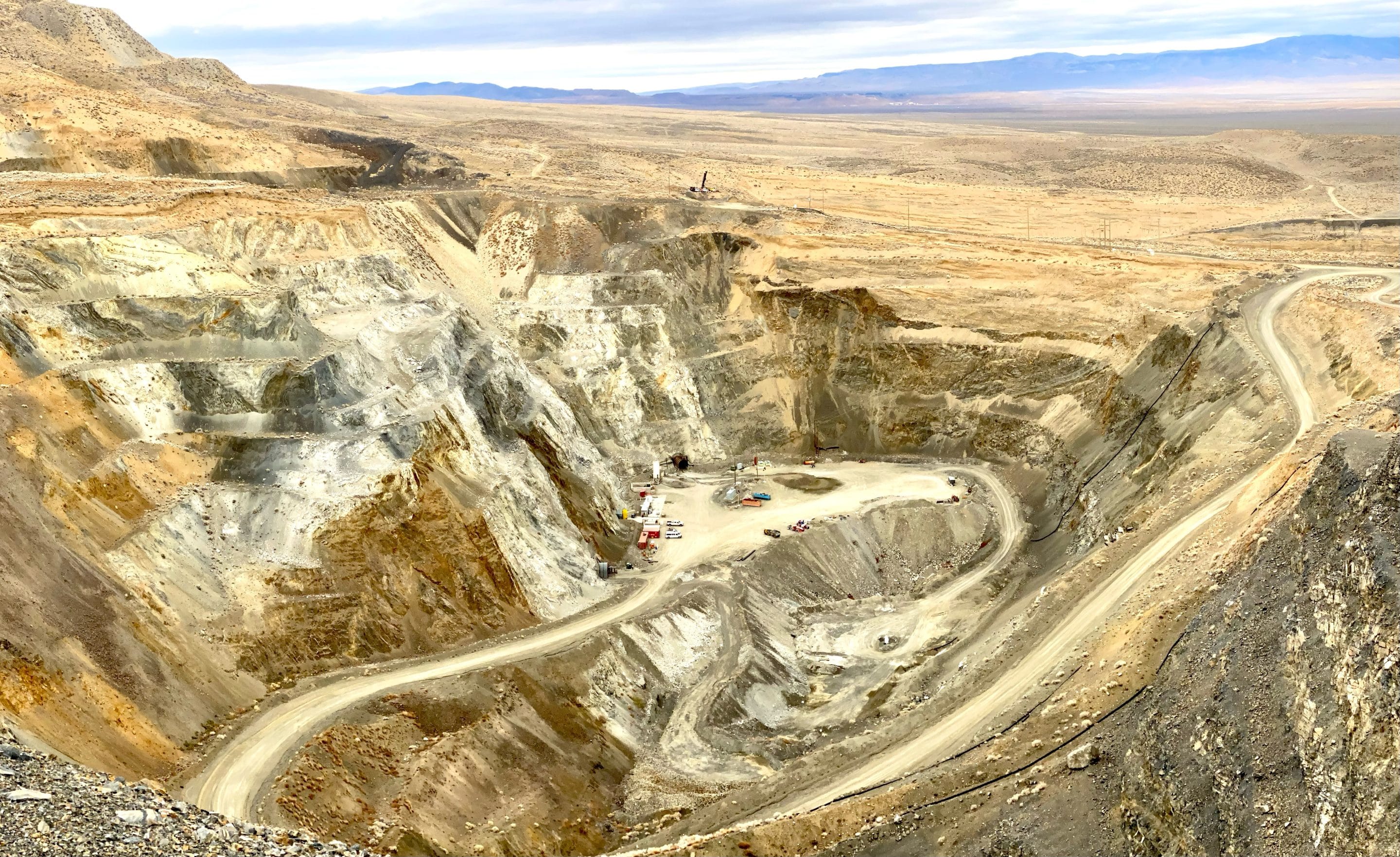
The Lone Tree facility represents i-80's central processing hub and the primary determinant of its margin profile across refractory feed sources.
Under toll milling arrangements for refractory ore, payability typically ranges from 55 to 60 percent. Owner-operated autoclave processing shifts payability to approximately 92 percent recovery. The difference translates directly into margin expansion across every ounce processed.
The distinction between oxide and sulphide mineralization determines processing pathway. Oxide material can be processed through lower-cost heap leaching. Sulphide material requires pressure oxidation to achieve economic recoveries.
Autoclave Capacity in Nevada
i-80 operates one of two permanent autoclaves in Nevada outside of Nevada Gold Mines. This infrastructure position offers potential optionality including internal feedstock processing, potential third-party tolling revenue, and enhanced positioning in strategic discussions.
Richard Young has framed the strategic positioning directly.
"We did announce a feasibility study for the refurbishment of our Lone Tree process facility. As you recall, that is both an autoclave and carbon-in-leach circuit. We are one of two companies, the other being Nevada Gold Mines, that has a permanent autoclave in Nevada."
The refurbishment scope has been defined at Class 3 engineering study level, with completion targeting late 2027.
"In December we announced the refurbishment. It is a little over $400 million, plus capital spares brings it to about $430 million... That refurbishment is on track for completion by the end of 2027. That would then take production to about 200,000 ounces per year moving into 2028, and we would generate EBITDA between $200 and $400 million depending on the price of gold."
Resource Base & Project Economics
I-80 Gold’s portfolio includes several high-grade underground deposits based on mineral resource estimates with an effective date of December 31, 2024.
Granite Creek Underground contains 261,000 ounces at 10.5 grams per tonne gold in the Measured and Indicated category. Cove Underground holds 311,000 ounces at 8.2 grams per tonne in the Indicated category. Ruby Hill, specifically the Archimedes deposit, contains 436,000 ounces at 7.6 grams per tonne.
Grade is expressed in grams per tonne of gold. Resource categories reflect confidence levels: Measured resources have the highest geological confidence, Indicated resources have reasonable confidence, and Inferred resources have lower confidence.
Preliminary Economic Assessment Parameters
The consolidated preliminary economic assessments outline the following parameters at a 5 percent discount rate:
After-tax NPV of $1.6 billion at $2,175 per ounce gold and after-tax NPV of $4.9 billion at $3,000 per ounce gold. Project-specific AISC ranges from $1,225 per ounce at Granite Creek Open Pit to $1,893 per ounce at Archimedes.
Richard Young has articulated the valuation differential in quantitative terms.
"The NAV of the five gold projects at $3,000 gold was about $5 billion USD. At these prices the number is probably somewhere between $8 and $10 billion NAV. Our market cap is maybe $1.3 billion on a fully diluted basis. There is still a lot of room to move forward."
2026 Timeline: Feasibility Studies & Construction Milestones
Feasibility studies for Granite Creek and Cove are targeting Q1 2026. A feasibility study represents higher confidence than a preliminary economic assessment, with tighter capital expenditure accuracy and bankable engineering assumptions.
Richard Young has indicated expectations for study outcomes.
"What you will see with the first two feasibility studies that will be out in Q1 to early Q2 is that they are better than the preliminary economic assessments."
Lone Tree Construction Decision Targeting Q2
The construction decision on Lone Tree refurbishment targets Q2 2026, contingent upon completion of the Class 3 engineering study, board approval, and successful funding. This decision would commit capital to the central processing infrastructure and trigger the timeline toward production.
Financial Position & Institutional Participation
The capital structure provides context for evaluating execution capability.
Balance Sheet Configuration
As of September 30, 2025, i-80 reported approximately $103 million in cash. The company raised approximately $200 million during 2025 and is targeting an additional $350 to $400 million in financing to repay convertible debt and eliminate gold and silver prepayment obligations with National Bank and Orion Mine Finance.
Richard Young has addressed the recapitalization strategy.
"Once we complete that recapitalization, the balance sheet issues will be addressed. To a degree, we believe that we are going to over-raise to provide some cushion so that as we move forward, the discussion is no longer about our balance sheet. It is really about the quality of the assets."
Shareholder Registry Composition
As of November 14, 2025, the shareholder registry includes Condire Management at 9.7 percent, Sprott Asset Management at 8.2 percent combined, and The Vanguard Group at 2.9 percent.
Risk Factors for Investor Consideration
Autoclave restart carries inherent technical risk. The $430 million refurbishment estimate reflects Class 3 engineering accuracy, with potential for revision as detailed engineering progresses. Recovery assumptions require ongoing metallurgical validation.
Permitting Timelines
Active permitting processes are underway across multiple projects. Cove permitting is expected to take approximately three years. Granite Creek Open Pit requires additional state and federal permits with a similar timeline target. Archimedes is finalizing approvals for lower development areas.
Financing & Encumbrances
Existing royalties include 6 percent on Granite Creek Open Pit and 3 percent on both Mineral Point Open Pit and Archimedes Open Pit. Gold price volatility directly affects project economics and financing terms. The mix between equity dilution, debt financing, and streaming arrangements will influence shareholder returns.
The Investment Thesis for i-80 Gold
- Autoclave ownership creates processing infrastructure that may enhance refractory ore economics and reduce third-party dependency across a multi-million-ounce resource base.
- The differential between current market capitalization and study-derived NPV profiles represents a consideration for investors evaluating the development pathway.
- The 2026 catalyst density, including feasibility studies and a construction decision, creates a defined timeline for technical validation.
- High-grade underground assets with grades exceeding 7 grams per tonne gold provide margin support across gold price scenarios.
- Board-level execution oversight with metallurgical, valuation, and governance expertise is positioned to support autoclave refurbishment and project financing.
- Nevada's established mining regulatory framework and skilled labor base reduce development risk relative to emerging market alternatives.
In the current gold market, investors are placing greater emphasis on operational delivery, cost control, and balance sheet management. Governance structure and board composition have therefore become relevant analytical considerations alongside asset quality and resource scale.
i-80 Gold’s board appointments, effective February 1, 2026, coincide with the company’s advancement of its Nevada development assets, including the refurbishment of the Lone Tree autoclave. The additions bring operating experience in pressure oxidation processing, public markets oversight, and financial governance, areas directly connected to the technical and capital intensity of autoclave-based gold processing.
The focus increasingly centers on construction sequencing, commissioning timelines, and capital allocation discipline rather than resource size alone. Board composition does not determine project outcomes, but it forms part of the governance framework through which execution risk and development capital deployment are overseen.
TL;DR
i-80 Gold has appointed three independent directors effective February 1, 2026, adding metallurgical, capital markets, and financial governance expertise as the company advances its Lone Tree autoclave refurbishment. The $430 million project targets completion by late 2027, potentially lifting gold recovery from approximately 55–60 percent under toll milling to approximately 92 percent through owner-operated processing.
The company controls 6.5 million ounces Measured and Indicated and 7.5 million ounces Inferred across five Nevada projects. Consolidated preliminary economic assessments outline $1.6 billion after-tax NPV at $2,175 per ounce gold, rising to $4.9 billion at $3,000 per ounce. Feasibility studies for Granite Creek and Cove target Q1 2026, with a Lone Tree construction decision targeting Q2 2026, subject to financing and board approval.
FAQs (AI-Generated)
Refractory ore contains gold locked within sulphide minerals that cannot be recovered through conventional heap leaching. Pressure oxidation via autoclave breaks down the sulphide matrix, liberating gold for extraction and achieving economic recoveries of approximately 92 percent compared to 55–60 percent through third-party toll arrangements.
As of December 31, 2024, i-80 Gold reports 6.5 million ounces in the Measured and Indicated category and 7.5 million ounces in the Inferred category across five development projects, including high-grade underground deposits at Granite Creek, Cove, and Ruby Hill.
The company targets feasibility studies for Granite Creek and Cove in Q1 2026 and a construction decision on Lone Tree autoclave refurbishment in Q2 2026, contingent upon financing and board approval.
The company is targeting $350–400 million in additional financing to repay convertible debt, eliminate gold and silver prepayment obligations, and provide balance sheet cushion for development execution.
Key risks include autoclave refurbishment technical execution, permitting timelines of approximately three years for major projects, financing terms and potential equity dilution, existing royalty encumbrances, and gold price volatility affecting project economics.
Analyst's Notes





Subscribe to Our Channel



Stay Informed






















