




What Happened In Gold This Week?


Gold consolidates near highs as funded developers and disciplined producers like Serabi set the benchmark for margin delivery in a volatile market.
- Gold consolidated near US$5,000/oz this week as rate expectations shifted, but the structural macro drivers supporting the metal remain intact.
- Equity markets are becoming more selective, rewarding developers with funding certainty and penalising those reliant on frequent equity raises.
- Structured financing and strengthened balance sheets (e.g. i-80 Gold, Integra Resources) are emerging as key differentiators in a volatile tape.
- The market is placing greater emphasis on engineering confidence, grade control and permitting clarity over exploration headlines alone.
- In this phase of the cycle, execution discipline, not just exposure to gold, is likely to determine which developers and emerging producers outperform.
Gold spent the week consolidating near historic highs.
After pushing toward the US$5,000/oz level, the metal softened modestly as stronger US economic data complicated expectations for near-term rate cuts. Real yields edged higher. The US dollar found some support. Momentum-driven capital rotated cautiously.
For casual observers, the pullback invited familiar questions: is this the top? Is the rally exhausted? For serious gold equity investors, the more relevant takeaway is different. This was not a structural breakdown in the gold thesis. It was a stress test. And in stress tests, differentiation accelerates.
The companies that are funded, engineered and positioned to execute begin to separate from those still reliant on narrative alone. In that context, this week was less about the gold price itself and more about how capital markets are reassessing risk across the developer spectrum.
Gold’s Macro Backdrop Remains Structurally Intact
Short-term volatility is not new in gold. What is new in this cycle is the structural bid underpinning it. Even as rate-cut timing shifts week to week, several macro drivers remain firmly in place:
Central bank gold purchases continue at levels materially above the pre-2022 regime. Sovereign reserve diversification is no longer a cyclical trade; it reflects long-term geopolitical realignment. Meanwhile, fiscal deficits across major economies remain elevated, reinforcing gold’s role as a hedge against currency debasement and sovereign balance sheet expansion.
Against that backdrop, gold’s recent retracement looks tactical rather than structural.
What matters more for equity investors is how companies behave in this environment. When gold is strong but volatile, markets begin to look beyond price leverage and focus instead on capital efficiency, funding structure and execution visibility.
The market is no longer paying for “exposure to gold.” It is paying for credible pathways to cash flow.
Cost of Capital Is Now Central to the Developer Narrative
In bull phases, it is easy to assume that higher gold prices solve development risk. They do not.
A US$5,000 gold price does not eliminate financing risk. It merely improves the theoretical economics. Whether those economics translate into shareholder returns depends on funding structure.
This week, financing clarity emerged as one of the most important differentiators in the sector.
i-80 Gold secured a structured financing package of up to US$500 million through a combination of royalty monetisation and gold prepay arrangements. For investors, this is more than a capital raise. It is a statement about third-party confidence in the asset base and development strategy.
Structured financing changes the risk profile of a developer. Instead of relying on repeated equity issuance, often at volatile prices, the company now has clearer visibility on advancing its Nevada portfolio. It also signals that institutional capital is prepared to underwrite long-term project development in the current gold regime.
In a gold market with heightened volatility, funding certainty is often rewarded more than incremental resource growth.
A similar dynamic is visible at Integra Resources, which recently closed a US$61 million bought deal. Strengthening the balance sheet ahead of continued advancement at DeLamar reduces near-term dilution risk and enhances optionality. If gold resumes upward momentum, a funded developer can accelerate. If volatility persists, it is not forced into distressed financing decisions.
For investors, treasury runway is not a secondary metric. It is a core valuation driver. Developers with capital clarity can focus on permitting, engineering and optimisation. Those without it remain subject to market timing.
In this cycle, that distinction is becoming increasingly visible.
Execution Is Replacing Exploration as the Premium
Earlier stages of gold cycles often reward discovery. High-grade intercepts capture imagination and drive speculative capital. As cycles mature, the premium shifts toward execution. Markets begin to ask harder questions: Can this be mined? At what cost? With what dilution? Over what timeline?
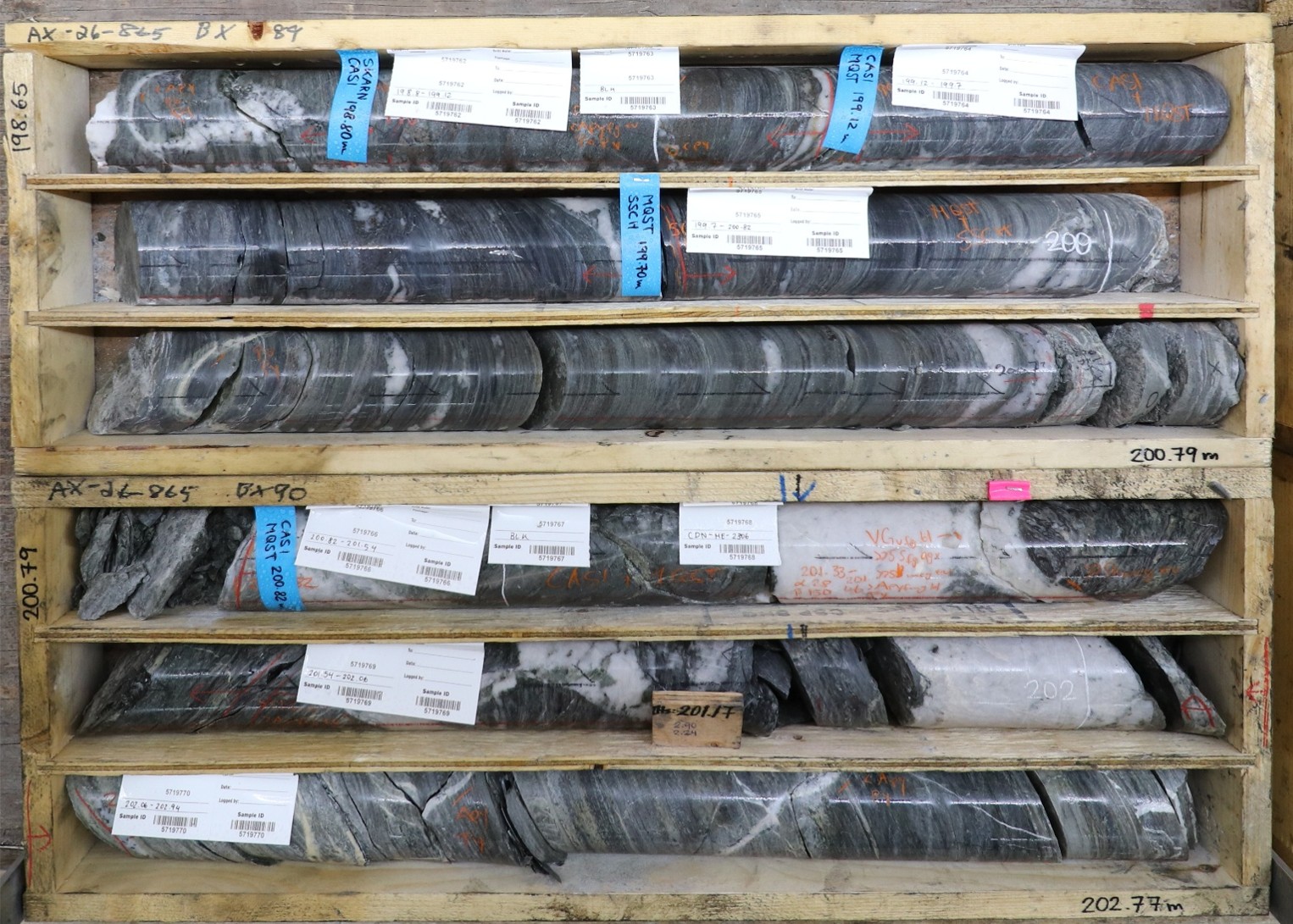
New Found Gold illustrates this transition clearly. The company’s ongoing grade-control drilling at Queensway is less about spectacular intercepts and more about continuity, geometry and mine planning confidence.
Grade-control drilling does not dominate headlines in the way discovery drilling does. But from a valuation perspective, it is arguably more important. It tightens dilution assumptions. It refines stope design. It improves confidence in mining sequence and cost forecasting.
The same emphasis on disciplined technical progression is visible at P2 Gold, where infill and expansion drilling at Gabbs is focused on resource refinement rather than speculative step-outs. Likewise, Tudor Gold continues to shape its bulk-tonnage system with an eye toward development readiness rather than headline scale alone.
Resource size matters. Resource quality, geometry and cost assumptions matter more.
Permitting & Development Readiness Are Strategic Multipliers
Regulatory clarity remains one of the most powerful valuation multipliers in the gold sector.
U.S. Gold Corp represents the strategic value of projects advancing with defined permitting frameworks and development timelines. In volatile markets, regulatory uncertainty often carries a heavier discount than geological uncertainty. Projects with clearer pathways to construction reduce binary risk and allow valuation models to focus on capex, returns and funding strategy rather than approval timelines.
As gold consolidates near highs, capital tends to rotate within the sector toward assets that combine geological robustness with regulatory predictability.
Commercial Production Shifts the Risk Profile
A particularly important shift in this cohort is at West Red Lake Gold Mines, which entered commercial production on January 1, 2026. This transition materially alters how the company should be evaluated. The conversation is no longer about restart risk or commissioning uncertainty. It is about margin delivery and operational stability.
For a newly commercial producer, investors focus on:
- Throughput consistency
- Grade reconciliation
- All-in sustaining cost performance
- Working capital management
- Early-quarter production variability
In a US$5,000 gold environment, the difference between US$1,300 and US$1,700 AISC has significant impact on free cash flow models. Early-stage producers often experience operational variability during initial quarters of commercial output. How management manages that variability, and how quickly performance stabilises, determines whether the company earns a full producer multiple or remains discounted as a transitional asset.
In the current macro environment, newly commercial producers offer something developers cannot: direct, real-time leverage to gold prices. But that leverage must be accompanied by cost discipline to sustain re-rating momentum.
Production Anchors the Valuation Framework
While developers dominate forward-looking narratives, producers provide the empirical benchmark.
Serabi Gold offers direct leverage to elevated gold prices. Realised price improvements translate into cash flow, strengthening balance sheets and funding internal growth. After delivering record production in 2025 and building cash materially while funding exploration, management is now targeting a move toward 60,000+ ounces in 2026 through incremental plant expansion funded entirely from cash flow. With debt retired and a commitment to return a portion of free cash flow to shareholders, Serabi is demonstrating what disciplined growth looks like in a US$5,000 gold environment.
In consolidation weeks like this one, producers often act as valuation anchors. Their margins demonstrate what gold at current levels actually means in operational terms.
Developers are then assessed relative to that benchmark: can they replicate similar margin profiles? At what capex intensity? Over what timeline? Emerging production narratives such as Cabral Gold sit between these categories. Transitioning toward construction and production shifts the valuation lens from exploration upside to execution delivery. In volatile gold markets, that transition phase is often the most sensitive to funding structure and timeline clarity.
Differentiation Is Accelerating
This week did not change the gold thesis. It clarified it.
The market is no longer rewarding the sector indiscriminately. Instead, it is differentiating across several dimensions:
- Funding certainty versus funding dependence.
- Engineering confidence versus conceptual scale.
- Permitting clarity versus regulatory uncertainty.
- Cash-flow visibility versus extended development timelines.
Across the developer and emerging producer cohort, the dispersion of outcomes is likely to widen as the cycle progresses.
Companies that can demonstrate disciplined capital allocation, conservative cost assumptions and credible development sequencing should benefit disproportionately if gold resumes its upward trajectory. Those reliant on perpetual equity raises or optimistic cost projections may struggle even in a supportive gold environment.
Looking Ahead
The next few weeks will continue to revolve around macro data - inflation prints, real yield movements and central bank signalling. These variables will influence gold’s short-term trajectory. But for equity investors, the more durable questions remain unchanged:
- Is the project financeable?
- Is the timeline credible?
- Is management aligned with long-term value creation?
- Can the asset generate attractive returns at conservative gold prices?
Gold at elevated levels creates opportunity. It does not eliminate risk.
The companies most likely to outperform in this phase are not simply those with the largest resources or the highest grades. They are those with capital clarity, engineering depth and disciplined execution pathways.
This week’s volatility was not a warning sign for gold. It was a reminder that in a US$5,000 gold world, execution - not narrative - defines value.
Analyst's Notes





Subscribe to Our Channel










Stay Informed






















