




i-80 Gold's 500-600Koz Nevada Blueprint Is Now Funded - Backed by Franco-Nevada Towards First Pour 2027


i-80 Gold secures major financing, issues full notice to proceed at Lone Tree autoclave. First gold pour targeted end-2027. Path to 500–600koz/yr mid-tier production now funded.
- i-80 Gold has closed a major financing package with institutional backing, including royalty giant Franco-Nevada, National Bank of Canada and Macquarie, removing the primary capital risk that had previously weighed on the stock and allowing the company to issue a full notice to proceed to engineering firm Hatch on the $430 million Lone Tree autoclave refurbishment.
- The Lone Tree facility is a formerly operating autoclave plant requiring refurbishment rather than greenfield construction, underpinned by a Level 2/3 feasibility study that provides a high degree of engineering certainty around the $430 million capital estimate and supports a first gold pour target of end-2027.
- i-80 is deploying approximately $80 million in drilling across Ruby/Archimedes Underground, Granite Creek, and Mineral Point in 2026, with the objective of converting resources to measured and indicated status and advancing feasibility studies to support the company's next two phases of production growth.
- Mineral Point already holds 3 million ounces in the measured and indicated category and a further 2 million ounces inferred, with a prefeasibility study targeted for early 2027 and gold production currently estimated for 2032, a timeline the company intends to accelerate by one to two years through its current drilling programme.
- i-80's three-phase production plan spanning Lone Tree, Mineral Point, and Granite Creek targets aggregate annual output of 500,000–600,000 ounces, a level that would firmly establish the company as a North American mid-tier gold producer with significant margin leverage to current gold prices.
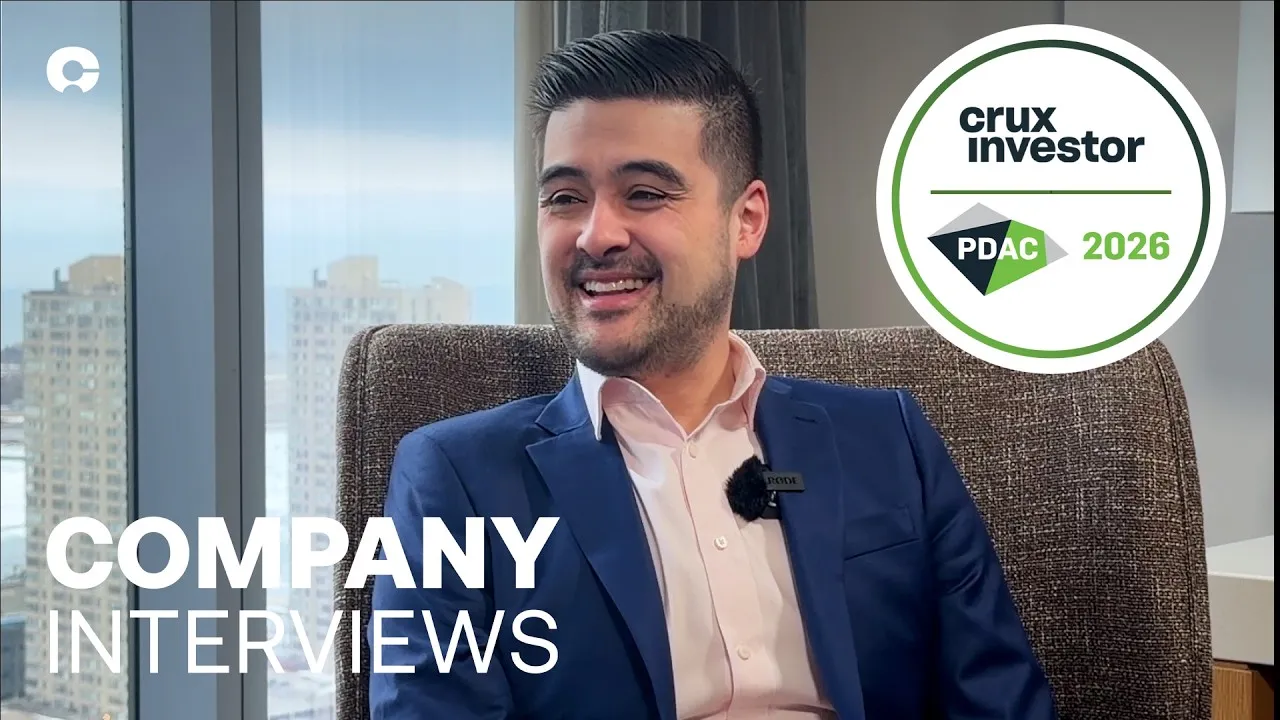
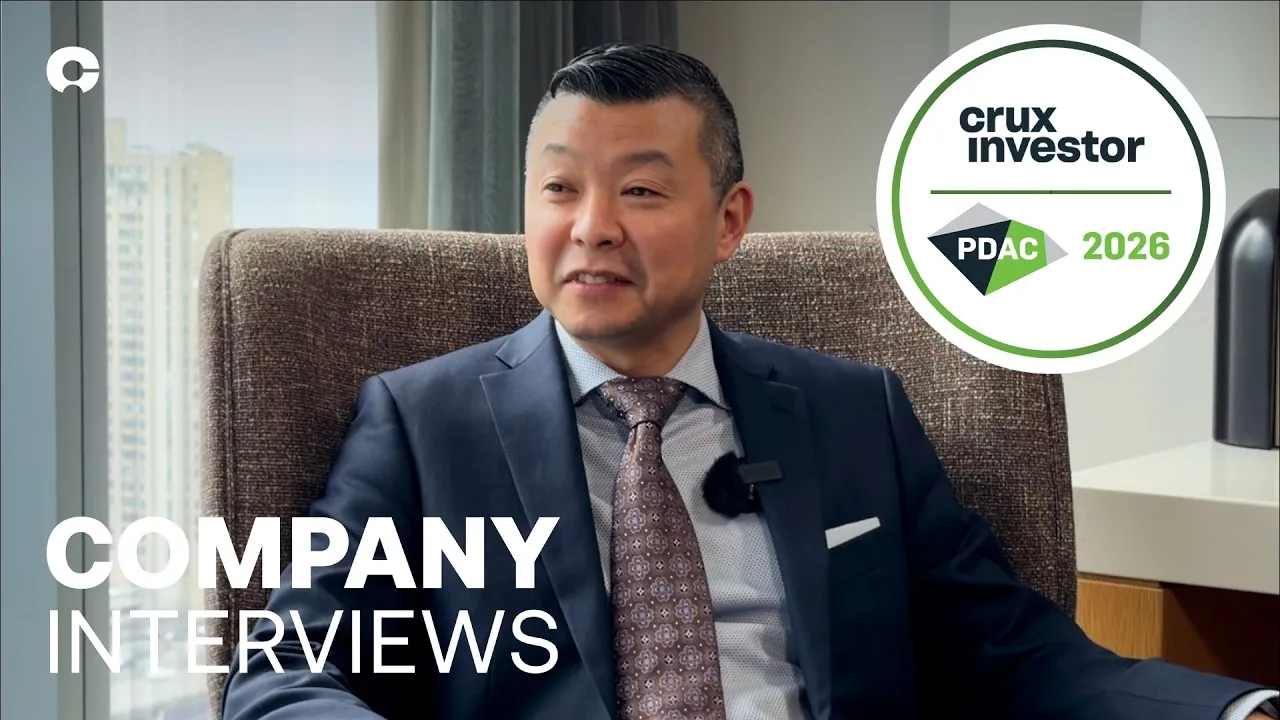
After some market scepticism around the complexity and capital requirements of its flagship Lone Tree autoclave project, the company has closed a significant financing package with institutional backing including royalty giant Franco-Nevada and issued a full notice to proceed to engineering firm Hatch. In a wide-ranging interview at PDAC 2026, Chief Operating Officer Paul Chawrun provided a detailed update on the company's construction progress, drilling programmes, and multi-stage production roadmap across its Nevada asset base.
The Financing Milestone
The financing event that preceded Chawrun's PDAC appearance marked a turning point for i-80 Gold. The company had previously been viewed by segments of the market as carrying execution risk given the scale of the Lone Tree project and the breadth of simultaneous workstreams. The close of the capital raise, supplemented by Franco-Nevada's involvement as a strategic partner, has addressed that concern directly.
"We went through comprehensive due diligence. We had a competitive process as well. There were a lot of interested parties to be part of this story, and now we're all about execution," Chawrun said.
The participation of Franco-Nevada, a well-regarded royalty company with a track record of rigorous project assessment, lends additional credibility to i-80's asset quality, particularly around the Mineral Point open pit opportunity, which Chawrun noted was a key driver of Franco-Nevada's enthusiasm for the partnership.
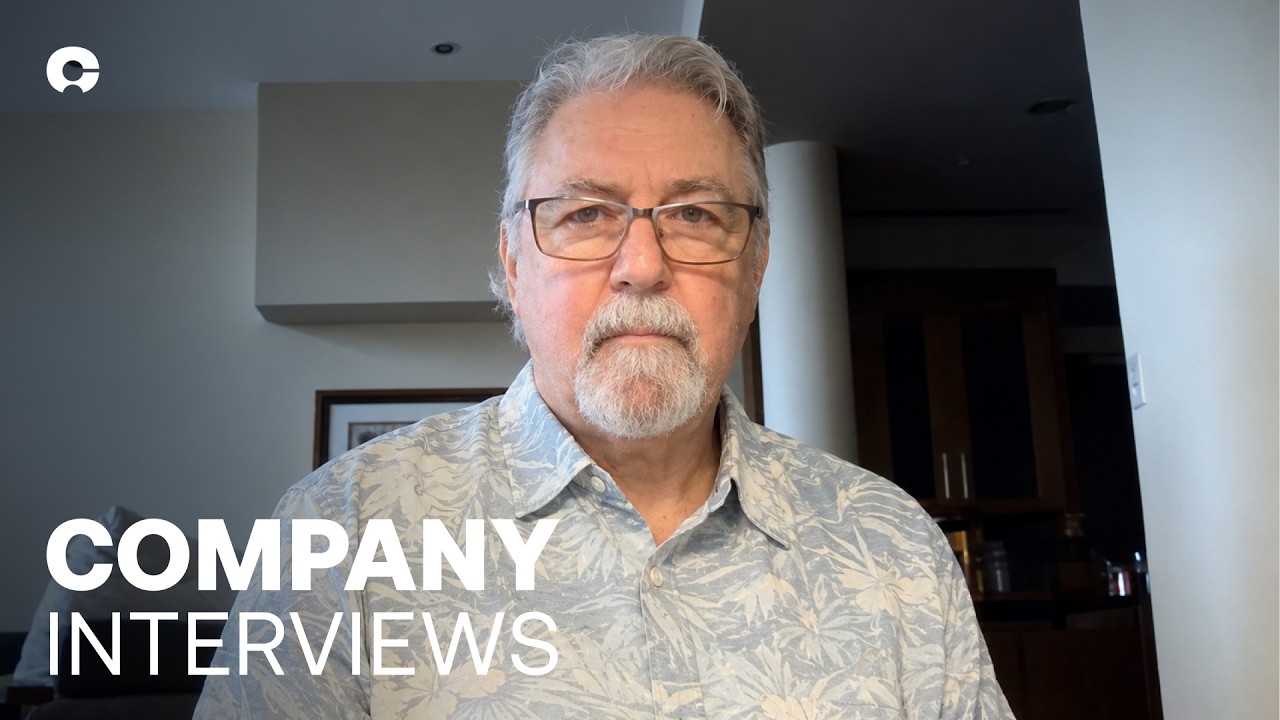
Interview with Paul Chawrun, COO of i-80 Gold Corp.
Lone Tree: Autoclave Refurbishment and Construction Timeline
The Lone Tree facility sits at the centre of i-80's near-term production strategy. It is a formerly operating autoclave plant that requires refurbishment rather than greenfield construction. This distinction is significant: the company is working with known infrastructure, known technology, and an experienced team that includes personnel who have operated this specific autoclave and others in the Nevada region.
The feasibility study was completed approximately two and a half years ago by Hatch and updated with results released in November 2025. The total capital cost is estimated at $430 million. Importantly, the study is classified as a Level 3 estimate meaning a high degree of detailed engineering underpins the cost figure, reducing the risk of material budget overruns typical of earlier-stage estimates.
i-80 has now issued a full notice to proceed Hatch to advance detailed engineering with board approval, and the execution plan has been brought forward from its previously indicated schedule. The target remains a first gold pour by the end of December 2027, with wet commissioning ahead of that and a ramp-up to full production in Q1 2028.
How the Autoclave Works
Chawrun offered a clear explanation of why the autoclave is essential to unlocking i-80's Nevada resources. The gold at these deposits is encapsulated within arseno-pyrite which cannot be recovered through conventional leaching without first liberating the gold particles.
"Our ore is currently going through an autoclave through a third-party partner so we know this stuff works and it's well-known technology in Nevada," Chawrun noted.
The autoclave applies heat, pressure, and oxygen in a pressure oxidation process to break down the sulphide host, after which the gold becomes amenable to standard carbon-in-leach (CIL) processing. This technology is well-established in Nevada, where similar facilities operate at other major mines.
Capital Deployment: $80 Million Drilling Programme
Beyond the Lone Tree refurb, a significant portion of the newly raised capital is being allocated to an aggressive drilling programme totalling approximately $80 million for the current year. The programme spans three key areas:
- Ruby Underground infill drilling is designed to move resources into the measured and indicated category, supporting a future feasibility study and reserve definition.
- Granite Creek has also seen a recent drilling campaign, which Chawrun confirmed has concluded after running longer than planned not due to disappointing results, but because the team kept encountering mineralisation and needed to define a logical stopping point. Approximately $10 million is being spent at Granite Creek this year, with feasibility study results from both Granite Creek and Cove expected in Q2 2026.
- At Mineral Point, the programme is focused on converting what is already a substantial resource base 3 million ounces measured and indicated plus 2 million ounces inferred into fully measured and indicated status, the prerequisite for a prefeasibility study. That prefeasibility study is targeted for early 2027.
Production Phases and the Path to Mid-Tier
Chawrun walked through the phased production roadmap with clarity. Phase one is Lone Tree, targeting 150,000–160,000 ounces per year from late 2027/early 2028 at margins he characterised as highly attractive at current gold prices. At $3,000/oz gold, the company estimates $150–200 million in net annual cash flow from Lone Tree alone. At current gold prices above that level, margins improve further.
Phase two involves the Granite Creek open pit and the Mineral Point open pit, both requiring full Environmental Impact Statement (EIS) permitting processes and feasibility studies, placing them approximately three to four years from production. Mineral Point's PEA published roughly a year ago indicated a production profile of 250,000–300,000 ounces per year at an all-in sustaining cost of approximately $1,500 per ounce.
Chawrun indicated those figures may be subject to optimisation. Construction initiation at Mineral Point is currently estimated for 2029, with gold production in 2032, though the capital programme is specifically designed to accelerate that by one to two years.
"The largest hurdle was for us to raise this capital. The technical work is ongoing, has been ongoing. We have the team," Chawrun adds.
Granite Creek adds a similarly material contribution. Combining all three production centres, i-80 targets an aggregate annual output of 500,000–600,000 ounces a range firmly in mid-tier producer territory.
The Investment Thesis for i-80 Gold
- Financing de-risked. The company has closed a major capital raise with institutional participation including Franco-Nevada, removing the primary concern that had weighed on the stock. The focus has shifted from "can they fund it" to "can they build it."
- High-quality engineering study. The $430 million Lone Tree capital estimate is supported by a Level 2/3 feasibility study prepared by Hatch reducing the probability of material cost overruns.
- Near-term cash flow catalyst. First gold pour is targeted for end of 2027, with a ramp-up in Q1 2028. At current gold prices well above the $5,000/oz modelling assumption, the economics are materially stronger than the base case.
- Attractive margins. Lone Tree is expected to generate $150–200 million in net annual cash flow at $3,000/oz gold. At current prices, the margin uplift is significant.
- Large resource base with upside. Mineral Point alone holds 3 million ounces M&I and 2 million ounces inferred. Conversion drilling in 2025 is designed to support a prefeasibility study in early 2027 and ultimately define reserves for a major open pit operation.
- Multi-phase growth to mid-tier. The company's three-phase plan targets 500,000–600,000 oz/year, a production level that would place it among North American mid-tier producers, with a step-change re-rating potential as each phase is de-risked.
- Experienced team and proven technology. The autoclave technology is well-established in Nevada. Key team members have operated this specific facility and comparable autoclaves in the region.
- Franco-Nevada validation. The royalty major's decision to participate following comprehensive due diligence functions as third-party validation of the asset quality, particularly for Mineral Point.
The Case for Domestic Production in a Supply-Constrained World
The broader investment backdrop for i-80 Gold is one of the most constructive for gold developers in over a decade. Spot gold prices have moved well above the $5,000 per ounce level, driven by a confluence of factors: persistent central bank buying, elevated geopolitical uncertainty, and growing concerns about the long-term credibility of fiat currencies in an era of structurally elevated sovereign debt.
For North American gold producers, there is an additional and increasingly material dimension: jurisdictional security. Western governments have renewed focus on domestic resource production as a strategic priority. Nevada, home to some of the world's most prolific gold districts, sits at the centre of this narrative. The state combines geological endowment with established processing infrastructure, experienced labour, and a regulatory environment that, while requiring rigorous permitting, is well understood by industry participants.
The autoclave processing model that underpins i-80's strategy speaks directly to this context. Refractory gold deposits are abundant in Nevada but require capital-intensive processing infrastructure that has historically been a barrier to development for smaller companies. The refurbishment of existing autoclave capacity, as i-80 is pursuing at Lone Tree, represents a more capital-efficient path to production than greenfield construction, and the availability of that infrastructure in Nevada is a significant competitive advantage.
TL;DR
i-80 Gold has closed its critical financing, issued a full notice to proceed on the $430 million Lone Tree autoclave refurbishment, and is targeting first gold production by 2027. With Franco-Nevada as a strategic partner, $80 million in drilling underway across three assets, and a phased roadmap to 500,000–600,000 ounces per year, the company has moved decisively from development-stage uncertainty into execution. The next milestones are construction progress and Q2 2026 feasibility results from Granite Creek and Cove. Execution risk remains as it does for any capital-intensive development project but the financing, team, and technical foundation are now in place.
Frequently Asked Questions (FAQs) AI-Generated
The Lone Tree facility is a former Newmont autoclave plant in Nevada that i-80 is refurbishing to process refractory gold ore. The gold at i-80's deposits is locked inside arseno-pyrite and cannot be recovered through conventional leaching. The autoclave uses heat, pressure, and oxygen to break down the sulphide host mineral, liberating the gold for standard carbon-in-leach processing. Without this facility, i-80 cannot economically process the majority of its Nevada resource base.
The estimate is supported by a Level 2/3 feasibility study completed by Hatch, one of the most rigorous engineering classifications available at this stage of project development. The majority of components are at Level 2, meaning detailed engineering work — including construction schedules, procurement strategies, and execution plans — has already been completed. This significantly reduces the risk of material cost overruns compared to earlier-stage estimates.
Franco-Nevada is a highly regarded royalty and streaming company known for conducting thorough due diligence before committing capital. Its decision to participate in the financing package — following a competitive process with multiple interested parties — functions as institutional validation of i-80's asset quality. Chawrun noted that Franco-Nevada was particularly excited about the Mineral Point open pit opportunity, suggesting confidence in the longer-term production pipeline beyond Lone Tree.
Phase one is Lone Tree, targeting 150,000–160,000 ounces per year from late 2027/early 2028. Phase two encompasses the Mineral Point and Granite Creek open pits, which require EIS permitting and full feasibility studies, with Mineral Point construction estimated to begin in 2029 and gold production in 2032 — potentially accelerated by one to two years. Combined, all three phases are expected to deliver 500,000–600,000 ounces per year, placing i-80 in mid-tier producer territory.
i-80's financial modelling for Lone Tree was based on approximately $3,000 per ounce gold, at which the company estimated $150–200 million in net annual cash flow from that facility alone. With spot gold prices now trading above that level, the margin profile has improved materially. The high fixed-cost nature of autoclave processing means that incremental revenue above the base case gold price flows through largely as additional free cash flow.
Analyst's Notes





Subscribe to Our Channel




.jpg)
Stay Informed






















