




Iran Truce Keeps Brent Near $72 & Russia's Diesel Ban Supports Refining Margins


Brent held near $72 after the US-Iran truce, but Russia's proposed diesel export ban and tight US inventories could keep diesel markets under pressure.
- Brent crude held near $72.20 per barrel, down 22% for the month, after the US and Iran agreed to halt hostilities and renew talks.
- US distillate fuel inventories remained about 10% below the five-year average despite a 3.1-million-barrel weekly build.
- Russian President Vladimir Putin said Russia faces a "temporary deficit" of fuel and is considering a full diesel export ban after Ukrainian drone strikes hit refineries in the Krasnodar and Yaroslavl regions.
- US crude oil inventories fell 6.1 million barrels to 412.1 million barrels, about 7% below the five-year average, despite crude imports rising to 5.6 million barrels per day.
- The dollar index held near 101.25, just below its one-year high, as markets priced in at least one Fed rate hike this year, reversing expectations for two rate cuts before the US-Iran conflict.
Ceasefire Lifts Equities & Pressures Safe Havens
Brent crude held near $72.20 per barrel, down 22% for the month, after the US and Iran agreed to halt hostilities and renew talks following a weekend of strikes triggered by an Iranian projectile that hit a cargo vessel in the Strait of Hormuz. Oil briefly spiked before falling to its lowest level since the US-Iran conflict began.
The de-escalation pushed European equities higher, with the STOXX 600 rising 0.1% and US S&P 500 futures climbing 0.7%. The dollar index held near 101.25, just below its one-year high, pushing gold down 0.6% to $4,061 per ounce and the yen to 161.80 per dollar, near levels that have previously triggered Bank of Japan intervention.
High Refinery Runs Fail to Rebuild Distillate Inventories
US refinery utilization reached 96.1% and crude inputs averaged 17.1 million barrels per day, yet distillate fuel inventories remained about 10% below the five-year average despite a 3.1-million-barrel weekly build.
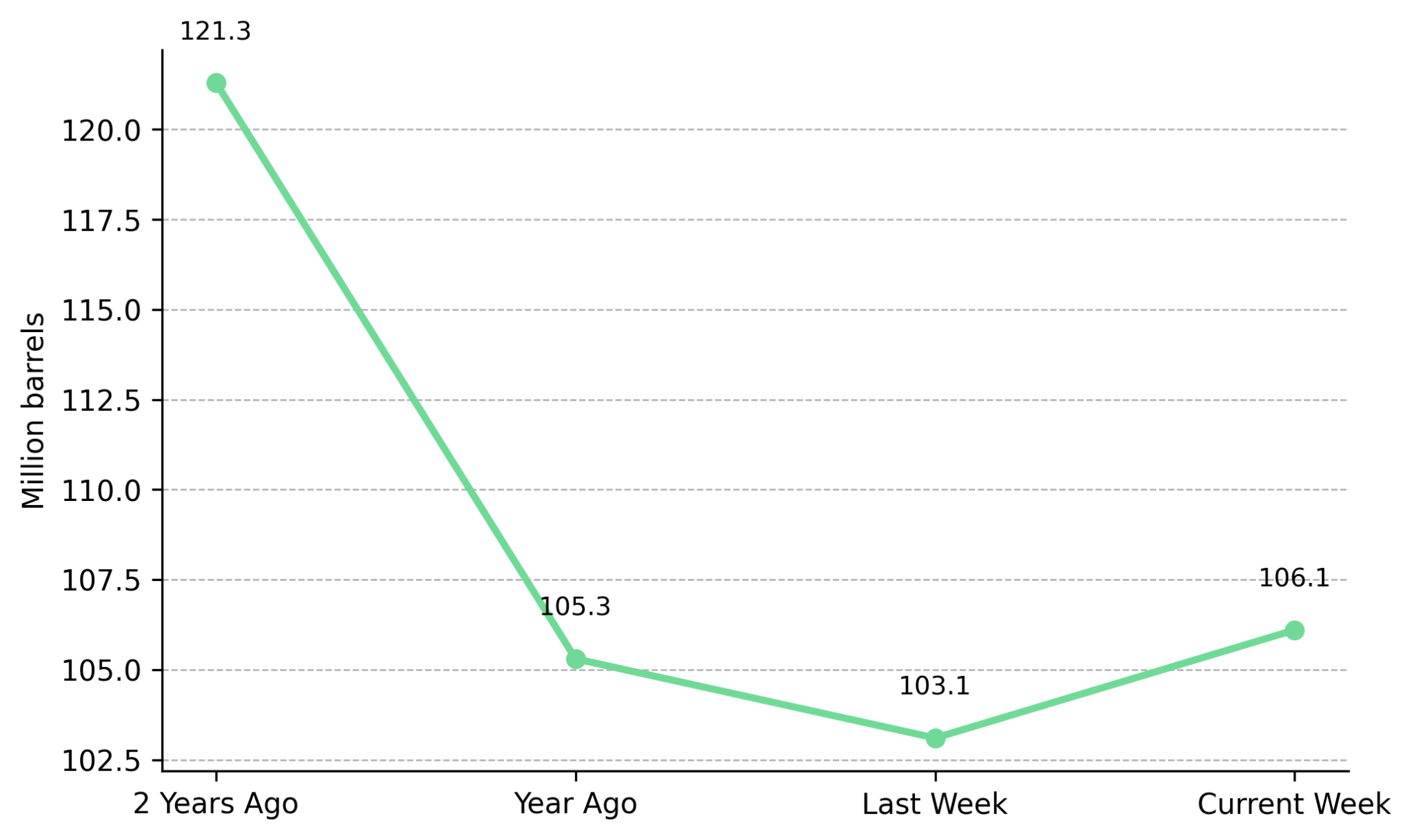
US crude inventories fell 6.1 million barrels to 412.1 million barrels, about 7% below the five-year average, despite crude imports rising to 5.6 million barrels per day. Russia's proposed diesel export ban could keep diesel prices supported even if Brent crude remains lower, because US distillate inventories are already below the five-year average.
Drone Strikes Deepen Russia's Fuel Deficit
Russian President Vladimir Putin said Russia faces a "temporary deficit" of fuel after Ukrainian drone strikes damaged refineries in the Krasnodar and Yaroslavl regions, and is considering a full diesel export ban.
Mohit Kumar said lower oil prices could support the global economy and added that growth-sensitive sectors could outperform if oil prices remain low. That outlook depends on the ceasefire holding and oil prices remaining low.
Jose Torres said rising infrastructure costs have firms "scrambling for cash on their balance sheets" and added that traders have shifted toward defensive and cyclical stocks, making it harder to isolate the impact of lower oil prices on energy equities.
Diesel Supply Tightness Favors Refiners Over Crude Producers
Oil producers and refiners face different market drivers as crude prices fall and diesel supplies remain tight. Crude producers benefit if the ceasefire holds and Brent remains near $72.20 per barrel.
Refiners with diesel-heavy product mixes face tighter diesel supply because US distillate inventories are already 10% below the five-year average, and a Russian export ban would reduce available supply further even if Brent crude remains lower. If Russia enacts the diesel export ban and Ukrainian strikes continue reducing Russian refinery output, global diesel supply would tighten while US distillate inventories remain below the five-year average, supporting distillate crack spreads.
EIA Inventory Data & Russia's Diesel Decision Drive the Next Market Move
Brent could remain near $72.20 per barrel, down 22% for the month, if the US-Iran truce holds after the Strait of Hormuz tanker strike. The dollar index at 101.25 and expectations for a Fed rate hike continue to pressure commodities, including oil and gold.
Diesel supply would tighten if Russia enacts a full diesel export ban or Ukrainian strikes continue disrupting refineries in the Krasnodar and Yaroslavl regions, while US distillate inventories remain 10% below the five-year average. The next catalysts are US distillate inventory data and any Kremlin decision on a diesel export ban, which will show whether the recent 3.1-million-barrel inventory build continues.
Analyst's Notes





Subscribe to Our Channel







Stay Informed


