




Gold Falls 0.7% Even as Fed Hike Odds Drop to 36%, Keeping the Bull Case Intact



Gold fell 0.7% as Fed hike odds dropped to 36%, while central-bank buying and bar-and-coin demand support the longer-term bull case.
- Spot gold fell 0.7% to $4,373.29/oz as cooler US inflation cut September Fed hike odds to 36% from 55% a week earlier.
- Silver, platinum and palladium also fell as pre-inflation positioning unwound, pointing to broad profit-taking rather than weaker metal-specific demand.
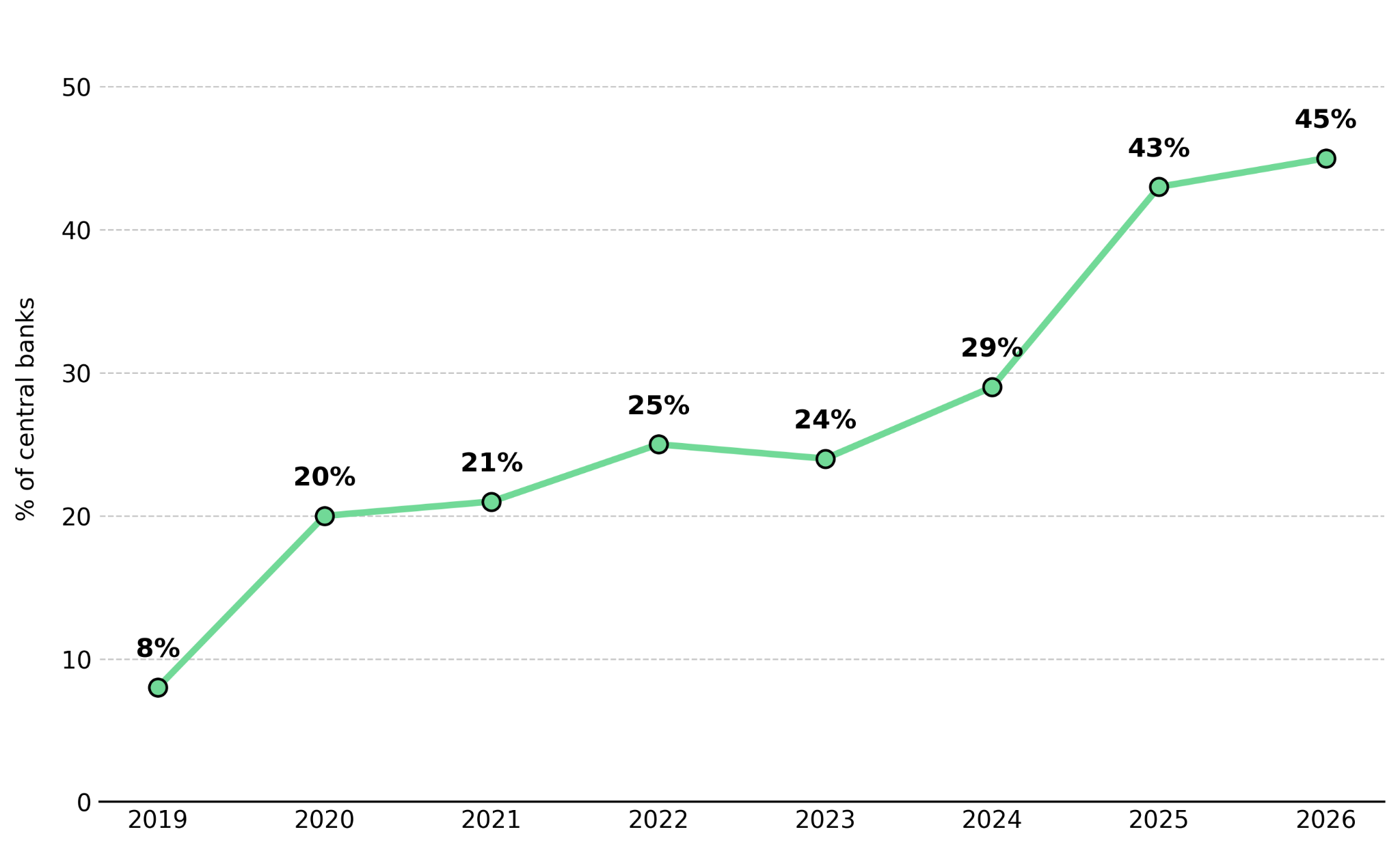
- Central banks bought 244 tonnes net in Q1 2026, while a record 45% plan to increase gold reserves within 12 months.
- No single data release can time the pullback, making position sizing more reliable than trading around one inflation print.
- A close above $4,387/oz would strengthen the near-term recovery signal, while continued central-bank buying would reinforce the longer-term gold thesis.
Cooling Inflation Cuts Fed Hike Odds, While Profit-Taking Tests Gold Support
Spot gold fell 0.7% to $4,373.29/oz after briefly rising about 1% to a two-month high. December US gold futures fell 0.8% to $4,430.20/oz, confirming broader short-term selling. US CPI slowed to 3.4% year over year from 3.5%, reducing expectations for another Fed hike.
Gold broke below $4,387 support as profit-taking unwound positions built ahead of the inflation report, according to independent analyst Ross Norman. CME FedWatch cut the implied probability of a September hike to 36% from 55% a week earlier, reducing the rate pressure that competes with non-yielding gold.
Broad Metals Selling Signals Positioning Reset, Preserving Gold’s Reserve-Asset Case
Silver fell 1.36% to $64.41/oz, platinum 1.93% to $1,722.65/oz and palladium 2.16% to $1,339.87/oz, extending the selloff across precious metals. The synchronized decline points to a broad positioning unwind rather than weaker physical demand for any single metal.
Venezuela’s dispute over 31 metric tons of gold shows how bullion can retain strategic value when currency purchasing power falls. The Bank of England continues to hold roughly 31 metric tons of Venezuelan gold that Caracas cannot access. Caracas is targeting the roughly $4 billion reserve for earthquake reconstruction as annual inflation reached 575.9%, reinforcing gold’s role as a reserve asset when domestic currency loses purchasing power.
45% of Central Banks Plan More Gold, Supporting Demand Through Short-Term Volatility
Central-bank gold demand operates on a longer horizon than a single inflation print. Central banks bought 244 tonnes net in Q1 2026, while a record 45% plan to increase reserves within 12 months, up from 43% last year. WGC Global Head of Central Banks Shaokai Fan said the survey shows more reserve managers view gold as an “active, strategic allocation.” WGC and the Artisanal Gold Council also signed a five-year agreement to improve gold traceability, expanding the infrastructure needed for compliant institutional sourcing.
42% Bar-and-Coin Growth Offsets Jewelry Weakness, Favoring Investment Exposure
Retail bar and coin demand rose 42% year over year to 474 tonnes in Q1 2026, the second-highest quarter on record, while high prices pushed US jewelry demand to a record quarterly low. High gold prices are supporting investment demand while reducing jewelry volumes, separating financial exposure from consumer demand.
Portfolio construction should distinguish gold investment exposure from jewelry demand rather than treat both as one trade. Independent analyst Ross Norman sees longer-term upside in gold but says a stronger safe-haven bid for the dollar is delaying the next advance.
Neither one inflation print nor the September Fed decision can reliably time when gold’s pullback will end. Position sizing offers more control than timing one release, while WGC demand data tracks trends that develop over quarters.
$4,387 Reclaim Restores Gold Support, Watch Fed Odds Before Adding Exposure
Gold remains under pressure as safe-haven demand favors the dollar, while profit-taking drives the near-term pullback. Longer-term demand remains supportive, with a record 45% of central banks planning to increase gold reserves within 12 months.
A close above $4,387/oz would reclaim near-term technical support, while January’s $5,405/oz record remains a longer-term reference point. US PPI is the next macro catalyst because its effect on Fed hike odds could change rate pressure on non-yielding gold. A rebound in September hike odds would increase near-term pressure, while a further decline would strengthen the case for using gold weakness to build exposure.
Analyst's Notes





Subscribe to Our Channel






Stay Informed






















