




17.4 Million-Barrel US Crude Build Defies Forecast, Pulling Brent Below $89


A 17.4 million-barrel US crude build pressures oil prices, while tight distillate stocks keep diesel costs and open-pit mining margins in focus.
- US commercial crude inventories rose 17.4 million barrels to 424.4 million, the largest weekly gain since January 2023 and 18.8 million barrels above the forecast change.
- Brent fell 91 cents to $88.07 a barrel and West Texas Intermediate (WTI) fell 96 cents to $82.31 despite the Hormuz blockade, as the US inventory build offset part of the geopolitical risk premium.
- Vessel crossings through Hormuz, excluding container ships, fell to five, the lowest in three weeks, confirming that physical transit remains constrained despite lower crude prices.
- The International Energy Agency (IEA) estimates a 1.8 million-barrel-per-day global deficit in the third quarter, meaning the 17.4 million-barrel US build does not confirm global oversupply.
- Distillate inventories stand at 107.1 million barrels, 12% below the five-year average, while demand runs 1.9% above last year, leaving diesel prices vulnerable to increases that would raise open-pit mining costs.
Brent Falls Below $89 as US Crude Build Meets Hormuz Constraints, Preserving Rebound Potential
US commercial crude inventories rose 17.4 million barrels to 424.4 million, the largest weekly gain since January 2023 and 18.8 million barrels above the forecast change. Brent fell 91 cents, or 1%, to $88.07 a barrel, while WTI fell 96 cents, or 1.2%, to $82.31 despite the Hormuz blockade, showing the inventory build outweighed part of the geopolitical risk premium.
Vessel crossings through the Strait of Hormuz, excluding container ships, fell to five, the lowest in three weeks, while pre-attack traffic averaged 130 ships of all types per day. The simultaneous US inventory build and restricted Hormuz traffic show that rising domestic stocks do not mean the global supply constraint has cleared.
Imports Rise 1.14 Million Barrels Daily as Exports Fall, Separating Stock Build From Demand Weakness
The 17.4 million-barrel build was driven by trade flows, with US crude imports rising 1.14 million barrels per day to 7.3 million and exports falling 627,000 barrels per day to 3.058 million. Domestic production held at 13.805 million barrels per day, 478,000 above last year, while refineries ran at 96.2% capacity and processed 17.2 million barrels per day, showing the additional crude accumulated in commercial inventories rather than from weaker refinery activity.
Hormuz remains closed as Iran conditions reopen on ending the US naval blockade, sanctions relief, US troop withdrawals, and war reparations, while no progress has been made on reviving the interim deal. Strategic Petroleum Reserve holdings also fell 6.1 million barrels to 298.7 million, 104.5 million below last year, reducing the US emergency supply cushion while the waterway remains blocked.
1.8 Million-Barrel-Per-Day Deficit Supports Crude Prices Despite Rising US Inventories
One week of US inventory data does not establish global oversupply. Antonio Di Giacomo, Senior Market Analyst at XS, said sustained commercial builds would weaken the US demand outlook and reduce price support from restricted Hormuz flows.
In contrast, the IEA estimates a 1.8 million-barrel-per-day global deficit in the third quarter. Soojin Kim, Market Analyst at Mitsubishi UFJ Financial Group (MUFG), identifies Hormuz as the key supply variable, arguing that progress in restoring traffic through the strait would be the main catalyst for oil prices.
Diesel at $3.910 Cuts Open-Pit Fuel Costs, Supporting Near-Term Mining Margins
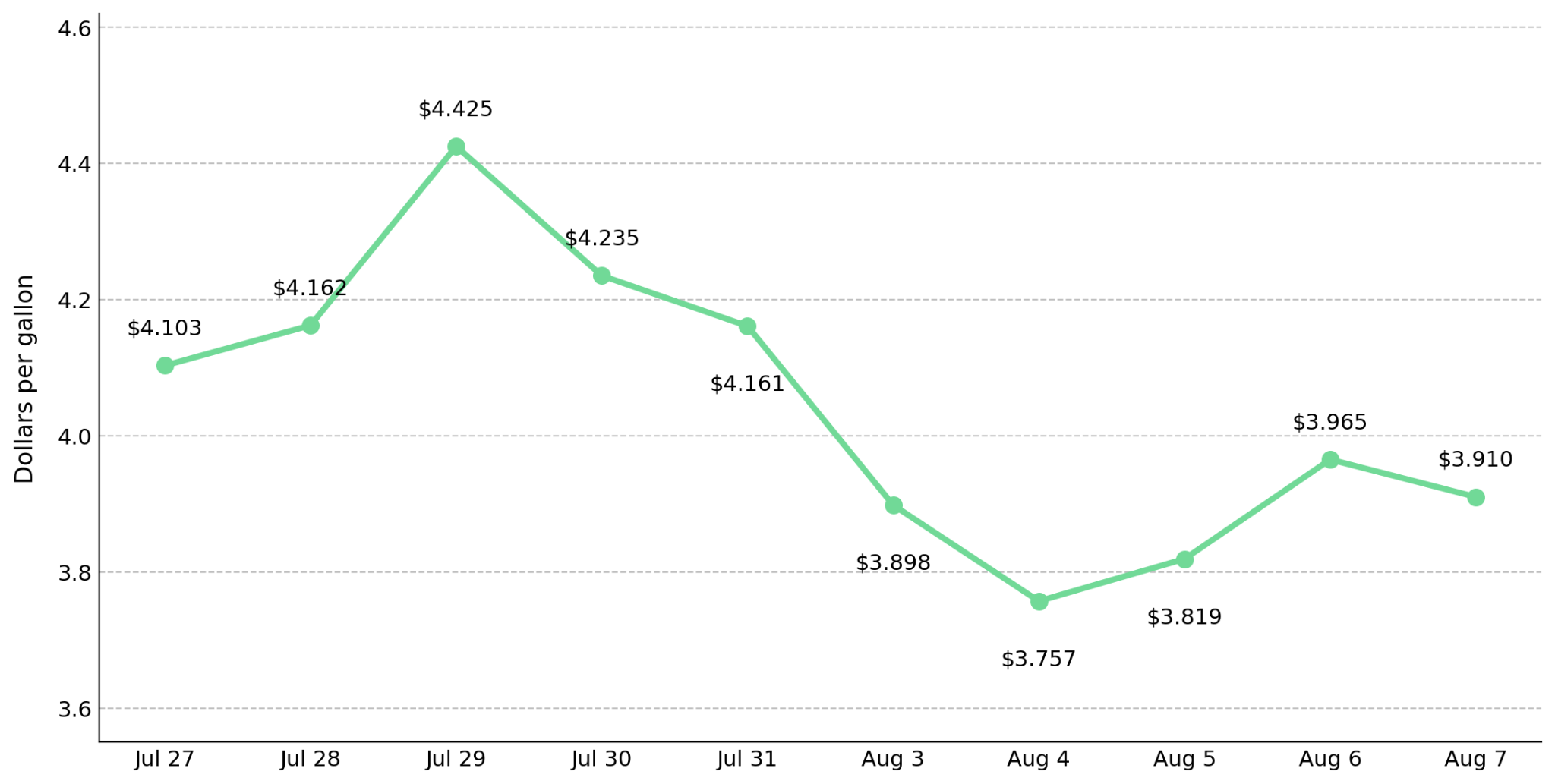
Fuel prices directly affect US mining costs because diesel accounts for about 34% of total industry energy use and 87% of materials-handling energy use, while about 90% of US mines are open pit. Ultra-low sulfur diesel at New York Harbor fell from $4.161 to $3.910 per gallon, while national retail diesel fell $0.091 to $5.257 per gallon, reducing near-term fuel costs despite remaining $1.503 above last year.
Regional diesel prices determine how much mines benefit from lower fuel costs. On-highway diesel averaged $6.033 per gallon in the West Coast district, $0.852 above the Midwest at $5.181. The dataset places most sampled copper mines in Arizona and gold mines in Nevada, where fuel costs are higher, while Minnesota and Michigan iron ore operations benefit from lower Midwest diesel prices.
Conflicting US and Iranian statements make the timing of a Hormuz reopening uncertain. Until traffic resumes, weekly distillate inventories and disclosed unit costs provide measurable signals of whether lower diesel prices are still supporting mining margins.
Check 12% Below-Average Distillate Stocks as Further Draws Threaten Mining Margins
US commercial crude inventories stand at 424.4 million barrels, about 2% below the five-year average, while Brent remains below $89. Lower diesel prices are reducing fuel costs for diesel-intensive open-pit mines versus July 31, with the largest benefit in regions recording the steepest price declines.
Distillate inventories stand at 107.1 million barrels, about 12% below the five-year average, while product supplied runs 1.9% above last year. Ultra-low sulfur diesel at New York Harbor rising above $4.161 per gallon would raise fuel costs and pressure open-pit mining margins.
The EIA Weekly Petroleum Status Report provides the next measurable signal each Wednesday. A further distillate draw below 107.1 million barrels, already 12% below the five-year average, would increase the risk of higher diesel prices and weaker open-pit mining margins.
Analyst's Notes





Subscribe to Our Channel




Stay Informed


