IsoEnergy: Grade, Scale, & Timing in Uranium's Supply Crisis



IsoEnergy holds 133 million pounds Measured and Indicated uranium resources across Canada, the US, and Australia, with near-term production potential and C$155.6M cash to execute.
- IsoEnergy holds pro forma Measured and Indicated (M&I) resources of 133 million pounds (Mlbs) of uranium trioxide (U3O8) and 39 Mlbs Inferred across tier-one jurisdictions in Canada, the US, and Australia, per IsoEnergy's February 2026 corporate presentation.
- Its flagship Hurricane Deposit in Saskatchewan's Athabasca Basin holds an Indicated Mineral Resource Estimate (MRE) of 48.61 Mlbs U3O8 grading 34.5%, making it the world's highest-grade published Indicated uranium resource, confirmed by the National Instrument 43-101 (NI 43-101) technical report effective July 8, 2022.
- Near-term production potential centres on the Tony M Mine in Utah, where a 2,000-ton bulk sampling program is underway with completion expected in April 2026.
- Pro forma cash stands at approximately C$155.6 million (M), with an equity portfolio valued at approximately C$55.8M as of February 18, 2026, backed by NexGen Energy at approximately 30% standalone ownership, per IsoEnergy's February 2026 corporate presentation.
- The World Nuclear Association (WNA) 2025 World Nuclear Fuel Report projects global uranium reactor requirements rising from approximately 175 Mlbs U3O8 in 2024 to 391 Mlbs by 2040 in the Reference Scenario, a 124% increase, with IsoEnergy's own corporate presentation noting that total identified supply covers only 46% of that 2040 reference demand figure.
Why the Uranium Market Demands Attention Right Now
Uranium spot prices are trading near US$86.05 per pound as of mid-March 2026, according to market pricing data, up more than 33% year-over-year. The move is not speculative. It reflects a structural market that the WNA's 2025 World Nuclear Fuel Report describes as increasingly dependent on new primary supply that has yet to be committed. Global nuclear capacity stood at 398 gigawatts electric (GWe) as of June 2025. Under the WNA Reference Scenario, that figure is projected to reach 746 GWe by 2040, a near-doubling within fifteen years. The Upper Scenario puts that number at 966 GWe. Both projections require uranium supply that does not yet exist in the development pipeline.
The WNA is direct on the consequences: primary uranium supply alone will not meet demand even in the near term. Secondary sources, including inventories and recycled material, are declining in their ability to bridge the gap. Analyst research noted that the WNA's supply forecast had already missed five key production cuts announced after its June 2025 data cutoff, meaning the market is likely tighter than headline figures suggest. The world's largest uranium producer reduced its 2026 nominal production capacity to approximately 77 Mlbs from 85 Mlbs previously, according to the same research.
That divergence between flat spot and rising long-term pricing is a signal that the market's structural repricing is underway well before utilities step in aggressively. For investors, the window to position ahead of that contracting cycle is narrowing.
A Portfolio Built for the Long Game
IsoEnergy is a growth-oriented, diversified uranium company focused in tier-one jurisdictions. Its portfolio spans near-term production potential, mid-stage development assets, and long-range exploration across Utah and Virginia in the US, Saskatchewan and Quebec in Canada, and Western Australia, Queensland, and South Australia in Australia, the latter pending completion of its announced acquisition of Toro Energy.
The leadership team carries deep institutional credibility. Chairman Richard Patricio co-founded both NexGen Energy and IsoEnergy and serves as Chief Executive Officer (CEO) of Mega Uranium. Vice Chairman Leigh Curyer co-founded NexGen Energy and served as its CEO. CEO and Director Phil Williams co-founded and formerly led Uranium Resources Corp and Consolidated Uranium Resources. Chief Financial Officer (CFO) Graham du Preez previously served as CFO of Uranium One.
As of February 18, 2026, IsoEnergy's pro forma basic market capitalisation stands at approximately C$936.8M on a combined basis with Toro Energy, with pro forma cash of approximately C$155.6M and an equity portfolio valued at approximately C$55.8M, per IsoEnergy's corporate presentation. All eight sell-side analysts covering the stock carry Buy ratings, with price targets ranging from C$18.00 (TD Securities, analyst Craig Hutchison) to C$28.25 (Red Cloud Securities, analyst David Talbot), against a share price of C$14.42 as of February 18, 2026.
Hurricane Deposit in Saskatchewan
At the centre of IsoEnergy's investment case sits the Hurricane Deposit on the Larocque East property in Saskatchewan's eastern Athabasca Basin. The NI 43-101 MRE, effective July 8, 2022 and prepared by SLR Consulting from 52 diamond drill holes totalling 20,387 metres, assigns the deposit a Total Indicated resource of 48.61 Mlbs U3O8 grading 34.5%, based on 63,800 tonnes. The high-grade domain alone contains 43.89 Mlbs at an average grade of 52.1% U3O8. The Total Inferred resource stands at 2.66 Mlbs U3O8 grading 2.2%, based on 54,300 tonnes, per IsoEnergy's July 18, 2022 press release.
To put that grade in perspective: Cameco's Cigar Lake mine, widely regarded as the world's highest-grade operating uranium mine, carries a grade of approximately 14.05% U3O8. Denison's Phoenix deposit grades approximately 19.13% U3O8. Hurricane's 34.5% does not sit incrementally above those figures. It occupies a categorically different grade range. Then-President and CEO of IsoEnergy, Tim Gabruch, made the distinction plain at the time of the MRE announcement.
Hurricane sits approximately 40 kilometres (km) from the operating McClean Lake Mill, accessible by existing roads and power infrastructure, with no water cover at surface and a relative depth of 325 metres (m). That location advantage becomes increasingly material as Cigar Lake, the basin's largest active mine, faces projected production declines from approximately 18 Mlbs per annum through 2034, dropping to approximately 7 Mlbs in 2035 and approximately 1 Mlbs in 2036, based on figures cited from Cameco's 2023 technical report in IsoEnergy's February 2026 corporate presentation. IsoEnergy's 2026 winter drill program, approximately 5,200m in up to 13 holes, is currently underway along the Hurricane Main and South trends.
Adjacent activity reinforces Hurricane's strategic position. In its Annual Information Form dated February 13, 2026, Cameco noted that its neighbouring Dawn Lake joint venture (JV) with Orano had continued to expand the footprint of known uranium mineralisation with additional high-grade intercepts, stating the results were comparable to those of other mines in the basin.
Near-Term Production: Tony M Mine & the Utah Portfolio
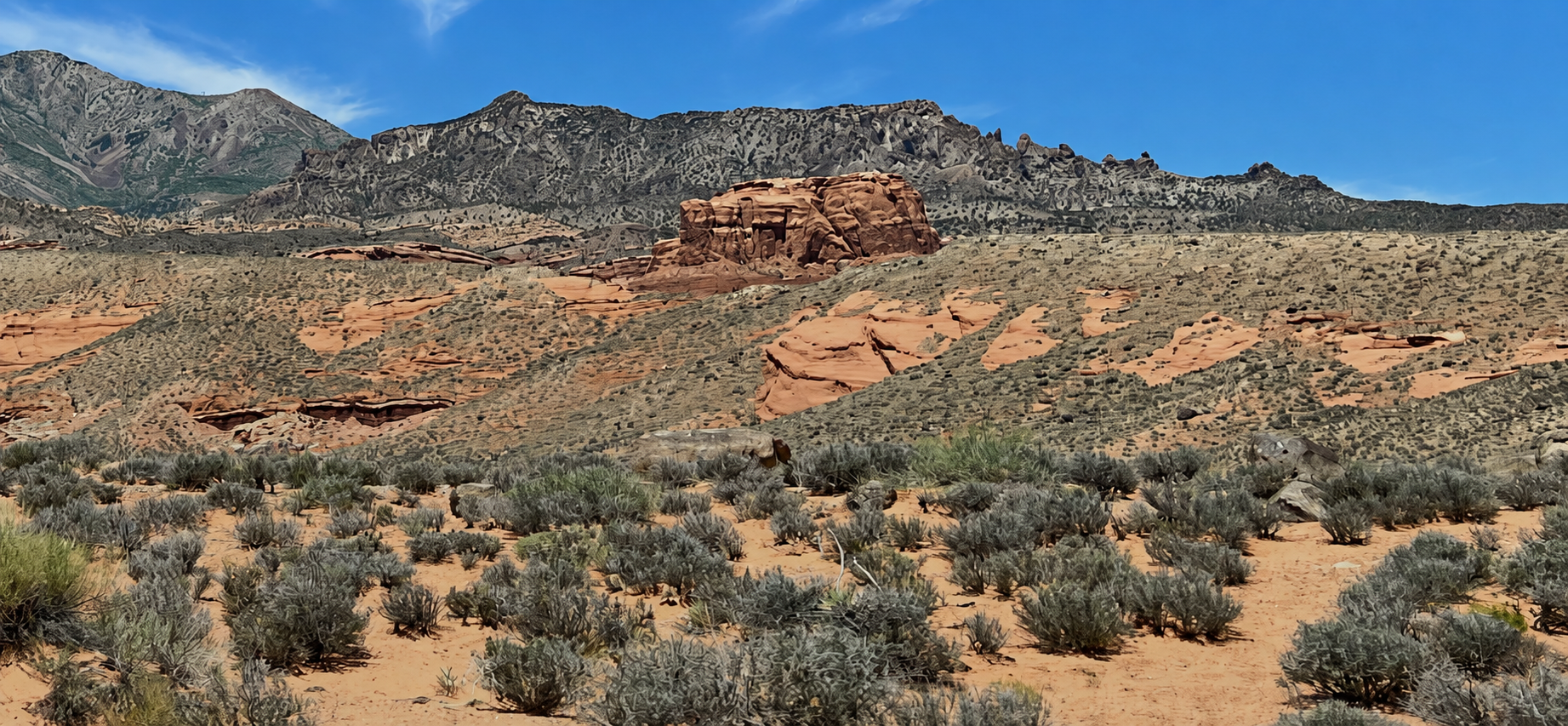
While Hurricane anchors the long-term valuation story, the Tony M Mine in Utah's Henry Mountains district is where IsoEnergy may generate its first production revenues. The mine holds a current NI 43-101 MRE, effective September 9, 2022 and prepared by SLR Consulting, of 1,185,000 Indicated tons grading 0.28% U3O8, containing 6,606,000 lbs, plus 404,000 Inferred tons grading 0.27%, containing 2,218,000 lbs, per IsoEnergy's February 2026 corporate presentation.
Key state and federal operating permits are already in place across the Utah portfolio. IsoEnergy estimates these existing permits save three to five years and more than US$1 million per mine in development costs compared to a greenfield permitting process. The 2,000-ton bulk sampling program underway at Tony M is expected to complete in April 2026, with ore processed at the White Mesa Mill. Completed beneficiation test work has demonstrated uranium recovery above 90%, with High-Pressure Slurry Ablation upgrading to approximately 25% of original mass. A completed Enhanced Evaporation Study confirmed that Landshark evaporators eliminate the need for evaporation-pond expansion, reducing permitting timelines and capital requirements further.
The Utah portfolio also includes the Daneros Mine and Rim Mine, all within trucking distance of the White Mesa Mill operated by Energy Fuels. Toll milling agreements are already in place. Together, the three Utah assets form a production pipeline that most pure-play uranium developers at this stage of development cannot match.
Expanding the Base: Toro Energy & the Wiluna Uranium Project
IsoEnergy's announced acquisition of Toro Energy adds a third geographic leg to the portfolio. The Wiluna Uranium Project in Western Australia holds Total Wiluna Project M&I resources of 77.8 million tonnes (Mt) grading 403 parts per million (ppm) U3O8, containing 69.1 Mlbs, plus 10.0 Mt grading 206 ppm containing 4.5 Mlbs Inferred. The Wiluna Regional package adds a further 17.3 Mt grading 236 ppm for 9.0 Mlbs M&I and 45.6 Mt grading 558 ppm for 23.2 Mlbs Inferred, per Toro Energy's Joint Ore Reserves Committee (JORC) compliant resource announcement dated September 24, 2024. These figures have not been converted to NI 43-101 standards.
Deposits sit at approximately 10m depth, suited for open-pit mining and alkaline leach processing. Japan Australia Uranium Pty and Itochu hold the right to acquire a 35% interest in Lake Maitland for US$39.6 million, a pre-existing offtake and financing pathway that materially derisks post-acquisition development. Australia holds the world's largest share of uranium resources and ranks as its fourth-largest producer, per the WNA. IsoEnergy cited 2024 Fraser Institute rankings placing Western Australia 17th out of 82 jurisdictions globally for investment attractiveness and 18th for policy perception.
The Investment Thesis for IsoEnergy
- Hurricane's Indicated MRE of 48.61 Mlbs grading 34.5% U3O8 is the world's highest-grade published Indicated uranium resource, a grade advantage that directly improves project economics across commodity price cycles.
- Tony M's existing permits, 90%-plus uranium recovery in completed test work, and an April 2026 bulk sample completion create a realistic near-term production decision catalyst within the current calendar year.
- Pro forma cash of approximately C$155.6M and an equity portfolio of approximately C$55.8M provide the financial runway to advance multiple assets concurrently without near-term reliance on dilutive equity raises.
- The Toro Energy acquisition adds 69.1 Mlbs M&I at Wiluna with a Japanese offtake partner already in place, diversifying both geography and development-stage risk.
- All eight covering analysts rate IsoEnergy a Buy, with price targets ranging from C$18.00 to C$28.25 against a share price of C$14.42 as of February 18, 2026.
- Investors seeking uranium exposure should monitor the April 2026 Tony M bulk sample results and the 2026 winter Hurricane drill program as the two most proximate re-rating catalysts.
IsoEnergy is not a single-asset story or a speculative explorer. It is a methodically built, multi-stage uranium developer with the world's highest-grade Indicated resource in Saskatchewan, a near-term production-ready asset in Utah, a growing Australian base with Japanese offtake interest already in place, and a leadership team with a track record of building and exiting uranium companies. The structural supply deficit described by the WNA, with IsoEnergy's own presentation noting that total identified supply covers just 46% of 2040 reference demand, provides the macro foundation. Uranium spot prices near US$86/lb as of mid-March 2026, up more than 33% year-over-year per CarbonCredits.com, provide the pricing backdrop.
With C$155.6M in cash, unanimous Buy-rated analyst coverage, and multiple near-term catalysts due in 2026, the stock's discount to consensus targets reflects the development-stage discount that tends to narrow as milestones are delivered, not a judgment on underlying asset quality.
TL;DR
IsoEnergy is a well-funded, diversified uranium developer with the world's highest-grade Indicated uranium resource, near-term US production optionality, and a growing Australian asset base, positioned at the intersection of a structural supply deficit and rising global nuclear demand.
FAQs (AI-Generated)
Analyst's Notes





Subscribe to Our Channel






Stay Informed