




2026 Outlook: Lithium Ionic Eyes Mid-2026 Construction Start as Prices Triple and Financing Falls Into Place


.webp)
Lithium Ionic advances low-cost Brazilian project toward mid-2026 construction with financing stack near complete. Market timing favors near-term producers as prices triple.
- Lithium prices have tripled since mid-2025, while Lithium Ionic's stock has doubled, driven by faster-than-expected energy storage demand and supply constraints
- The company is assembling a comprehensive financing stack for its $191 million capex project, with strong interest from lenders, offtake partners, and prepayment opportunities
- At $600 all-in sustaining cost, the project remains viable even during market downturns, differentiating it from higher-cost competitors unable to advance in volatile conditions
- Construction is expected to begin mid-2026, with production targeted for 18-24 months thereafter, leveraging the experienced Sigma team that built similar projects
- The company is working through a new regional permitting process with strong federal and state government support; management expects to announce permit completion early in the new year alongside the financing stack
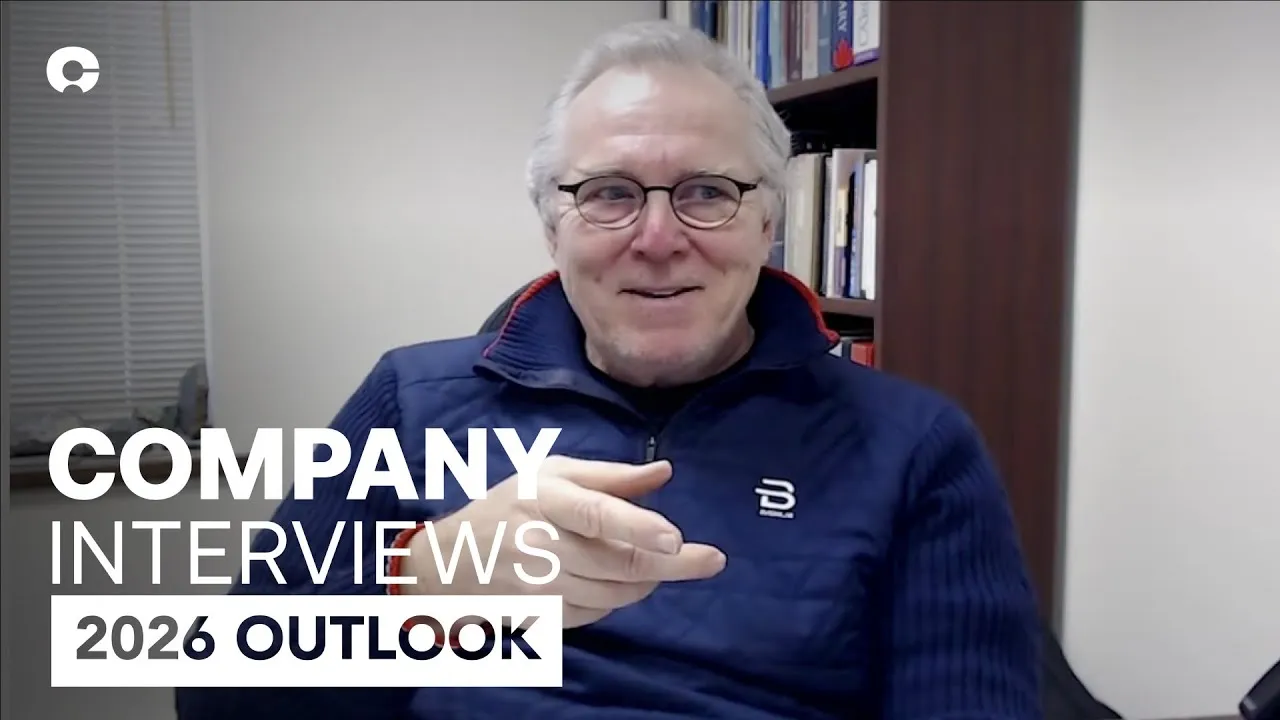
Blake Hylands, CEO of Lithium Ionic, sat down for an end-of-year discussion to outline the company's progress and strategic positioning as it moves toward production. The interview comes at a pivotal moment for lithium markets, with prices recovering sharply after a prolonged downturn, and amid growing recognition that supply constraints will create opportunities for well-positioned developers. Hylands emphasised that 2026 will be the year the company transitions from development to construction, marking a fundamental shift in the investment thesis.
Market Recovery Drives New Interest
The lithium market has experienced a dramatic turnaround in the second half of 2025. According to Hylands,
"lithium prices have tripled since mid this year already, and our stock's doubled since mid this year already, and I think that it's still massively undervalued."
This recovery is being driven primarily by energy storage demand, which is expanding more quickly than initially projected, creating a supply gap that existing and planned production cannot adequately fill.
Hylands noted that many lithium projects conceived during the previous price spike have failed to advance due to high costs and technical challenges.
“If you look at the projects that have been able to move forward in this space, it's these low-cost, high-quality producers in safe jurisdictions."
This competitive winnowing has left fewer credible near-term supply additions, setting the stage for projects like Lithium Ionic's to capture premium economics as the market tightens.
The Financing Stack: De-Risking Construction
One of the most significant developments for Lithium Ionic is the progress on project financing. The company needs $191 million to construct its Brazilian lithium project - a capex number that Hylands described as "extremely manageable" and well-aligned with the company's market capitalization. The financing approach involves multiple layers: near-term higher-cost debt that is standard for mine construction, followed by lower-cost options including export credit agencies (ECAs) and potentially government-backed facilities.
"We have been working with some partners that have been there along the way that want to be part of a debt facility that would take care of almost the entire package."
He added that the company is "being inundated with now offtake and prepay opportunities" due to market participants rushing to secure future supply. This competitive dynamic is allowing Lithium Ionic to be selective about its commercial partnerships, maximising shareholder value rather than accepting unfavorable terms out of necessity.
The financing discussions span multiple jurisdictions, with strong interest from China, North America, and other regions. Some lenders are expressing willingness to finance the entire project rather than just a portion, which could significantly accelerate the timeline to financial close.
Competitive Advantages: Cost, Speed, and Certainty
Lithium Ionic's project stands out in several key dimensions. The all-in sustaining cost of $600 per unit provides substantial downside protection, remaining profitable even when spot prices dipped to $800-900. Current spot prices around $1,200 offer healthy margins, but more importantly, the project's economics were stress-tested using conservative assumptions.
"Our early year projections for spot spodumene price in our DFS are actually below where spot spodumene prices are right now."
Speed to market represents another critical advantage. The company has assembled the "Sigma team" - professionals who successfully built the Sigma Lithium project - providing both technical credibility and execution capability. Hylands estimates the company can reach production within 18-24 months of breaking ground, far faster than competing projects that are "5 to 10 years away from production."
The project's location in Brazil provides additional benefits. As Hylands described it, the company operates in "a trusted global trading jurisdiction" that can "send material anywhere in the world." This flexibility in serving different end markets enhances commercial optionality and reduces counterparty concentration risk.
Interview with Blake Hylands, CEO, Lithium Ionic
Securing Routes to Market
The company is actively evaluating offtake partners across multiple categories: battery OEMs, chemical converters, and trading houses. Hylands was explicit about Chinese interest: "China extremely wants to secure more material, right? That continues to grow." However, North American options are also under consideration, reflecting the geopolitical dimension of lithium supply chains.
The strategy is to coordinate offtake agreements with the lending structure, allowing lenders to see clear revenue visibility and defined markets for production. "It's not just believing in me because I say it. It's saying, look, here's the buyer. Here's what they're willing to give. The terms are excellent," Hylands explained. This integrated approach to financing and offtake is designed to minimise dilution to existing shareholders while maximising project returns.
Preparing for Construction
Lithium Ionic recently raised capital to maintain momentum on detailed engineering, contractor selection, and long-lead item procurement. Hylands praised the support from major shareholders, noting that
"when you can reach out to your big shareholders and say, 'Look, this is a runway. This is what we're doing,' they believe in you and they write a check."
The company now has sufficient cash from this raise and a previous royalty sale to begin earthworks and other preliminary construction activities if needed. However, management is taking a measured approach.
"Right now we've said, look, let's conserve cash in the right way. Let's be smart about this. We're very close on what we think will be the ultimate stack.”
The company expects to accelerate spending as the financing package comes together, targeting a rapid ramp-up by mid-2026.
The organizational build-out is progressing alongside financial preparation. The Sigma team is helping recruit procurement and engineering specialists with relevant experience.
Navigating the Permitting Process
The permitting process has proven more complex than initially anticipated, though Hylands framed this as a natural evolution of regulatory frameworks in a developing mining region.
"It's something that's been hard to communicate really well to the market because it hasn't been a straight line."
The company found itself in the middle of a transition to new permitting procedures, which created apparent delays but actually represents the new standard for all projects in the area.
Support from government authorities remains strong at both federal and state levels.
"The government from the federal level and the state level have been extremely positive. The communities involved in the region are extremely supportive."
Hylands emphasised that the company is taking a proactive approach to community engagement, positioning itself as a regional leader in stakeholder relations and environmental standards.
The permitting timeline aligns with the financing schedule, with both expected to conclude in early 2026, clearing the path for construction to begin.
Resource Growth Takes a Back Seat
While Lithium Ionic's resource base has grown from zero to 70 million tons in a relatively short period, and management is confident in further expansion potential, the near-term focus is squarely on execution.
"I don't think there's a human being that would not believe we could grow this reserve. But right now, it's about execute, execute, execute."
The decision to prioritise construction over exploration reflects market realities. Investors are rewarding companies that can demonstrate clear paths to production rather than those simply adding resources. Once the project is operational and cash-flowing, resource expansion can proceed with internally generated funds rather than requiring additional equity dilution.
2026 Milestones and Accountability
Looking ahead, Hylands set clear expectations for 2026. The key milestones are: completing the financing stack, securing the final permit, and commencing construction.
"I think early in the new year, you're going to see us put together and announce on the stack. You're going to see the permit come together. And then you're going to see us off to the races [on construction]. Anything less than that, I'd be disappointed."
The construction phase will feature regular updates on progress, with the experienced project team providing credibility that milestones will be met. This operational transparency will be critical for maintaining investor confidence as the company transitions from developer to producer.
The Investment Thesis for Lithium Ionic
- Market Timing: Entry point as lithium prices recover from lows, with the stock having doubled but potentially "massively undervalued" relative to improving fundamentals and near-term catalysts
- Low-Cost Economics: $600 all-in sustaining cost provides downside protection and superior margins compared to higher-cost competitors, with $191 million capex that is manageable relative to market cap
- De-Risked Financing: Comprehensive financing stack near completion with strong lender interest, offtake demand, and potential government backing, reducing construction risk
- Execution Capability: Proven Sigma team with track record of successful project construction brings technical credibility and reduces development risk compared to less experienced operators
- Speed to Production: 18-24 month timeline to production once construction begins (mid-2026 target), allowing company to capture supply gap while competitors remain 5-10 years away
- Supply-Demand Imbalance: Energy storage demand growing faster than expected while many projected supply additions fail to advance, creating favorable pricing environment for near-term producers
- Jurisdiction Advantage: Brazilian location provides political stability, global market access, and established mining infrastructure without the geopolitical constraints of other lithium-producing regions
- Multiple Catalysts: Near-term newsflow expected on financing completion, permit approval, construction commencement, and offtake agreements throughout 2026
- Operational Leverage: As a pre-production company approaching construction, significant re-rating potential exists once project financing and permitting de-risk the path to cash flow
- Resource Expansion Optionality: 70 million ton resource with clear potential to exceed 100 million tons provides multi-decade production profile and exploration upside without immediate capital requirements
Macro Thematic Analysis
The lithium sector is experiencing a structural transformation as energy storage demand accelerates beyond initial forecasts while supply additions lag due to market volatility eliminating marginal projects. Spodumene prices have tripled from mid-2025 lows as the market recognises that projected supply models are "way off" due to production contractions and delayed developments.
This dynamic creates extraordinary opportunities for low-cost, near-term producers in stable jurisdictions that can withstand commodity volatility. The convergence of rising demand, falling supply, and geopolitical pressure to secure non-Chinese sources is reshaping the competitive landscape. As Hylands noted:
"We can bring supply to the market when others can't. These projected supply models are falling away because they can't afford to actually come online."
TL;DR: Executive Summary
Lithium Ionic is advancing a low-cost Brazilian lithium project toward mid-2026 construction with $600 all-in sustaining costs, $191 million manageable capex, and the proven Sigma team executing development. The company is finalising a comprehensive financing stack amid strong lender and offtake interest, positioning to capture the emerging supply-demand gap as lithium prices triple from 2025 lows. With permits expected early 2026 and 18-24 months to production, the investment offers significant re-rating potential as the company transitions from developer to near-term producer in a tightening market where higher-cost competitors cannot advance.
FAQs (AI Generated)
The manageable $191 million capex, robust project economics with $600 sustaining costs, strong offtake interest, and proven Sigma team credibility are attracting multiple lenders. Some financiers find the amount too small for typical commitments and prefer funding the entire project.
Low-cost production ($600 all-in sustaining) remains profitable even at $800-900 spot prices, providing downside protection most competitors lack. The project also offers faster timeline to production (18-24 months post-construction start) versus 5-10 years for alternatives, capturing near-term supply gaps.
Hylands set clear accountability markers: announce comprehensive financing stack early 2026, secure final permit, commence construction by mid-year, and have significant construction progress underway by year-end. "Anything less than that, I'd be disappointed," he stated explicitly.
Management frames the process as evolution of regional standards rather than project-specific issues, affecting all developers in the area. Strong federal and state government support continues, with proactive community engagement positioning Lithium Ionic as a regional leader in stakeholder relations.
The company is evaluating battery OEMs, chemical converters, and traders across multiple jurisdictions including China, North America, and other regions. Strategy coordinates offtake with lending structure to provide revenue visibility for lenders while maximising shareholder returns and maintaining commercial flexibility.
Analyst's Notes





Subscribe to Our Channel



.png)
.png)




Stay Informed


