Lotus Resources Reports Phase One Infill Drilling Results at Letlhakane Uranium Project



Lotus Resources has wrapped up the first 71 holes of a 140-hole infill drill programme at Letlhakane in Botswana, with all holes intersecting uranium mineralisation and a resource update targeted for H2 2026.
- All 71 holes drilled at Serule West intersected uranium mineralisation, with top intercepts of 8.23 metres at 1,357ppm and 11.67 metres at 567ppm equivalent uranium oxide (eU3O8)
- Laboratory assay results from eight diamond core holes closely matched downhole gamma probe readings, confirming data reliability
- Two exploration holes drilled in the adjacent Prospecting Licence returned uranium mineralisation, suggesting the deposit extends north of the current mining lease boundary
- The full 10,000-metre programme is designed to convert Inferred mineral resources into higher-confidence Indicated and Measured categories, with an updated Mineral Resource Estimate (MRE) expected in H2 2026
- Engineering trade-off studies are continuing, covering mining methodology and processing flowsheet optimisation, following a prior study that showed up to 70% reduction in acid consumption
Lotus Resources Limited (ASX: LOT, OTCQX: LTSRF) is an Australian-based uranium producer holding an 85% interest in the Kayelekera Uranium Mine in Malawi and 100% of the Letlhakane Uranium Project in Botswana. The company restarted production at Kayelekera in August 2025, on time and within budget. Kayelekera previously produced around 11 million pounds of uranium between 2009 and 2014. Combined, Lotus holds approximately 165 million pounds of uranium oxide across its mineral resource inventory, with Letlhakane being advanced as its second uranium mine.
First Phase Infill Drilling Results at Serule West, Letlhakane
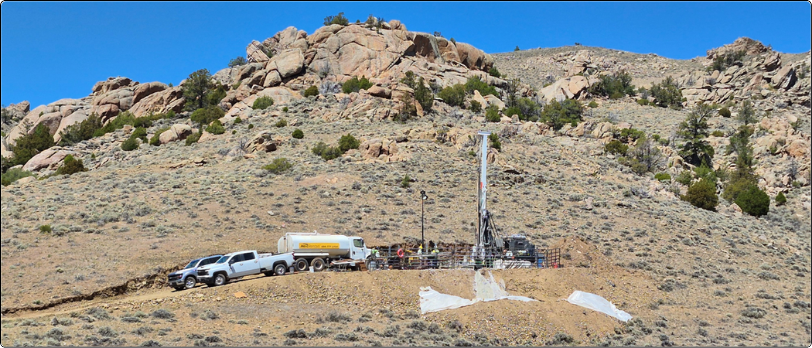
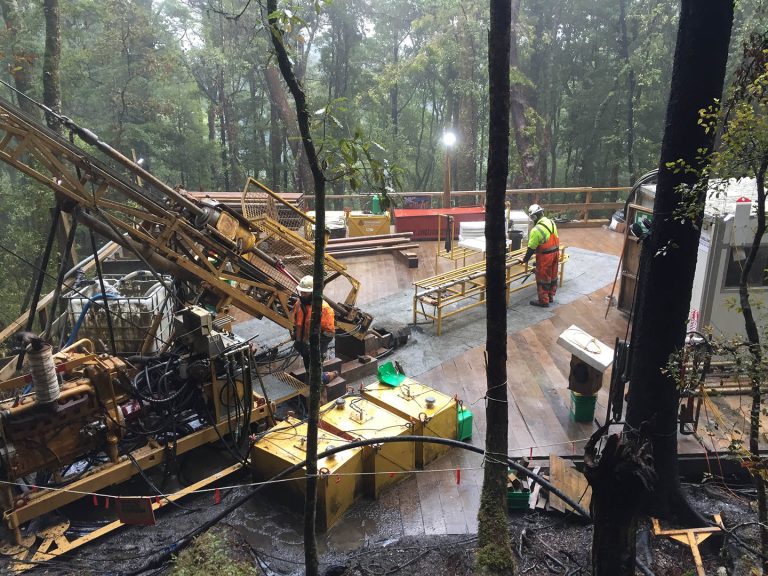
Lotus completed 71 holes totalling 4,559 metres at Serule West during phase one, using a combination of reverse circulation (RC) drilling and diamond core drilling. All holes were drilled vertically into flat-lying uranium mineralisation horizons. Serule West is characterised by shallower and higher-grade uranium than other parts of the deposit, such as the Gorgon zone.
Every hole drilled intersected uranium mineralisation. The most notable intercepts from the programme include 8.23 metres at 1,357ppm eU3O8, 11.67 metres at 567ppm, 2.81 metres at 982ppm, and 4.64 metres at 465ppm. The results confirm continuity of mineralisation and grade across Serule West.
Eight diamond core holes were drilled as part of phase one, with 146 samples submitted to an accredited laboratory alongside certified reference materials, duplicates, and blanks. Uranium assay results confirmed and closely matched the gamma probe readings, satisfying the company's internal quality control requirements and those of the JORC Code.
Mineral Resource Estimate Upgrade and H2 2026 Update
Letlhakane's current MRE stands at 142.2 million tonnes at 363ppm uranium oxide, for a total of 113.7 million pounds of uranium oxide. Of this, approximately 50% is classified as Inferred, the lowest confidence category under the JORC Code. The current infill programme is designed to upgrade these Inferred resources to Indicated and Measured status by tightening drill spacing at Serule West to around 100-metre centres.
Phase two of the programme will target both Serule West and the Gorgon zone, where the bulk of the Inferred resources reside, and is scheduled for H2 2026. Once the full 10,000-metre programme is complete, results will be incorporated into an updated MRE.
Managing Director Greg Bittar stated:
"We are looking forward to getting back on the ground for the second phase later on in 2026, with the aim to upgrade more of Letlhakane's mineral resources to the Measured and Indicated categories, which we expect to deliver in a MRE update in H2 2026."
The MRE update will in turn inform decisions on the scope and timing of a Preliminary Feasibility Study (PFS), which is currently expected in H1 2027.
Managing Director Greg Bittar added:
"The MRE update and the further studies being undertaken will determine decisions around the work programs and timing for the expected preliminary feasibility study which is now expected in H1 CY2027."
Prospecting Licence Exploration Success and Ongoing Engineering Studies
In addition to the infill programme, Lotus drilled two exploration holes in the Prospecting Licence (PL) immediately north of Letlhakane's mining lease. Both holes returned uranium mineralisation, with results including 5.6 metres at 292ppm and 4.9 metres at 293ppm. The company noted that further drilling may extend Indicated resources into the PL area.
Lotus is also advancing engineering trade-off studies covering the optimal mining approach and a simplified processing flowsheet. These studies build on metallurgical testwork completed in October 2025, which showed acid consumption reductions of up to 70%. Acid is the primary reagent used in uranium extraction at Letlhakane, and the company is continuing to evaluate flowsheet options with the aim of improving project economics ahead of the PFS.
Outlook
Phase two drilling at both Serule West and Gorgon is planned for H2 2026, with an updated MRE to follow. The Prospecting Licence results will be factored into further work programmes. Ongoing engineering studies on mining methodology and processing are expected to conclude ahead of the PFS, now targeted for H1 2027.
Analyst's Notes





Subscribe to Our Channel



Stay Informed