




200,000-Ton US Copper Imports Tighten Supply Outside the US Despite Tariff Uncertainty



Record US copper imports tightened supply outside the US, supporting higher prices as AI demand and deficit forecasts outweighed tariff uncertainty.
- July US copper imports exceeded 200,000 metric tons, the highest monthly volume in IHS Markit shipping data since 2014. The inflow lifted combined US Comex and London Metal Exchange (LME) warehouse inventories above 740,000 tons, with another 110,860 tons held in private US port storage.
- LME copper settled at $13,848/mt as the cash contract traded at a $65/mt premium to the three-month contract, the widest backwardation since January, indicating tightening physical copper supply outside the US.
- J.P. Morgan projects a 330,000-ton refined copper deficit in 2026, while Goldman Sachs forecasts a near-term surplus. The International Copper Study Group (ICSG) also forecasts a 150,000-ton copper deficit, highlighting a widening gap in institutional outlooks.
- The June 30 deadline for Commerce Secretary Howard Lutnick to recommend refined copper tariffs passed without an announcement, shifting market attention from policy timing to tightening physical supply outside the US.
- Ten consecutive LME settlements below $12,500/mt would signal AI demand deferral. A sustained break above $14,000/mt would support higher copper-equity valuations if J.P. Morgan's projected 330,000-ton refined copper deficit begins to tighten the physical market.
Copper Flows Into the US Tighten Overseas Supply & Reshape the Physical Market
US refined copper imports exceeded 200,000 metric tons in July, the highest monthly volume in IHS Markit shipping data since 2014. LME copper settled at $13,848/mt, while the SHFE 2609 copper contract closed at 106,190 yuan/mt. Copper traded at $6.52/lb, about 47% above year-ago levels and just below its record high of $6.67/lb reached in June.
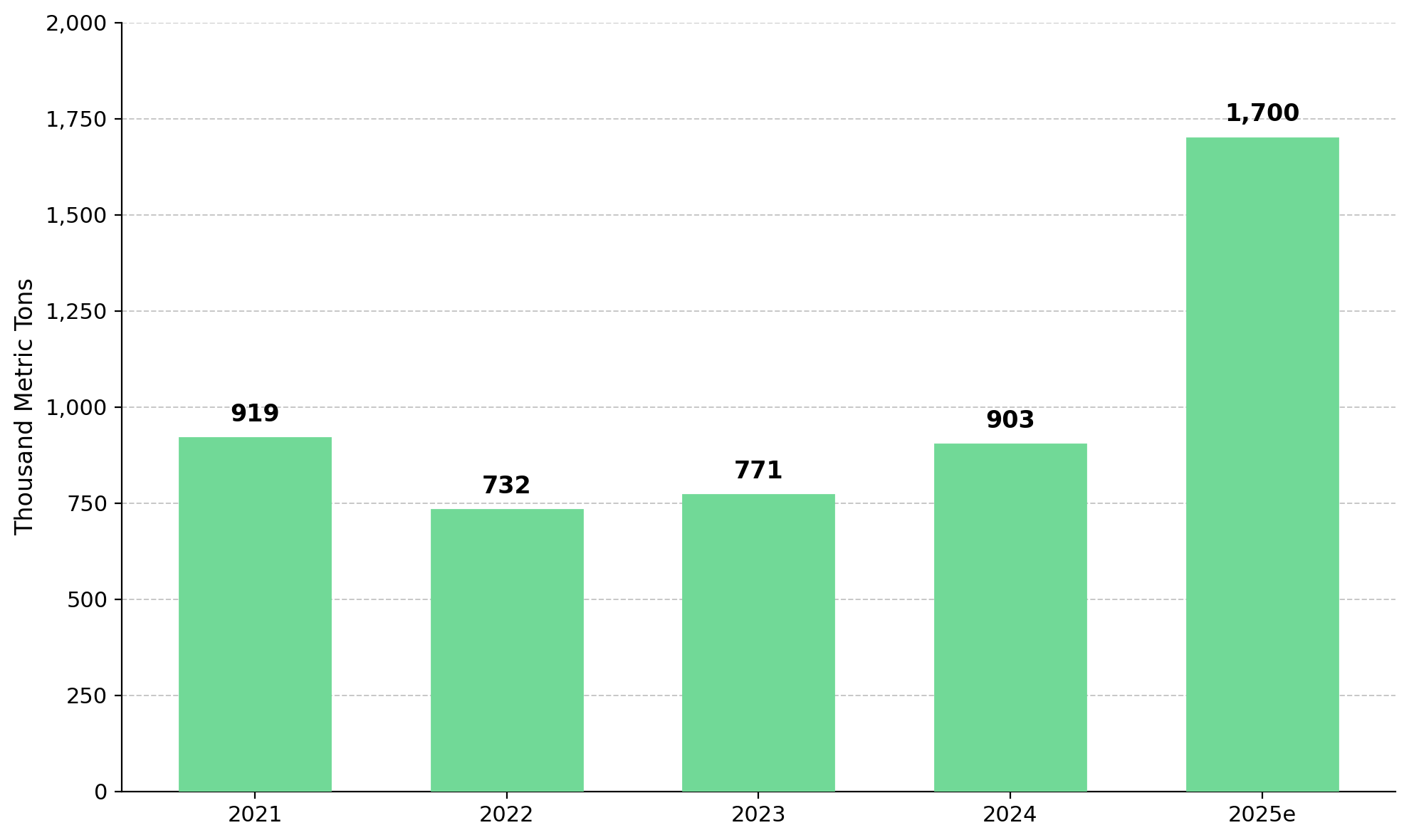
The July imports increased combined US Comex and LME warehouse inventories to more than 740,000 tons, while another 110,860 tons remained in private US port storage. Official Comex inventories have risen more than 40% this year to a record, lifting total US copper inventories above an estimated 1 million tons. The inventory build in the US has reduced LME warehouse stocks outside the US, tightening physical copper supply overseas.
Comex Arbitrage Tightens Copper Supply Outside the US as LME Backwardation Widens
The Comex-LME spread averaged more than $350/mt in July, creating enough price incentive to move copper from overseas warehouses into US ports. The LME cash contract traded at a $65/mt premium to the three-month contract, the widest backwardation since January, indicating tighter short-term physical copper supply. In Shanghai, the spot premium for Grade 1 copper cathode rose to 280 yuan/mt above the SHFE 2608 contract, up 20 yuan/mt from the previous session, indicating physical demand remained strong despite higher futures prices.
Tariff policy remains the second key driver of copper flows as the June 30 deadline for Commerce Secretary Howard Lutnick to recommend refined copper tariffs passed without an announcement, leaving the timing of President Donald Trump's decision uncertain. Existing 50% tariffs apply to semi-finished copper products and derivatives. Trump also directed Lutnick to study phased tariffs on refined copper imports beginning at 15% in January 2027. The delayed decision continues to encourage tariff-driven copper imports into the US, reducing inventories in LME warehouses outside the US.
AI Data Center Demand Supports Copper Deficit Forecasts Beyond Tariff Uncertainty
Copper's medium-term outlook depends more on supply and demand than the final tariff decision. J.P. Morgan projects a 330,000-ton refined copper deficit in 2026, while the ICSG forecasts a 150,000-ton deficit. Both forecasts assume data center demand will consume about 475,000 metric tons of copper in 2026. StoneX Financial's head of metals, Michael Cuoco, said traders continue accelerating copper shipments into the US because they expect importing metal before any tariff decision will be more advantageous than waiting.
Bear case: LME copper closes below $12,500/mt for ten consecutive settlements, indicating AI data center demand is being delayed by 18 to 24 months. The weaker demand outlook reduces support for J.P. Morgan's and the ICSG's copper deficit forecasts, increasing the risk of a 15% to 20% decline in copper miners and physically backed copper ETFs.
Bull case: Chinese downstream restocking lifts SHFE copper above 108,000 yuan/mt through Q4 2026, while LME copper remains above $14,000/mt. If J.P. Morgan's projected 330,000-ton refined copper deficit begins to tighten the physical market, copper mining equities could gain 12% to 18% over the same period.
Higher Copper Prices Favor Miners While Raising Costs for Fabricators
Copper exposure is concentrated in three areas: primary miners with LME-linked pricing, US fabricators buying copper priced against Comex, and Chinese manufacturers rebuilding inventories through the SHFE market. Miners with LME-linked sales benefit first from higher LME prices because a $200/mt increase directly improves revenue and per-ton EBITDA. US fabricators face higher costs. Shanghai Metals Market (SMM) data showed the SHFE import margin was negative by 730 to 840 yuan/mt, making imported copper uneconomic without the Comex-LME arbitrage.
A company's ability to hold inventory through the tariff decision without facing margin calls will determine how well it can benefit from continued price volatility. Individual market participants cannot replicate large-scale inventory accumulation, making physically backed copper ETFs a more practical way to gain exposure to higher copper prices without managing physical inventories.
Most market participants cannot predict the timing of a tariff decision, and the June 30 deadline passed without an announcement. They also lack access to the private US port inventory data that showed 110,860 tons of copper in storage. A more durable approach is to focus on J.P. Morgan's projected 330,000-ton refined copper deficit in 2026 rather than attempting to trade the timing of the tariff decision.
Watch $14,000/mt LME to Confirm Higher Copper Prices as $12,500/mt Signals AI Demand Is Weakening
LME copper held at $13,848/mt, while the Comex-LME spread remained above $350/mt, encouraging copper shipments into the US. At the same time, a $65/mt LME cash-to-three-month backwardation indicated tightening physical copper supply outside the US. If the Comex premium remains above $200/mt and LME stays in backwardation, higher copper prices are more likely to support earnings for miners with LME-linked pricing.
Goldman Sachs identifies $12,500/mt as a key price floor tested in June. Ten consecutive LME settlements below that level would suggest AI data center copper demand is being delayed by 18 to 24 months relative to the 475,000-ton demand outlook used in J.P. Morgan's and the ICSG's deficit forecasts, weakening the outlook for higher copper prices. Under that scenario, copper miners and physically backed copper ETFs could decline by 15% to 20%.
Watch the LME cash-to-three-month spread to gauge whether physical copper supply is tightening or easing. A sustained widening above $80/mt would reinforce support for higher copper prices, while a narrowing below $30/mt for ten consecutive sessions would indicate easing supply pressures and a weaker price outlook.
Analyst's Notes





Subscribe to Our Channel







Stay Informed


