




Oil Falls 7% on US-Iran Talk Hopes, Favoring Energy Producers & Diversified Miners


Oil fell 7% on US-Iran deal hopes, but tight supply and Hormuz risks continue supporting energy producers and diversified miners.
- Brent crude fell more than 7% on August 3 to a three-week low before rebounding 1.2% to $84.79 as traders judged a US-Iran deal unlikely, while West Texas Intermediate (WTI) recovered 0.6% to $80.80.
- The selloff reflected diplomacy headlines rather than changes in physical supply, as US commercial crude inventories fell 7.2 million barrels to 404.5 million, about 6% below the five-year average, while refineries operated at 97.2% of capacity.
- The geopolitical risk premium remained in crude prices as Iran denied negotiations, a cargo vessel was struck near Oman's Al Khasab, and Saudi Aramco reported a 33% increase in second-quarter profit to $33.4 billion.
- Diesel at $5.313 a gallon, up roughly 40% year over year, raises operating costs for open-pit miners, while uranium near $85 a pound and diversified miners continue to benefit from energy-security demand.
- A verified agreement reopening the Strait of Hormuz, or Brent falling below $80 a barrel, would quickly unwind the geopolitical premium.
Ceasefire Hopes Trigger 7% Oil Selloff While Tight Supply Supports Crude Prices
Brent crude fell more than 7% on August 3 to a three-week low before rebounding 1.2% to $84.79 a barrel as traders judged a diplomatic resolution to the US-Iran conflict unlikely, while WTI recovered 0.6% to $80.80.
The selloff partially reversed Brent's July rally, which pushed prices above $100 and left the benchmark up about 20% from its $72 monthly open. It followed ceasefire speculation rather than stronger supply, as US commercial crude inventories fell 7.2 million barrels to 404.5 million, about 6% below the five-year average, while refineries operated at 97.2% of capacity, indicating that market sentiment shifted ahead of any change in physical oil supply.
Hormuz Dispute Keeps the Geopolitical Premium Embedded in Crude Prices
Before the conflict, roughly 20% of global crude and gas shipments passed through the Strait of Hormuz. Shipping flows remained disrupted, with Barclays estimating crude and refined-product net exports through the strait at 4.2 million barrels per day, up from 3.2 million the previous week, while the United Kingdom Maritime Trade Operations agency reported a cargo vessel struck by an unknown projectile near Oman's Al Khasab. Saudi Aramco continued routing crude through its 1,200-kilometer East-West pipeline to the Red Sea to maintain exports near 7 million barrels per day.
The dispute remains unresolved because Washington and Tehran interpret the June memorandum differently, with Washington arguing it required Iran to reopen the Strait of Hormuz and Tehran maintaining it preserved Iran's authority. Iran's foreign ministry rejected President Trump's claim that negotiations were underway, stating that no talks were scheduled and that it was engaging only with Oman on Strait of Hormuz issues. The lack of a verified agreement continues to support the geopolitical risk premium, with Madhur Kakkar of Elevate Financial Services arguing that markets are pricing the risk of a shipping chokepoint rather than a physical oil shortage.
Rerouted Oil Flows Delay Relief From a Hormuz Agreement
Even a signed agreement would not immediately restore normal shipping because rerouted cargoes, higher insurance costs, and longer voyages would continue to affect trade for months. Saudi Aramco President and Chief Executive Officer Amin H. Nasser said the company sustained output by using its diversified asset base and long-term planning, illustrating how large producers can adapt to supply disruptions. Aramco's second-quarter adjusted net income rose 33% from a year earlier to $33.4 billion, exceeding the $31.59 billion consensus estimate.
$5.313 Diesel Raises Mining Costs, Favoring Operators With Cost Pass-Through
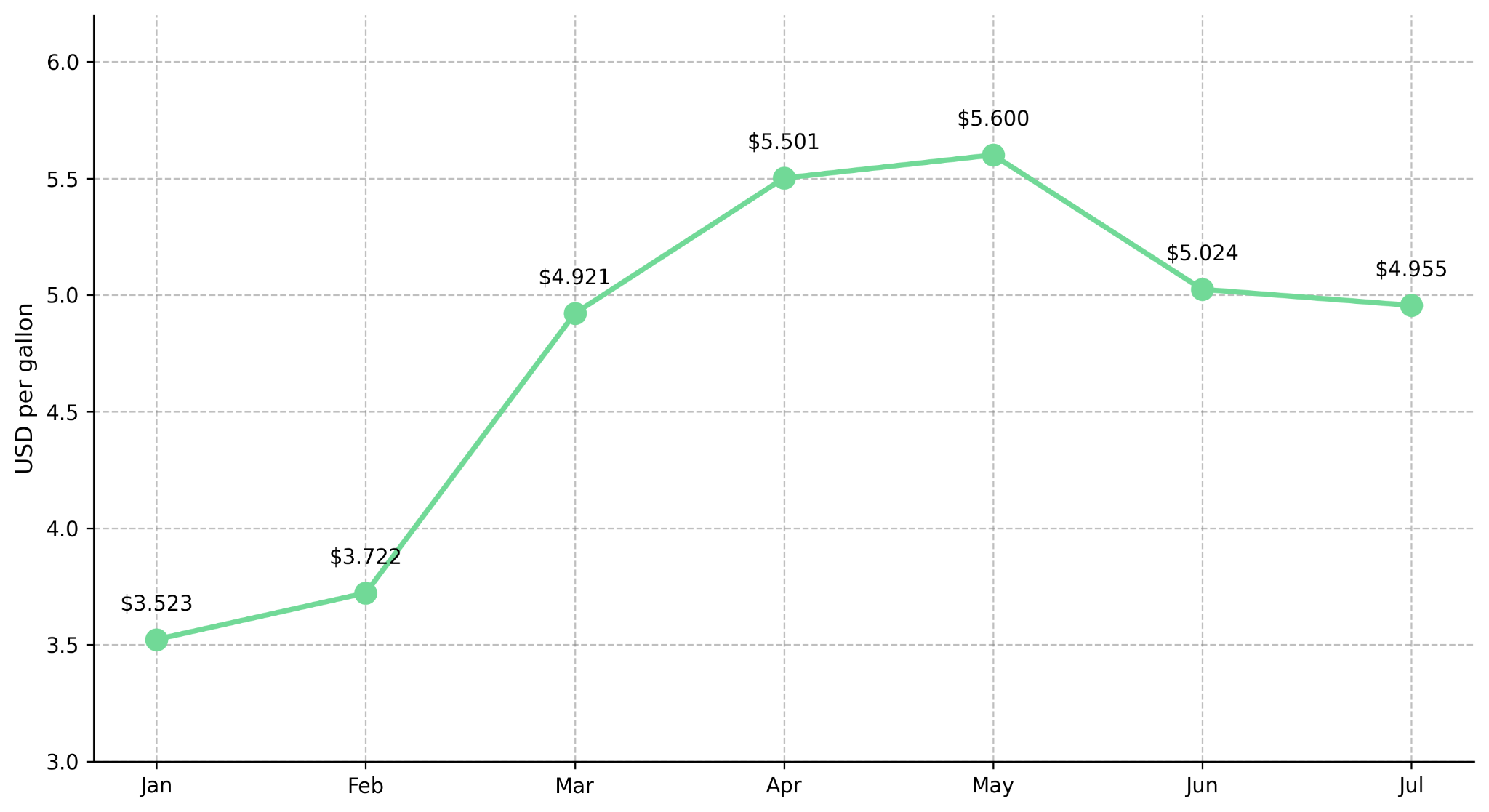
Higher crude prices increase diesel costs, a major operating expense at open-pit mines. US retail diesel reached $5.313 per gallon, up roughly 40% from a year earlier. Because diesel accounts for 15% to 25% of all-in sustaining costs at open-pit operations, remote diesel-powered copper, iron ore, and gold mines face the greatest margin pressure, while underground and grid-connected mines are less exposed.
The key distinction is which producers can pass through higher costs or reroute operations. Saudi Aramco rerouted crude around the Strait of Hormuz by pipeline, while diversified miners with pricing power continued delivering strong results, with BHP shares up about 32% this year and Rio Tinto reporting a 43% increase in underlying earnings to $6.9 billion. By contrast, fuel-exposed single-asset juniors without that flexibility remain more vulnerable to higher operating costs.
The timing remains uncertain because Iran continues to deny negotiations while President Trump describes the situation as a final opportunity to reach an agreement, making the outcome difficult to anticipate. Rather than reacting to headlines, the focus remains on operators with cost pass-through, operational flexibility, and energy-security exposure, while uranium near $85 per pound continues to support the sector until a verified agreement removes the geopolitical premium.
Monitor Brent at $84.79: The Hormuz Premium Holds Until a Deal is Verified
While Brent holds above $80 a barrel and Iran continues to deny a deal, the Hormuz geopolitical premium remains embedded in oil prices, supporting energy producers and diversified miners with commodity exposure. The $6.7 billion Invesco Optimum Yield Diversified Commodity Fund has gained about 32% this year, reflecting continued demand for broad commodity exposure.
A verified US-Iran agreement reopening the Strait of Hormuz, or Brent falling below $80 a barrel toward its July opening level near $72, would signal that the geopolitical premium is unwinding. Either outcome would compress the geopolitical premium, reduce energy and mining equities, and ease diesel costs for open-pit miners. Conversely, Hamza Dweik of Saxo Bank said oil above $85 to $90 a barrel could increase stagflation risks by combining slower economic growth with stubborn inflation, limiting the Fed's scope to reduce interest rates.
Monitor Brent relative to the $80 a barrel threshold, the EIA Weekly Petroleum Status Report each Wednesday, and the UK Maritime Trade Operations feed for incidents in the Strait of Hormuz before reassessing the energy and mining outlook.
Analyst's Notes





Subscribe to Our Channel


Stay Informed


