Maple Gold's 2026 Playbook: 30,000+ Metres of Full-Funded Drilling Towards Resource Update and Economic Study


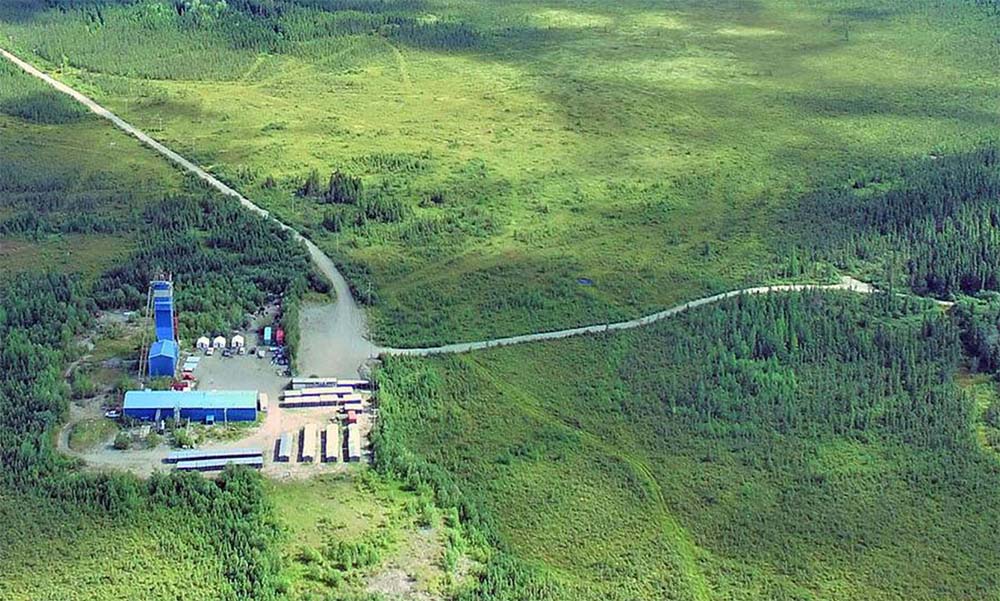
Maple Gold drills 30,000m at its Quebec gold projects, holds C$30M cash, backs Agnico Eagle partnership, and targets resource growth with economics in 2026.
- Maple Gold Mines is executing a fully funded 30,000-metre drill program across its Douay and Joutel projects in Quebec, more than doubling the drilling in 2025, with three rigs running continuously and further metres expected beyond the initial allocation.
- The company holds approximately C$30 million in cash following a C$16 million financing closed in January 2026, providing a multi-year exploration runway without near-term dilution risk.
- The existing NI 43-101 resource of approximately 3 million ounces at Douay was calculated at a US$1,800 gold price and covers only 6 of 55 kilometres of strike length controlled by the company indicating substantial room for expansion and value growth with current gold prices.
- Having Agnico Eagle as a joint venture partner and strategic shareholder provides institutional validation and a logical consolidation pathway for a district-scale asset that has seen only 275,000 metres of historical drilling versus two million or more at comparable Abitibi producers.
- A resource update and preliminary economic study are both anticipated in 2026, which will for the first time allow the market to assess not only the size of the Douay-Joutel opportunity but the economics underpinning it, representing the most significant de-risking catalysts in the company's history.
Junior exploration companies with credible scale and strong partnerships are attracting renewed attention. Maple Gold Mines (TSXV:MGM) sits squarely with a fully funded 30,000-metre drill program underway across its two Quebec gold projects, Douay and Joutel, and a $30 million cash balance secured through a series of disciplined financings. The company is entering what CEO Kiran Patankar describes as a pivotal phase of value definition. Patankar outlined the company's operational momentum, strategic priorities, and the economic milestones it intends to achieve over the next 18 months.
A Fully Funded Exploration Push
Maple Gold's current drill program represents a substantial increase in exploration intensity. In 2025, the company drilled approximately 12,000 metres. The 2026 program, at 30,000 metres with three rigs operating continuously in northern Quebec, more than doubles that output. Douay is receiving approximately 20,000 metres of the total allocation, with Joutel accounting for the remaining 10,000 metres. Patankar indicated that further metres beyond the initial 30,000 are likely, with a formal update on capital deployment expected.
The program is fully funded. Maple Gold closed a C$16 million financing at the end of January 2026, adding to an existing cash position. At an estimated cost of around $300 per metre, that balance provides drilling capacity to a meaningful multi-year runway that the company intends to deploy with geological discipline rather than simply for the sake of news flow.
The Douay and Joutel Projects
Douay is the larger of the two assets. The existing NI 43-101 resource, last updated in 2022 at an US$1,800 gold price, stands at approximately 3 million ounces. That resource sits within just 6 kilometres of a 55-kilometre strike length controlled by Maple Gold where a vast majority of the land package remains untested.
Joutel is a past-producing mine complex featuring an open pit and two underground shafts. It represents a structurally distinct style of mineralisation - a volcanic-hosted, shear-hosted system with higher-grade characteristics. The company recently released results from seven of 39 holes drilled at Joutel, demonstrating that the mineralised system extends meaningfully beyond the existing mined-out stopes. A significant pipeline of additional Joutel results is anticipated throughout 2026.
Building the Team
Patankar emphasised that capital and geology alone are insufficient drivers of value creation - team quality matters equally. Two recent additions underscore the company's effort to bring institutional-grade technical expertise to a junior exploration setting. A new Vice President of Exploration - Pascal Lessard - brings approximately 30 years of experience from major mining companies including Glencore, Xstrata, Falconbridge, and Falco Resources, with a background in applying mine-setting exploration disciplines to earlier-stage projects. Additionally, director Mark Lego, who brings 34 years of experience at Iamgold and joins the board after his first site visit to Douay - a property he worked at during its operating mine phase in the 1980s and 1990s - adds a direct continuity of geological knowledge that is difficult to replicate.
Patankar reflected on the significance of time spent at site with his team.
"There's passion amongst the team to really drive the value for shareholders through good exploration and development of our district-scale projects, but it's a passion for doing it the right way."
That operational culture, including a dry camp policy and a focus on health, safety, and environmental practices as first principles, was cited as a meaningful factor in attracting quality drilling crews and contractors to a remote northern Quebec location.
The Agnico Eagle Partnership
Agnico Eagle, one of the world's leading gold producers and a company with two major operating mines in the Abitibi region is a strategic partner and significant shareholder in Maple Gold. The partnership was established through a joint venture agreement and has been deepened over time. Patankar confirmed that Agnico has been an incredible partner and that the relationship has been strengthened in a manner that benefits all shareholders rather than being structured around the interests of any single party.
Agnico's mines in the same geological belt have absorbed two million metres or more of drilling to reach their current resource definitions. Douay, by comparison, has seen approximately 275,000 metres of total historical drilling. The implication is straightforward: there is a large amount of low-hanging fruit remaining to test on a land package that sits within one of the most productive gold districts on Earth.
Interview with Kiran Patankar, President & CEO of Maple Gold Mines
Towards Resource Definition and Economics
The next major value catalyst for Maple Gold is an updated NI 43-101 resource expected later in 2026. The update will incorporate all drilling completed since 2022, apply current gold price assumptions in a more conservative manner than the prior estimate, and be built on a geologically driven block model designed to interface directly with mine engineering optimisation.
Rather than simply adding ounces, the company intends the updated resource to be a functional tool for mine sequencing analysis: identifying starter pit configurations, open-pit versus underground trade-offs, and potential blending scenarios between Douay's bulk-tonnage near-surface material and Joutel's higher-grade ore.
Following the resource update, a preliminary economic study is expected to provide the first formal economic framing of the project. Patankar was deliberate in setting realistic expectations for the scale of any modelled operation relative to Maple Gold's current market capitalisation of approximately C$200 million.
"I personally like the idea that we say, here's the realistic path for a smaller company - there's optionality, there are ways to look at it where we can demonstrate credibly that there's a path on a starter pit, say 5,000 tonnes per day, where you can get it into a reasonable permitting timeline."
Permitting and Jurisdiction
Quebec is widely regarded as one of the most mining-friendly jurisdictions in Canada, and Patankar noted that permitting timelines are likely to improve further under the current policy environment. The province's established infrastructure, experienced workforce, and supportive regulatory framework reduce execution risk relative to more challenging jurisdictions. The company's preference for a low-footprint operational design - phased pit development, efficient use of existing regional infrastructure - reflects both commercial prudence and a commitment to obtaining social licence in a reasonable timeframe.
The Investment Thesis for Maple Gold Mines
- Significant resource upside. Maple Gold Mines resource of approximately 3 million ounces covers only 6 of 55 kilometres of strike length at Douay. The resource is substantially under-drilled relative to comparable Abitibi assets, suggesting meaningful upside to the ounce count as systematic drilling continues.
- Fully funded through a key de-risking cycle. With approximately C$30 million in treasury and no near-term capital requirement, Maple Gold can execute its 30,000-metre program and resource update without dilutive financing pressure in a volatile market environment.
- Agnico Eagle provides strategic validation. The presence of one of the world's top gold producers as a JV partner and cornerstone shareholder is a credible signal of geological merit. Agnico's familiarity with the Abitibi belt and its operational mines in the region make Douay a strategically logical asset for potential future consolidation.
- Valuation gap relative to peers. The existing resource is based on a US$1,800 gold price in a market as compared to the current gold prices now above $5,000/oz. Even before any new ounces are added, the resource is undervalued on a per-ounce basis relative to comparable Quebec gold exploration peers. The planned resource update and economic study are the most direct catalysts to close this gap.
- Actionable advice: Investors with exposure to gold or seeking it may consider Maple Gold as a leverage play on both gold price appreciation and exploration success in a Tier 1 jurisdiction. Position sizing should reflect the exploration stage risk, but the combination of a large, underdeveloped land package, institutional support, a funded multi-year drill program, and an incoming economic study makes the current period a logical entry window ahead of anticipated news flow. Monitor quarterly drill results and the resource update as primary milestones.
- Near-term catalysts to watch: Results from remaining Joutel holes; Douay drill program updates; resource update timeline and ounce count; preliminary economic study; any announcements regarding the Agnico Eagle JV structure or increased participation.
The combination of a large, under-drilled land package in Quebec's Abitibi gold belt, a strategic partnership with Agnico Eagle, a C$30 million funded treasury, and an incoming resource update and preliminary economic study positions the company at an inflection point.
Macro Thesis Analysis
Gold's ascent past US$5,000 per ounce in early 2026 is not simply a function of short-term uncertainty. It reflects a deeper structural shift in how institutional capital is allocating to real assets amid persistent geopolitical instability, sovereign debt concerns, and the gradual reassessment of reserve currency dynamics. The junior exploration segment has historically been the last part of the gold equity complex to re-rate in a bull cycle. Larger producers and royalty companies attract capital first, followed by mid-tier developers, and finally high-quality juniors with genuine scale.
Quebec itself has emerged as a global benchmark for mining jurisdiction quality. Its combination of low political risk, established infrastructure, available skilled workforce, and progressive but workable permitting environment makes it the destination of choice for major mining companies seeking large-scale gold assets. The Abitibi greenstone belt, which hosts Detour Lake, Canadian Malartic, and Windfall, among others, continues to demonstrate that the geological endowment of the region is not yet fully mapped.
Patankar captured the essential investment dynamic when he observed:
"Capital has been few and it's been hard to source capital to go out and really test these kinds of systems as a junior company but with the capital that we now have, with the backing that we now have, that's becoming in focus."
That framing describes precisely the opportunity that investors face: a company moving from capital-constrained exploration to systematic, funded, purpose-driven drilling at the inflection point of a gold bull market.
TL;DR
Maple Gold Mines enters 2026 as a well-capitalised, technically credible junior gold explorer with a clear and executable value-creation roadmap. The company controls a 3-million-ounce gold resource in Quebec that covers only 6 of 55 kilometres of its land package. The company has C$30 million in cash, a 30,000-metre drill program running now, and Agnico Eagle as its joint venture partner.The existing resource already represents meaningful value at current gold prices — and it has been constructed on a fraction of the drilling that defines comparable producing assets nearby. The 12 to 18 months ahead will, for the first time, allow the market to assess not just the size of the opportunity but the economics of that opportunity. For investors seeking leverage to gold through a technically sound, institutionally endorsed exploration company with genuine scale potential in a politically stable jurisdiction, Maple Gold warrants close attention.
Frequently Asked Questions
Analyst's Notes


Subscribe to Our Channel


Stay Informed