




Canada Nickel's Crawford Construction Decision Backed by Tax Credits Support and Government Funding Pathway


Canada Nickel advances Crawford toward construction as Indonesian supply discipline and Western funding reshape the nickel market outlook.
- Canada Nickel Company is advancing the Crawford nickel sulfide project in Ontario toward a construction decision, supported by both federal and provincial government endorsements.
- CEO Mark Selby highlights a structural shift in the nickel market driven by Indonesian supply discipline and tiered royalty policies that incentivize higher prices.
- Nickel prices have risen approximately 30% year-to-date, while ore, nickel pig iron, and stainless steel prices have increased between 25% and 40%, indicating strengthening physical market fundamentals.
- The company’s funding strategy includes an estimated C$600 million in refundable tax credits and a US$100 million strategic investment from Samsung SDI for a 10% project stake.
- Beyond Crawford, Canada Nickel holds additional district-scale assets such as Midlothian and Reid showing long-term production growth potential within the Timmins Nickel District.
After several years of nickel price volatility and investor hesitation largely driven by Indonesian oversupply, evidence is emerging of a structural recalibration in global supply discipline. Against this backdrop, Canada Nickel Company is advancing one of the largest undeveloped nickel sulfide resources in North America: the Crawford project in Ontario.
CEO Mark Selby outlined how shifting Indonesian policy, improving physical nickel market indicators, and coordinated Western government support are reshaping the investment case for nickel developers. For investors assessing exposure to critical minerals, Canada Nickel represents a case study in project readiness aligned with improving macro fundamentals.
Crawford: Advancing Toward Construction
Canada Nickel’s flagship Crawford project is located in Ontario and targets a large-scale, low-strip, long-life nickel sulfide resource. The project is advancing through permitting, engineering, and financing, with management targeting a construction decision by the end of the year.
Key milestones include:
- Federal permitting targeted for mid-year.
- Provincial coordination under Ontario’s “One Project, One Process” framework.
- Detailed engineering initiated with engineering partner Ausenco.
- Long-lead item scheduling underway.
Crawford’s projected mine life is approximately 40 years, with expected production approaching 50,000 tonnes of nickel annually in its initial configuration. Importantly, the project qualifies for significant refundable tax credits under Canadian critical minerals programs. Selby emphasized how Canada Nickel is uniquely positioned:
"As the only project in Canada that's both got a federal and provincial endorsement, we've got a lot of lot of worldwide attention. There are a lot of people we're talking to already, there's a lot more people at the door with that."
Capital Structure and Funding Visibility
Large-scale nickel developments require substantial upfront capital. Crawford’s capital stack blends private capital, refundable tax credits, strategic investment, and potential government funding.The company estimates approximately C$600 million in refundable tax credits across two programs. These credits were legislated after earlier announcements and are now actionable.
Additionally, Samsung SDI has agreed to acquire a 10% interest in the project for $100 million, validating the asset’s strategic relevance to battery supply chains. Remaining equity requirements are approximately US$300 million. Selby highlighted multiple funding avenues including Ontario’s Critical Minerals Processing Fund, federal C$2 billion Critical Minerals Sovereign Fund, expanded infrastructure funding envelopes, and G7-aligned financing relationships in Germany, France, and Italy.
Germany and France have established national funds to secure critical minerals supply. While these countries may not build domestic mines, they are willing to co-invest in allied jurisdictions to ensure feedstock security. For investors, this diversified funding framework reduces reliance on public equity markets alone and aligns the project with strategic industrial policy.
District-Scale Growth Beyond Crawford
While Crawford is the immediate focus, Canada Nickel controls a broader land package within the Timmins Nickel District. The Midlothian and Reid properties exhibit geological characteristics that could enhance recoverable nickel grades and lower strip ratios relative to Crawford. Early indications at Midlothian suggest higher nickel content associated with awaruite mineralization. Reid has a footprint larger than Crawford and lower overburden. According to Selby, applying similar mining rates could yield up to 75,000 tonnes of nickel per year. Over a 10–15 year period, the district could potentially support 250,000 to 300,000 tonnes of annual nickel production, depending on sequencing and partnership structures.
The development model may involve sequential internal builds, joint ventures on select projects, partial asset sales, and shared processing infrastructure across deposits. This district-scale optionality provides embedded growth that could accelerate once Crawford establishes operational proof-of-concept.
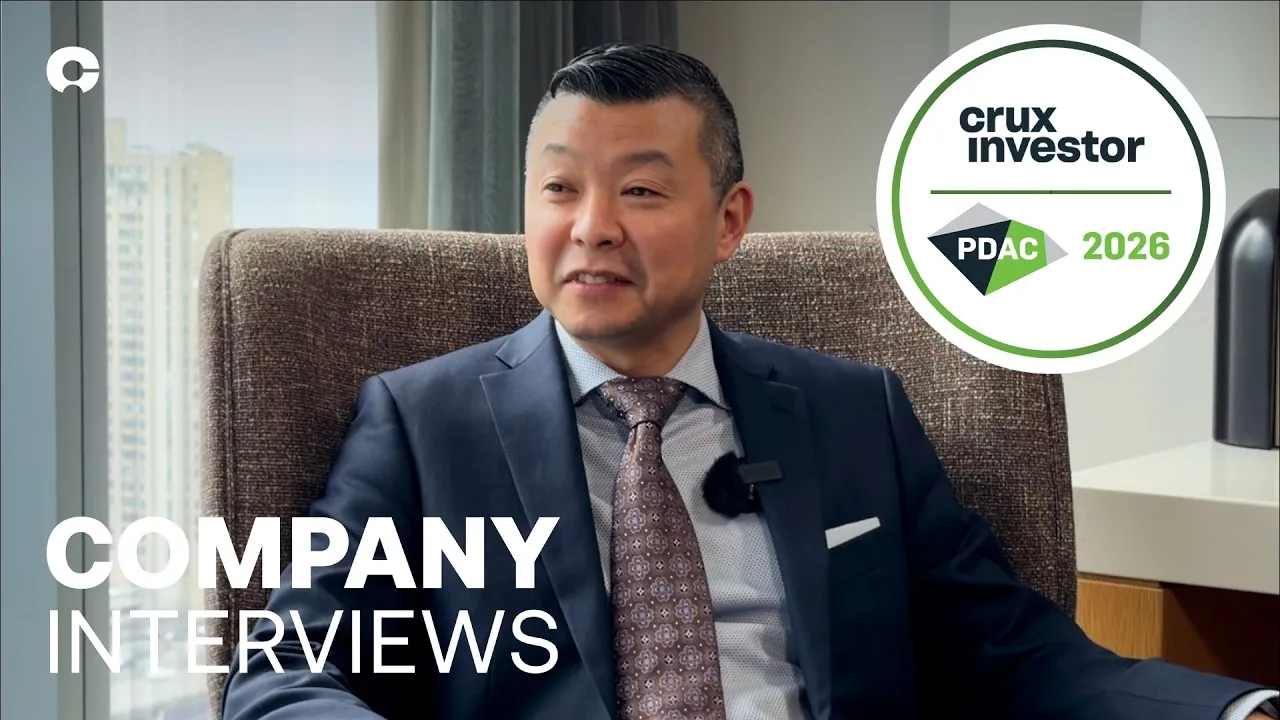
Interview with Mark Selby, CEO of Canada Nickel
A Fundamental Shift in the Nickel Market
For much of the past three years, investor appetite for nickel equities has been constrained by Indonesian production growth. Indonesia, which accounts for a substantial share of global supply, has periodically expanded output, pressuring prices and discouraging Western project development.
Nickel prices have responded. Year-to-date, prices are up approximately 30%, while physical indicators such as ore, nickel pig iron (NPI), and stainless steel prices have risen between 25% and 40%. Notably, some marginal products are approaching three-year highs.
According to Selby, these changes reflect fiscal incentives within Indonesia. Nickel represents a significant component of the country’s export revenue, and higher price environments directly benefit government finances. As Selby noted:
“This is a sustained fundamental shift in the nickel market [...] If governments have a chance to make more money, they usually try and take that chance to make more money.”
For investors, the implication is not short-term momentum but structural supply management. A more disciplined Indonesian policy framework may support higher and more stable pricing, improving the economics of Western nickel sulfide projects.
Valuation Context and Market Re-Rating Potential
Canada Nickel is currently trading at a fraction of net asset value (NAV), reflecting both commodity cyclicality and project development risk. Selby noted that the company trades at approximately 15% of NAV, compared to typical valuations of 50% NAV for comparable advanced-stage projects in more favored commodities.
As nickel regains investor attention, a re-rating toward peer multiples could materially impact valuation particularly as permitting and financing milestones are achieved. Importantly, Crawford’s advancement has occurred during a period when nickel was out of favor. As fundamentals improve, projects already positioned near construction decisions may command a scarcity premium.
The Investment Thesis for Canada Nickel
- Canada Nickel offers investors leveraged exposure to a structural repricing in nickel supported by improving global supply discipline.
- The Crawford project is an advanced-stage asset nearing a construction decision, which reduces development risk compared to earlier-stage exploration companies.
- The company benefits from rare dual federal and provincial endorsements, strengthening its access to refundable tax credits and sovereign-backed funding pools. A US$100 million strategic investment from Samsung SDI validates the project’s relevance to global battery supply chains.
- In addition, Canada Nickel controls multiple follow-on projects within the Timmins Nickel District, providing embedded long-term growth optionality.
- As permitting and financing milestones are achieved, the company may benefit from valuation re-rating toward peer net asset value multiples.
Macro Thematic Analysis
The global nickel market sits at the intersection of electrification, stainless steel demand, and industrial policy realignment. Indonesia’s emergence as a dominant supplier reshaped supply curves over the past decade. However, its evolving fiscal framework suggests a transition from volume maximization to value maximization. Indonesia now faces fiscal pressures and balance-of-payments considerations. Tiered royalty systems incentivize higher realized prices. Ore quota management further reinforces supply discipline. These mechanisms collectively reduce downside price volatility while enhancing revenue predictability for the state.
Western governments are simultaneously prioritizing critical minerals security. Canada, Germany, and France have established funding programs to secure supply chains. This coordination reflects lessons learned from energy dependency shocks and semiconductor shortages. Nickel sulfide projects in stable jurisdictions therefore occupy a strategic position. They offer lower carbon intensity profiles compared to laterite processing and align with ESG-focused supply chains.
If Indonesian policy remains aligned with price support and Western capital mobilizes behind strategic projects, the sector may transition from cyclical oversupply to structured, policy-informed equilibrium.
TL;DR
Canada Nickel is advancing one of North America’s largest undeveloped nickel sulfide projects toward a construction decision. Strengthening nickel fundamentals, Indonesian supply discipline, government-backed funding programs, and strategic investment from Samsung SDI collectively improve financing visibility. With district-scale expansion potential beyond Crawford, the company offers exposure to both near-term development milestones and long-term production growth within a stable Canadian jurisdiction.
Frequently Asked Questions (FAQs) AI-Generated
Crawford is in advanced permitting, engineering, and financing stages, with management targeting a construction decision by year-end.
Funding sources include approximately C$600 million in refundable Canadian tax credits, a US$100 million strategic investment from Samsung SDI, potential provincial and federal funding programs, and other sovereign-aligned capital pools.
Indonesian ore quota management and tiered royalty systems are incentivizing price discipline, while physical market indicators such as ore and stainless steel prices have risen significantly.
Crawford has an estimated mine life of approximately 40 years with expected annual production near 50,000 tonnes of nickel in its initial configuration.
The Midlothian and Reid properties within the Timmins Nickel District may support additional production lines and long-term district-scale expansion.
Analyst's Notes





Subscribe to Our Channel

.png)

.png)








.png)

Stay Informed


