Myriad Uranium Prepares Drill Campaign at Potentially The Largest US Uranium Project


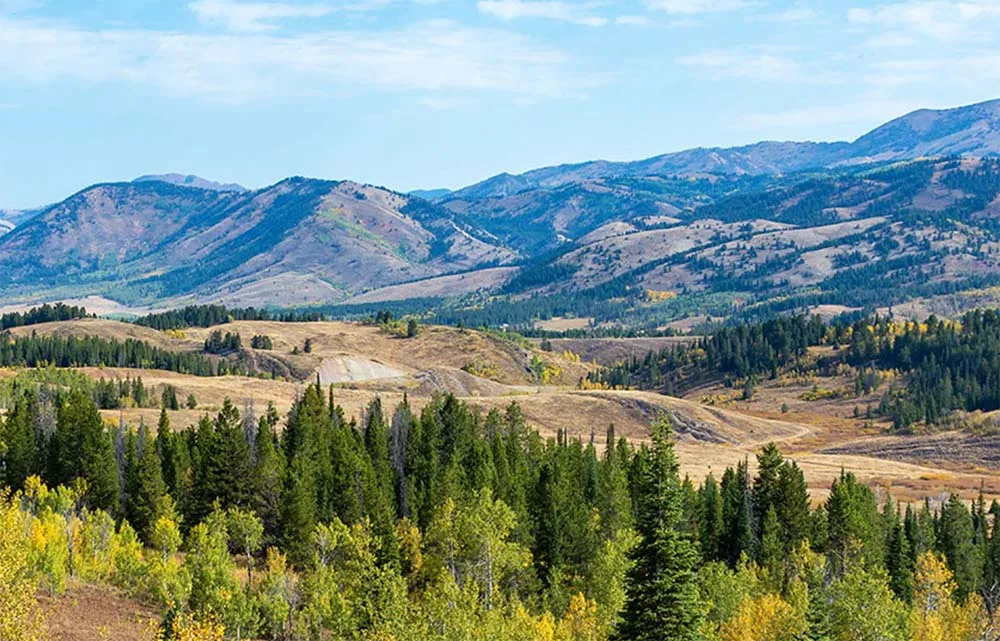
Myriad Uranium: 655M lb DOE-estimated endowment, 100+ new anomalies, drilling starts Q2 2026. America's uranium call option for AI data center energy demand.
- Myriad Uranium controls Wyoming's Copper Mountain project, where Union Pacific invested ~$100M drilling 2,000 holes and identifying seven deposits before Three Mile Island halted the 1979 mine plan; DOE estimated 655M lbs uranium endowment across the broader area
- Recent high-resolution radiometric surveys revealed 100+ new anomalies east of a major north-south structure, potentially doubling the exploration footprint beyond the western deposits that formed the original 15-30M lb resource estimate
- New assay work shows 50-60% more uranium than historical probe data suggested, with extended mineralised intervals at depths ranging from surface to 1,495 feet (original mine plan only considered uranium to 600 feet)
- Company plans 7-10,000 meter drill program starting within two months with $8.4M CAD in treasury, targeting both historical resource updates and new eastern anomalies across 222 permitted drill holes
- Location 5 miles from rail and power infrastructure, 113 miles from Sweetwater Mill processing facility, combined with US government emphasis on domestic uranium supply for AI/data center energy needs, positions Myriad as what one analyst calls "the call option on uranium in the United States"
As artificial intelligence companies face government mandates to secure independent energy supplies and uranium prices reflect renewed nuclear interest, Myriad Uranium Corp is preparing to drill what could become America's largest uranium project. CEO Thomas Lamb outlined the company's strategy at PDAC 2026, detailing how recent geophysical discoveries and enhanced assay techniques have expanded the potential resource at their flagship Copper Mountain project in central Wyoming well beyond the historical estimates that first attracted major investment nearly five decades ago.
The Copper Mountain Legacy: $100 Million Foundation
The Copper Mountain uranium project carries substantial historical credentials. Union Pacific invested approximately $100 million in the late 1970s, drilling roughly 2,000 boreholes and identifying seven separate uranium deposits. "Union Pacific of course planned a large scale conventional mine. 15 to 30 million pounds was their starter resource," Lamb explained. The company had planned to begin production in 1983 before the Three Mile Island incident effectively ended the uranium cycle.
More significantly, a 1982 Department of Energy assessment estimated the uranium endowment in the central Copper Mountain area at 245 million pounds, with a broader area containing 655 million pounds. Myriad holds approximately 60% of the acreage in the larger area and 80-85% of the central zone. This historical work provides an unusual level of geological confidence for an exploration-stage company, with the extensive drilling database serving as a foundation for modern exploration techniques.
Radiometric Discovery: Doubling the Exploration Footprint
Two months prior to the PDAC, Myriad completed high-resolution radiometric and magnetic surveys across the entire project area. The results revealed a significant north-south geological structure that appears to control uranium mineralisation. Critically, while all seven historical deposits and most known anomalies lie west of this structure, the radiometric survey identified more than 100 new anomalies to the east.
"The signatures of the deposits and the anomalies [are] maybe even more to the east of that structure," Lamb noted. Ground-truthing teams with scintillometers are currently sampling these eastern anomalies to prioritise drill targets. The geophysical signatures of the eastern anomalies match those of the known western deposits, suggesting similar mineralisation styles and potentially comparable grades.
This discovery has forced Myriad to evolve its drill strategy from simply confirming historical resources to potentially expanding the project's uranium inventory substantially. The company holds permits for 222 boreholes and plans to allocate drilling capacity between resource confirmation and new discovery work.
The Assay Advantage: 50-60% More Uranium Than Previously Understood
Perhaps the most significant technical development involves the difference between historical probe data and modern assay results. Union Pacific relied on downhole gamma probes to estimate uranium content in the 1970s, a standard practice at the time that measured radioactive decay rather than directly analysing uranium concentration.
Myriad's recent assay work reveals systematic underestimation in the historical data. At grades of 500 ppm or higher, assays show approximately 50% more uranium than probe results suggested. At 1,000 ppm or higher, the difference increases to 60% more uranium. Additionally, intervals that probes recorded as below cutoff grades (around 100 ppm) contain substantial uranium when assayed, extending the mineralised zones beyond historical interpretations.
"Instead of it being a 15 to 30 million pound range potentially, I think we're going to be right at the top of that range, I think is quite likely," Lamb stated, referring to the initial resource that could be defined through the drilling program. This conservative estimate applies only to updating the historical resource and doesn't account for potential new discoveries in the eastern anomaly field.
Interview with Thomas Lamb, CEO, Myriad Uranium
Capital Position and Drill Program Economics
Myriad currently holds approximately $8.4 million Canadian in treasury, with the balance rising as warrants and options are exercised. The initial drill program targets 7,000 to 10,000 meters with a budget of approximately $4 million. This provides sufficient capital for the first phase of drilling with treasury remaining for follow-up work based on results.
The company has adopted a multi-track approach: confirming historical resources through infill drilling, testing high-grade targets like the recently acquired Lucky Cliff area (which returned intervals of 85 feet at 1,200 ppm probe equivalent, potentially 1,800-1,900 ppm by assay), and drilling the new eastern anomalies. This strategy balances resource definition work that supports future economic studies with higher-risk, higher-reward discovery drilling that could substantially expand the project. Lamb emphasised market-driven capital allocation:
"What kind of drilling is the market going to reward? Is it going to be these, reproduce historic banger intercepts? We'll definitely do some of that because if you invest a dollar, you get $3 back, you just keep doing that."
Strategic Discussions and Industry Interest
Myriad has multiple parties under non-disclosure agreements accessing the company's data rooms. While Lamb declined to specify potential partners, he indicated active discussions with "US-based investors, funds, banks" as well as strategic industry participants. The nature of these discussions reflects the unique characteristics of uranium projects compared to other commodities.
Strategic partners are asking specific technical questions about the deposit characteristics and project economics, suggesting serious evaluation rather than preliminary interest. Some analysts are valuing in-ground uranium pounds at approximately $3 per pound, though valuations vary based on resource category and confidence level.
Infrastructure and Processing Advantages
Location provides significant advantages for Copper Mountain. The project sits at the intersection of two Wyoming highways, five miles from rail, high-tension power lines, and highway infrastructure. Nearby towns provide labor pools familiar with mining operations. Column leach testing in the 1970s achieved 90-94% uranium recovery rates, suggesting the ore would respond well to conventional processing.
Critically, the Sweetwater Mill - formerly operated by Rio Tinto and recently acquired by UEC (Uranium Energy Corp) - sits 113 miles from Copper Mountain. The mill processes both conventional ore and in-situ recovery material.
"We are very likely to be a large-scale conventional uranium mine and I hope that Sweetwater mill needs feed and a lot of it. Instead of going 600 miles away, this is 113 miles."
Myriad could potentially upgrade ore three to four times on-site through leaching processes before transporting concentrated material to the mill, reducing transportation costs and improving project economics.
The AI Data Center Catalyst
Recent US government directives requiring tech companies to secure independent energy sources for AI data centers have created new categories of potential uranium buyers beyond traditional utilities. These companies prioritise supply security over current uranium prices, with some willing to accept prices of $150-200 per pound if it guarantees long-term supply for energy-intensive data center operations.
"A prominent US analyst views us as the call option on uranium in the United States. It's because of this vast endowment that we have that more and more of it will become economic as the price goes up."
At Myriad's current market capitalisation of approximately $60-70 million Canadian (increasing as the company acquires its partner's remaining 25% stake), the company trades at a significant discount to its potential resource value, particularly for strategic buyers prioritising supply security over near-term economics.
The project's depth potential adds further optionality. Union Pacific's mine plan only considered uranium to 600 feet depth because shallow deposits provided sufficient inventory. Myriad has drilled deeper holes encountering uranium mineralisation at depths exceeding 1,400 feet, suggesting substantial additional resources that become economic at higher uranium prices.
The Investment Thesis for Myriad Uranium
- Unmatched Scale: DOE-estimated 655M lb endowment (Myriad holds ~60% of acreage) represents one of America's largest undeveloped uranium resources, with 245M lbs in central area where Myriad controls 80-85% of acreage
- Discovery Leverage: 100+ new eastern anomalies with geophysical signatures matching known deposits could potentially double exploration footprint; ground-truthing underway with drilling commencing within two months
- Grade Re-rating Catalyst: Modern assay techniques reveal 50-60% more uranium than historical probe data at higher grades, plus extended intervals below historical cutoffs, suggesting material resource expansion from same drilling database
- Near-Term Newsflow: 222 permitted drill holes, $8.4M CAD treasury, $4M initial program budget targeting multiple objectives: historical resource confirmation, high-grade Lucky Cliff intercepts, and new eastern anomalies
- Strategic Value Proposition: US government mandate for tech companies to secure independent energy creates new buyer category beyond utilities; analyst-estimated $3/lb in-ground valuation vs. ~$60-70M CAD market cap suggests significant re-rating potential
- Infrastructure De-risking: Five miles from rail/power, 113 miles from Sweetwater Mill processing facility, proven 90-94% metallurgical recoveries, established labor pools in supportive Wyoming mining communities
- Depth Optionality: Historical mine plan limited to 600 ft depth; Myriad drilling confirms uranium to 1,495 ft, creating additional resource potential that becomes economic at higher uranium prices
- Multiple Exit Paths: Active NDA discussions with strategic parties; conventional mine development potential; toll milling agreements; partial project sales; or complete acquisition as strategic uranium reserve
- Capital Efficiency: Union Pacific's $100M historical investment and 2,000 drill holes provide geological database that would cost hundreds of millions to replicate; Myriad leverages this foundation with targeted modern techniques
- Low Political Risk: Wyoming pro-mining jurisdiction, established uranium mining culture, Republican state government supportive of nuclear energy, federal emphasis on domestic uranium supply for national security
Macro Thematic Analysis
The convergence of AI-driven electricity demand and government nuclear energy mandates is reshaping uranium markets fundamentally. Recent US federal directives requiring technology companies to secure independent energy sources for data centers have created unprecedented demand from non-utility buyers focused on supply security rather than spot prices. Unlike traditional power utilities operating on long-term contracts and regulated returns, tech companies view $150-200/lb uranium as acceptable if it guarantees long-term supply for energy-intensive AI operations.
This dynamic particularly favors large, scalable US-based projects like Copper Mountain that can serve as strategic reserves. The 1982 DOE-estimated 655 million pound endowment positions Myriad as what analysts call "the call option on uranium in the United States" - a leveraged play on rising prices where increasingly peripheral, higher-cost resources become economic as market tightness intensifies.
TL;DR: Executive Summary
Myriad Uranium controls what could become America's largest uranium project with DOE-estimated 655M lb endowment in Wyoming's Copper Mountain district, where Union Pacific invested $100M drilling 2,000 holes before Three Mile Island halted 1983 production plans. Recent radiometric surveys identified 100+ new anomalies potentially doubling the exploration footprint, while modern assay techniques reveal 50-60% more uranium than historical probe data suggested. With $8.4M CAD in treasury, 222 permitted drill holes, and drilling commencing within two months, the company offers leveraged exposure to rising US uranium demand driven by AI data center energy requirements and government supply security mandates.
FAQ's (AI Generated)
Scale and geological confidence from Union Pacific's $100M investment and 2,000 historical drill holes, combined with proximity to Sweetwater Mill processing facility (113 miles), rail, and power infrastructure in supportive Wyoming jurisdiction.
Identified 100+ new anomalies east of major structure with geophysical signatures matching known western deposits, potentially doubling exploration footprint beyond the original seven deposits that formed historical 15-30M lb resource estimate.
1970s gamma probes measured radioactive decay rather than uranium concentration directly; assays reveal 50-60% more uranium at higher grades, plus extended intervals below historical cutoffs that probes missed entirely.
Drilling commences within two months on 7,000-10,000 meter initial program. Ground-truthing of eastern anomalies currently underway. Results expected throughout 2026 as multi-track program advances on historical confirmation and new discovery fronts.
Tech companies prioritise supply security over current pricing, accepting $150-200/lb uranium for long-term guarantees. Myriad's large endowment positions it as strategic reserve option at $60-70M CAD market cap versus potential $3/lb in-ground valuations.
Analyst's Notes





Subscribe to Our Channel












Stay Informed