Mogotes' 20,000-Meter Season Tests a Deeper Porphyry Below Albor's Breccia


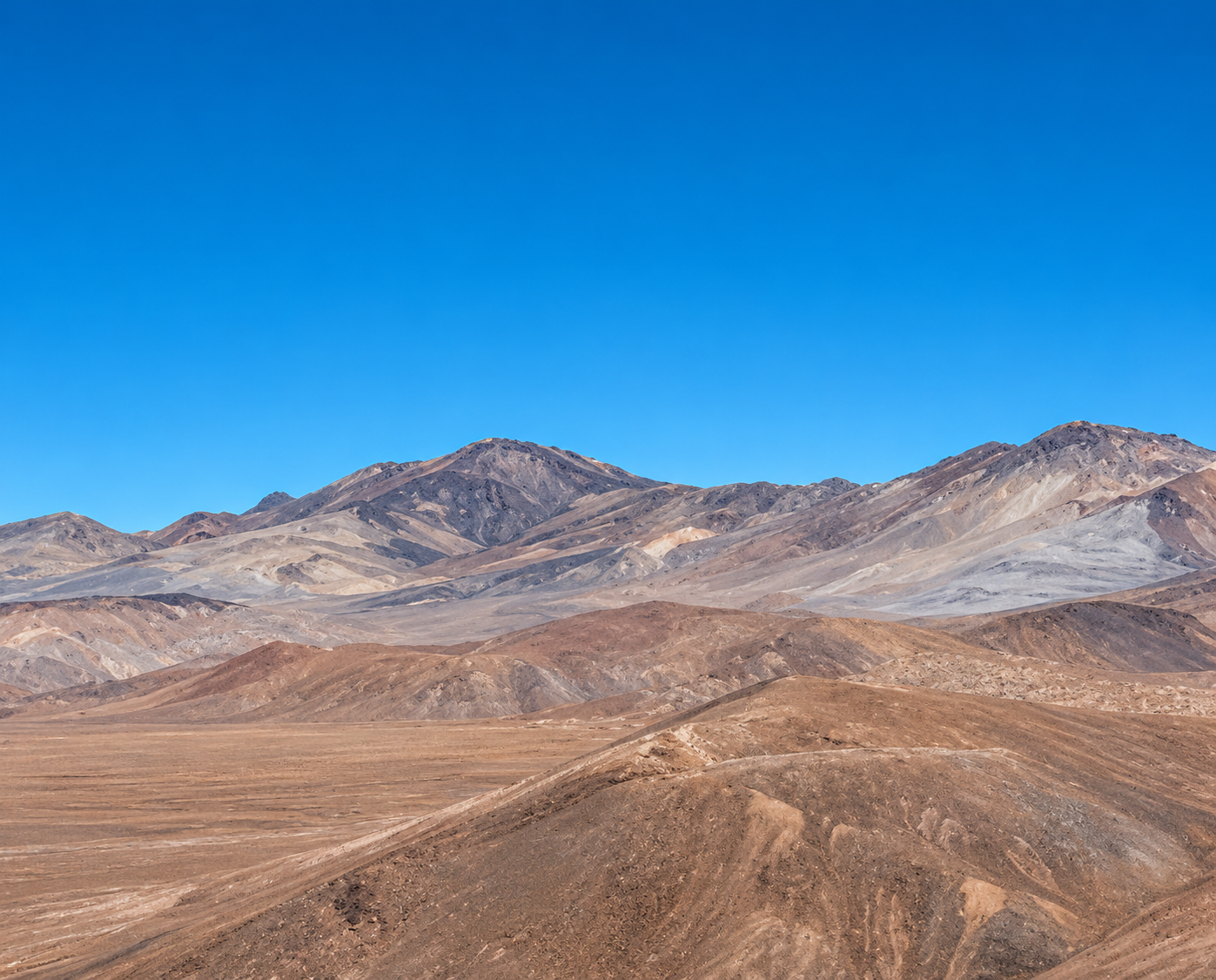
Mogotes Metals targets a deeper copper porphyry below the Albor breccia at Filo Sur, with up to 20,000 meters of drilling planned from December 2026.
- Mogotes Metals' Albor discovery at Filo Sur returned 180 meters at 0.98% copper equivalent from 108 meters, including 58 meters at 1.77%, the project's highest-grade intercept to date.
- Potassic alteration intensifies at the bottom of the discovery hole beside an induced polarization (IP) high, which the company interprets as a deeper porphyry target.
- The Albor breccia contains porphyry clasts and multi-stage mineralization that management compares to Filo del Sol, the neighboring discovery BHP and Lundin Mining acquired for C$4.5 billion.
- Ground around Albor is open for about 1.5 kilometers in each direction, and the only identified historic hole in the area is a reverse circulation hole drilled to about 300 meters in 2005.
- Up to 20,000 meters of drilling is planned at Filo Sur for 2026-2027, with drilling targeted to start in December, and the company states that C$77 million in cash funds its year of operations.
Mogotes Metals (TSXV: MOG | FSE: OY4 | OTCQB: MOGMF) is best known for where Filo Sur lies: directly south of Filo del Sol in the Vicuña district of Argentina and Chile. The more specific case for the coming season is vertical. The first hole into Albor intersected a high-grade breccia from 108 meters, and alteration and geophysical data near the bottom of that hole define a deeper porphyry target that no drill has yet tested. Mobilization is underway, and the 2026-2027 program includes both extension and depth drilling at Albor.
The Albor Intercept & Its Grade Profile
The discovery hole cut 180 meters at 0.98% copper equivalent from 108 meters, including 58 meters at 1.77% copper equivalent from 111 meters. A single sample from 125 to 126 meters assayed 1.67% copper, 1.62 grams per tonne gold, 1.69 grams per tonne silver and 685 parts per million molybdenum. Copper, gold, silver and molybdenum all feed the copper equivalent calculation, which the company reports at a 0.20% cut-off, with included intervals at 1.0%.
The intercept came from the first hole drilled into this part of the project, and it remains the highest-grade result at Filo Sur. Surface data around the collar are consistent with a system larger than the first hole tested: road cuts the hole was drilled from returned anomalous copper in rock chips, and the molybdenum soil grid shows elevated values adjacent to the drill site. Mogotes has drilled 8,392 meters at Filo Sur in total, excluding historic holes.
Geological Signals Pointing Below the Breccia
The mineralized interval from 108 meters is a strongly mineralized magmatic-hydrothermal breccia. Toward the bottom of the hole, potassic alteration intensifies alongside an induced polarization (IP) high, which the company treats as a deeper porphyry target. The breccia also hosts multi-stage mineralization, with copper, gold, silver and molybdenum present in the same core.
President and Chief Executive Officer of Mogotes Metals, Allen Sabet, compared the Albor core directly with the deposit to the north:
"We're seeing in this drill hole geological characteristics that parallel or are analogous to those you see at Filo del Sol, including these multi-stage types of mineralization, the kind of breccias that we're seeing, strongly mineralized magmatic-hydrothermal breccias, and we're really happy to also see porphyry clasts in there, so we think this part of the system has got a really high potential."
Geophysics & Geochemistry Overlap Near the Discovery Hole
Geophysical and geochemical data point to the same ground. A 3D model of chargeability isosurfaces shows increasingly chargeable zones close to Albor, with readings of 45 and above classed as very chargeable. Mogotes also modeled a geochemical target from its rock-chip samples, using the suite of elements typically associated with the core of a porphyry to project a potential porphyry at depth.
No single indicator confirms a porphyry. The potassic alteration is an observation in the drill core, while the chargeability and geochemical results are models. Their coincidence gives Mogotes a defined area to drill beneath the known breccia, but the presence and size of any underlying porphyry remain untested.
Sabet weighed the new geochemical method against the IP data in explaining the drill plan at Albor:
"It's an experimental technique, but it's good to see that both this technique and the chargeability correlate in the same area near to our existing discovery drill hole, so we definitely plan to drill at depth here as well in the coming season."
District Setting & Funding
Filo Sur adjoins the southern limit of the Filo del Sol resource and lies on the same belt as Lundin Mining's and NGEx Minerals' deposits, including Lunahuasi. The belt shares rocks of similar Middle Miocene age, 14 to 16 million years old, and the deposits generally cluster where the north-south belt meets cross-cutting trans-Andean faults.
Mogotes held C$77 million in cash and equivalents as of September 21, 2026. The company states this funds a year of operations across all 3 projects: Filo Sur, the Beskauga copper-gold-silver project in Kazakhstan, and the Copper Cliff project in Montana. Filo Sur takes priority on company funding.
How the 2026-2027 Program Tests Depth & Strike
Mogotes plans up to 20,000 meters of drilling at Filo Sur for 2026-2027, more than triple last season. Albor is 1 of 5 program components, with drilling planned both to extend the known breccia and to test the deeper porphyry target. Holes are targeted to the north and south along strike, and to the east, where the company's cross-section interpretation shows potential at depth. The remaining work covers Cruz del Sur, the first porphyry test at Luz del Sol-Cuenca, the Meseta high-sulfidation and porphyry test, and reconnaissance drilling along the Macho Muerto fault zone.
About 1.5 kilometers in each direction around the discovery remains open. The immediate Albor area has seen almost no historic drilling, and the only identified historic hole is a reverse circulation hole drilled in 2005 to about 300 meters.
Filo Sur drills from about November to May, during the Southern Hemisphere summer, with drilling targeted to start in December and assays reported through the season. The program remains subject to permitting, budgets and results from earlier holes. The first deep holes at Albor will test whether the high-grade breccia, the IP high and the modeled geochemical target connect to a larger porphyry system at depth. Confirming that connection would extend the discovery beyond its known breccia footprint and give Mogotes a new target for follow-up drilling.
FAQs (AI-Generated)
Analyst's Notes





Subscribe to Our Channel




Stay Informed