New Found Gold Acquisition Reduces Equity Dilution by Accelerating Queensway Cash Flow


.webp)
New Found Gold leverages Hammerdown's mill to fast-track Queensway to $200M+ annual cash by 2027, avoiding dilution from $900M build while de-risking execution via operational synergies.
- New Found Gold acquired Hammerdown and Pine Cove primarily to access permitted mill and tailings infrastructure, accelerating Queensway development by ~3 years
- Company is ramping up 700 tpd production at Hammerdown while expanding Pine Cove mill to 1,400 tpd for Queensway Phase 1 operations
- Queensway Phase 1 targets 69,000 oz/year at ~$1,300 AISC, generating $200M+ annually at current gold prices by end of 2027
- Phased approach avoids massive dilution from $900M capex for larger plant; focuses on near-term cash generation over delayed scale
- Two-asset strategy reduces execution risk while transferring operational learnings from Hammerdown ramp-up to Queensway development
New Found Gold Corporation (TSXV: NFG) is executing a deliberate strategy to bring its high-grade Queensway project into production by leveraging existing infrastructure and generating near-term cash flow. CEO Keith Boyle recently outlined the company's approach in detail, explaining how the acquisition of the Hammerdown gold project and Pine Cove mill facility serves as a catalyst for accelerating Queensway development while minimising shareholder dilution. With gold prices near historic highs, the company's phased development strategy positions it to capture substantial margins years ahead of a traditional single-asset build timeline.
The Hammerdown Acquisition: Infrastructure Over Ounces
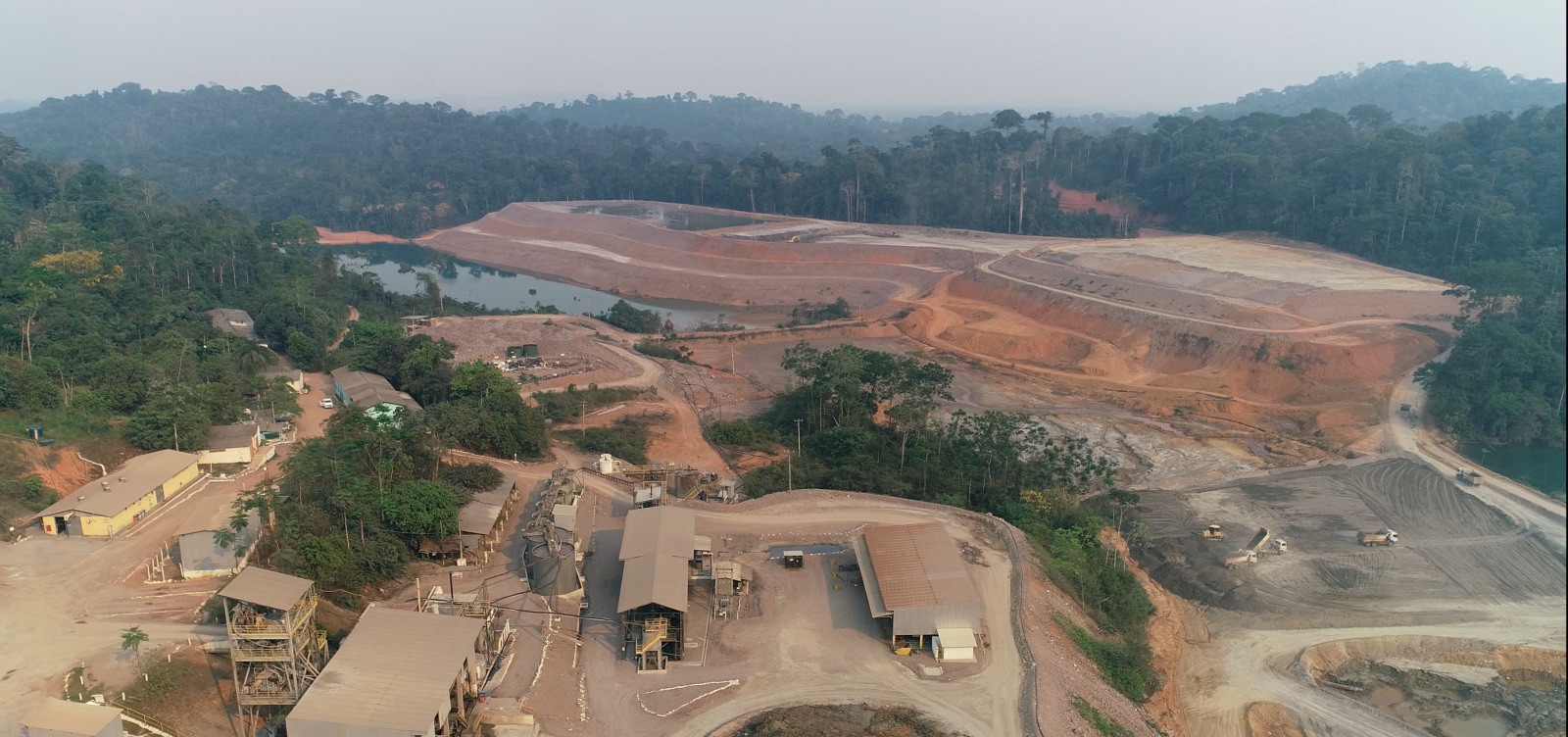
New Found Gold's acquisition of the Hammerdown project was driven primarily by strategic infrastructure needs rather than the deposit itself. As Boyle explained, "We wanted the mill and tailings for Queensway. That's what we were shooting for." The company recently released a Preliminary Assessment (PEA) and updated mineral resource estimate for Hammerdown, taking a broader view than the previous 2022 feasibility study, which focused narrowly on the Hammerdown deposit alone.
The previous management's approach was characterised by Boyle as "somewhat entrepreneurial or optimistic." With operational experience, the New Found Gold team reassessed the project with more conservative parameters around block sizes and mining schedules. The result is a right-sized operation that serves multiple strategic purposes: it provides modest production and cash flow, delivers operational experience in a 700-ton-per-day open pit environment, and most importantly, provides permitted milling infrastructure that saves two to three years on the Queensway timeline.
The broader property package between Hammerdown and Pine Cove includes historic deposits and former mining operations that were not previously evaluated for their development potential. By bringing these historic resources current and examining the entire asset base, New Found Gold can prioritise future development opportunities more effectively.
Queensway: The Flagship Asset & Primary Value Driver
The Queensway project remains New Found Gold's flagship asset and the ultimate target of the company's development strategy. The Queensway PEA released in July identified Phase 1 production of approximately 69,000 ounces per year with all-in sustaining costs around $1,300 per ounce. At current gold prices, this translates to annual cash generation exceeding $200 million.
The development timeline calls for expanding the Pine Cove mill throughout 2026 and into 2027, doubling its capacity from 700 tons per day to 1,400 tons per day. By the end of 2027, the company expects to begin trucking mineralisation 270 kilometers from Queensway to Pine Cove - approximately 700 tons per day grading between 9-10 grams per ton. This represents a substantial gold stream from a logistical standpoint, though the distance is manageable for truck transport.
Boyle emphasised the financial impact of accelerating this timeline:
"That extra 3 years would have meant more dilution to shareholders and less opportunity for an increase in share price shareholder return."
By utilising existing permitted infrastructure rather than constructing a new mill on-site, New Found Gold can bring high-grade material to market significantly faster while preserving shareholder value.
The Phased Development Rationale: Avoiding Dilution & Delay
A central element of New Found Gold's strategy is its phased approach to development, which stands in contrast to a traditional single-large-plant build. The company fielded questions from investors about why it didn't pursue immediate construction of a larger facility.
Attempting to raise nearly 3 times the company's previous market capitalisation would have required doubling the share count or more, resulting in massive shareholder dilution. Additionally, constructing a large plant would have pushed first production to at least 2031 - a 7-year delay from the current timeline. The phased approach addresses both concerns: capital requirements are modest relative to market cap, and cash generation begins years earlier.
This strategy reflects lessons learned from single-asset development projects. Boyle noted he has "the 'experience wrinkles' having done single asset builds twice now," and emphasised that operating two complementary assets reduces risk compared to betting everything on a single project.
Interview with Chief Executive Officer, Keith Boyle
Execution Capacity & Team Development
The 2026 calendar presents significant operational challenges for New Found Gold: ramping up production at Hammerdown, installing ore sorting equipment, expanding the Pine Cove mill, advancing exploration programs, and progressing Queensway development. Executing across multiple simultaneous workstreams requires substantial organisational capability.
Boyle expressed confidence in the team assembled to meet these demands. COO, Robert Assabgui brings extensive experience in mine development and operations. WSP has been engaged as EPCM contractor for the Pine Cove expansion and Queensway development, with recent meetings confirming progress on deliverables. At Hammerdown, the company placed an internal manager to lead the production ramp-up following the November takeover of operations.
The scale of operations helps maintain focus. At 700 tons per day, these are relatively small mining operations without large workforces, allowing management attention to concentrate on critical factors like grade control. Weather conditions in Newfoundland - notably heavy snowfall in January - have presented some challenges to the Hammerdown ramp-up, though February has shown more positive results.
Operational Learning Transfer & Synergies
Beyond infrastructure access, the Hammerdown operation provides a valuable proving ground for operational techniques that will transfer directly to Queensway. Both projects involve 700-ton-per-day open pit mining in similar geological settings on the island of Newfoundland. Skills, processes, and lessons learned at Hammerdown in 2025 will migrate with the team to Queensway in 2026 and 2027.
This operational continuity represents a significant de-risking element for investors. Rather than starting Queensway development from scratch, the company will apply battle-tested approaches refined through actual production experience. The synergies between the two assets were a key consideration in the acquisition decision and continue to influence how New Found Gold views its asset portfolio.
Market Reception & Project Financing
Recent marketing efforts in New York and at industry conferences have generated positive feedback, according to Boyle. Investors have responded enthusiastically to the timeline and cash generation potential:
"Wow, what a great story. Didn't realise what you had here. Queensway by the end of 2027 generating over $200 million at today's prices. Best story we've heard in a long time."
The presence of current production at Hammerdown strengthens the company's position in project financing discussions. Having existing cash flow makes lenders more comfortable with providing a project financing facility, improving terms and increasing the likelihood of securing attractive financing for the Pine Cove expansion and Queensway development.
When asked whether investors prefer the cash generation story over pure exploration scale, Boyle confirmed that the market is rewarding the phased approach. The alternative - pursuing immediate large-scale development - would have resulted in significant dilution and delayed cash generation, leaving current shareholders substantially worse off.
The Investment Thesis for New Found Gold
- Near-term cash generation: Hammerdown production ramps up in 2026, providing cash flow ahead of most development-stage gold companies
- Accelerated timeline to major production: Queensway Phase 1 production by end of 2027, approximately three years faster than greenfield mill construction
- High-margin production profile: 69,000 oz/year at ~$1,300 AISC generates $200M+ annually at current gold prices, delivering substantial free cash flow
- Infrastructure value: Permitted mill and tailings facility eliminates permitting risk and construction delays for processing capacity
- Minimised dilution: Modest capital requirements relative to market cap preserve shareholder value compared to $900M large-plant scenario
- Operational de-risking: Hammerdown experience transfers directly to Queensway, reducing execution risk on flagship project
- High-grade asset base: Queensway mineralisation averages 9-10 g/t, supporting premium margins even in lower gold price environments
- Portfolio diversification: Two-asset strategy reduces single-project risk while maintaining exploration upside across large land package
- Experienced management team: Track record in mine development and operations with lessons learned from previous builds
- Project financing advantages: Existing production and cash flow improves terms and likelihood of securing attractive financing for expansion
New Found Gold's approach exemplifies a growing trend in gold development: leveraging existing infrastructure to accelerate timelines and reduce capital intensity. In an environment where construction costs have escalated significantly and permitting timelines extend into years or decades, access to permitted processing facilities represents substantial value. The company's willingness to operate a modest-scale production asset primarily for its infrastructure value demonstrates sophisticated capital allocation in pursuit of larger strategic objectives.
As Boyle explained, the Hammerdown acquisition was not about the deposit itself but about enabling Queensway development: "We wanted the mill and tailings for Queensway." This infrastructure-first thinking allows development-stage companies to bypass major bottlenecks while generating cash flow that funds advancement of primary assets, reducing reliance on equity markets during the critical pre-production phase.
TL;DR
New Found Gold is leveraging the Hammerdown acquisition to access permitted milling infrastructure, accelerating Queensway development by ~3 years and avoiding massive dilution from $900M greenfield construction. Queensway Phase 1 will generate $200M+ annually at current gold prices by late 2027, with operational learnings from Hammerdown's 700 tpd ramp-up transferring directly to Queensway's identical-scale operations, significantly de-risking execution.
FAQ's (AI Generated)
Hammerdown provided permitted mill infrastructure, saving 2-3 years on timeline and avoiding $900M capex that would have doubled share count and delayed production until 2031 versus 2027.
Phase 1 targets 69,000 oz/year at $1,300 AISC, generating over $200 million annually at current gold prices with 9-10 g/t feed grade trucked 270km to Pine Cove mill.
Both are 700 tpd open pit operations in Newfoundland; skills, grade control processes, and operational learnings from Hammerdown ramp-up transfer directly to Queensway, reducing execution risk.
Portfolio approach provides operational diversification, maintains cash generation if one asset faces challenges, and offers optionality for capital allocation across complementary projects with shared infrastructure.
Near-term production (2027) capturing high margins during favorable pricing, minimal dilution path to cash flow, proven infrastructure eliminating permitting risk, and high-grade deposit supporting sustained profitability across price environments.
Analyst's Notes





Subscribe to Our Channel





Stay Informed