




New Found Gold Graduates to the TSX: What It Means for Investors


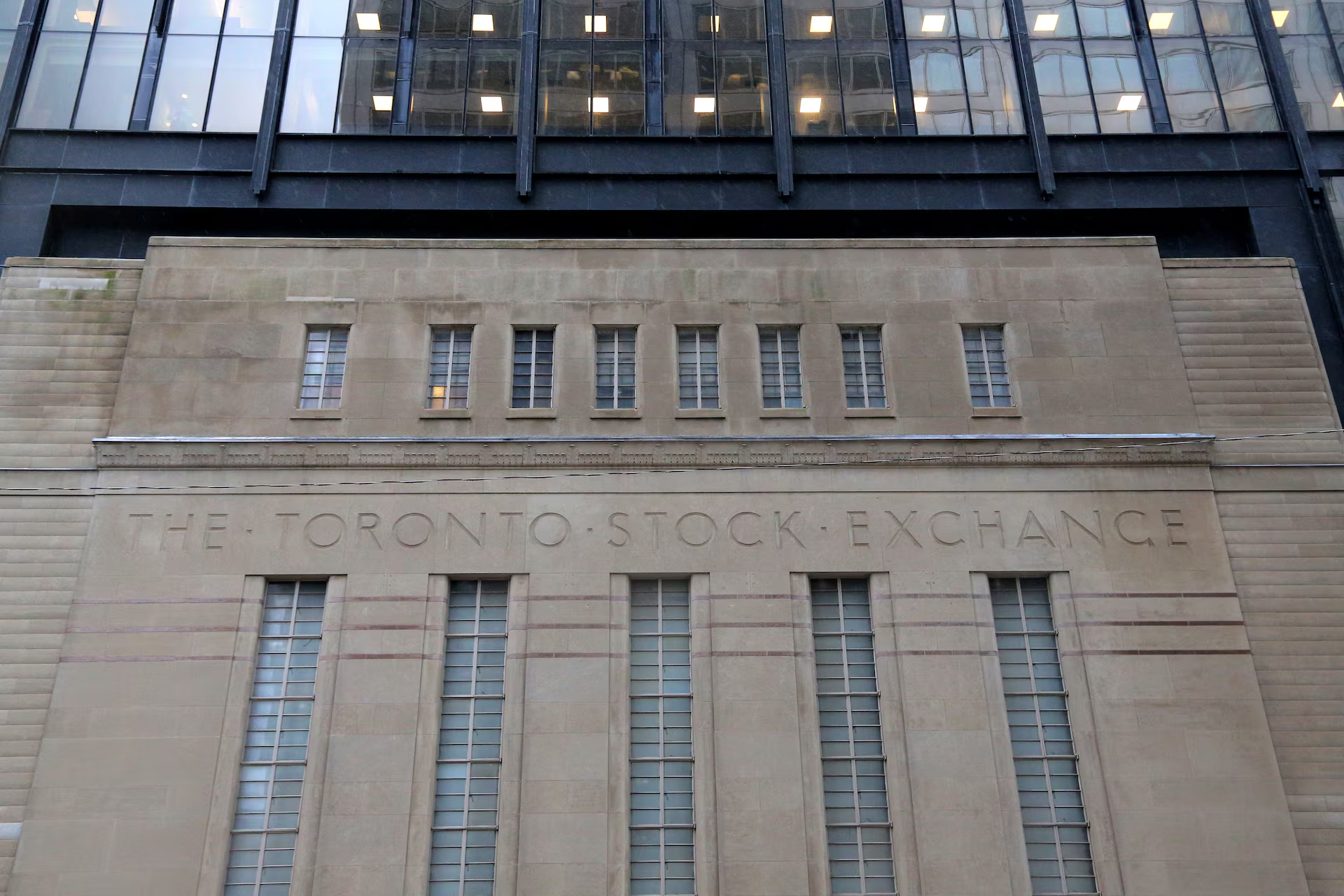
New Found Gold graduates from the TSXV to the TSX, unlocking institutional investor access and improving liquidity for NFG shareholders on both sides of the bo…New Found Gold graduates from the TSXV to the TSX, unlocking institutional investor access and improving liquidity for NFG shareholders on both sides of the border.
- New Found Gold Corp has graduated from the TSX Venture Exchange to the Toronto Stock Exchange, a milestone CEO Keith Boyle frames as formal recognition of the company's transition from early-stage explorer to emerging producer.
- The TSX listing opens the company to institutional funds and larger asset managers that restrict their mandates to TSX-listed securities, removing a structural barrier to that capital.
- Combined with its existing NYSE American listing, New Found Gold now has equivalent market presence across both major North American exchanges.
- Improved liquidity is the expected near-term benefit, as broader investor eligibility tends to support more efficient price discovery and reduced thin-market volatility.
- The graduation comes as the Queensway Gold Project advances and institutional interest in domestic gold producers increases, timing that gives the credibility signal practical weight.
From the Venture to the TSX: What Changed & Why It Matters
New Found Gold Corp (TSX: NFG | NYSE American: NFGC) has graduated from the TSX Venture Exchange to the Toronto Stock Exchange, a milestone that CEO Keith Boyle describes as formal recognition of the company's transition from early-stage explorer to emerging producer:
"It's a real recognition about how we've come from early stage exploration into emerging producer status," Boyle said. "Graduating to the TSX demonstrates the credibility that that transition has provided."
The move is more than symbolic. The TSX carries a different investor audience than the Venture exchange, one that includes institutional funds, larger asset managers, and sophisticated retail investors who filter their universe by exchange. By listing on the TSX, New Found Gold removes itself from the screens of those who exclude TSXV-listed companies by default, and enters the sightlines of capital pools that were previously out of reach.
Boyle was direct about the practical implications:
"A lot of funds, a lot of larger potential shareholders will be looking more to the TSX than they would to the Venture."
The result should be improved liquidity and broader share distribution, two metrics that matter when a company begins to attract the kind of institutional attention that comes with development-stage de-risking.
Combined with the company's existing listing on the NYSE American, the TSX graduation effectively puts New Found Gold on equal footing across both major North American markets. As Boyle put it, it brings the Canadian listing "on par" with what investors already have access to through the US exchange, giving the full investor base, on both sides of the border, the same level of access and credibility signal.
For existing shareholders, this is a positive development for the same reasons it benefits the company: more visibility tends to mean more price discovery, and more institutional participation can reduce the kind of thin-market volatility that often plagues Venture-listed names. For prospective investors, it signals that New Found Gold is being taken seriously as a company that has moved past the speculative phase and is operating at a different scale.
The timing matters. A TSX graduation at this stage of New Found Gold's development, with the Queensway Gold Project advancing and capital markets increasingly focused on domestic gold producers, adds credibility to the investment case at a moment when that credibility can be put to work.
The Investment Thesis for New Found Gold Corp
- New Found Gold's graduation to the TSX marks a formal step-change in its market positioning, moving the company from a venture-stage listing into a tier that institutional capital actively monitors.
- The dual listing on the TSX and NYSE American gives the company coverage across both the Canadian and US institutional investor bases, removing a structural barrier that has historically limited liquidity.
- Greater exchange visibility is expected to improve share liquidity, as funds that restrict their universe to TSX-listed companies can now include NFG in their screening processes.
- The graduation reflects the company's operational progress at the Queensway Gold Project, with Boyle framing the listing as recognition of a genuine transition to emerging producer status rather than a promotional exercise.
- For investors already positioned in NFG, the move reduces thin-market risk; for those evaluating entry, it adds a credibility layer at a time when the gold development space is attracting renewed institutional interest.
Analyst's Notes





Subscribe to Our Channel







Stay Informed






















