New Found Gold Is Building Its Queensway Operating Team at Hammerdown First


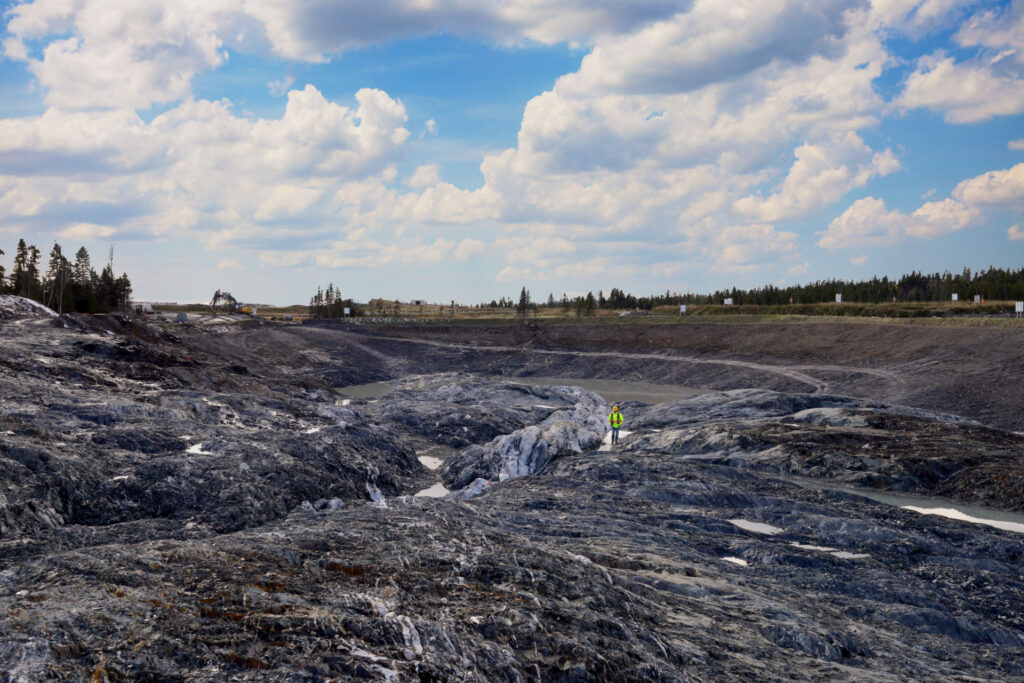
New Found Gold is using the Hammerdown ramp-up to build a local operating team and to implement grade-control procedures that it will carry to Queensway.
- New Found Gold hired 50 new personnel at Hammerdown by the end of the second quarter of 2026, with over 90% from Newfoundland and Labrador, and a total workforce of 264.
- Mark Ross was promoted to General Manager, Mines, after serving as Hammerdown Mine Manager and previously as Queensway Site Manager.
- Hammerdown's ramp-up has reached the preliminary economic assessment (PEA) design rate of 700 tonnes per day and 87% recovery, with gold reconciling from the block model to the mill.
- The grade-control procedures proven at Hammerdown will be transferred to Queensway, which is advancing through permitting, with test-pitting targeted to begin later in 2026.
- Hammerdown experience changed the Queensway plan, prompting contract mining first and a doubling of the Pine Cove Mill, with first ore targeted for late 2027.
New Found Gold (TSXV: NFG | NYSE American: NFGC) is treating the ramp-up of its Hammerdown gold mine in Newfoundland and Labrador as more than a production milestone. Chief Executive Officer of New Found Gold, Keith Boyle, has described Hammerdown as the place where the company is building the operating team and the procedures it intends to carry into its larger Queensway project, so the bigger build starts with people and processes already in place rather than from zero.
Acquiring Hammerdown to Accelerate Queensway
The acquisition logic for Hammerdown was about access to processing, not cash generation. New Found Gold bought the Hammerdown gold project primarily for the Pine Cove Mill and its tailings facilities, which give the company a permitted route to accelerate Queensway into production. Hammerdown is on schedule to reach commercial production in the second half of 2026.
Boyle is direct about why the company bought Hammerdown:
“We did buy the Hammerdown Gold project in particular for the Pine Cove mill and tailings facilities. That was so we could advance Queensway and accelerate its progression to commercial production, which we are now targeting towards the end of next year. We never really thought of Hammerdown as the cash-flow producer for funding Queensway.”
That framing positions Hammerdown as a working operation that the company can learn from while Queensway moves through development.
Building the Operating Team
Most of the work at Hammerdown through the first half of 2026 has gone into assembling the people who run it. The company hired 50 new personnel by the end of the second quarter of 2026, with a further 14 due to start in June, and has created 40 new jobs to date. The total workforce stands at 264, comprising 76 employees and 188 contractors. Over 90% of the new hires come from Newfoundland and Labrador. Hiring to complete the operational team is expected to be finished in the current quarter.
The senior appointment is Mark Ross, promoted to General Manager, Mines. Ross served most recently as Hammerdown Mine Manager and previously as Queensway Site Manager. The operation is led by Chief Operating Officer Robert Assabgui and Mill Manager Dwight Goudie. The key positions filled in this hiring round include Chief Mine Geologist, Safety and Environment Coordinator, Metallurgist, Manager of Processing Projects, and Exploration Manager.
Boyle puts the scale of the local hiring this way:
“We hired 50 new people by the end of the second quarter. Over 90% of those new jobs were from Newfoundland and Labrador. Right now, we're really focused on having people who can drive back and forth. We've got a total workforce of 264 people. 76 of them are our employees and 188 contractors.”
The local concentration gives the company a workforce it can retain as the same people move toward Queensway.
Ramp-Up Performance & Grade Control
The ramp-up has given the new team measurable results to work from. Delivery to the Pine Cove Mill has reached the Preliminary Economic Assessment (PEA) design rate of 700 tonnes per day, with peak throughput of 1,394 tonnes per day. Recovery reached the PEA design level of 87% in mid-second quarter 2026, and gold is being reconciled from the Hammerdown block model to the mill. Grade control has improved, with 7,000 metres of 5-metre-by-5-metre grade-control drilling completed to date, lifting the head grade delivered to the mill toward the grades set out in the PEA.
Overburden stripping for the first-phase pit was completed in the first quarter of 2026; civil works are on schedule for the end of the third quarter; and the permanent crushing and sorting plants are on track for the end of the fourth quarter. The operation has recorded zero lost-time incidents and a total recordable incident frequency rate of zero after more than 105,000 person-hours worked in 2026. New regrind mills to replace the current regrind mill are due for commissioning in the fourth quarter of 2026. Recovery is expected to increase toward approximately 92% following the conversion of the mill from a flotation-Merrill-Crowe circuit to a gravity-carbon-in-leach circuit.
Boyle is precise on what commercial production actually requires:
“For us in particular, it's really hitting our mill rate. In the PEA, we have 700 tons a day. The recovery's in the high 80s. And the consistent grade from the mine. Because it's a narrow vein deposit, grade control is critical, and the team we've built on site has done a great job. We're now getting close to that steady state where we're able to generate enough material to send to the mill consistently.”
Steady, consistent feed is the test the team is working to pass before the operation is declared commercial.
Carrying the Team & Procedures to Queensway
The point of building all of this at Hammerdown is to move it across to Queensway. Ross is tasked with taking the grade control, grade-control drilling, and mining procedures developed at Hammerdown and applying them to the Queensway build, so the project starts with a trained workforce and established processes. Queensway is advancing through government permitting, with capital costs being updated and remaining within the PEA range. Phase 1 carries an initial capital cost of C$155 million, which is fully funded.
Hammerdown experience has already changed the Queensway plan. The company will begin Queensway with a contract miner rather than an owned equipment fleet, working out operational issues before bringing in its own fleet and people, and it is doubling the Pine Cove Mill to take Queensway feed. The first couple of years of Phase 1 target processing 12 to 12.5 grams per tonne (g/t) of high-grade material for roughly 100,000 ounces of gold a year at an all-in sustaining cost (AISC) of US$1,300 per ounce, with average annual production of 172,000 ounces in years five to nine at an AISC of US$1,090 per ounce.
Boyle frames the sequencing plainly:
“It's really using Hammerdown to leverage an understanding, because as a new company, all this stuff is brand new. Whether you get a bunch of experienced people together, you all kind of learn something new together. By doing it on Hammerdown first, we'll hit the ground running at Queensway.”
Early works at Queensway and the early works permit are targeted for the fourth quarter of 2026, with first ore to the mill in late 2027 and Phase 1 commercial production in 2028.
From Ramp-Up to Queensway Construction
The sequence New Found Gold has set out runs from Hammerdown reaching commercial production into a Queensway build staffed by the same management and crews. Whether the grade-control discipline proven at Hammerdown holds as the team scales into a larger operation is the question the next stage will answer.
FAQs (AI-Generated)
Analyst's Notes





Subscribe to Our Channel

.png)

.png)



Stay Informed