New Found Gold: Hammerdown Clears the Path to Queensway Production


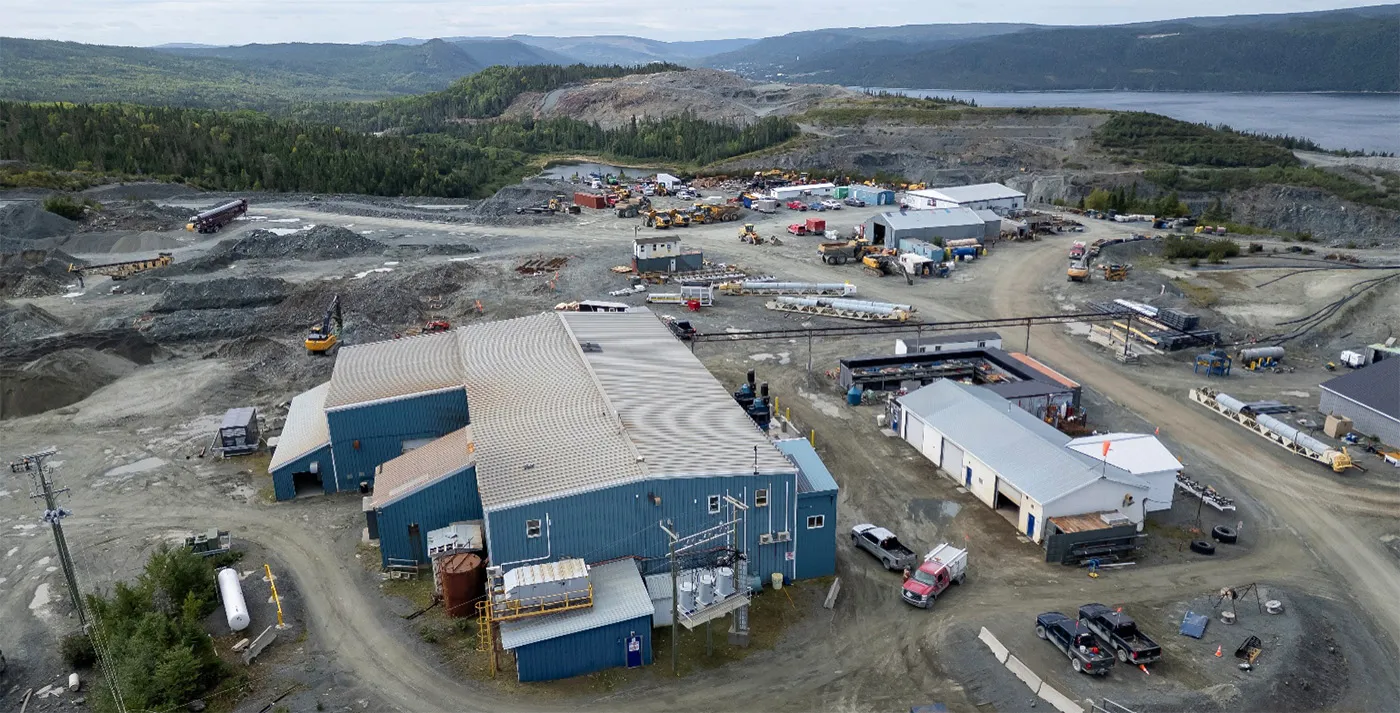
New Found Gold CEO Keith Boyle on Hammerdown's ramp-up, Pine Cove Mill expansion, Queensway Phase 1 funding, and a 90,000m drill program across 110km of Newfoundland ground.
- Hammerdown is in the final stages of its ramp-up to commercial production, with a workforce of 264 personnel now in place and throughput approaching the target rate of 700 tonnes per day. At steady state, the operation is projected to generate $40 to $50 million per year in free cash flow, sufficient to cover corporate overhead and fund the exploration program.
- The Pine Cove Mill is being expanded to double its current 700 tonne-per-day capacity as part of the Phase 1 capital program. This removes the need to permit and construct a new on-site mill at Queensway for Phase 1 and is fully funded within the existing capital structure.
- Queensway Phase 1 targets approximately 100,000 ounces per year in the first two years at grades of 12 to 12.5 g/t and an AISC of approximately $1,300 per ounce. At gold prices prevailing at the time of the interview, Boyle estimated free cash flow of approximately $300 million from this initial production phase.
- The $220 million financing package closed in April 2026, a $105 million credit facility with EdgePoint Investment Group and a bought deal equity raise, provides sufficient capital to fund Phase 1 construction. The company held $148 million in cash and marketable securities as of May 2026.
- The 2026 drill program covers 90,000 metres across six rigs on a 110-kilometre land package. New Found Gold's historical discovery cost at Queensway is under US$100 per ounce, which Boyle cited as the basis for prioritising organic exploration over M&A at current gold prices.
Introduction to New Found Gold & Key Projects
New Found Gold Corp (TSXV: NFG | NYSE-A: NFGC) holds two gold projects in Newfoundland and Labrador, Canada. Its flagship asset is the Queensway Gold Project, a 220,000-hectare land package in central Newfoundland hosting a NI 43-101 resource of 1.39 million ounces of indicated gold at 2.40 g/t and 0.608 million ounces of inferred gold at 1.77 g/t. Its second asset is the Hammerdown Gold Project, which includes the Hammerdown open-pit mine and the Pine Cove Mill, a fully permitted, operational processing facility located approximately 95 kilometres from Queensway.
CEO Keith Boyle discussed the operational status of Hammerdown, the capital program underpinning Queensway Phase 1, and the 2026 exploration drill program. The conversation covers the company's transition from exploration-stage developer to operating producer, and the sequencing of capital and operational decisions that connects Hammerdown's current ramp-up to Queensway's targeted production start.
The company's development strategy centres on using the Pine Cove Mill to process Queensway Phase 1 ore, removing the need to build a new on-site processing facility and shortening the path to first production. A preliminary economic assessment published in 2025 outlined Phase 1 at an initial capital cost of C$155 million, with first ore to mill targeted for Q4 2027 and commercial production in 2028. A $220 million financing package was closed in April 2026 to fund that construction program.
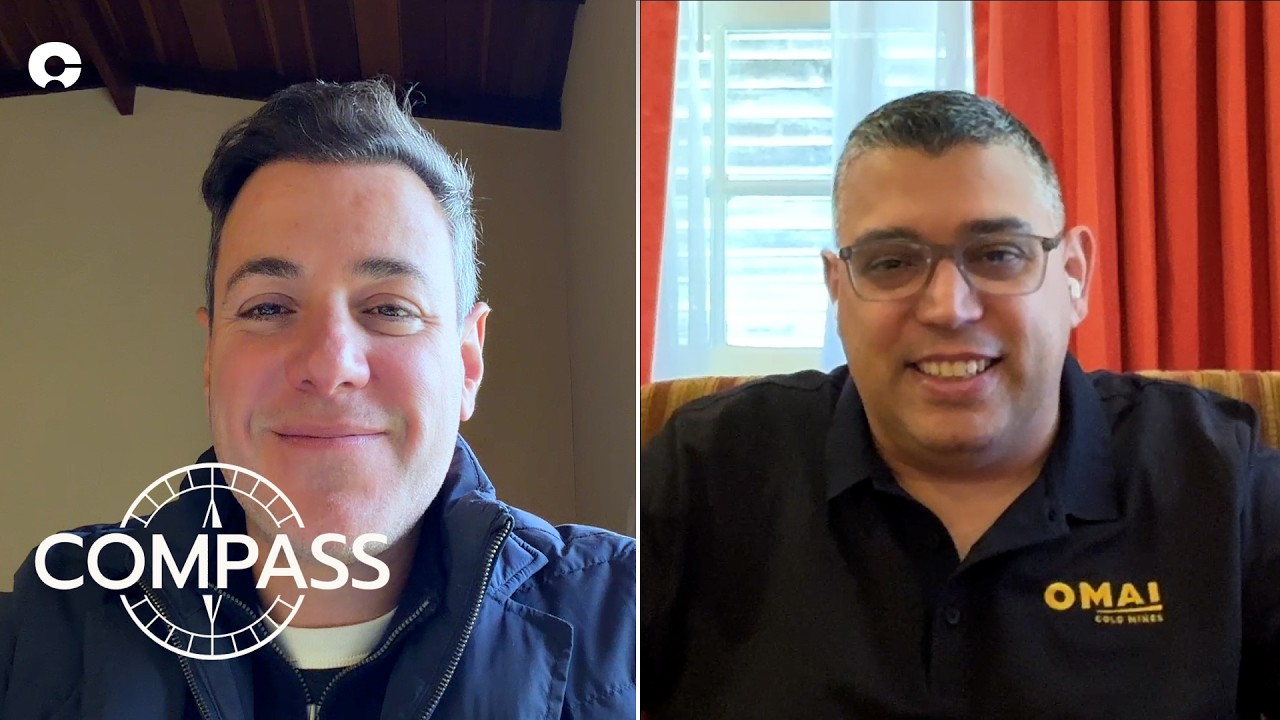
Interview with President & CEO, Keith Boyle
Commercial Production & Operational Readiness
Hammerdown is in the final stages of its ramp-up to commercial production. Boyle defined commercial production operationally as sustained throughput of 700 tonnes per day at the Pine Cove Mill, with consistent grade delivery from the open pit, a milestone he described as imminent:
"Commercial production - there's lots of different definitions and it's really retrospective. Once you've achieved it, you then say you've done it. For us, it’s really hitting our mill rate. In the PEA, we have 700 tons a day, the recoveries in the high eighties, and as well the consistent grade from the mine."
The ramp-up has involved building an operational team from close to zero. As of Q2 2026, New Found Gold employed 264 personnel at Hammerdown - 76 direct employees and 188 contractors - with over 90 per cent sourced from Newfoundland and Labrador communities within commuting distance of the mine. Fifty new hires were added in Q2 2026 alone to complete the team build-out.
Boyle noted that the ramp-up took longer than prior operators had indicated when New Found Gold acquired the project. He described the first half of 2026 as a period of deliberate preparation: filling out the team, learning the deposit, and establishing the grade control and ore flow processes required for consistent mill feed. The company expects to be able to designate commercial production in H2 2026.
At steady state, Hammerdown is projected to produce 20,000 to 25,000 ounces per year at an AISC of approximately $2,500 per ounce, generating an estimated $40 to $50 million per year in free cash flow. Boyle described this as sufficient to cover corporate general and administrative costs and fund the exploration program, making both effectively self-financing once Hammerdown reaches steady state.
"What we saw when we announced our PEA earlier this year was a run rate of 20,000-25,000 ounces a year at US$2,500 all-in sustaining. So that's US$40-50 million a year cash flow generator, which will pay the G&A and it'll pay exploration."
Team Building & Management Structure
A key element of the company's operational strategy is the transfer of knowledge, personnel, and process from Hammerdown to Queensway. The most direct expression of that approach is the appointment of Mark Ross as General Manager of Mines. Ross, originally from Springdale, Newfoundland, joined New Found Gold as mine manager at Queensway before moving to Hammerdown to oversee the ramp-up. His promotion to a role spanning both operations is designed to carry the grade control procedures, reconciliation protocols, and operational systems developed at Hammerdown into the Queensway start-up.
"By doing it on Hammerdown first, we're really going to hit the ground running at Queensway."
Boyle indicated that the Queensway team build-out is expected to extend through to approximately Q4 2026, at which point the company targets the commencement of early works, contingent on receipt of the early works permit, which is expected in Q3 2026. The provincial environmental assessment submission was made in Q2 2026.
Beyond Ross, Boyle referenced COO Robert Assabgui as the senior operational leader overseeing the overall program. The organisational structure, with a General Manager of Mines responsible for both assets, reflects the company's intention to run Hammerdown and Queensway as connected operations drawing on shared institutional knowledge rather than as independent units.
Optimizing Operations & Capital Expenditure
Two scope changes have been made relative to the original PEA. The first concerns the Pine Cove Mill. The original PEA modelled Phase 1 at Queensway using a 700 tonne-per-day capacity toll mill. The updated plan utilizes Pine Cove by doubling the capacity as part of the Phase 1 capital program, at a cost that Boyle described as within the range outlined in the PEA.
"We've decided to expand the Pine Cove Mill - double the size of it - to accept Queensway and really accelerate the permitting timeframe or the ability to process Queensway."
This change removes the need for a separate mill construction event at a later stage of the project and allows Queensway Phase 1 ore to be processed at the same facility as Hammerdown, simplifying the operational and permitting pathway. The mill expansion is included within the funded Phase 1 capex envelope.
The second scope change concerns the mining fleet at Queensway. The original PEA assumed owner-operated equipment. The updated plan starts with a contract miner, with the option to transition to an owned fleet once the operation is established. Boyle cited the Hammerdown experience as the basis for that decision, noting that starting with a contract miner reduces execution risk during the initial ramp-up period.
On the overall capital position, Boyle confirmed that the revised Phase 1 capital requirement, incorporating both scope changes, remains within the range modelled in the PEA, and that the $220 million raise completed in April 2026 is sufficient to fund it. The company held $148 million in cash and marketable securities as of May 2026, alongside a $105 million credit facility with EdgePoint, of which $70 million was drawn at closing.
Financial Projections & Cash Flow Strategy
The financial structure of Queensway Phase 1 as described by Boyle involves two distinct production periods. In the first two years, the company expects to process higher-grade material from the initial open-pit benches at grades of 12 to 12.5 g/t, targeting approximately 100,000 ounces per year at an AISC of around $1,300 per ounce. At gold prices prevailing at the time of the interview, Boyle estimated free cash flow from this phase of approximately $300 million.
"For the first couple of years, we're targeting about a 100,000 ounces a year at US$1,300 all-in sustaining. So at today's price of gold, we're in the neighbourhood of US$300 million."
That cash flow is intended to fund the Phase 2 expansion, the construction of a 7,000 tonne-per-day on-site mill at Queensway, at a projected growth capital cost of C$442 million per the PEA. Phase 2 would support average annual production of approximately 172,000 ounces from Queensway in years five to nine, at an AISC of approximately US$1,090 per ounce. Combined with Hammerdown's contribution, the company's stated target is total annual production approaching 200,000 ounces.
The PEA's base case economics, at a US$2,500 gold price, show an after-tax NPV of C$743 million at a 5% discount rate, an IRR of 56%, and after-tax payback of under two years. The sensitivity analysis in the corporate presentation shows NPV increasing by approximately C$89 million for each US$100 per ounce increase in the gold price, with an after-tax IRR of 197% at a US$3,300 gold price scenario.
Boyle also noted that the company does not regard Hammerdown as the primary funding source for Queensway construction. That role is fulfilled by the $220 million raise. Hammerdown's cash flow is instead framed as covering operating costs and exploration expenditure, preserving the construction capital for its intended purpose.
Exploration Potential & Future Plans
The 2026 drill program covers 90,000 metres across six rigs, recently expanded from the four rigs that began the year. The program is testing the broader target inventory across the Queensway land package, running in parallel with Queensway construction and the Hammerdown ramp-up.
The scale argument underpinning the exploration program rests on the extent of the land package. The Queensway project covers 110 kilometres of strike extent along two regional fault zones - the Appleton Fault Zone and the JBP Fault Zone. Boyle drew a comparison with the Abitibi Greenstone Belt, which has produced over 70 million ounces of gold with a total endowment estimated at over 113 million ounces, while being explicit that the comparison is one of scale rather than a projection of Queensway's potential.
"We've got a property that's a hundred and ten kilometres long. That's the size of the Abitibi. The Abitibi generated over seventy million ounces. I'm not saying that's what we have, but that's the scale of property that we have, and we've got some really good targets to follow up on."
The economic rationale for prioritising organic exploration over acquisitions was stated directly. New Found Gold's historical discovery cost at Queensway is under US$100 per ounce. Boyle noted that M&A transactions in the current gold market are being completed at materially higher per-ounce acquisition costs, making in-house drilling more capital-efficient for ounce growth.
Key exploration targets in the 2026 program include: step-out and depth drilling at the AFZ Core, including the AFZ KBFZ corridor at 300 to 550 metres vertical; continued development of the Dropkick zone, 11 kilometres along strike from the AFZ Core, which has returned intercepts including 42.79 g/t Au over 14.95 metres and is excluded from the current MRE; and regional targets including Gazebo South and Pauls Pond. The updated MRE incorporating Dropkick is in preparation and is expected to be published in the second half of 2026.
The Investment Thesis for New Found Gold
- Fully funded development: The $220 million financing package closed in April 2026, combining a $105 million credit facility and a bought deal equity raise, provides sufficient capital to fund Queensway Phase 1 construction to first production without a further equity raise, subject to capital costs remaining within the PEA range.
- Near-term production catalyst: First ore to mill is targeted for Q4 2027 with commercial production in 2028. The use of the existing Pine Cove Mill removes the permitting and construction risk associated with a greenfield processing facility, and the environmental assessment process is underway.
- High-grade, low-cost Phase 1 profile: Processing grades of 12 to 12.5 g/t in the first two years at an AISC of approximately $1,300 per ounce generate material free cash flow at current gold prices. The PEA's base case after-tax NPV of C$743 million at US$2,500 gold and 56% IRR reflects the capital efficiency of the near-surface, high-grade resource.
- Hammerdown as operational proof of concept: The ramp-up at Hammerdown is providing the team, systems, and grade control procedures that will be applied at Queensway. Commercial production at Hammerdown, expected H2 2026, also generates cash flow that covers corporate overhead and the exploration program.
- Resource growth catalyst: The updated MRE incorporating the Dropkick zone, excluded from the initial estimate despite returning intercepts of up to 42.79 g/t Au over 14.95 metres at 11 kilometres along strike, is expected in 2026 and represents a material ounce addition to the current inventory of 1.39 million oz indicated and 0.608 million oz inferred.
- District-scale exploration upside: The 110-kilometre land package contains numerous targets at varying stages of advancement. The 2026 90,000-metre program is testing several of these simultaneously, with a historical discovery cost under $100 per ounce providing a basis for ongoing organic exploration rather than acquisition.
- Key risks include: permitting timeline for Queensway early works and environmental assessment; capital cost variance from the PEA given the Pine Cove Mill expansion scope change; execution risk at Queensway given the company's limited prior operating history; and gold price sensitivity, given the leveraged economics of the Phase 1 production profile.
New Found Gold enters the second half of 2026 with its capital structure in place, its operational team nearing full strength, and its permitting process underway. The primary near-term milestones - Hammerdown commercial production, the Queensway early works permit, and the updated MRE - are each expected within the next two to three quarters. The investment case rests on the company's ability to execute sequentially across those milestones while the 2026 drill program generates ongoing geological news flow from one of Canada's larger active gold land packages.
Macro Thematic Analysis
The case for high-grade, near-production gold developers is supported by several structural factors in the current market. Gold prices have sustained multi-year highs through 2025 and into 2026, driven by a combination of central bank reserve diversification, persistent fiscal expansion in major economies, and institutional demand for assets with limited correlation to financial system risk. Within that environment, investor focus has shifted toward developers capable of translating geological quality into near-term free cash flow with manageable execution risk.
New Found Gold's Phase 1 structure addresses several of the execution concerns that have historically suppressed valuations for development-stage gold companies. The use of an existing permitted mill removes one of the most common sources of development delay. The low initial capital of C$155 million relative to the projected production profile reduces balance sheet risk. The after-tax payback period of under two years, as modelled in the PEA at US$2,500 gold, limits the duration of investor exposure to construction-phase risk.
The Hammerdown ramp-up addresses a separate category of risk: first-time operator uncertainty. New Found Gold has no prior history of operating a mine, and the complexity of moving from exploration to production is well documented in the sector. The structured ramp-up at Hammerdown - building a 264-person operational organisation, establishing grade control and mill reconciliation processes, and promoting personnel into roles they will replicate at Queensway - reduces, though does not eliminate, that uncertainty.
The exploration component adds optionality that is structurally distinct from the development thesis. The Dropkick zone alone, excluded from the initial MRE and returning grades comparable to the highest-grade zones in the AFZ Core, represents a resource addition that will be quantified in the upcoming MRE update. Across a 110-kilometre land package with a sub-US$100 per ounce historical discovery cost, the 2026 exploration program is testing a geological system that extends well beyond the current resource outline. Whether that system delivers results consistent with its scale remains to be demonstrated, but the capital required to test it is covered within the existing budget.
"We've got a property that's a hundred and ten kilometres long. That's the size of the Abitibi. The Abitibi generated over seventy million ounces. I'm not saying that's what we have, but that's the scale of property that we have, and we've got some really good targets to follow up on. Our historical cost is just under a hundred dollars an ounce discovery. When you look at some of the M&A deals getting done now, we're better off to turn the drill bit and find our own ounces."
TL;DR
New Found Gold CEO Keith Boyle outlines the company's current operational and financial position. Hammerdown is approaching commercial production - defined as sustained 700 tonne-per-day throughput with consistent grade from the open pit - and is expected to generate $40 to $50 million per year in free cash flow at steady state. The Pine Cove Mill is being expanded to double its throughput capacity as part of the funded Phase 1 capital program, removing the need for a separate greenfield processing facility at Queensway. A $220 million raise completed in April 2026 is fully in hand to fund Phase 1 construction, with first ore to mill targeted for Q4 2027 and commercial production in 2028. The operational team assembled at Hammerdown, including newly promoted General Manager of Mines Mark Ross, is intended to transfer directly to Queensway. A 90,000-metre drill program across a 110-kilometre land package is running in parallel with the development program, with results from multiple targets expected throughout 2026.
FAQ's (AI-Generated)
Analyst's Notes





Subscribe to Our Channel







Stay Informed