




North America's Salt Supply Gap Widens as Global Shipping Costs Surge


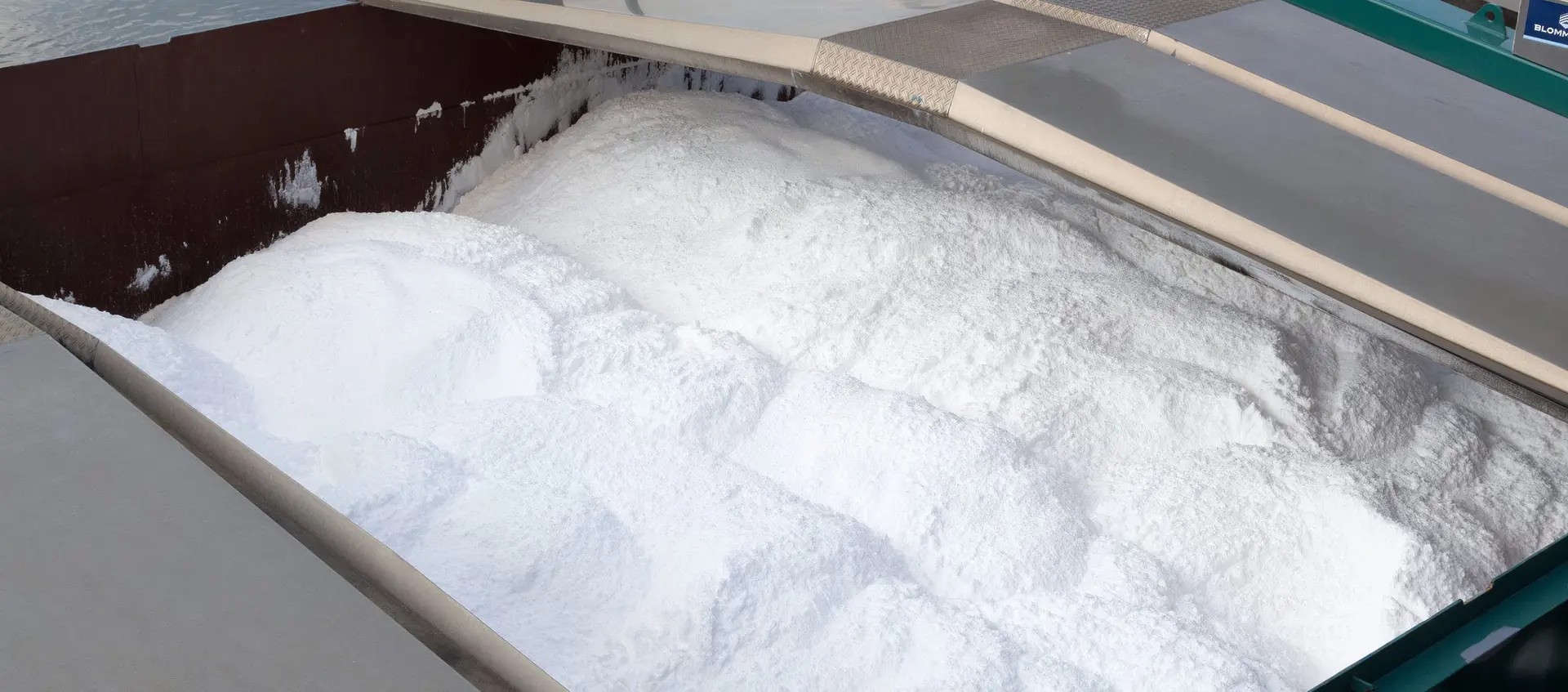
Municipal no-bid failures and a 2-year high in dry bulk freight rates are colliding with an import-dependent salt market, spotlighting the case for new domestic supply.
- Weirton, West Virginia, received no bids at all for its 2026-2027 road salt contract, and more than 250 Illinois municipalities came away from the state's joint bulk-salt program without a bid this season.
- The Baltic Dry Index, the benchmark for dry-bulk ocean freight, rose 5.5% to 3,331 points on September 2, 2026, its highest level in 2 years, after climbing 77% so far this year.
- The Panama Canal Authority cut daily transit slots at its Neopanamax Locks to 9 as of September 3, 2026, and reduced Panamax Lock slots to 23 as of September 15, 2026, amid low water levels in the Gatun Lake watershed.
- North America imports an estimated 8 million to 10 million tonnes of de-icing salt annually, mostly from Egypt, Chile, Mexico, and the Caribbean, filling a domestic production gap that Atlas Salt Chief Executive Officer Nolan Peterson estimates at 30% to 40% of total demand.
- Atlas Salt is developing the Great Atlantic Salt Project in Newfoundland, positioned as North America's first new salt mine in nearly 3 decades, with a shipping time to Boston of under 3 days versus more than 14 days from Egypt or Chile.
Weirton, West Virginia, received no bids at all this year for its 2026-2027 road salt contract. The city's fallback resolution authorizes purchases from any available supplier at up to $175.00 per ton delivered, up from $88.38 per ton under a competitively bid contract just last year and $77.69 per ton the year before that. Weirton is not an isolated case. More than 250 municipal agencies across Illinois came away from the state's joint bulk-salt procurement program without a single bid this season, forcing towns such as McHenry and Yorkville into emergency and joint purchasing arrangements at prices well above their historical norms, with Yorkville ultimately paying $111.41 per ton.
In western Pennsylvania, municipalities that buy through the South Hills Area Council of Governments have watched salt prices climb sharply this season, with the council's executive director, Patrick Conners, pointing to market uncertainty and a shrinking pool of competing suppliers as the cause.
These read, on the surface, as local procurement problems. But they are unfolding against a backdrop that has nothing to do with any single municipality's budget: the global dry-bulk shipping market that carries a meaningful share of North America's imported salt has entered its tightest stretch in 2 years, and a major transit chokepoint for that trade is simultaneously restricting capacity.
Industry Context
North America does not produce enough salt to meet its own demand. Nolan Peterson, Chief Executive Officer of Atlas Salt Inc. (TSXV: SALT | OTCQX: SALQF | FSE: 9D00), put the scale of that shortfall plainly:
"North America doesn't produce enough salt of our own. All the mines in North America going full production still fall short by about 30 to 40% of our salt needs. Not just in the deicing market, but in all the salt markets."
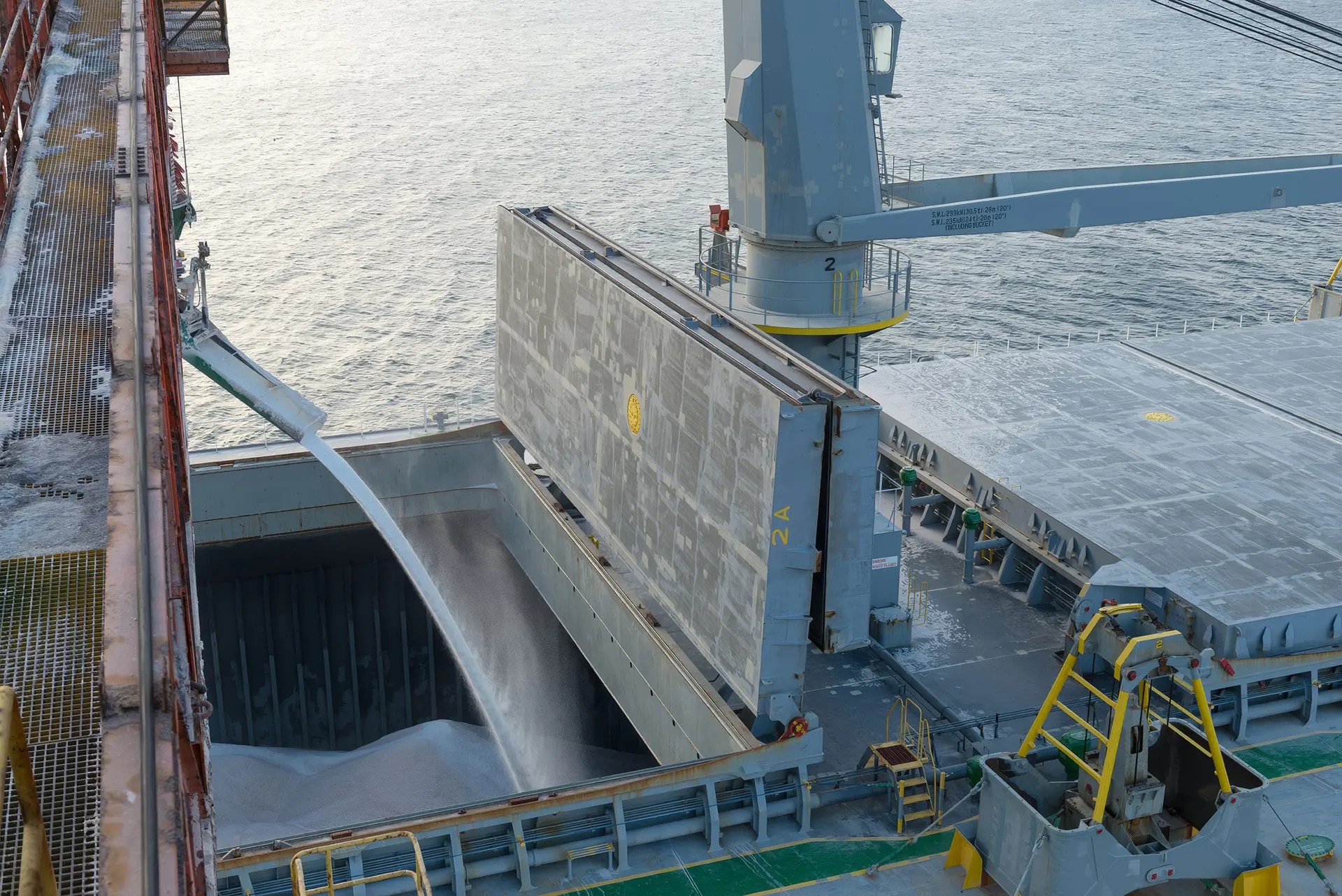
Seaborne imports fill that gap, with North American de-icing salt imports totaling an estimated 8 million to 10 million tonnes annually, sourced primarily from Egypt, Chile, Mexico, and the Caribbean.
That import math is now under pressure from 2 directions at once. The Baltic Dry Index, the benchmark gauge for dry-bulk freight covering the class of vessels used to move raw materials such as iron ore, coal, and grain, rose 5.5% to 3,331 points on September 2, 2026, its highest level since December 2023. The index has climbed 77% this year, driven by typhoon-related port disruptions in the Pacific, Middle East shipping conflict, and stronger export demand competing for a limited pool of Capesize and Panamax vessels.
Compounding the squeeze, the Panama Canal Authority has imposed new transit restrictions because of low water levels in the Gatun Lake watershed. Effective September 3, 2026, daily slots at the Neopanamax Locks were cut to 9, with Panamax Lock slots reduced to 23 as of September 15, 2026. Demand for the remaining capacity has pushed canal transit auctions to new records, including a $5.3 million winning bid for a single transit slot in early September.
Emerging Practices & Industry Progress
After failed state and regional bids, municipalities are increasingly banding together or bypassing the traditional procurement channel entirely. In Illinois, Arlington Heights joined a cooperative bid with Palatine and Elk Grove Village after both benefited from stockpiles built up during a milder prior winter. In Ohio, after a second-round state bid came in near $155 per ton, Jefferson County, Steubenville, Wintersville, and other communities formed their own purchasing cooperative and secured roughly 10,000 tons at approximately $123 per ton from a private supplier.
On the supply side, the structural response has been new domestic capacity rather than new import relationships. No new salt mine has opened in North America since American Rock Salt's New York operation began production in 2001, a gap of roughly 25 years, and one of the continent's legacy sources, Cargill's Avery Island mine in Louisiana, ceased production in 2021, removing supply that had served the US East Coast de-icing market. Atlas Salt's Great Atlantic Salt Project, which received environmental assessment approval in 2024 after roughly 2 months of review, is positioned as the industry's answer to that gap: the first new North American salt mine in nearly 3 decades.
Remaining Challenges
The bidding failures are not resolving on their own. Illinois' state program left more than 250 participating agencies without contracts this season, and communities that do secure supply are frequently paying multiples of prior-year prices.
In some cases, the disruption runs deeper than pricing: a major North American salt producer ended a long-running supply agreement with the South Hills Area Council of Governments earlier this year over contract terms tied to inflation indexing, leaving close to 100 member communities to find a new vendor altogether.
The shipping side of the equation shows little sign of near-term relief. Analysts covering the dry-bulk market expect Pacific weather disruptions and longer-haul export demand, including rising ore flows tied to new transshipment capacity in Guinea, to keep tonnage tight into the back half of the year, adding further support to an already firm freight market.
Company & Project Examples
Atlas Salt's positioning illustrates how a domestic, port-connected supply chain changes the economics of this problem. The Great Atlantic Salt Project sits near St. George's, Newfoundland, roughly 2 kilometers from a deep-water port that stays ice-free year-round, with direct access to the Trans-Canada Highway and a hydroelectric grid connection. The company's 2025 Updated Feasibility Study outlines a mine life of more than 24 years at a nameplate production of 4.0 million tonnes annually, an after-tax net present value at an 8% discount rate of C$920 million, a 21.3% after-tax internal rate of return, and a 4.2-year payback. The deposit sits roughly 180 meters below the surface, shallow enough to be accessed by decline rather than the shaft mining used at deeper North American salt operations such as Compass Minerals' Goderich mine, which reaches approximately 600 meters below Lake Huron.
Peterson framed the advantage of that setup in terms of transit time rather than distance alone:
"It's basically the same price of production at a foreign port, but with 2 to 3 days to land a boat into Boston versus 2 to 3 weeks from Egypt or Chile, or longer in the winter when the boats are backed up."
Atlas Salt's own investor materials put the comparison at under 3 days to Boston versus more than 14 days from Egypt or Chile, a gap that widens in both cost and reliability whenever freight rates rise, or canal capacity tightens, as both have this month.
Regional & Jurisdictional Perspective
Newfoundland's regulatory environment has been part of the project's case from the start, with the province's environmental assessment process moving in months rather than years. That profile received new validation on September 16, 2026, when Atlas Salt was named in the official prospectus for the Canada Investment Summit, a forum hosted by the Prime Minister of Canada alongside CPP Investments and PSP Investments in Toronto. The inclusion positioned the Great Atlantic Salt Project alongside a select group of Canadian investment opportunities presented directly to international capital providers, arriving as the company continues to advance project financing beyond the more than C$300 million in non-binding financing interest it had previously disclosed.
Industry Outlook
None of the pressures converging this month resolve the underlying arithmetic: North America still needs 8 million to 10 million tonnes of imported salt a year, and that import chain now runs through a shipping market at a 2-year high and a canal operating under hydrology-driven restrictions. Municipal procurement will likely keep producing no-bid outcomes and sharp price increases through the winter bidding cycle, particularly for buyers without the scale to pool purchases or negotiate outside state programs. The longer-cycle answer, new domestic production, remains years away. Atlas Salt is targeting initial production toward the end of the decade, meaning this year's supply and freight dynamics are unlikely to be the last test of how exposed the market remains before that capacity arrives.
FAQs (AI-Generated)
Analyst's Notes





Subscribe to Our Channel

.jpg)


Stay Informed


