Cabral Gold's First Gold Pour Shifts the Funding Story from Equity to Cash Flow


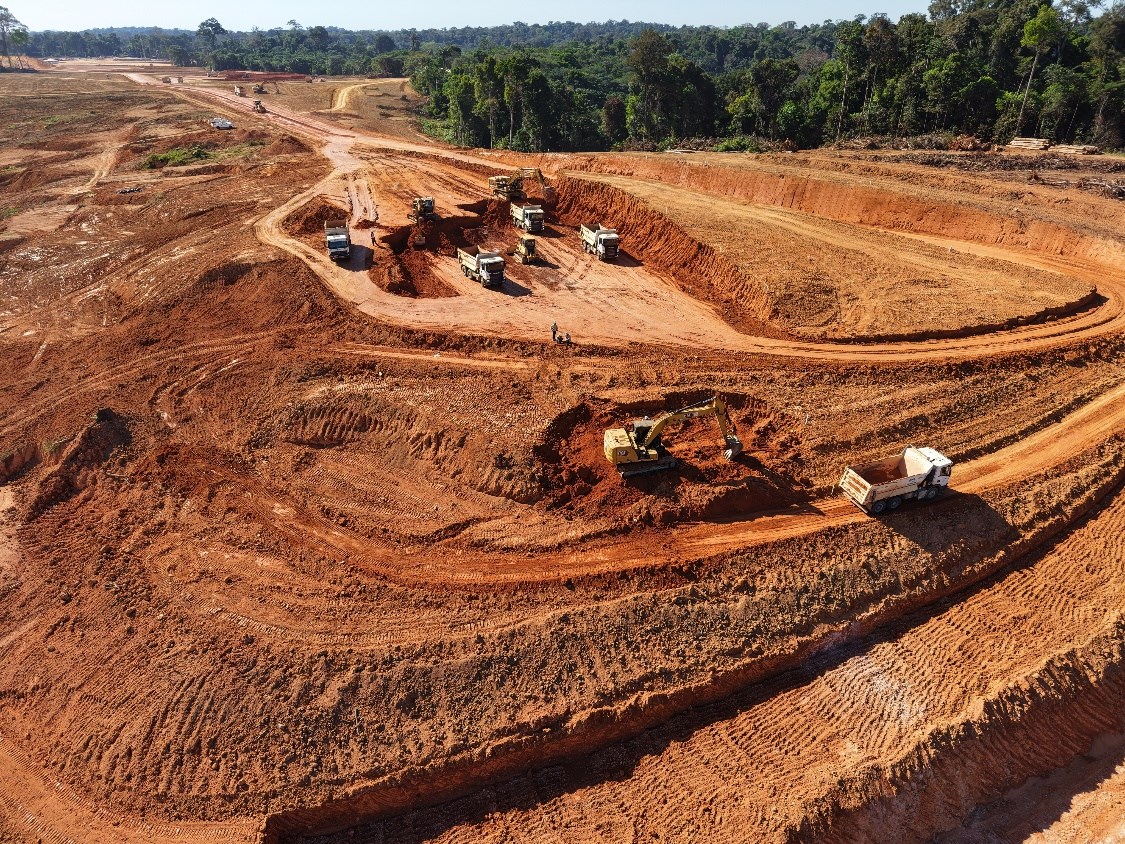
Cabral Gold's first gold pour at Cuiú Cuiú positions operating cash flow, not further equity, to fund exploration and de-risk the larger Phase 2 hard rock development.
- Cabral Gold poured its first gold at the Phase 1 Cuiú Cuiú mine in Brazil on September 10, 2026, with the dore assaying approximately 93% to 94% gold and yielding an estimated 1,130 ounces.
- Company modeling points to first-year production of 20,000 to 25,000 ounces at a margin of approximately US$3,300 per ounce, implying roughly US$80 million in pre-tax cash flow.
- That cash flow is positioned to eliminate the need for annual equity financing to fund exploration, unlike how construction was financed.
- Construction was equity-funded, including a recent strategic placement that brought in Alpayana, a major Peruvian private mining company, for a 9.99% stake.
- Formal 2027 production guidance is targeted for approximately January, once ramp-up toward a 3,000-tonne-per-day stacking rate and leaching data from the first heap leach pad are complete.
Cabral Gold Inc. (TSXV: CBR | OTCQX: CBGZF) poured its first gold at the Phase 1 Cuiú Cuiú mine in Brazil on September 10, 2026, with the dore assaying approximately 93% to 94% gold and yielding an estimated 1,130 ounces. The company reached a milestone few junior developers reach, but the more durable story for investors sits one layer beneath the pour itself: how the company intends to pay for what comes next. Cash flow arithmetic not previously reflected in the company's public disclosures now positions production, rather than further share issuance, as the funding source for growing the Cuiú Cuiú district.
From an Equity-Funded Build to a Cash-Flow-Funded Growth Phase
The company financed its first gold conventionally. A strategic placement with Alpayana, Peru's largest private mining company and operator of 6 mines, closed within 2 to 3 weeks before the pour, giving Alpayana a 9.99% stake in Cabral. The placement came separately from the construction financing secured over the prior 12 months, during which Cabral moved from an exploration company with no project financing in place to a gold producer.
President and Chief Executive Officer of Cabral Gold, Alan Carter, frames the change ahead as one of flexibility rather than necessity:
"It gives us so much more flexibility. We're not at the mercy of the market in terms of having to go back every year and do another equity financing and diluting the capital structure."
The distinction is specific to exploration and de-risking capital; the much larger Phase 2 hard rock development, once it reaches a construction decision, will likely be a separate financing event.
What the Cash Flow Numbers Show
The estimate rests on the company's Prefeasibility Study (PFS), now roughly 18 months old and not yet updated for the district's ongoing expansion drilling. That study's first-year production range of 20,000 to 25,000 ounces, combined with a current per-ounce margin of approximately US$3,300, works out to close to US$80 million in pre-tax cash flow in the first 12 months of operation, or well over C$100 million. Carter points to how the market typically prices that cash flow: gold producers generally trade at 6 to 12 times cash flow, a range that, applied to that estimate, points to a valuation gap between the pre-production PFS and where the market prices comparable producers.
Ramp-up is still underway. Stacking rates were running at approximately 1,500 tons per day toward the 3,000-tonne-per-day target, and the first heap leach pad has not yet completed its leach cycle, meaning full reconciliation between the mine's block model and recovered gold remains pending. Formal production guidance for 2027 is targeted for approximately January, once that ramp-up and reconciliation work is complete.
What the Self-Funding Case Covers
The self-funding case is not confined to the existing oxide operation. Cash flow from Phase 1 is intended to fund the district's exploration program, which currently runs 6 drill rigs and feeds directly into the global resource update due by year-end, covering all 6 defined gold deposits, up from 3 in the last update 4 years ago. Roughly 75% of the previously defined gold sits in hard rock rather than oxide material, and the materially larger resource base from that update would justify formalizing a Preliminary Economic Assessment on the hard rock component.
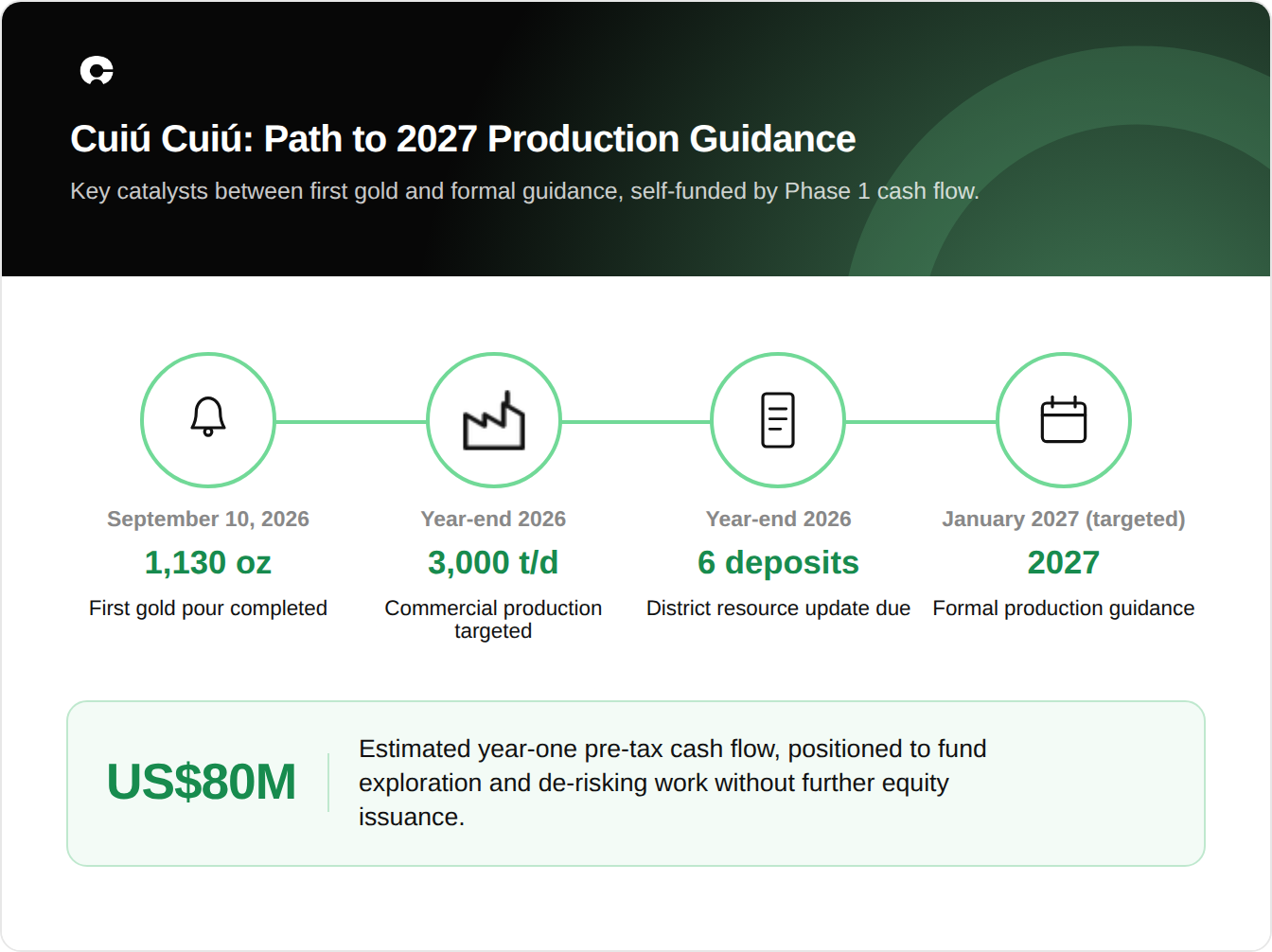
For investors, the distinction matters for how to read the next several months of newsflow. Commercial production by year-end, the district-wide resource update, and any guidance on low-cost expansion options for the existing oxide operation are all near-term catalysts that will test whether the cash flow assumptions hold up in practice, ahead of an eventual Phase 2 construction decision.
FAQs (AI-Generated)
Analyst's Notes





Subscribe to Our Channel





.jpg)
Stay Informed