




Ontario Salt Shortage Lifts Prices Faster Than Markets Priced In, Exposing a Multi-Year Supply Deficit


North America's de-icing salt supply deficit, Ontario shortages, and delayed mine development support higher prices.
- No major North American salt mine has entered production in close to three decades, with the last comparable project entering production in 2001, while two legacy mines have exited or stalled, further reducing available supply.
- Ontario municipalities experienced a second road salt shortage within a year in early 2026, driving wholesale prices from $65-$70 per tonne to nearly $190 per tonne.
- The largest North American highway deicing producer reported highway salt prices increased 8% year over year and consumer and industrial prices increased 6%, even as total sales volumes fell 4% in the same quarter.
- A developer advancing the only comparable-scale project targeting this supply deficit trades at an enterprise value roughly one-fifth of its feasibility study's after-tax net present value (NPV).
- Multi-year permitting and construction timelines mean new supply cannot reach the market quickly, allowing higher de-icing salt prices to persist until new production enters service.
Three-Decade Mine Drought & Legacy Mine Exits Tighten North American Salt Supply
The last comparable new salt mine to enter production in North America opened in New York in 2001. No project of similar scale has followed it in close to three decades, even as winter road safety requirements have sustained demand for highway deicing salt across the northeastern US and eastern Canada. The supply shortfall has widened because legacy mines have exited or stalled while no comparable replacement has entered production.
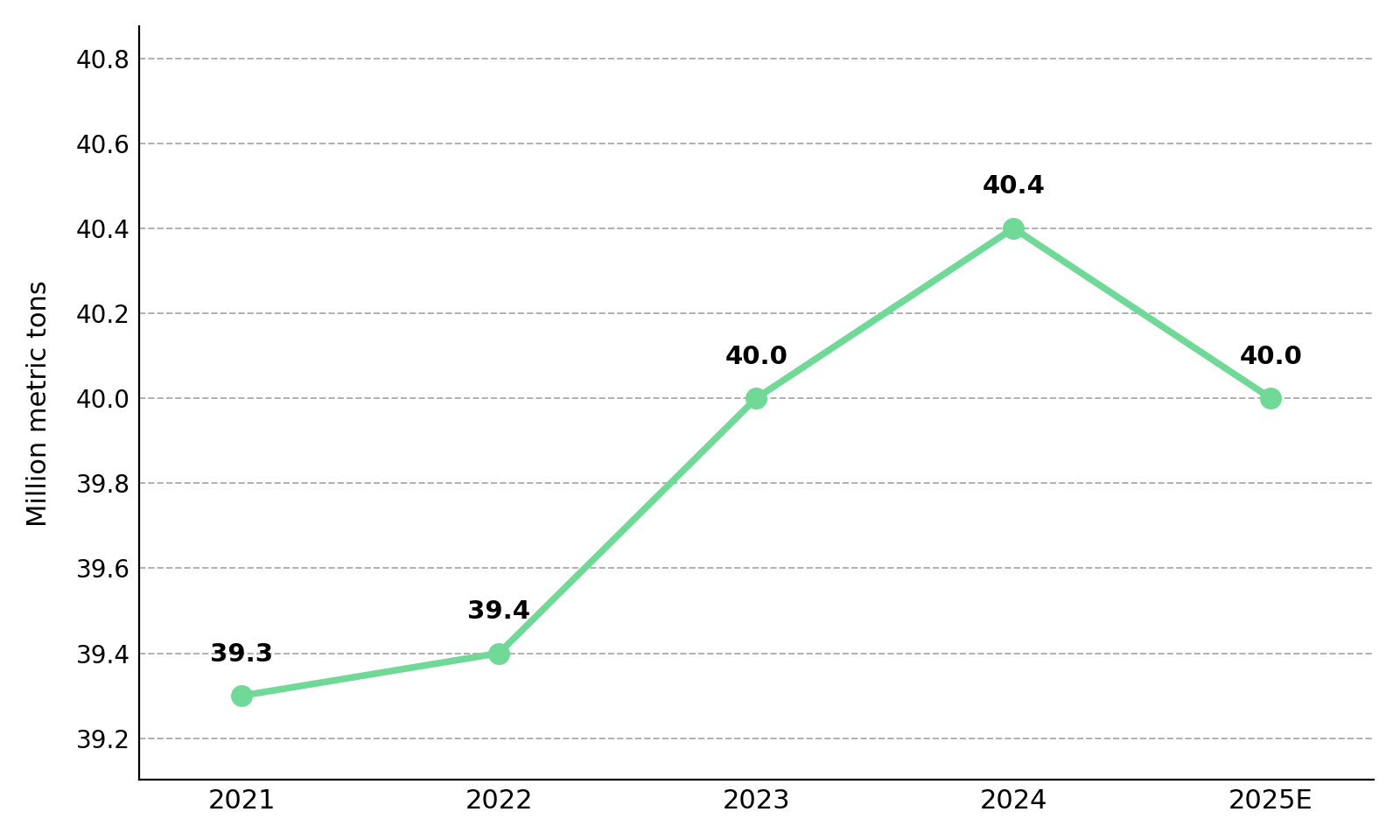
One Gulf Coast salt mine ceased production, removing an estimated 2.5 million tons per year of domestic supply from the US East Coast deicing market. A second operator's salt assets in New York and Cleveland have remained unsold since a divestiture process began in 2023 because of environmental liabilities, leaving a further 2 million tons per year of capacity unavailable to the market. Together, these two events remove or place roughly 4.5 million tons per year of capacity at risk in a market that has not added a comparable new salt mine in close to three decades.
Ontario Salt Shortage Lifts Wholesale Prices to Nearly $190, Confirming Supply Constraints
The first clear evidence that the supply shortage affected end users came from municipal procurement data. Ontario municipalities reported running out of road salt for the second time in less than a year during January and February 2026, demonstrating that available supply could no longer meet municipal demand during the winter season.
The Ontario shortage translated directly into a measurable increase in wholesale road salt prices. Wholesale road salt prices in Ontario rose from $65-$70 per tonne to nearly $190 per tonne during the shortage, showing how quickly prices responded when supply could not meet demand. New York's transportation department cited the previous winter's salt shortages as a reason for not applying a "Buy American" preference in a new supply contract, showing that supply constraints outweighed domestic sourcing priorities.
The Ontario price increase and New York's procurement decision show that supply could no longer meet demand at historical price levels. A near-tripling in wholesale prices during a single shortage shows that de-icing salt prices can respond sharply when supply cannot meet demand before new mine supply reaches the market.
Tight Salt Supply Lifts Highway Prices Despite Lower Volumes, Supporting Stronger Earnings Outlook
The Ontario shortage was reflected in producer earnings, where quarterly results showed higher selling prices despite weaker sales volumes. Compass Minerals, the largest North American highway deicing salt producer, reported fiscal 2026 third-quarter highway salt prices increased 8% year over year to $83.74 per ton, while consumer and industrial prices increased 6% to $204.09 per ton, for a combined average price increase of 9%, according to its fiscal 2026 third-quarter earnings. In the same quarter, total sales volumes fell 4%, with a 6% decline in highway volumes only partially offset by 3% growth in consumer and industrial volumes.
Higher selling prices despite lower sales volumes indicate that supply remained tight during the quarter. Municipal demand remained relatively inelastic because road safety obligations limited buyers' ability to reduce purchases even as prices increased. The company's higher selling prices did not fully offset rising costs. Salt segment operating income declined 25% to $21.2 million and Adjusted earnings before interest, taxes, depreciation, and amortization (EBITDA) fell 15% to $38.9 million because higher per-unit product and distribution costs outpaced pricing gains. Higher selling prices despite rising costs indicate that demand remained strong enough to support price increases even as profitability came under pressure.
Management's guidance supports the view that demand remained strong despite rising costs. The company described the 2026-27 highway deicing bid season as "constructive," citing year-over-year price gains and growth in demand tenders across its core US markets. It also raised full-year highway sales volume and revenue guidance while narrowing Adjusted EBITDA guidance to reflect higher near-term costs. Raising volume and revenue guidance despite higher costs indicates that management expects demand and pricing to remain strong enough to offset part of the cost inflation.
Supply Deficit Highlights Valuation Gap as Financing Support Advances Project Development
The supply deficit and rising salt prices shift attention to whether public market valuations reflect these changes. The strongest example is the public market valuation of the only comparable-scale project currently advancing toward production to address this supply deficit.
Atlas Salt is advancing the Great Atlantic Salt Project in Newfoundland, targeting 4 million tonnes per annum of nameplate production. As of July 31, 2026, the company's enterprise value was $164.6 million, roughly one-sixth of the project's modeled after-tax NPV8%. Institutional and strategic participation increased from 50% in the October 2025 financing to 71% in the June 2026 bought deal, while Export Development Canada issued a non-binding Letter of Interest for up to $150 million in senior debt financing on July 23, 2026, supporting the project's financing efforts.
Nolan Peterson, Chief Executive Officer of Atlas Salt, describes the underserved de-icing salt market opportunity:
"We're developing the Great Atlantic Salt Project on the west coast of Newfoundland, aiming to supply de-icing road salt to critically underserved markets in the northeast US, eastern Canada, and the Atlantic provinces."
Supply Deficit & Multi-Year Mine Timelines Delay New Supply, Supporting Higher Salt Prices
The North American de-icing salt market has relied on imports for years because domestic mine supply has not kept pace with demand. North American de-icing salt imports total an estimated 8-10 million tonnes per annum, while the US imported 67.5 million tonnes between 2020 and 2023 from Canada, Chile, Mexico, and Egypt. This import dependence reflects years of limited domestic mine development, indicating that new supply will require long lead times to reduce reliance on imports.
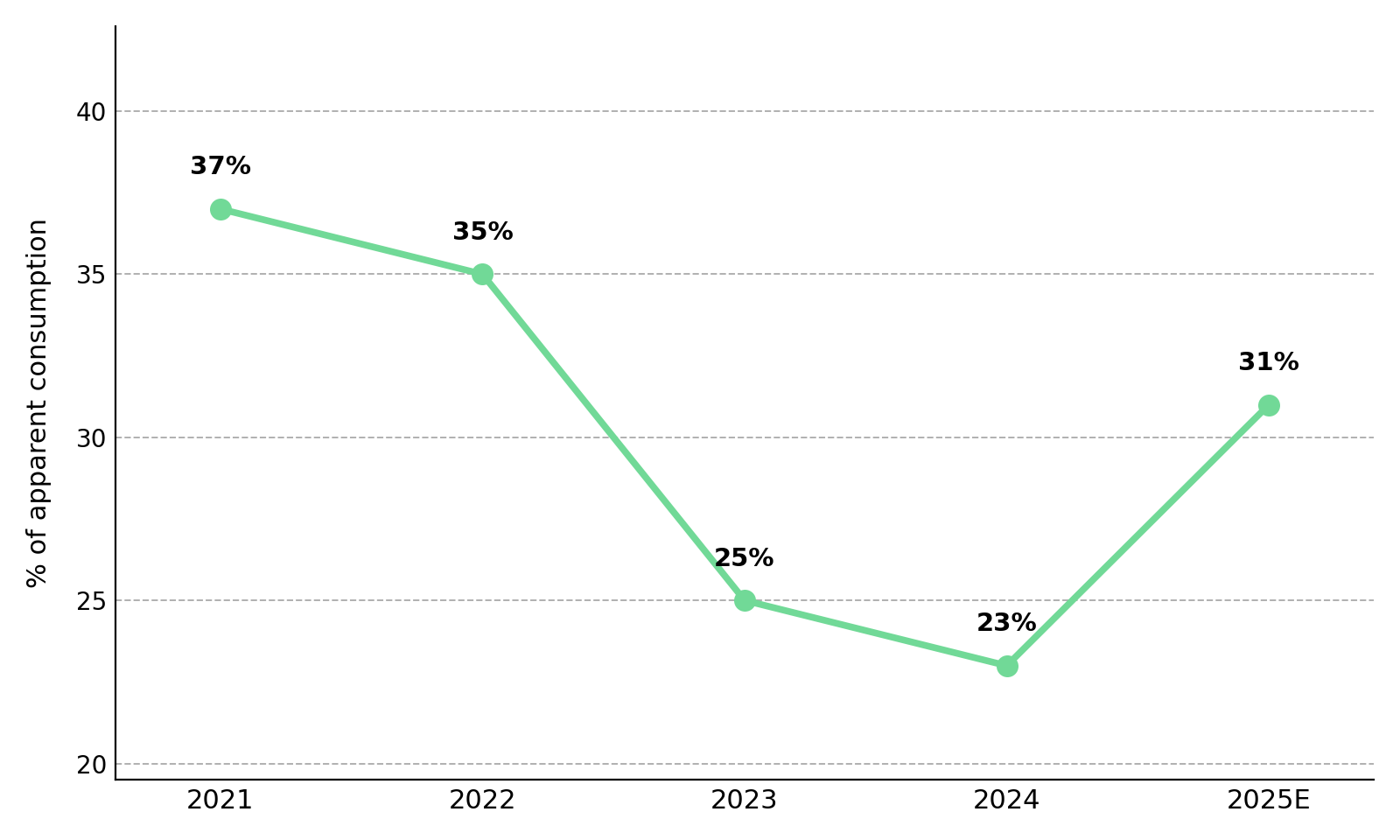
Bringing a new mine of comparable scale into production requires feasibility work, environmental assessment, permitting, and multi-year construction before a single tonne reaches customers, delaying new supply even for the most advanced projects. Even if the project reaches full production, North America would remain dependent on imported de-icing salt because one new mine cannot replace existing import volumes. Because new mine development requires multiple years, North American supply is unlikely to respond quickly to current shortages.
Higher wholesale prices in Ontario and producer earnings have emerged faster than new mine supply can respond because permitting and construction require multiple years. Recent price increases and multi-year mine development timelines indicate that higher de-icing salt prices could persist until additional supply enters the market.
The Investment Thesis for De-Icing Salt
- A supply base that has not added a major new mine in close to three decades, while losing legacy capacity through closures and unresolved divestitures, supports higher de-icing salt prices until additional supply enters the market.
- Municipal shortages and wholesale price increases show that supply constraints have already affected the physical de-icing salt market, while new mine supply remains years from production.
- Higher selling prices despite lower sales volumes show that demand remained strong enough to support price increases even as rising costs reduced near-term margins.
- Developers trading at a substantial discount to their feasibility study valuations may offer upside if project economics are achieved and financing milestones continue to reduce development risk.
- Multi-year permitting and construction timelines limit how quickly new supply can respond to the documented supply deficit, allowing current supply constraints to persist until additional production enters the market.
- Project economics, financing progress, and permitting milestones will determine how quickly new de-icing salt supply can enter the market.
North America's de-icing salt market demonstrates how prolonged supply constraints, limited new mine development, and lengthy project timelines can reshape pricing across an essential industrial commodity. As existing supply tightens and replacement capacity remains years from production, the ability to advance new projects through permitting, financing, and development becomes increasingly important in determining how future supply enters the market. Project quality, execution, and access to capital are likely to differentiate which development-stage companies are best positioned to bring new supply into production.
TL;DR
North America's de-icing salt market has tightened after nearly three decades without a comparable new mine, while legacy capacity losses have reduced available supply. Ontario's 2026 road salt shortage pushed wholesale prices from $65 to $70 per tonne to nearly $190 per tonne, and producer earnings showed higher selling prices despite weaker sales volumes, indicating that supply constraints are already affecting the market. With imports remaining essential and new mines requiring years of permitting and construction, additional supply is unlikely to arrive quickly. Financing progress and project execution will therefore play an important role in determining how future de-icing salt supply reaches the North American market.
FAQs (AI-Generated)
Analyst's Notes





Subscribe to Our Channel

.jpg)


Stay Informed


