




OPEC+ Links 2027 Oil Quotas to What Members Can Actually Produce


- The Organization of the Petroleum Exporting Countries (OPEC) and its participating non-OPEC partners (OPEC+) have designated assessed capacity as a reference for negotiating 2027 output quotas, giving demonstrated production capability a formal role in allocation talks.
- The International Energy Agency (IEA) estimates that 18 participating countries produced approximately 2.4 million barrels per day (bpd) below their October 2026 target, while US production is forecast to rise from 13.9 million bpd in 2026 to 14.3 million bpd in 2027, making delivered supply essential to assessing both markets.
- Upstream investment at approximately US$550 billion in 2026, up 1% from 2025, against an estimated 8% increase in capital costs, making spending efficiency central to funding additional capacity.
- The seven largest international oil companies acquired more than 2,200 exploration blocks covering 1.9 million square kilometers since 2021, with 88% taken as operator, placing responsibility for exploration execution alongside the expansion of acreage portfolios.
- Oil and gas-importing countries are home to 75% of the world’s population, giving potential discoveries in markets with established refining infrastructure an identifiable domestic outlet and connecting exploration progress with future commercial opportunities.
Capacity Assessments Shape Negotiations Over 2027 Production Quotas
OPEC+ sets a production quota for each participating country, a ceiling on how much crude oil it can pump. The group uses those limits to manage how much oil reaches the world market, so a country's quota largely determines how much oil it can sell. The current quota agreement expires on December 31, 2026, and members meet on November 29 to negotiate 2027 levels.
For the first time, the talks will lean on an independent measure of what each country can actually produce. On June 7, OPEC+ agreed to use assessments of each member's maximum sustainable production capacity (MSC), the highest output a country can reach and hold over time, as a reference for setting 2027 quotas. Petroleum consultancy DeGolyer & MacNaughton (D&M) completed the assessments on November 16, giving negotiators a technical benchmark. A higher capacity figure strengthens a country's case for a larger quota.
Output Gaps Make Sustainable Capacity Essential to Supply Forecasts
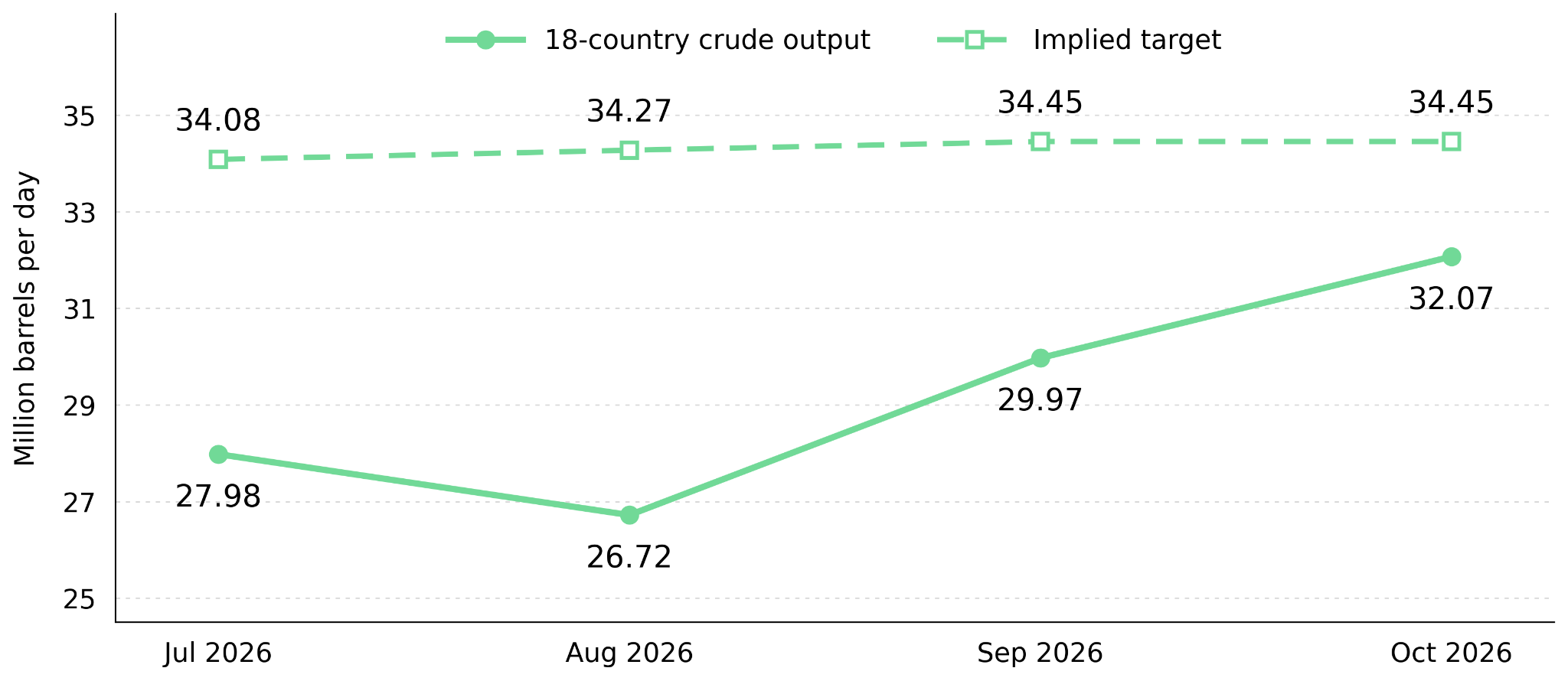
The IEA estimates October 2026 crude output from the 18 countries covered by the November 2022 agreement at 32.07 million bpd against an implied target of 34.45 million bpd, a shortfall of approximately 2.4 million bpd. The gap shows why production targets alone cannot establish the volume of oil available to the market.
The IEA estimates Saudi Arabia’s sustainable capacity at 12.11 million bpd against an October 2026 implied target of 10.48 million bpd. Russia’s estimated sustainable capacity is 9.30 million bpd against a target of 9.95 million bpd. On IEA estimates, capacity above the target in Saudi Arabia and below it in Russia points to different negotiating positions in talks that will rely on the OPEC+ assessments.
The OMR defines sustainable capacity as production that can be reached within 90 days and maintained for an extended period. This makes the readiness of wells and facilities relevant to assessing both how quickly additional oil can reach the market and how long that supply can continue.
Rising Costs Make Capital Allocation Critical to Future Supply
The IEA estimates global upstream oil and gas investment at approximately US$550 billion in 2026, up 1% from 2025, compared with an estimated 8% increase in the IEA’s Upstream Capital Cost Index. Costs rising faster than spending would limit the additional drilling, equipment purchases, and production capacity that larger budgets can fund.
Producer income rose 65% following the 2022 energy crisis while investment increased about 30%, with most of the windfall going to shareholders and host governments or being used to repay debt. This allocation shows why higher industry income does not translate directly into equivalent spending on future production capacity.
Exploration Commitment Signals Future Supply
The seven largest international oil companies acquired more than 2,200 exploration blocks covering 1.9 million square kilometers (km²) of gross acreage since 2021, according to Wood Mackenzie. With 88% of that acreage acquired as operator, these companies are positioning themselves to direct the exploration programs that identify potential drilling targets.
Westwood’s November 12, 2026 review records access to more than 500,000 km² of offshore exploration acreage during the first three quarters of 2026, with Africa accounting for 72%. Because this total includes reconnaissance and preliminary agreements, assessing its contribution to future supply requires examining the exploration licenses secured and the seismic or drilling commitments attached to them.
Import Dependence Gives Potential Discoveries a Domestic Market
Three-quarters of the world’s population live in oil- and gas-importing countries. In markets with established refining capacity, exploration can pair the search for new oil resources with an identifiable domestic outlet for future supply. Türkiye sits outside the OPEC+ allocation framework, so domestic discoveries can reach local refiners without a production quota.
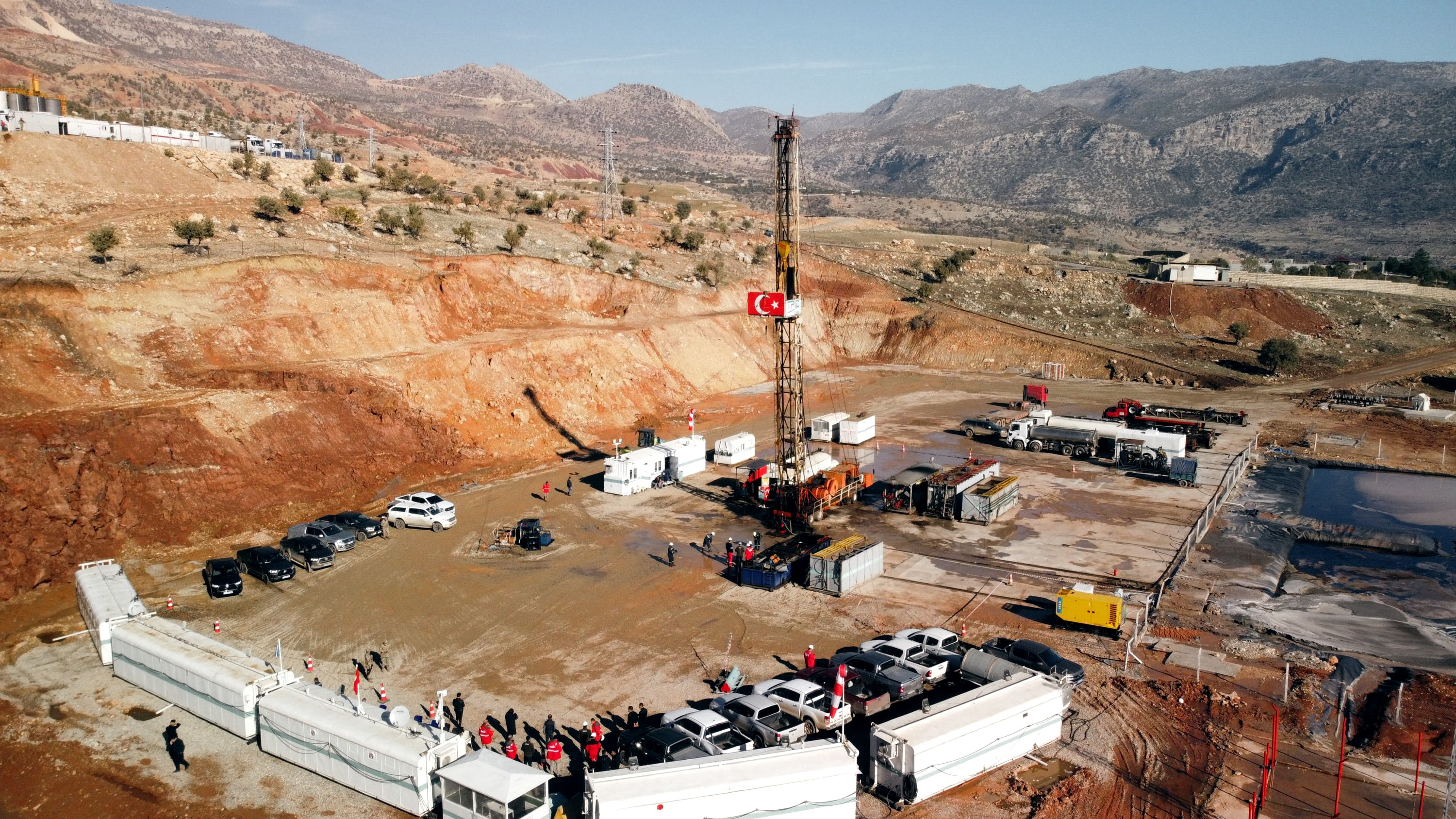
Dune Oil has begun a 45-kilometer seismic survey at M47 in southeastern Türkiye to prioritize locations for planned 2027 drilling. Fieldwork is scheduled to finish by the end of February 2027, with the results complementing planned work at the C-1 and C-2 wells.
Scott Lower, Chief Executive Officer of Dune Oil, discusses oil import demand and domestic refining capacity:
“Turkey is the best place to produce oil because they're a net importer of over a million barrels a day. Not only is there a market, but there's a well-developed capacity for refining in the country.”
US Output Growth & OPEC+ Shortfalls Make Capacity a Core Supply Input
US crude production is forecasted to rise from 13.9 million bpd in 2026 to 14.3 million bpd in 2027, adding supply outside OPEC+’s allocation framework. Within the alliance, the IEA’s estimated October 2026 output shortfall of approximately 2.4 million bpd against the combined target for 18 participating countries shows why allocations alone cannot establish available supply. Together, these figures make sustainable capacity and project delivery schedules necessary inputs to assessing supply during the next allocation period.
With upstream costs projected to rise faster than spending, seismic surveys, drilling results, and well tests provide evidence for selecting projects for subsequent funding. OPEC+’s review makes demonstrated capacity relevant to allocation negotiations, while exploration establishes the geological evidence needed to assess potential future developments and their routes to market.
The Investment Thesis for Oil
- Explorers with defined targets and funded work programs provide clear milestones for assessing progress toward potential future oil supply.
- Seismic interpretation, drilling results, and well tests help identify which prospects justify additional spending and further development assessment.
- Capital commitments tied to completed technical milestones allow companies to evaluate results before allocating further funding.
- Cost discipline helps preserve the drilling and evaluation work that exploration budgets can fund when equipment and service costs rise.
- Operator positions give companies responsibility for directing exploration programs, making their ability to execute those programs relevant alongside acreage ownership.
- Access to established oil markets and refining infrastructure gives potential discoveries an identifiable route to buyers, connecting resource evaluation with future commercial opportunities.
OPEC+’s capacity review gives demonstrated production capability a defined role in allocation talks among members, while costs rising faster than spending make technical results central to funding decisions for explorers. The longer-term opportunity extends to explorers that use disciplined work programs to establish the resources needed for future development. Prioritizing technical progress, funding discipline, and access to buyers provides a practical basis for identifying projects that could turn geological potential into commercial oil supply.
TL;DR
OPEC+’s capacity assessments will inform negotiations over 2027 production quotas, making demonstrated production capability relevant to future allocations. Participating countries produced approximately 2.4 million barrels per day below their combined October 2026 target, illustrating the distinction between quotas and delivered supply. The IEA estimates upstream investment growth of 1% against an 8% increase in capital costs, increasing the importance of spending discipline. Exploration programs contribute geological evidence for potential future developments. Dune Oil’s seismic survey in Türkiye illustrates this process by refining targets for planned drilling, while domestic import demand and refining infrastructure provide a potential market for future discoveries.
FAQs (AI-Generated)
Analyst's Notes





Subscribe to Our Channel






Stay Informed


