




P2 Gold's $943M Gold-Copper Development & What Its Buildability Signals for Nevada-Focused Investors


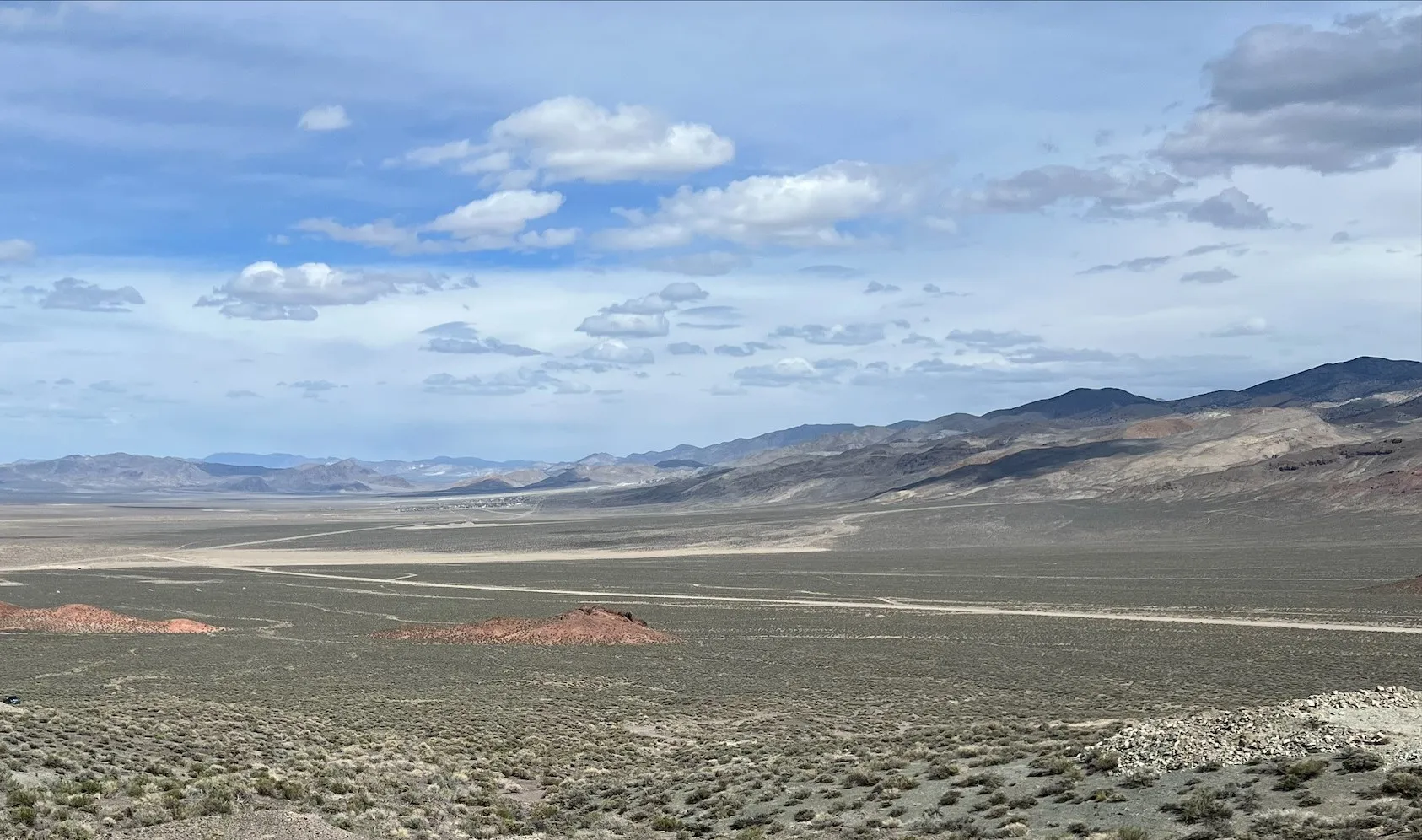
P2 Gold's Gabbs Project delivers $943M NPV with strong gold-copper economics in Nevada. Can a $72M market cap developer advance a near-$1B project to production?
- P2 Gold's updated Preliminary Economic Assessment (PEA) assigns the Gabbs Project a US$943M NPV5 and 33.8% Internal Rate of Return (IRR), prompting investor questions about whether a mid-cap developer can realistically build such a project in Nevada.
- The project benefits from Tier-1 jurisdictional stability, strong metallurgy, and scalability toward 5 million ounces (Moz) gold equivalent (AuEq), but requires disciplined capital management to avoid dilution and maintain project optionality.
- With a 15,000 meter (m) drilling program currently underway, improved metallurgy, and targeting Feasibility Study completion in the third quarter of 2026, management is executing a focused de-risking strategy that emphasizes speed to production.
- Permitting delays, water rights processing following a cyberattack and Mining Plan of Operations (MPO) initiation delayed by the federal government shutdown, highlight the realities of United States regulatory bottlenecks, even in stable jurisdictions, underscoring why development timelines look different today than a decade ago.
- The core investor question, can a developer with a market capitalization of US$72.0M as of December 4, 2025, advance a near-$1B Net Present Value (NPV) project to construction, hinges on capital structure discipline, resource growth, permitting execution, and market-cycle alignment.
When Project Economics Outrun Market Valuation
Large-scale gold-copper projects are becoming increasingly difficult to advance globally due to permitting timelines, capital scarcity, geopolitical risk, and jurisdictional instability. Nevada remains a rare exception, ranking second globally for mining investment according to the Fraser Institute's 2024 Survey of Mining Companies, but even Tier-1 regions face regulatory bottlenecks and capital intensity challenges.
P2 Gold's Gabbs Project now stands at the center of a broader investor question: How viable is it for a micro-cap developer to advance a US$943M NPV project in today's financing and permitting environment? The project's updated PEA delivers economics that would justify institutional attention, yet the company's market capitalization represents a fraction of its project-level value. This disconnect reflects both the difficulty of development-stage financing and the market's skepticism about execution risk.
What a US$943M NPV5 Actually Means for Investors
The October 2025 PEA update establishes a US$943M NPV at a 5% discount rate, a 33.8% after-tax IRR, US$382.7M in initial capital expenditure (capex), and a 2.4-year payback period. These figures are based on metal price assumptions of $2,350 per ounce (oz) gold, $29/oz silver, and $4.50 per pound (lb) copper, pricing that reflects conservative mid-cycle assumptions.
The use of inflation-adjusted inputs is particularly significant. Many PEA-stage projects completed prior to 2022 underestimated capex and operating expenditure escalation, leading to disappointing Feasibility Study revisions. P2 Gold's updated study incorporates higher contractor rates, equipment costs, and reagent pricing, reducing the likelihood of meaningful downward revisions during the Feasibility Study phase.
Production Profile and Metal Mix: Why the Gold-Copper Blend Matters
Gabbs is expected to produce 109,000 ounces (koz) of gold, 33 million pounds (Mlbs) of copper, and 174 koz of gold equivalent annually over a 14.2-year mine life. This dual revenue stream structure provides margin stability compared to pure-play gold heap-leach developers exposed to single-commodity price volatility.
Copper exposure is particularly valuable given long-term supply deficits driven by electrification, grid infrastructure build-out, and limited new discoveries. From a financing perspective, projects with diversified revenue streams are more attractive to lenders and strategic partners because they reduce reliance on single-commodity cycles.
The Valuation Disconnect: Market Cap vs. Project Value
P2 Gold's market capitalization was US$72.0M as of December 4, 2025, while the project's NPV5 stands at US$943M. Even at a 15% discount rate, a more conservative measure that accounts for execution risk, the NPV is US$298.0M, still representing a meaningful multiple of the company's valuation.
Joseph Ovsenek, Chief Executive Officer of P2 Gold notes the valuation gap:
"We're going to keep the same mine plans based on 1,950 gold and 450 copper. It's nice to have a strong margin per ounce of gold produced."
Rerating catalysts that investors typically monitor include Feasibility Study completion, resource upgrades that convert Inferred to Indicated categories, permitting milestones such as MPO submission and approval, and strategic partnerships or project-level financing announcements.
Resource Scale and Geological Upside: The Path Toward 5 Moz AuEq
Current Resource Framework and Conversion Strategy
The project hosts 1.16 Moz Indicated and 2.29 Moz Inferred gold equivalent resources based on the April 2024 Mineral Resource Estimate. The distinction between Indicated and Inferred categories is material because only Indicated and Measured resources can be included in economic models used for Feasibility Studies and financing decisions.
P2 Gold's strategy focuses on converting Inferred resources to Indicated through its drilling program, which is currently underway. A reverse circulation (RC) rig was recently mobilized for a 4,500-meter program at the Sullivan zone. This infill drilling is designed to improve drill spacing and geological confidence.
Step-Out Potential and Incremental Grade Improvement
Management has expressed confidence that near-surface mineralization could support a 5 Moz gold equivalent target. The use of RC drilling represents a meaningful improvement over historical percussion drilling methods. RC drilling provides higher-quality samples with reduced contamination risk, which can result in grade improvements of approximately 10% compared to older datasets. This grade uplift has significant implications for IRR and strip ratio assumptions, lowering mining costs and improving project economics.
Metallurgical Improvements and Their Economic Implications
Phase 3 metallurgical testing, released as part of the October 2025 PEA update, delivered results that materially strengthen the project's technical feasibility. Gold recoveries have improved from 78% to 85%, and copper recoveries in oxide material have increased from 54% to 67%. These improvements are driven by the incorporation of a Sulphidization, Acidification, Recycling, and Thickening (SART) plant.
Joseph Ovsenek provides specific performance metrics:
"With these new program, we had 98% of the gold recovered in 58 days and 85% of the copper recovered in 58 days."
Faster leach kinetics reduce the size of heap leach pads required to maintain steady-state production, lowering initial capex and reducing reclamation liabilities.
Joseph Ovsenek frames the metallurgical progress as transformative:
"Our gold recoveries have gone from 78% to 85%. Copper recoveries in the oxides have gone from 54% to 67%... The real gamechanger for Gabbs is the introduction of a SART plant which is a development for the recovery of gold and copper oxides."
Permitting in Nevada: Advantageous but Not Instantaneous
Nevada's regulatory framework is widely regarded as among the most predictable and efficient in North America for mining project development. However, even Tier-1 jurisdictions are not immune to procedural delays driven by resource constraints at regulatory agencies and external factors such as cyber incidents or government shutdowns.
Understanding the Permitting Pathway
Federal and state permitting processes for open-pit mines in Nevada are managed primarily by the Bureau of Land Management (BLM) at the federal level and the Nevada Division of Environmental Protection (NDEP) at the state level. The MPO is the central document that triggers environmental review under the National Environmental Policy Act (NEPA).
Current Status and Realistic Timelines
P2 Gold has encountered two specific procedural delays. The water rights permit application has been submitted but processing was delayed following a cyberattack on the Nevada State Engineer's office. The company expects to receive the permit in the fourth quarter of 2025. The initial meeting to kick off the MPO with the BLM was delayed due to the January 2025 federal government shutdown.
To mitigate timeline slippage, P2 Gold has proactively advanced baseline studies. Cultural studies and wildlife surveys, including raptor studies, are either complete or underway. Management targets MPO filing within four to five months.
Despite these delays, Nevada remains significantly more favorable than comparable jurisdictions in British Columbia, Arizona, or Latin America, where permitting timelines frequently exceed five years. Joseph Ovsenek emphasizes Nevada's advantage:
"Everybody loves Nevada Not only for geology but permitting. It's well known and especially heap leaching in Nevada. It's straightforward."
Capital Structure and Financing Reality: Can a Micro-Cap Build a Mid-Tier Mine?
Recent Financing and Shareholder Quality
As of September 30, 2025, the company reported cash, marketable securities, and receivables of $12.M, providing sufficient runway to advance the drilling program, initiate the Feasibility Study, and advance permitting activities through MPO submission.
Institutional and family office participation signals confidence in the project's technical and economic viability.
Managing Warrant Overhang
As of December 4, 2025, P2 Gold has 91 million warrants outstanding. Management has identified approximately 48 million warrants coming due over the next year. The company's strategy emphasizes generating newsflow and technical progress that supports steady warrant conversion over time.
The Path from PEA to Construction
Management's focus on execution speed is driven by investor demand for near-term production visibility. Joseph Ovsenek explains:
"The people we've spoken to aren't looking for how many ounces you have... How are you getting into production, how quickly can you get into production and how you're doing that."
The company's track record provides credibility. Joseph Ovsenek references past success:
"What we think is our claim to fame is Pretium Resources where we took the Brucejack, now it's the Brucejack mine. We took it from discovery through to production in under eight years. We discovered it, permit it, raised the money, built it and operated it."
Management targets Feasibility Study commencement in January 2026 with completion targeted for the third quarter of 2026.
Cost Competitiveness and Infrastructure Access
Nevada's cost structure and infrastructure access provide material advantages. RC drilling costs in Nevada are estimated at US$225 to $250 per meter, compared to costs that would be doubled in British Columbia's Golden Triangle due to helicopter support requirements.
The Gabbs Project benefits from paved highway access and a powerline running through the property. A major transmission line reaches the Paradise Peak Mill on the property's southern border, with plans to run a line to operations from this infrastructure. These elements reduce both capex and construction schedule risk.
Joseph Ovsenek highlights the project's operational simplicity:
"It's such a simple process especially to start with. It's a heap leach in Nevada the only thing new is the SART plant and there's a lot of those been built now…They like the simplicity of the project."
Where Gabbs Fits in Nevada's Production Landscape
Based on its PEA production profile, the Gabbs Project would rank as Nevada's fourth-largest gold producer at approximately 109 koz per year and the third-largest copper producer at approximately 33 Mlbs per year. This scale positions the project as a meaningful contributor to Nevada's production base and enhances its visibility to potential strategic partners or acquirers.
The Investment Thesis for P2 Gold
- Valuation support exists through a near-$1B NPV project with a market capitalization representing a significant discount to project-level value, offering asymmetrical upside if Feasibility Study outcomes align with current PEA metrics.
- Resource growth through the drilling program currently underway and potential path to 5 Moz gold equivalent materially improves the project's scalability and financeability, increasing strategic optionality for partnerships or acquisition.
- Jurisdictional strength positions Nevada as one of the few regions globally where large-scale open-pit projects retain high permitting and development probability despite regulatory complexity.
- Capital structure discipline through management's approach to financing preserves project-level economics and maintains optionality for future construction financing or strategic partnerships.
- Metallurgical strength demonstrated through improved recoveries and SART integration supports higher margin potential and derisks operational assumptions that underpin project economics.
- Diversified revenue streams from gold plus copper reduce sensitivity to single-commodity cycles, strengthening long-term investment appeal and providing natural hedges against commodity price volatility.
What the Gabbs Project Tells Us About Modern Mine Development
The question of whether a US$943M NPV project can be built by a micro-cap developer reveals broader truths about mine development in 2025. Capital efficiency matters more than ever. Jurisdictional advantage helps but does not eliminate procedural delays. Scalability is essential for attracting strategic capital.
De-risking actions, drilling, metallurgy, Feasibility Study progression, and permitting advancement, directly influence rerating potential by demonstrating management's ability to deliver on stated timelines. Gabbs represents today's investment environment, where projects with strong economics, scale, and disciplined management can still advance, but only with high execution visibility and credible capital strategy.
The next 18 to 24 months will determine whether P2 Gold can close the gap between compelling project economics and construction readiness through successful drilling, metallurgical validation, permitting progress, and strategic capital formation.
TL;DR
P2 Gold's Gabbs Project presents a significant valuation disconnect, with a $943M NPV5 and 33.8% IRR against a $72M market capitalization. The Nevada-based gold-copper development benefits from improved metallurgy (85% gold recovery, 67% copper oxide recovery via SART plant integration) and jurisdictional stability, though permitting delays from cyberattacks and government shutdowns highlight regulatory realities even in Tier-1 regions. With 109 koz annual gold production and 33 Mlbs copper production over 14.2 years, the project offers dual revenue diversification and scalability toward 5 Moz gold equivalent. Management targets Feasibility Study completion in Q3 2026 while executing a 15,000-meter drilling program to convert Inferred resources. The core investor question centers on whether disciplined capital management, permitting execution, and resource growth can bridge the gap between compelling project economics and construction readiness over the next 18-24 months.
FAQs (AI-Generated)
The valuation disconnect reflects typical development-stage financing challenges and market skepticism about execution risk. P2 Gold's strategy emphasizes capital structure discipline through warrant management (48 million warrants due over the next year), institutional financing participation, and preserving project-level economics for future construction financing or strategic partnerships. Management's track record at Pretium Resources (Brucejack development from discovery to production in under eight years) provides credibility. The company currently holds $12M in cash and marketable securities to advance drilling, initiate the Feasibility Study, and progress permitting through MPO submission. Rerating catalysts include Feasibility Study completion (targeted Q3 2026), resource upgrades converting Inferred to Indicated categories, and permitting milestones.
Despite Nevada's Tier-1 regulatory framework, P2 Gold has experienced procedural delays including water rights permit processing delayed by a cyberattack on the Nevada State Engineer's office (expected Q4 2025) and Mining Plan of Operations (MPO) initiation delayed by the January 2025 federal government shutdown. To mitigate timeline slippage, management has proactively advanced baseline cultural studies and wildlife surveys. The company targets MPO filing within four to five months. Nevada still offers significantly faster timelines than comparable jurisdictions in British Columbia, Arizona, or Latin America, where permitting frequently exceeds five years. The federal process is managed by the Bureau of Land Management (BLM) under NEPA review, while state oversight comes from the Nevada Division of Environmental Protection (NDEP).
The Phase 3 metallurgical testing delivered material improvements that strengthen project economics. Gold recoveries increased from 78% to 85%, and copper recoveries in oxide material rose from 54% to 67% through the introduction of a Sulphidization, Acidification, Recycling, and Thickening (SART) plant. Management reported 98% gold recovery and 85% copper recovery in 58 days, demonstrating faster leach kinetics. These improvements reduce the heap leach pad size required for steady-state production, lowering initial capital expenditure and reclamation liabilities. The use of reverse circulation (RC) drilling provides higher-quality samples than historical percussion methods, potentially delivering approximately 10% grade improvements that positively impact IRR and strip ratio assumptions.
The current resource base includes 1.16 Moz Indicated and 2.29 Moz Inferred gold equivalent resources from the April 2024 Mineral Resource Estimate. P2 Gold's 15,000-meter drilling program, including a 4,500-meter reverse circulation program at the Sullivan zone, focuses on converting Inferred resources to Indicated categories through infill drilling that improves drill spacing and geological confidence. Only Indicated and Measured resources can be included in Feasibility Study economic models and financing decisions, making this conversion critical. Management has expressed confidence in near-surface mineralization supporting a 5 Moz gold equivalent target, which would materially improve project scalability, financeability, and strategic optionality for partnerships or acquisition.
Gabbs' dual revenue stream from 109 koz annual gold production and 33 Mlbs annual copper production provides margin stability compared to single-commodity heap-leach developers. Copper exposure addresses long-term supply deficits driven by electrification, grid infrastructure build-out, and limited new discoveries. From a financing perspective, projects with diversified revenue streams are more attractive to lenders and strategic partners because they reduce reliance on single-commodity price cycles. The PEA uses conservative metal price assumptions ($2,350/oz gold, $29/oz silver, $4.50/lb copper), and the dual revenue structure provides natural hedging against commodity price volatility while maintaining strong economics even at a 15% discount rate ($298M NPV15).
Analyst's Notes





Subscribe to Our Channel






Stay Informed






















