Queensway's 2026 Drilling Targets the Ounces Behind Phase 2 & Underground Mining


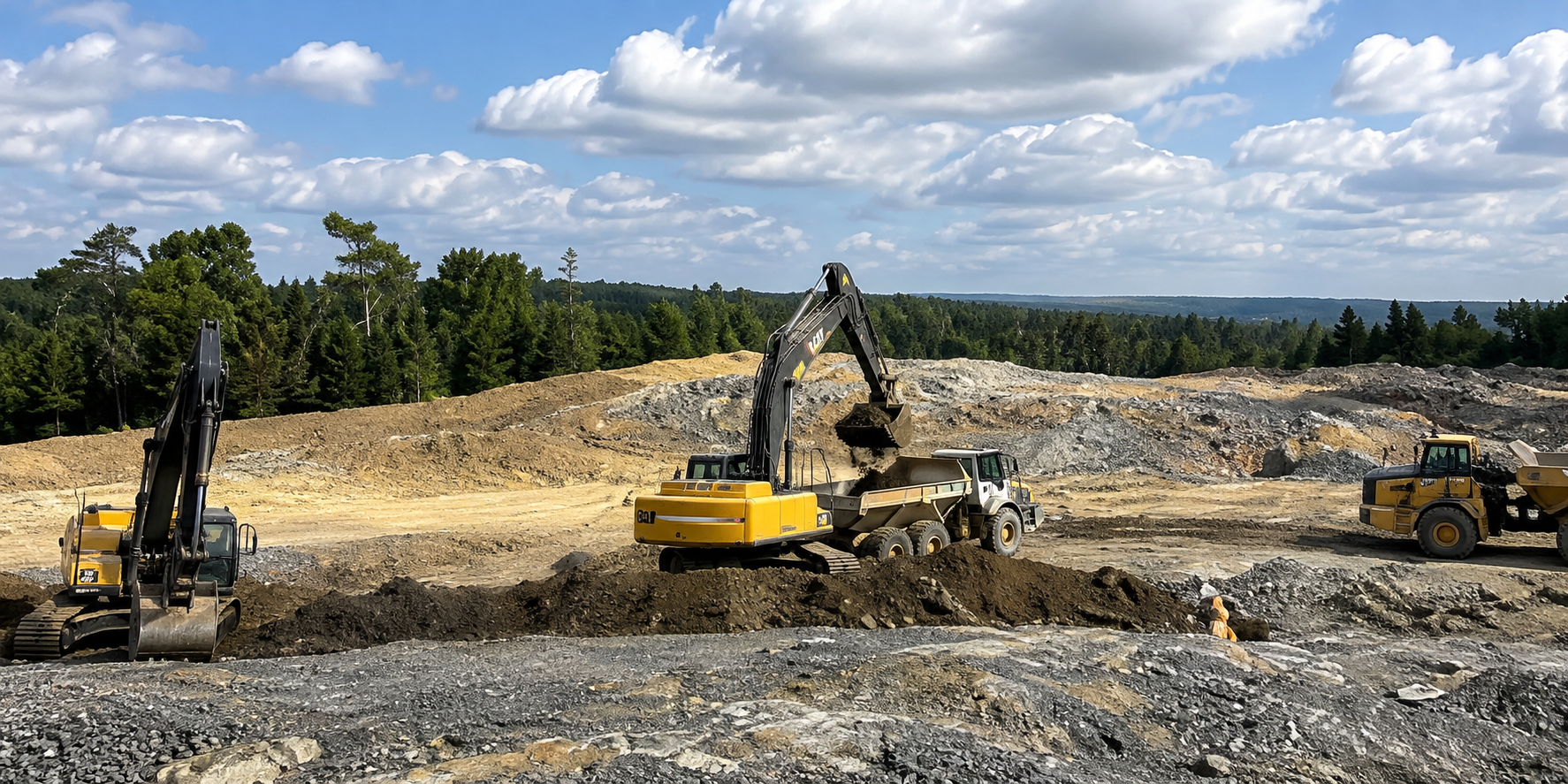
Queensway drilling targets inferred ounces in the Phase 2 open pits and underground, so New Found Gold is positioned to execute a feasibility study in 2027.
- The revised preliminary economic assessment for Queensway moves underground mining from Phase 3 into Phase 2, starting in 2030, and lifts underground ounces in the mine plan by 86%.
- The updated resource totals 1.92 million Measured and Indicated (M&I) ounces and 606,000 Inferred ounces, and the underground portion holds 80,000 M&I and 191,000 Inferred ounces.
- Advanced drilling targets converting Inferred ounces in the Phase 2 open pits and parts of the underground to Indicated, with 4 rigs active as of September 30, 2026, and 61,557 meters drilled in 439 diamond drill holes.
- Queensway drilling took 92% of the exploration & evaluation spend in the third quarter, with C$167.1 million in cash on hand and Phase 1 fully funded.
- Chief Executive Officer Keith Boyle says the drill programs aim to put the company in a position to execute a feasibility study in 2027.
What Has Happened
New Found Gold (TSX: NFGC | NYSE American: NFGC) released a revised preliminary economic assessment (PEA) and its first updated mineral resource estimate (MRE) for the Queensway Gold Project in Newfoundland and Labrador on October 22, 2026. Measured and Indicated (M&I) resources rose 38% to 1.92 million ounces, and Inferred resources total 606,000 ounces.
The revised PEA also changes the mining sequence. Underground mining moves up from Phase 3 to Phase 2 and starts in 2030; underground ounces in the mine plan rise 86%, and the mine plan now includes peripheral deposits such as Dropkick. The revised PEA includes C$832 million of growth capital over the life of mine, and cash flows from Phases 1 and 2 are anticipated to fund growth capital for Phases 2 and 3, respectively.
Where the Updated Resource Sits by Mining Method
The updated MRE reports open pit resources at a cut-off of 0.30 grams of gold per tonne (g/t) and underground resources at 1.90 g/t. The open pit holds 1,840,000 M&I ounces at 2.13 g/t and 414,000 Inferred ounces at 1.17 g/t. The underground holds 80,000 M&I ounces at 4.89 g/t and 191,000 Inferred ounces at 4.17 g/t. Underground grades exceed open pit grades in both categories.
What the 2026 Drilling Is Converting
At the end of the third quarter, 4 rigs were active at Queensway, and 61,557 meters had been drilled in 439 diamond drill holes. Advanced exploration drilling aims to convert Inferred resources in the Phase 2 open pits and portions of the underground to Indicated. Pre-development drilling also includes grade control drilling at the Keats Zone and geotechnical drilling of the Phase 2 open pits. Queensway drilling accounted for 92% of the C$15 million the company spent on exploration & evaluation in the third quarter, up 9% from the same period in 2025.
Extension Drilling Targets Higher Grade Ounces, With Dropkick as the Example
Dropkick entered the resource estimate for the first time in the updated MRE and contributed to the 38% increase in M&I ounces. Exploration drilling and conversion drilling both continue at Dropkick, which sits in the AFZ Peripheral area approximately 11 kilometers north of the AFZ Core.
Chief Executive Officer of New Found Gold, Keith Boyle, said the company is also looking at extensions to bring in higher-grade ounces, with Dropkick as the example:
"We are looking at extensions of the, I'll say, higher probability ones so that we can bring some higher-grade ounces. For example, along strike at Dropkick is a very good example where that was a good addition to this updated mineral resource, and we also brought it forward in the overall plan earlier into Phase 2 as opposed to Phase 3."
The Balance Sheet Behind the Drilling
New Found Gold held C$167.1 million in cash and C$167.3 million in working capital at September 30, 2026. The company also has a C$105 million credit facility with EdgePoint, of which C$70 million is drawn and C$35 million of a second tranche is available at its option until May 15, 2027, subject to conditions. Phase 1 initial capital of approximately C$150 million is fully funded.
The company's Hammerdown Gold Mine declared commercial production on August 19, 2026. In the third quarter, Hammerdown generated C$18.6 million of income from mine operations, 45% of revenue, and the company reported C$11.2 million of operating cash flow before changes in working capital. Management plans for Hammerdown cash flow to pay for general and administrative costs and exploration.
The Feasibility Study Path
Management says the drill programs focus on infill in Phase 2 and the underground so the company can execute a feasibility study in 2027. The revised PEA includes Inferred ounces, and NI 43-101 permits Inferred resources to form the basis of feasibility studies only in limited circumstances, so converting ounces to a higher category supports the study stage the company is working toward.
What to Watch Next
New Found Gold intends to file the Updated Technical Report supporting the PEA and MRE within 45 days of October 22, 2026. Drilling under the Queensway 2026 Program continues, and Boyle says it aims to put the company in a position to execute a feasibility study in 2027.
On the Phase 1 side, the Environmental Preview Report submitted on November 3, 2026 is in a 35-day review, with a ministerial decision within 45 days of submission and the potential for a 14-day extension. After the environmental assessment process concludes, the company plans to apply for provincial and federal permits and work toward a Surface and Mining Lease through mid-2027. Once the company receives the required permits, it is targeting contractor mobilization in the first quarter of 2027, early works in the second quarter, mining to build a stockpile in the third quarter, and delivery to Pine Cove in the fourth quarter of 2027.
FAQs (AI-Generated)
Analyst's Notes





Subscribe to Our Channel





Stay Informed