




Ramp-Up at Sleeping Giant and New Drilling at Flordin Set Up Strong 2026



Abcourt Mines transitions to gold producer in Quebec with debt-financed development, targeting cash flow by Q2 2026 and funding resource expansion through operations.
- Abcourt Mines has successfully transitioned from exploration to production at its Sleeping Giant mine in Quebec, securing $12 million in debt financing from Nebari, October gold production reaching 475 ounces, and targeting cash flow positivity by Q2 2026 at approximately 700 ounces monthly.
- The company operates an 800-tonne-per-day mill currently running at less than half capacity, providing substantial operational leverage to scale production to 350 tonnes per day without major capital investment, with management prioritizing hiring miners to overcome labour constraints as the primary bottleneck to production growth.
- Management's strategic focus centres on extending Sleeping Giant's seven-year mine life to 10+ years through three underground drill rigs funded by operating cash flow, followed by increasing mining fronts to utilise full mill capacity, with plans to update the preliminary economic assessment once the extended mine life is established.
- The Flordin discovery represents significant exploration upside, with a 300-metre surface strike grading 5 grams per tonne gold over 15–20 metres width within a potential two-kilometre mineralised corridor located 138 kilometres from existing mill infrastructure, supported by 20,000 metres of drilling planned for 2026 and funded entirely from operating cash flow.
- Abcourt's debt-based development model has avoided severe shareholder dilution, with management and directors holding approximately 30% ownership and expressing preference for share buybacks over dividends once balance sheet permits, whilst the two-year interest-only period on Nebari financing (principal repayments commencing July 2027) provides critical runway to demonstrate operational consistency and build cash reserves.
Building Cash Flow in a High-Grade Environment
Abcourt Mines (TSXV: ABI) represents an increasingly rare proposition in the junior mining sector - a company that has transitioned from exploration to production without the traditional path of massive capital raises and shareholder dilution. President and CEO Pascal Hamelin outlined a methodical strategy centred on narrow-vein, high-grade gold production at the company's Sleeping Giant mine in Quebec, alongside an emerging exploration story at the Flordin property that could materially expand the company's resource base.
The context for Abcourt's development trajectory is particularly relevant given current market conditions. Gold prices have sustained levels above US$4,000 per ounce throughout much of 2025, fundamentally altering the economics of projects that might have struggled to justify development in previous price environments. Hamelin noted this directly:
"We entered into the discussion with Nebari in the fall 2025. We saw the gold price coming up. The financial model looked better and better."
This price environment has enabled Abcourt to pursue an alternative financing model - one that prioritises debt over equity, accepts a longer production ramp-up period, and plans to self-fund exploration through operating cash flow rather than through successive capital raises. For investors, this approach presents both advantages and risks that merit careful examination.
Operational Status and Near-Term Trajectory
Abcourt's Sleeping Giant mine commenced development in July 2025 following the completion of a credit agreement with Nebari. The financing structure consisted of an initial $8 million tranche, a subsequent $2 million tranche in September, and an additional $2 million facility used to buy down the company's net smelter return (NSR) royalty with Triple Flag from 2% to 1.5%.
Hamelin emphasised the economics of this decision:
"The economics was there to justify the buy down to $2 million because we're in production now."
The company turned on its mill in August 2025 and poured its first gold bar in September. Production in October reached 475 ounces, with the company operating at what Hamelin characterised as conservative staffing levels whilst building inventory in the mill circuit.
The mill itself is an 800-tonne-per-day facility, permitted for 950 tonnes per day but optimised for 800 tonnes for recovery purposes. Current operations run at approximately 45% capacity, with the company targeting 350 tonnes per day as its initial steady-state objective.
Critically, the constraint on production growth is not geological or metallurgical - it is operational. Hamelin repeatedly emphasised that the bottleneck is labour:
"The key here to grow the production is to hire miners. It's not the feed, it's the people, that's the problem you're trying to solve for."
The company has invested in infrastructure to address recruitment challenges, including a sleep camp commissioned in September 2025, with Phase Two expansion pending permit approval for septic systems. The operation currently runs two 10-hour shifts with blasting, allowing two hours between shifts for ventilation. The mill operates on day shift only, processing all mine production in approximately eight hours, with plans to expand to two shifts in early 2026 and eventually to four shifts as production scales.
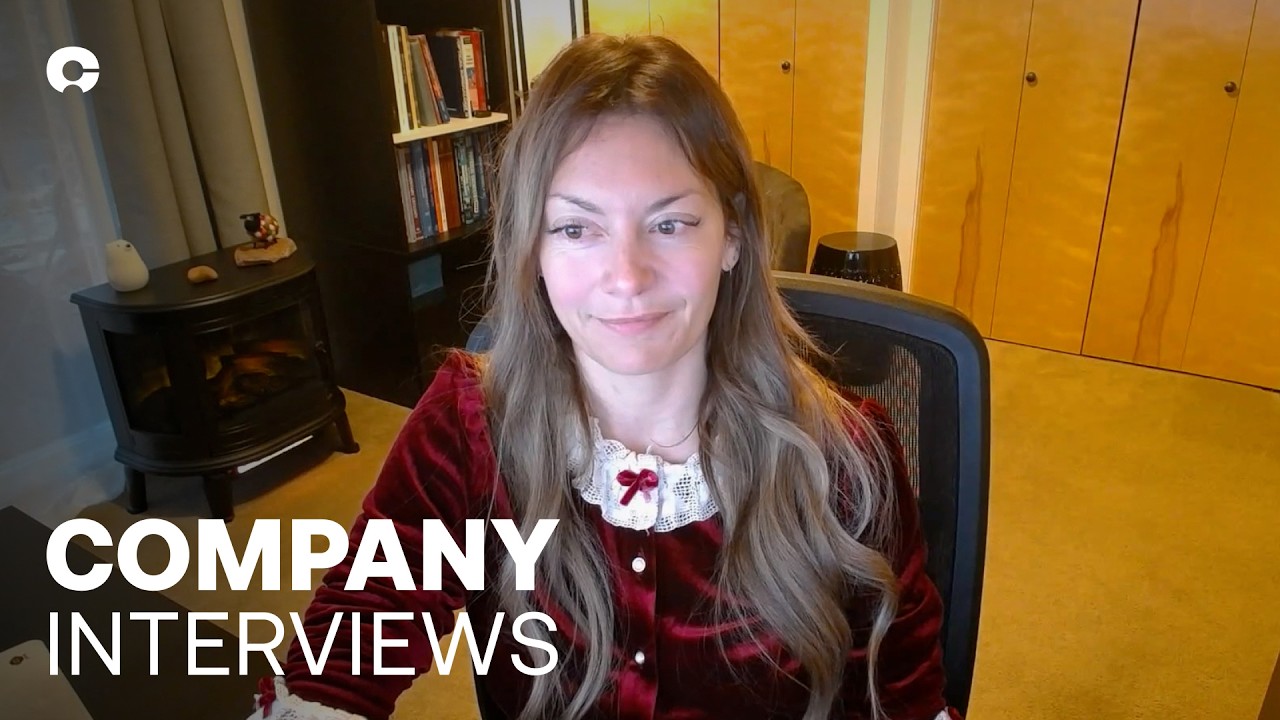
Interview with Pascal Hamelin, President & CEO of Abcourt Mines
Financial Trajectory and Cash Flow Targets
Using current gold prices and the company's operational guidance, Hamelin indicated that the company's current monthly burn rate is less than a million and projected cash flow positivity by the end of Q1 2026, with Q2 2026 representing definite cash flow positive operations.
The Nebari credit facility includes a two-year interest-only period, with principal repayments commencing in July 2027. This structure provides operational flexibility during the critical ramp-up phase.
Hamelin noted, "We'll have time to build up the bank account, and in July 2027, we start reimbursing the debt. We can, if we want, do it earlier if the gold price keeps going that way."
Importantly, the CEO signalled that maintaining some level of debt may be preferable to early repayment if it enables more aggressive drilling programmes:
"Some people don't mind that kind of debt on the balance sheet if it allows them to go and spend money on things which really drive value, such as drilling. The priority for Abcourt is to increase the life of mine."
Mine Life Extension and Resource Expansion
The current mine plan at Sleeping Giant supports a seven-year life producing between 25,000 and 33,000 ounces annually, with variation driven by grade rather than tonnage. Hamelin's strategic priority centres on extending this mine life to 10 years, then subsequently increasing the number of mining fronts to utilise the mill's full 800-tonne-per-day capacity.
The company plans to deploy three underground drill rigs at Sleeping Giant in 2026, focused on converting inferred resources to indicated categories and identifying additional high-grade zones. The CEO explained the narrow-vein mining approach:
"Room-and-pillar is a stope where the vein is sub-horizontal, you use that mining method. It's conventional mining. It's low tonnage but high-grade because you minimize the waste rock shipped to surface. You try to get only that vein. The vein is around 30 cm to 1 metre at the most but very rich."
This mining method inherently limits tonnes but maximizes grade. Sample results from underground workings have included visible gold with grades exceeding 300 grams per tonne (g/t), though Hamelin cautioned that such spectacular assays do not represent mill feed grades due to dilution during mining. The strategy of prioritising mine life extension over immediate production maximisation reflects a pragmatic assessment of the narrow-vein mining model. Hamelin articulated this clearly:
"You can't ask more tonnes from a stope because you will get waste rock going to the mill, so you're going to have a lower grade. So there's no point doing that. You're better off having more mining fronts. It takes more drilling, takes more geology, engineering, but you're going to get good quality ore going to the mill."
Once the 10-year mine life is established, the company plans to update its preliminary economic assessment (PEA) with current gold prices and expanded resources, which would provide the market with a clearer valuation framework for the Sleeping Giant asset.
The Flordin Discovery: A Potential Game-Changer
Whilst Sleeping Giant represents the company's producing asset, the Flordin property, located 138 kilometres from the mill, has emerged as a potentially significant exploration opportunity. The discovery resulted from systematic review of the company's extensive land package, which spans 500 square kilometres within trucking distance of the mill.
VP Exploration Robert Gagnon identified an historic shaft sunk by prospectors in 1939–1940 at a location approximately two kilometres east of a known zone covered by a 43-101 technical report. Hamelin recounted the discovery process:
"Robert is a boots-on-the-ground type guy. He went to do prospecting in spring '24, found the old channel that the prospector did in 1939. Did some chip sampling, turned out like 22 grams grabbed sample from that channel."
Systematic work in July and October 2024 exposed the vein over 300 metres of strike length, 15–20 metres wide, grading 5 g/tgold at surface as per Hamelin and emphasized the significance:
"It's 100% owned by Abcourt, 138 kilometres from the mill by gravel road. At five grams, I tell you, that's worth it."
The proximity of Agnico Eagle's recent land acquisition adds contextual interest. Agnico purchased a neighbouring property and drilled adjacent to Abcourt's showing in November 2024, though results have not been publicly released.
Hamelin noted, "Agnico Eagle drilled beside us in November '24. We're going to drill to their property limit."
Abcourt has planned 20,000 metres of drilling at Flordin for 2026, with winter drilling focused on the eastern extension towards Agnico's property boundary and spring/summer/autumn programmes targeting the northwestern extension. Importantly, this programme will be funded entirely from operating cash flow at Sleeping Giant, avoiding shareholder dilution.
The Flordin discovery illustrates the leverage inherent in Abcourt's land position. The company's predecessor management assembled a substantial portfolio during less favourable market conditions, creating optionality that is only now being systematically evaluated.
Capital Allocation and Shareholder Alignment
A notable aspect of Abcourt's development story is the concentration of ownership amongst management, directors, and long-term shareholders.
Hamelin stated: "I have two directors, Noureddine [Mokaddem] and François [Mestrallet], who have been supporting the company. Management and officers and directors, we own close to 30% of the company by issuing cheques when needed to advance the project."
This alignment has important implications for capital allocation decisions. When questioned about managing the company's share count, Hamelin indicated that shareholders have already communicated their preferences on buyback over dividend. The CEO signalled that capital allocation decisions would be driven by balance sheet strength rather than arbitrary timelines:
"It's all about the balance sheet. Once the balance sheet allows you to do [it], we'll be very fast at rewarding our shareholders because they were patient with us. They built the mine."
This approach - prioritising organic growth, then debt reduction, then potential share buybacks - contrasts with the dividend-focused strategies of many mid-tier and major producers, but aligns with the priorities typically associated with junior producers in growth phases.
The Alternative Development Model for Narrow-Vein Gold Mines
Hamelin articulated a broader thesis about financing narrow-vein gold deposits that has implications beyond Abcourt's specific situation. The traditional path - extensive drilling to define reserves, completing a feasibility study, raising substantial construction capital - requires significant shareholder dilution or creation of royalty interests that permanently reduce project economics.
The CEO offered a pointed critique of this model:
"If you need to drill a million metres to have a prefeasibility, a million metres times $200, so it's $200 million that shareholders - you're not going to have a loan for diamond drilling. So it's equity money or you're giving up part of your mine to someone else through an NSR."
The alternative model that Abcourt is pursuing accepts lower initial production and a longer ramp-up period in exchange for demonstrating cash flow earlier and using operating proceeds to fund resource expansion. This approach requires a different risk assessment from investors - less emphasis on net present value calculations based on fully defined reserves, more emphasis on management's ability to execute operations and systematically expand resources whilst controlling costs.
Hamelin defended this framework directly:
"I see projects, $1.5 to 3 billion tough to finance...Sometimes you might be better off with a smaller-scale mining project, longer period of time, less capital intensive. Might not be the best NPV, but it's probably the best rate of return for the shareholder."
The success of this model depends critically on several factors: maintaining cost discipline during the ramp-up phase, successfully hiring and retaining skilled miners in a competitive labour market, achieving forecast grades and recoveries, and executing systematic exploration programmes that expand resources faster than depletion through mining.
For investors, the question becomes whether Abcourt's specific circumstances - high-grade narrow veins in an established mining district, existing mill infrastructure, experienced management team, strong insider ownership - justify confidence in this alternative path.
The Investment Thesis for Abcourt Mines
- Abcourt Mines operates a producing gold mine in Quebec's established mining districts with an 800-tonne-per-day mill currently running at less than half capacity, providing substantial operational leverage for production growth without major capital investment whilst benefiting from the political stability and infrastructure advantages of a tier-one mining jurisdiction.
- The company's debt-based development model through total of $12 million in Nebari financing has avoided the severe shareholder dilution typical of equity-financed mine builds, with management and directors holding approximately 30% ownership and shareholders expressing preference for future share buybacks over dividends once the balance sheet permits.
- Near-term catalysts include the path to cash flow positivity by Q2 2026 at approximately 700 ounces monthly production, commercial production declaration expected in mid-2026, and initial drilling results from the 20,000-metre Flordin programme that could materially expand the company's resource profile beyond the current seven-year Sleeping Giant mine plan.
- The Flordin discovery represents significant exploration upside, with a 300-metre surface strike grading 5 g/t gold over 15–20 metres width within a potential two-kilometre mineralised corridor located 138 kilometres from existing mill infrastructure, making it economically viable to develop if 2026 drilling confirms depth extension and strike continuity.
- Sustained gold prices above US$4,000 per ounce have fundamentally improved the economics of narrow-vein, high-grade deposits like Sleeping Giant. Abcourt projecy value estimation statrted at $2,500/oz gold price and with every $100 increase in gold price translates to approximately US$2.5–3.3 million in additional annual revenue at current production guidance of 25,000–33,000 ounces annually.
- The two-year interest-only period on the Nebari facility (with principal repayments commencing July 2027) provides critical runway to demonstrate operational consistency whilst building cash reserves, with management planning to self-fund three underground drill rigs at Sleeping Giant and systematic exploration at Flordin through operating cash flow rather than further equity dilution.
- Investors should assess position sizing based on execution risk during the 18-month ramp-up period, tracking quarterly production reports and hiring progress as labour constraints represent the primary bottleneck, whilst monitoring drilling results from both assets as resource growth represents the key driver of valuation re-rating in this alternative development model for narrow-vein gold deposits.
Macro Thematic Analysis: Narrow-Vein Gold in the High-Price Environment
The broader context for Abcourt's development strategy reflects fundamental changes in the economics of narrow-vein, high-grade gold deposits. For decades, these geological systems were considered marginal - attractive to artisanal miners and small-scale operators but insufficiently scalable to interest major producers or justify the capital intensity of feasibility studies and large-scale mine construction.
This dynamic has created opportunities for companies willing to accept unconventional development paths. Rather than spending years and tens of millions defining reserves to feasibility standards, companies like Abcourt are commencing production with indicated and inferred resources, using operating cash flow to fund systematic resource expansion whilst generating returns for shareholders.
"At five grams, I tell you, that's worth it. And we're going to do that with our own money from cash flow. So 2026, we're already set up there. The deposit is 30 kilometres from the city of Lebel-sur-Quévillon." - Abcourt CEO Pascal Hamelin
This philosophy represents a meaningful departure from the conventional wisdom that has governed junior gold development for decades. The traditional path—define reserves, complete feasibility, raise construction capital—was optimised for a low-gold-price environment where project economics required scale to justify capital costs. In a sustained high-price environment, smaller-scale, high-grade operations that commence production earlier and grow organically may deliver superior shareholder returns, particularly when existing infrastructure can be leveraged.
The success of this alternative model will depend on individual company execution, but the proliferation of similar strategies across the junior gold sector suggests a structural shift in development philosophy. For investors, this creates opportunities in producing assets that might previously have been dismissed as sub-scale, provided management teams can demonstrate operational competence and systematic resource growth.
Quebec's established mining districts, with their legacy infrastructure and skilled labour pools, provide an ideal testing ground for this approach. Abcourt's combination of producing high-grade gold asset and early-stage exploration discovery exemplifies the risk-reward profile available to investors willing to embrace this alternative development paradigm.
TL:DR
Abcourt Mines represents a producing Quebec gold company executing an alternative development model—using C$12 million in debt financing rather than equity raises to commence production at its Sleeping Giant mine whilst maintaining an 800-tonne-per-day mill at less than half capacity. October 2025 production reached 475 ounces with management targeting 700 ounces monthly by Q2 2026 for cash flow positivity. The company plans to deploy three underground drill rigs at Sleeping Giant and complete 20,000 metres of drilling at the newly discovered Flordin property (300 metres of 5 g/t gold at surface)—all funded from operating cash flow.
With management and directors holding 30% ownership, a two-year interest-only debt period until July 2027, and sustained gold prices above US$4,000 per ounce fundamentally improving narrow-vein economics, Abcourt offers leveraged exposure to production growth and resource expansion without further shareholder dilution. The investment case depends on execution during the 18-month ramp-up period, successful miner recruitment to overcome labour constraints, and drilling success at both assets to extend mine life beyond the current seven-year plan.
Frequently Asked Questions (FAQs) AI-Generated
Management projects cash flow positivity by the end of Q1 2026, with Q2 2026 representing definite cash flow positive operations. This target is based on achieving approximately 700 ounces monthly production at sustained gold prices. The company's current monthly burn rate is less than C$1 million, and October 2024 production reached 475 ounces whilst operating at conservative staffing levels and building mill circuit inventory.
Labour availability represents the primary bottleneck, not geological or metallurgical factors. CEO Pascal Hamelin explicitly stated: "The key here to grow the production is to hire miners. It's not the feed, it's the people, that's the problem you're trying to solve for." The company has invested in a sleep camp commissioned in September 2024 to address recruitment challenges, with Phase Two expansion pending permit approval, and currently operates two 10-hour shifts with plans to expand to four shifts as the workforce grows.
The Flordin discovery exposed 300 metres of strike length grading 5 g/t gold over 15–20 metres width at surface, located 138 kilometres from existing mill infrastructure. Geophysical surveys suggest the mineralised corridor may extend two kilometres along an east-west trend, with historic Cambior drilling intersecting similar mineralisation at 400 metres depth. Abcourt has planned 20,000 metres of drilling for 2026—winter programmes targeting the eastern extension towards Agnico Eagle's adjacent property, and spring/summer/autumn programmes targeting northwestern extensions. Management estimates 50,000 metres would be required for a robust resource estimate, representing approximately 2.5 years of work at current drilling rates, all funded from operating cash flow.
Abcourt secured $12 million in total financing from Nebari: an initial C$8 million tranche, a $2 million tranche in September 2024, and an additional $2 million facility used to buy down the Triple Flag NSR royalty from 2% to 1.5%. The credit facility includes a two-year interest-only period, with principal repayments commencing in July 2027. This structure provides operational flexibility during the critical ramp-up phase, allowing the company to build cash reserves and demonstrate operational consistency before principal repayments begin.
Sustained gold prices above US$4,000 per ounce have fundamentally improved the economics of narrow-vein, high-grade deposits like Sleeping Giant. Abcourt's project value estimation started at US$2,500 per ounce gold price, and every US$100 increase translates to approximately US$2.5–3.3 million in additional annual revenue at current production guidance of 25,000–33,000 ounces annually. This high-price environment enables the alternative development model Abcourt is pursuing—commencing production with indicated and inferred resources rather than spending years defining reserves to feasibility standards, then using operating cash flow to fund systematic resource expansion.
Analyst's Notes





Subscribe to Our Channel





.jpg)

Stay Informed






















