




Santacruz Advances Growth Strategy Following Strong 2025 Performance


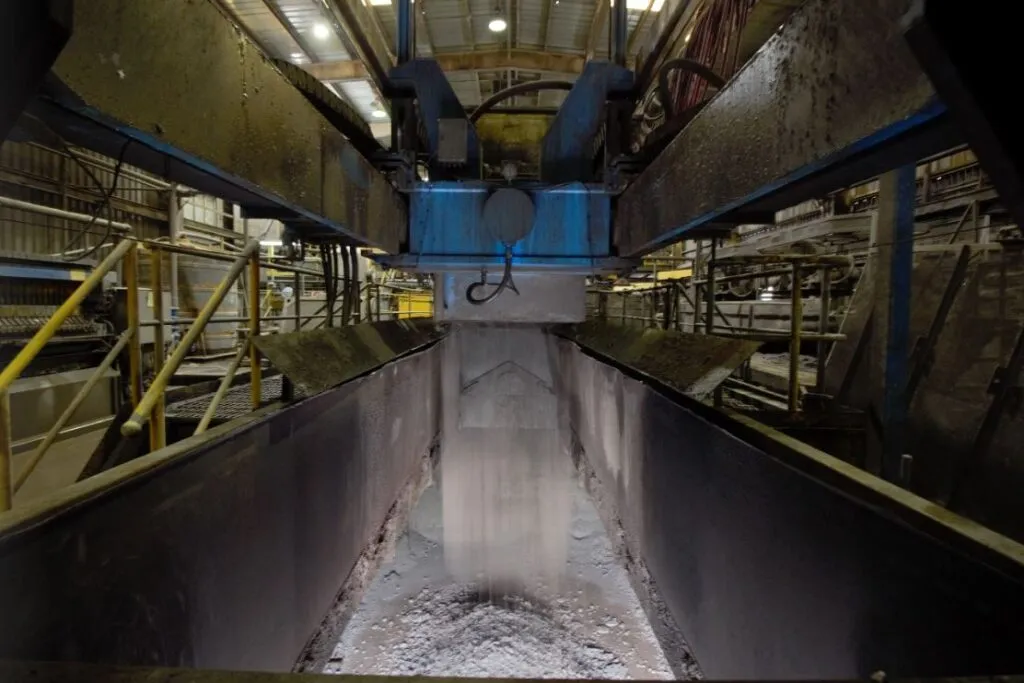
Santacruz Silver posts $326M revenue and $104M EBITDA in 2025, guides 10% production growth for 2026 as Bolivar mine recovers and TSX graduation nears.
- Santacruz Silver Mining delivered its strongest financial performance in recent years in 2025, generating revenues of $326 million and EBITDA of $104 million, supported by rising silver prices and operational efficiency gains across its multi-asset portfolio in Mexico and Bolivia.
- The Bolivar mine in Bolivia, which lost an estimated 600,000–660,000 ounces of silver equivalent production in 2025 due to flooding of two key veins, is recovering on schedule following a dewatering programme with full capacity restoration targeted for Q4 2026.
- Management has guided for approximately 10% group production growth in 2026, underpinned by the Bolivar recovery, throughput and recovery improvements at the Zimapan mine in Mexico, and incremental contributions from Caballo Blanco and the new Esperanza area.
- Santacruz is restructuring its AISC reporting to carve out San Lucas from consolidated cost figures which management believes will give investors a significantly clearer view of mine-level economics ahead of the Q1 2026 production release.
- The company is pursuing a graduation to the TSX main board to launch a formal share buyback programme, while maintaining a conservative treasury, scaling an innovative Bolivian local-currency financing channel, and keeping M&A options open across the Americas.
Santacruz Silver Mining Ltd. (TSXV:SCZ) closed 2025 with its strongest financial results in recent years, posting revenues of $326 million and EBITDA exceeding $100 million. With the worst of its operational challenges now behind it, the company is repositioning for a materially stronger 2026. Executive Chairman and CEO Arturo Préstamo Elizondo outlined the recovery timeline at the company's Bolivar mine, the levers available to expand margins across its broader portfolio, and the strategic priorities that will define the business over the next 12 to 24 months including a planned TSX graduation, a potential share buyback, and a disciplined but open approach to M&A.
2025 Financial Results: Price Tailwinds and Operational Improvement
Santacruz ended 2025 with revenues of $326.4 million, representing 15% growth year-on-year (YOY), alongside EBITDA of $104 million and ~$70 million cash on hand. Management attributed the improvement to a combination of stronger silver prices and measurable operational efficiency gains across its mine sites.
The company also materially strengthened its balance sheet during the year, paying down $40 million to Glencore and settling $27 million in deferred tax installments, while still growing its cash position. Working capital is around $63.7 million which improved by an estimated 35–40% YOY. The company closed the year with more than $80 million in cash when including its Corporación Minera de Bolivia (COMIBOL) joint venture structure in Bolivia.
Key Variable for 2026
The most consequential operational development for Santacruz over the past year has been the flooding of two key veins at the Bolivar mine in Bolivia. The event reduced silver production representing a cumulative loss of between 600,000 and 660,000 ounces of silver equivalent which is a meaningful shortfall for a mine that could produce 1.0–1.2 million silver equivalent ounces per quarter at full capacity.
Préstamo was direct about the recovery timeline:
"The water challenge in Bolivia started last year. What it actually did, it brought production like 50,000 ounces of pure silver down on a monthly basis. So, it was more than half a million ounces, close to 600,000–660,000 ounces of pure silver, that we didn't produce in 2025. So, we should catch up on those beginning at full capacity by Q4 of this year."
The dewatering process is underway and progressing in line with budget. Bolivar's Q4 2025 silver production increased 34% quarter-on-quarter, and further improvement is anticipated in Q1 2026. The primary bottleneck is not the mechanical pumping of water from the mine, but rather the treatment of the extracted water, which is highly acidic due to its sulfide content and requires pH neutralization before discharge. Management characterised the constraint as a technical, rather than structural, and that is being resolved on schedule.
Full production recovery at Bolivar is expected by Q4 2026, which would restore the lost volume and provide a meaningful tailwind to group revenues and margins in the second half of the year.
Interview with Arturo Préstamo Elizondo, Executive Chairman & CEO of Santacruz Silver Mining Ltd.
Zimapán and Caballo Blanco: Incremental Gains Across a Diversified Asset Base
Beyond Bolivar, Santacruz’s operating portfolio continues to show steady, incremental improvement across both Mexico and Bolivia. At Zimapán, the company’s highest-volume asset in Mexico, development has now advanced to Level 960 underground. Management highlighted consistent month-on-month improvements in both plant throughput and metallurgical recoveries, trends that are expected to translate into gradual production growth through 2026.
In Bolivia, the Caballo Blanco group of mines is emerging as a meaningful contributor to the production profile. Within this portfolio, the recently commissioned Esperanza area has entered production and is expected to contribute approximately 30,000 tonnes of concentrate annually. While still ramping, Caballo Blanco reflects Santacruz’s broader strategy of extracting incremental value from a portfolio of brownfield assets through operational optimisation rather than large-scale capital deployment.
Also in Bolivia, the Porco mine in the Potosí district remains the smallest asset in the portfolio, but management frames it as strategically important. Beyond its direct production contribution, Porco provides operational continuity and regional presence in one of Bolivia’s most established mining jurisdictions. Taken together, these assets underpin Santacruz’s targeted ~10% year-on-year production increase, driven less by step-change growth and more by cumulative operational gains across the portfolio.
Soracaya: Measured Development with Defined Near-Term Catalysts
Soracaya represents the next leg of organic growth within Santacruz’s Bolivian pipeline. The project is advancing through final permitting, with management guiding to full approval by August 2026. Initial production is targeted for Q4 2026 at a conservative rate of 200–250 tonnes per day, reflecting a deliberate, phased ramp-up strategy.
This measured approach is consistent with Santacruz’s broader capital allocation philosophy, prioritising disciplined treasury management and risk-controlled development. Rather than pursuing aggressive scale from the outset, the company is focused on establishing stable operations before progressing toward full capacity in 2027. For investors, Soracaya provides a clear, time-bound catalyst that complements the steady-state improvements being delivered across the existing asset base.
Rethinking AISC Reporting: San Lucas Carve-Out
One of the more significant near-term changes for investor transparency is a planned restructuring of how Santacruz presents its all-in sustaining cost figures. The change centres on San Lucas, the company's ore-purchasing and processing subsidiary, which operates as a margin business buying ore from third-party producers at market prices and processing it for a spread.
Because San Lucas purchases ore at prevailing metal prices, rising silver and base metal prices mechanically inflate its reported AISC, even when the business is performing well and generating strong margins. By carving San Lucas out of the consolidated AISC calculation and presenting it separately on a margin basis, management believes investors will gain a materially cleaner view of the company's mine-level cost performance.
Préstamo explained the rationale:
"It doesn't matter if metal prices increase and your all-in sustain at San Lucas increases. What's important to measure at San Lucas is the margin that you're getting from buying and selling those metals. So, we're going to be presenting those in a very easy-to-read way for investors, and I'm sure that they will be identifying our all-in sustain in a more efficient way."
The revised reporting format is expected to be introduced alongside the company's Q1 2026 production figures.
Capital Allocation, TSX Graduation
With a strengthened balance sheet, growing cash generation, and no pressing refinancing needs, Santacruz is now focused on deploying capital in a way that creates sustainable shareholder value. The company's treasury philosophy is conservative by design, reflecting the inherent volatility of commodity prices and the capital intensity of operating multiple underground mines.
On the question of shareholder returns, management pointed to a planned graduation from TSXV to the TSX main board as the catalyst for launching a formal share buyback program. Management believes the current share price does not reflect the company's underlying fundamentals and intends to use a buyback to address that discount when the appropriate listing venue is in place.
On the financing side, Santacruz has also pioneered an innovative approach in Bolivia, issuing local currency promissory notes through its subsidiaries including San Lucas listed on the Bolivian stock exchange. The issuance was oversubscribed more than twofold and absorbed by the market in under 15 minutes, carrying an interest rate in line with the Bolivian central bank rate of approximately 10%. Management indicated the program could scale to 140–200 million Bolivianos and potentially transition to longer-duration bond issuances of three to five years, providing a cost-effective local funding channel that reduces reliance on US dollar-denominated debt.
M&A Optionality and Country Risk
M&A is on the agenda, though firmly subordinated to financial discipline. Management confirmed it is reviewing acquisition alternatives across the Americas, from Canada and the United States down to Chile and Argentina. Any acquisition would need to be accretive to shareholders and present an opportunity for Santacruz to add operational value, a standard consistent with its track record of improving assets through hands-on management.
In Bolivia, Préstamo states President Rodrigo Paz has shown a clear commitment to attracting foreign investment and reforming the legal framework for resource development. Meanwhile in Mexico, management acknowledged ongoing security concerns in certain regions but expressed confidence in the federal government's efforts to address them, and noted the company operates in areas where it has deep local knowledge and established community relationships.
The Investment Thesis for Santacruz Silver
- Operational recovery underway at Bolivar: The Bolivar mine dewatering is tracking on schedule, with Q4 2025 production already up 34% quarter-on-quarter. Full capacity recovery by Q4 2026 could restore approximately 600,000–660,000 ounces of silver equivalent without requiring new capital or exploration success.
- Guided 10% production growth for 2026: Management has publicly guided for approximately 10% group production growth, driven by Bolivar recovery and Zimapan efficiencies. For investors, this represents organic growth with defined catalysts and a known timeline.
- Strong and growing balance sheet: Santacruz ended 2025 with approximately $70 million in cash after paying down $40 million in debt and $27 million in deferred taxes demonstating strong cash generation even during a period of operational disruption.
- Improving margin visibility: The planned carve-out of San Lucas from consolidated AISC reporting should reduce noise in cost metrics and allow investors to better assess the true profitability of the core mining operations. Watch for the new reporting format in the Q1 2026 production release.
- TSX graduation and buyback catalyst: A move to the TSX main board, followed by a formal share buyback program, represents a re-rating catalyst. Management explicitly believes the shares are undervalued, and a buyback provides a mechanism to act on that conviction while returning capital to shareholders.
- Soracaya adds a growth option: The Soracaya project in Bolivia is expected to begin initial production in Q4 2026, with full ramp-up in 2027. This adds a low-capital organic growth option to an already-producing asset base.
- Innovative financing reduces cost of capital: Santacruz's ability to issue Bolivian-currency promissory notes at local interest rates with demonstrated strong market demand is an under-appreciated competitive advantage that reduces reliance on expensive US dollar debt.
- M&A optionality at a disciplined price: Management is actively reviewing accretive acquisition targets across the Americas. Any deal is subject to strict financial discipline criteria, limiting the risk of value-destructive transactions. A well-structured acquisition could accelerate the company's growth trajectory significantly.
- Silver price leverage: As a primary silver producer with improving operational efficiency, Santacruz carries meaningful leverage to silver prices. The current constructive silver price environment provides an additional tailwind to revenues and margins beyond what operational improvements alone would generate.
Silver's Structural Moment: Macro Thematic Analysis
Silver occupies a unique position in the current commodity landscape simultaneously as a monetary metal, an industrial input, and a critical material for the global energy transition. The macro backdrop for silver in 2026 is arguably more compelling than at any point in the past decade, and Santacruz Silver Mining is positioned to capture an outsize share of that upside.
On the demand side, silver's role in solar photovoltaic panels, electric vehicle components, and grid-scale energy storage systems is expanding rapidly. The International Energy Agency and other bodies have consistently flagged that the pace of clean energy deployment is increasing faster than silver supply can comfortably accommodate. On the supply side, silver production is predominantly a by-product of base metal and gold mining, meaning supply growth is largely a function of decisions made for other commodities. Primary silver producers such as Santacruz are a relatively small subset of the market, which limits the supply-side response to higher prices. Mine development timelines of five to ten years further constrain any near-term supply increase.
Geopolitical dynamics add a further layer of structural support as Western governments are actively seeking to de-risk critical mineral supply chains from jurisdictions perceived as politically unreliable creating a premium for production assets in the Americas, which form the entirety of Santacruz's operating footprint.
TL;DR
Santacruz Silver Mining enters 2026 from a position of operational momentum and financial strength. The Bolivar dewatering recovery is the single most important variable for the year, and its progression on schedule gives management confidence in the 10% production growth guidance. Combined with incremental improvements at Zimapan, Caballo Blanco, and the early contribution from Soracaya, the company has multiple levers to drive revenue and EBITDA growth over the next 12 to 24 months. The company's planned AISC reporting change is a meaningful step toward investor transparency, and the TSX graduation with its associated share buyback program signals management's conviction in the company's intrinsic value. With a conservative treasury, an innovative local financing strategy in Bolivia, and M&A options open across the Americas, Santacruz is a multi-asset silver producer with a clear and credible pathway to delivering improved shareholder returns.
Frequently Asked Questions (FAQs) AI-Generated
Production at the Bolivar mine in Bolivia was impacted by the flooding of two key veins, which reduced silver output by approximately 50,000 ounces per month and resulted in a cumulative loss of 600,000–660,000 silver equivalent ounces over the course of the year. The dewatering programme is underway and tracking on budget. The primary technical bottleneck is the treatment of acidic, sulfide-laden water once it is pumped out of the mine, which requires pH neutralisation before discharge. Q4 2025 production at Bolivar was already up 34% quarter-on-quarter, and full capacity recovery is targeted for Q4 2026.
San Lucas is a subsidiary that purchases ore from third-party producers at prevailing market prices, processes it, and sells the output for a margin spread. Because it buys at spot prices, rising silver and base metal prices mechanically inflate its reported AISC even when the business is generating healthy margins. Including San Lucas in the consolidated AISC figure distorts the cost picture for the core mining operations. Carving it out and presenting it separately on a margin basis will allow investors to assess the underlying mine-level cost performance of Santacruz's owned assets more accurately.
Santacruz currently trades on the TSX Venture Exchange (TSXV), which is typically associated with earlier-stage or smaller companies. A graduation to the TSX main board would broaden the company's institutional investor access, improve liquidity, and signal a maturation of the business. Management has indicated that the TSX graduation will also be the trigger for launching a formal share buyback programme — a mechanism through which the company intends to address what it believes is a meaningful discount between its current share price and its intrinsic value.
The company has issued local-currency promissory notes through its Bolivian subsidiaries on the Bolivian stock exchange. A recent issuance was oversubscribed more than twofold and placed in under 15 minutes, at an interest rate aligned with the Bolivian central bank rate of approximately 10%. This approach allows Santacruz to fund local operations in Bolivianos rather than drawing on US dollar reserves, reducing foreign exchange exposure and cost of capital. The programme could scale to 140–200 million Bolivianos and may transition to longer-duration bonds of three to five years.
Management confirmed it is actively reviewing M&A alternatives across the Americas, spanning Canada, the United States, and down to Chile and Argentina. Any acquisition would need to be accretive to shareholders and present a clear opportunity for Santacruz to add operational value — consistent with its established track record of improving assets through hands-on management. If no transaction meeting those criteria is identified, the company will continue to grow organically. The disciplined framing around M&A reduces the risk of value-destructive deal-making.
Analyst's Notes





Subscribe to Our Channel

.png)


Stay Informed






