


Atlas Salt Q2 2026: 6 Things You Need to Know


Atlas Salt trades at 0.17x NPV with permitting complete, financing in progress, and a 24-year salt project targeting North America's supply gap.
Project Overview
Atlas Salt (TSXV: SALT) enters the second half of 2026 with most major development milestones already achieved at the Great Atlantic Salt Project. The feasibility study is complete, permitting has been secured, and agreements are in place with Scotwood Industries, Sandvik, and Hatch covering offtake, equipment support, and engineering. The company's focus now shifts to securing the $589 million financing package required to advance the project toward a targeted 2030 production start.
1. The Valuation Disconnect Is Quantifiable
Atlas Salt trades at approximately 0.1x its forward-looking net asset value (NAV), against an enterprise value of $138.5 million and a fully diluted market capitalisation of $143.9 million. Comparable salt asset transactions and public company multiples set the external benchmark: Compass Minerals (NYSE: CMP) traded at 9.1x trailing earnings before interest, taxes, depreciation, and amortisation (EBITDA) as of March 10, 2026, per FactSet. Management has noted that applying a comparable multiple to Atlas Salt's modelled life-of-mine (LOM) average annual EBITDA of $325 million implies a valuation of close to $3 billion. The Lassonde curve framework places pre-project-finance development assets in a valuation range of 0.2x to 0.4x NAV, rising to 0.4x to 0.6x at construction commencement and approaching 1.0x NAV at first production.
The primary financing challenge is scale: the $589 million pre-production capex compares against the $138.5 million enterprise value. Endeavour Financial has been engaged to structure a debt-weighted financing package supported by the $188 million average annual post-tax free cash flow (FCF) modelled in the 2025 UFS, but the financing has not yet closed, and construction cannot commence until it does.
2. The Free Cash Flow Profile Is Infrastructure-Grade
At the 2025 UFS base salt price of $81.67 per tonne, the Great Atlantic Salt Project generates a LOM average annual post-tax FCF of $188 million across a 24.3-year mine life, recovering the $589 million pre-production capex within 4.2 years on an after-tax basis.
The project models a LOM average annual net revenue of $407 million and a LOM average annual pre-tax operating cash flow of $325 million. The all-in sustaining cost (AISC) on a free-on-board Turf Point basis is $34.90 per tonne shipped, producing a LOM average margin of $74.50 per tonne. Total LOM sustaining capex of $609 million is absorbed within the modelled cash flow without requiring additional equity issuance in the base case, per the 2025 UFS. The 2025 UFS sensitivity analysis shows that a reduction in the base price to $73.50 per tonne reduces the after-tax NPV to $500 million and the after-tax internal rate of return (IRR) to 16.9%, while an increase to $89.84 per tonne raises the after-tax NPV to $1.5 billion and the after-tax IRR to 25.0%.
In years 1 to 8, the company targets allocating 50% of the average annual FCF of $161 million to debt repayment and 50% to shareholder returns, implying approximately $80 million per year in capital returns during the deleveraging phase. From year 9 onward, with debt obligations retired, more than 90% of the $203 million average annual FCF is targeted for buybacks or dividends, equivalent to $1.22 per share at 150 million shares outstanding.
3. The North American Supply Deficit Is Structural, Not Cyclical
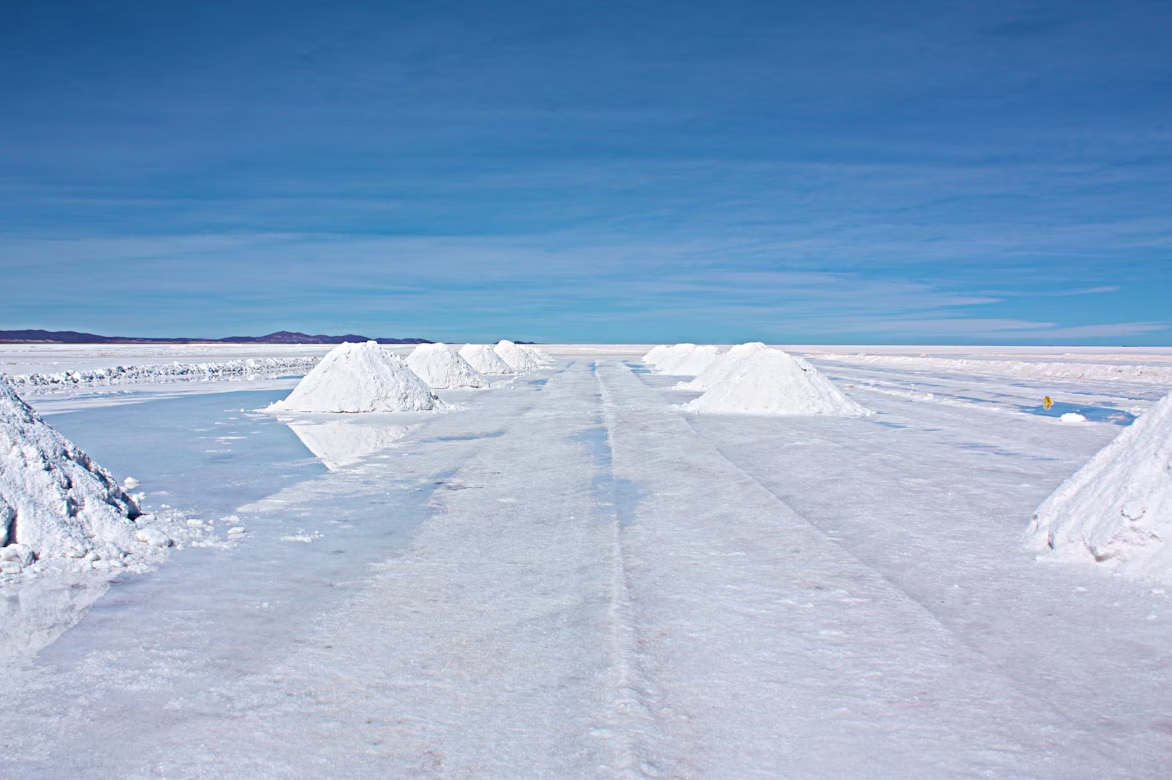
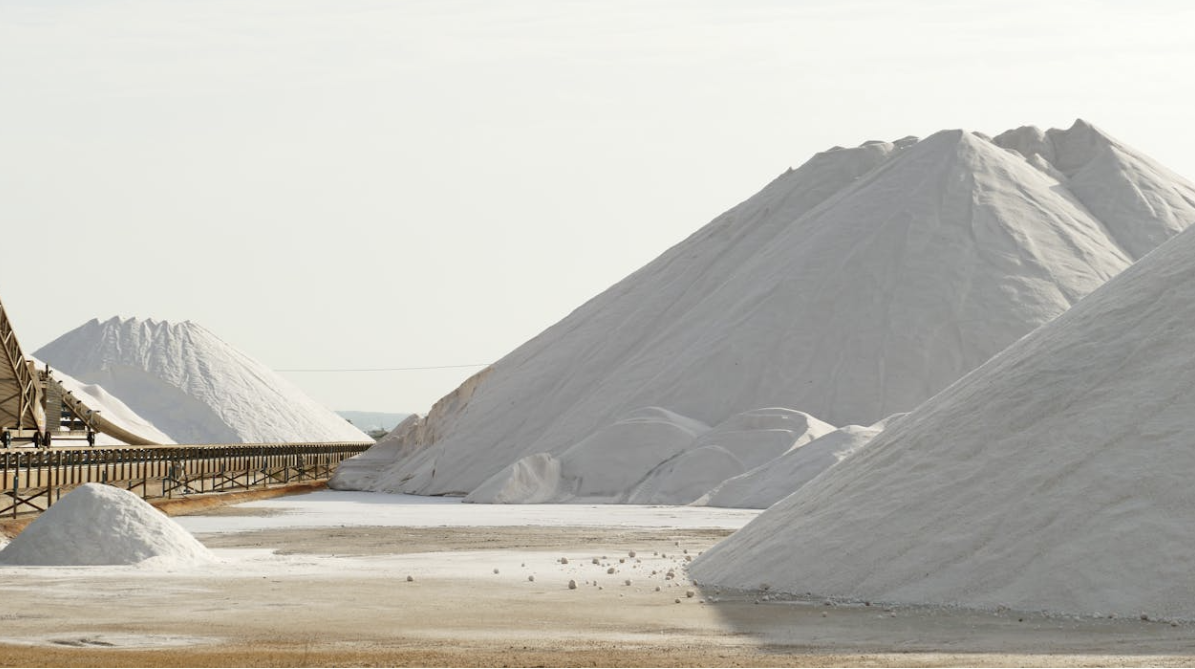
North America imports 8 million to 10 million tonnes of de-icing salt annually, and no new mine of comparable scale has entered production since American Rock Salt opened in New York in 2001. The Great Atlantic Salt Project's planned 4 million tonne annual production capacity is positioned to help address that supply gap. Meanwhile, domestic supply has contracted following the closure of Cargill's Avery Island mine in Louisiana, which removed approximately 2.5 million tonnes per year from the market. Cargill's remaining salt assets in New York and Cleveland have remained unsold since a 2023 sale process began, with environmental liabilities cited as a key obstacle.
Market tightness has already translated into higher prices. Spot road salt prices in Ontario reached nearly $190 per tonne in January 2026, up from roughly $65 to $70 per tonne. Municipal and provincial governments, the primary customers for de-icing salt, purchase the product as part of winter road safety obligations, making demand less discretionary than in many commodity markets. The United States Geological Survey reported a 4.2% compound annual growth rate in average United States rock salt prices between 2000 and 2024.
4. Technical & Permitting Risk Has Been Substantially Retired
The 2025 UFS, prepared by SLR Consulting, confirmed 95 million tonnes of probable reserves grading 95.9% sodium chloride at approximately 180 metres of depth, compared to the approximately 600-metre depth of the Goderich mine below Lake Huron, enabling decline-based underground development that eliminates shaft-sinking capital from the pre-production build.
The deposit remains open in all directions, with 868 million tonnes of inferred resource at 95.2% sodium chloride excluded from the current production plan, which management notes could increase annual production and mine life. Salt extraction requires no chemical processing and produces no tailings. The Newfoundland & Labrador Environmental Minister released the project from the provincial environmental assessment process in April 2024 after approximately 2 months of review. In addition to the environmental assessment release, the company lists approvals for early works, construction-phase environmental protection, waste management, water resource management, and community benefits plans.
Construction execution risk remains. Management notes that securing the project financing to fund the $589 million pre-production capex is the primary remaining milestone before construction can commence.
5. Strategic Agreements De-Risk the Path to Construction
Atlas Salt has secured memoranda of understanding (MOUs) with Scotwood Industries targeting 1.25 million to 1.5 million tonnes per annum of offtake, Sandvik for $132 million in equipment supply and engineering support announced February 2026, and Hatch as lead engineering and integrated project delivery partner - collectively addressing the offtake, equipment capital, and engineering execution components of the construction pathway.
The Scotwood Industries MOU, announced in August 2024, commits the largest US packaged retail de-icing salt distributor to a targeted volume of 1.25 to 1.5 million tonnes per annum, against the project's 4 million-tonne nameplate capacity. The Sandvik MOU introduces an equipment financing component that provides $132 million to help fund the $589 million pre-production capex. Newfoundland & Labrador was ranked the 9th-best mining jurisdiction globally by the Fraser Institute in 2025, based on mineral content and government policy alignment, providing a verifiable jurisdictional benchmark.
Endeavour Financial has been engaged to structure the project financing package, targeting a debt-weighted structure that the company's $188 million average annual post-tax FCF is designed to support.
6. Flow-Through Financing Advances a Secondary Asset Without Diluting the Primary Focus
A $1.25 million non-brokered flow-through private placement expected to close in May 2026 is issuing 961,539 common shares at $1.30 per share to fund Canadian exploration expenditures at the Black Bay nepheline property in Southern Labrador - preserving the $5.4 million net cash position for the Great Atlantic Salt Project. Proceeds qualify as flow-through mining expenditures under the Income Tax Act (Canada). The company also secured funding through the provincial Junior Exploration Assistance 2026 program to support the drill budget. Nepheline is an industrial mineral used in glass and ceramics manufacturing as a lower-energy alternative to feldspar, with only 1 producing mine currently operating in North America. The maiden drill program is designed to evaluate the deposit's potential tonnage.
A commercially viable nepheline discovery at Black Bay would represent value outside the 2025 UFS economics - an opportunity to uncover value and subsequently potentially monetise a non-core asset, while the company's focus remains on advancing the Great Atlantic Salt Project.
Key Takeaways for Investors
- Atlas Salt trades at an enterprise value of $138.5 million versus an after-tax net present value of $920 million from the 2025 Updated Feasibility Study, placing the company at approximately 0.1 times net asset value and below the valuation range typically associated with pre-financing development projects.
- The Great Atlantic Salt Project is projected to generate average annual post-tax free cash flow of $188 million over a 24.3-year mine life, with a 21.3% after-tax internal rate of return and a 4.2-year payback period.
- North America imports 8 million to 10 million tonnes of de-icing salt each year and has not commissioned a comparable new mine since 2001, creating a supply gap the project's 4 million tonne annual production capacity is designed to help address.
- Comparable salt producers and transactions have been valued at between 9.1 and 16.5 times earnings before interest, taxes, depreciation, and amortisation, while management estimates a valuation approaching $3 billion using the low end of that range.
- The feasibility study, environmental assessment, offtake discussions, equipment financing arrangements, and engineering partnerships are in place, leaving project financing as the primary milestone before a construction decision.
- A $1.25 million flow-through financing supports exploration at the Black Bay nepheline property, providing additional upside potential without diverting capital from the Great Atlantic Salt Project.
The Bottom Line
Atlas Salt enters the second quarter of 2026 with its FS complete, its environmental assessment cleared, and MOUs covering offtake, equipment financing, and engineering in place. The $138.5 million enterprise value relative to a $920 million after-tax NPV8% implies a multiple of approximately 0.1x forward NAV, below the 0.2x to 0.4x range associated with the pre-finance stage of the Lassonde curve. Closing the project financing package through Endeavour Financial is the primary remaining milestone required to move the company into the construction re-rate range of 0.4x to 0.6x NAV. Moving forward, key milestones to monitor include the financing package structure and close date, additional offtake announcements, and maiden drill results from the Black Bay nepheline program.
Analyst's Notes


Subscribe to Our Channel






Stay Informed


