




Section 338 Ends USMCA's Salt Exemption, Repricing North American Deicing Supply Before Bid Season


Section 338 ends USMCA's salt exemption, raising Canadian supply costs as constrained mine capacity shifts tariff pressure to prices, margins, and financing.
- Section 338 of the Tariff Act of 1930, invoked for the first time in nearly a century, imposes a 50 percent duty on a defined list of Canadian goods effective August 19, 2026, including goods qualifying under the United States-Mexico-Canada Agreement (USMCA), raising the landed cost of affected Canadian exports entering the US.
- Canada's largest rock salt mine has supplied a significant share of US highway deicing salt under tariff-free treatment for decades, while no major North American salt mine has entered production in nearly three decades, leaving few alternative sources capable of replacing that volume after the new duty takes effect.
- Export Development Canada (EDC) has issued a non-binding Letter of Interest for up to C$150 million in senior debt financing for a new Newfoundland salt project whose Updated Feasibility Study models an after-tax NPV of C$920 million and a post-tax IRR of 21.3 percent, signaling lender support for new supply despite higher cross-border trade costs.
- Ontario's premier has called for direct retaliation, while the Harmonized Tariff Schedule (HTS) codes implementing the proclamations remain unpublished, leaving the final scope of the duty unconfirmed ahead of its August 19, 2026 effective date.
- The coming summer bid season, when US municipalities set multi-year deicing salt contracts, will show whether producers or buyers absorb the new tariff cost, while financing access, rather than resource size alone, is becoming the key differentiator for projects seeking to add new supply.
Section 338 Ends USMCA Tariff Exemption, Raising Canadian Salt Costs & Limiting Near-Term Supply Alternatives
On July 20, 2026, the US invoked Section 338 of the Tariff Act of 1930 for the first time in nearly a century through three proclamations imposing an additional 50 percent duty on a defined list of Canadian goods effective August 19, 2026. The accompanying White House Fact Sheet, dated the same day, states that the duty applies regardless of USMCA qualification, removing the exemption that had generally shielded qualifying goods during earlier tariff rounds. Compass Minerals International's fiscal 2025 disclosures confirm that its Canadian-sourced salt exports remained tariff-free because the product qualified under USMCA, an exemption Section 338 removed effective August 19, 2026.

The mine at the center of that exemption is Goderich, Ontario, the world's largest rock salt mine, which has supplied a significant share of highway deicing salt across the northern US for decades under that duty-free arrangement. A 50 percent duty on that mine leaves few alternative sources capable of replacing its production in the near term. The US salt belt, spanning the Great Lakes through the Northeast and accounting for most US deicing salt demand, has long relied on Canadian-origin supply rather than treating it as supplemental volume. Removing the USMCA exemption therefore changes the cost basis of the regional market rather than the economics of a single shipment.
Three Decades Without New Mine Supply Limit Substitution, Shifting the Tariff's Impact to Prices & Margins
No large-scale North American salt mine has reached commercial production in nearly three decades. For US municipalities, that leaves few Canadian or domestic suppliers capable of replacing imported volume affected by the new duty. Substitution away from Goderich-origin salt, whether toward US-based mines or new Canadian entrants, is constrained by geology, permitting timelines, and the multi-year construction schedules required to develop a new mine, not by insufficient demand for additional supply.
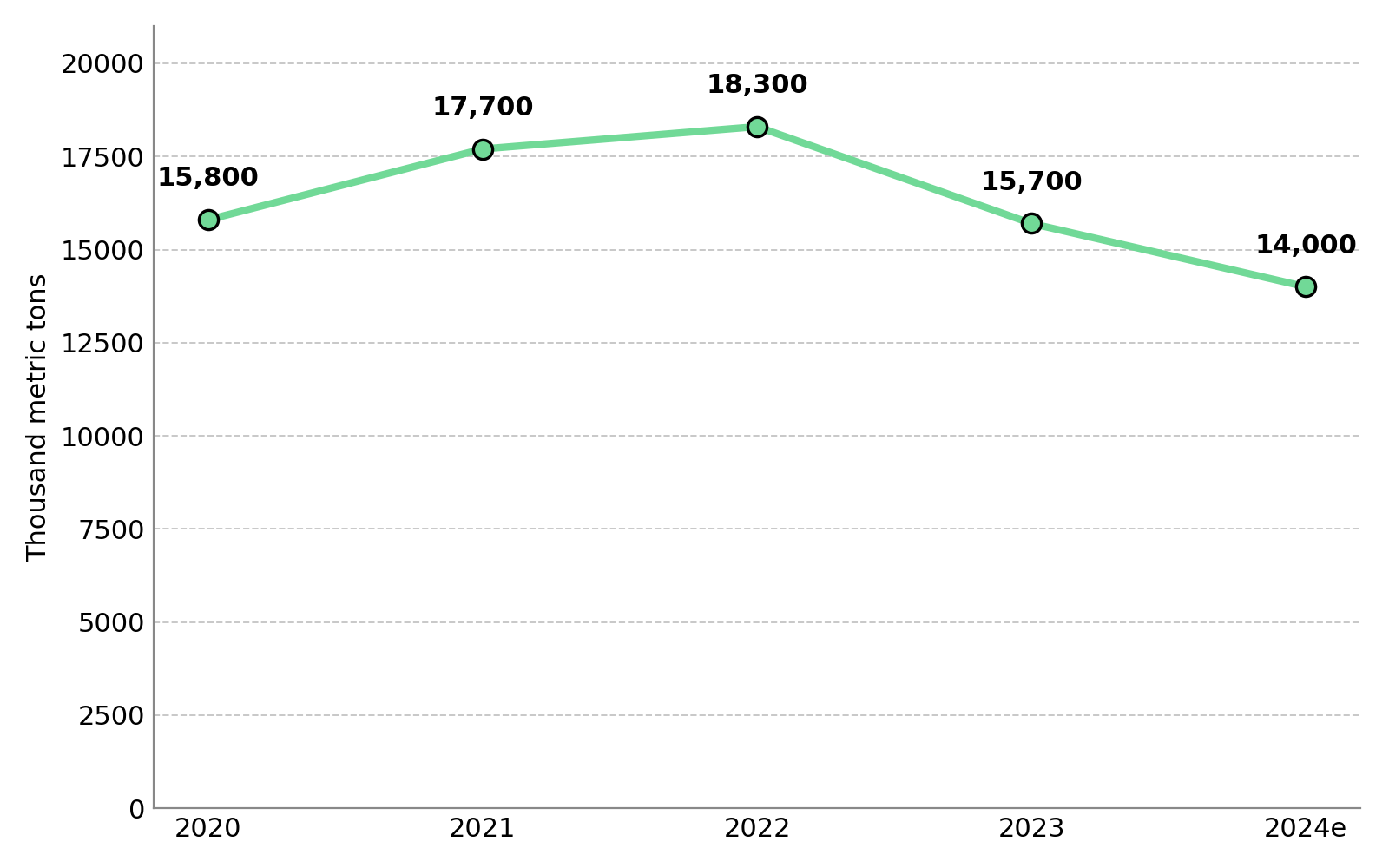
The mismatch between a tariff that takes effect within weeks and a supply response measured in years means financing and project valuations adjust long before new physical supply can enter the market. New mine permitting, development, and ramp-up to steady-state production take years rather than quarters, making price adjustment, not additional supply, the market's primary near-term response to a tariff of this size. Once the duty takes effect, the key variable becomes whether producers absorb the additional cost through lower margins or municipalities accept higher contract prices.
Pending HTS Codes Keep Section 338 Scope Uncertain, Leaving Tariff Costs Unresolved Before August 19
Ontario Premier Doug Ford said on July 20, 2026, that Canada should respond "tariff for tariff, dollar for dollar," signaling that Canadian retaliation against US goods remains possible before the tariff takes effect on August 19. Because Ontario is home to the Goderich mine, any retaliatory measures or a negotiated rollback of the Section 338 duty would directly affect the province supplying one of the US deicing salt market's most important sources of Canadian-origin volume.
The HTS Chapter 99 codes implementing Section 338 had not been published, leaving the final tariff classification for deicing salt, and therefore the duty's exact scope, unconfirmed. Until those codes are published, the tariff could remain unchanged, be narrowed to fewer products, or be revised before taking effect on August 19, leaving final pricing assumptions uncertain. Publication of the HTS codes before the August 19 effective date will determine whether deicing salt remains subject to the full 50 percent duty or a narrower application.
Long-Life Project Economics Attract Financing, Improving New Salt Supply Execution Despite Higher Trade Costs
Atlas Salt's 2025 Updated Feasibility Study for the Great Atlantic Salt Project targets annual production of 4.0 million tonnes over a 25-year mine life, with an after-tax net present value (NPV), discounted at 8%, of C$920 million, a post-tax internal rate of return (IRR) of 21.3%, a 4.2-year payback period, and approximately C$188 million in after-tax free cash flow over the mine life. A 25-year mine life and 4.2-year payback period indicate that the project's economics are evaluated over decades rather than short-term changes in trade policy or market conditions. Those long-term cash flow characteristics support project financing decisions and help explain why lenders remain willing to advance financing discussions despite higher cross-border trade costs.
Nolan Peterson, Chief Executive Officer of Atlas Salt, outlines disciplined project scheduling to support financing:
"The schedule determines how quickly we can build the mine and where delays could occur. Sequencing the project efficiently allows lenders to provide capital and gives investors confidence that the project can advance without unnecessary delays. They do not want committed capital sitting idle because the project is delayed, so our focus is on keeping the project moving."
EDC has issued a non-binding Letter of Interest to act as Mandated Lead Arranger for up to C$150 million of the approximately C$350 million to C$400 million in senior secured debt the company is arranging for the project. The Letter of Interest remains subject to due diligence, credit approval, and definitive agreements and does not constitute a binding financing commitment.
Section 338 Raises Salt Costs, With Bid Season Revealing Tariff Pass-Through & Margin Risk
US highway deicing salt is sold primarily through multi-year contracts rather than spot markets, limiting how quickly prices adjust to new trade costs. State and municipal buyers negotiate multi-year contracts during the summer bid season, locking in volumes and minimum prices months before winter demand begins. The Section 338 duty takes effect on August 19, 2026, during or immediately after pricing for many 2026-27 winter contracts, leaving producers little time to incorporate the higher landed cost before contract terms are finalized.
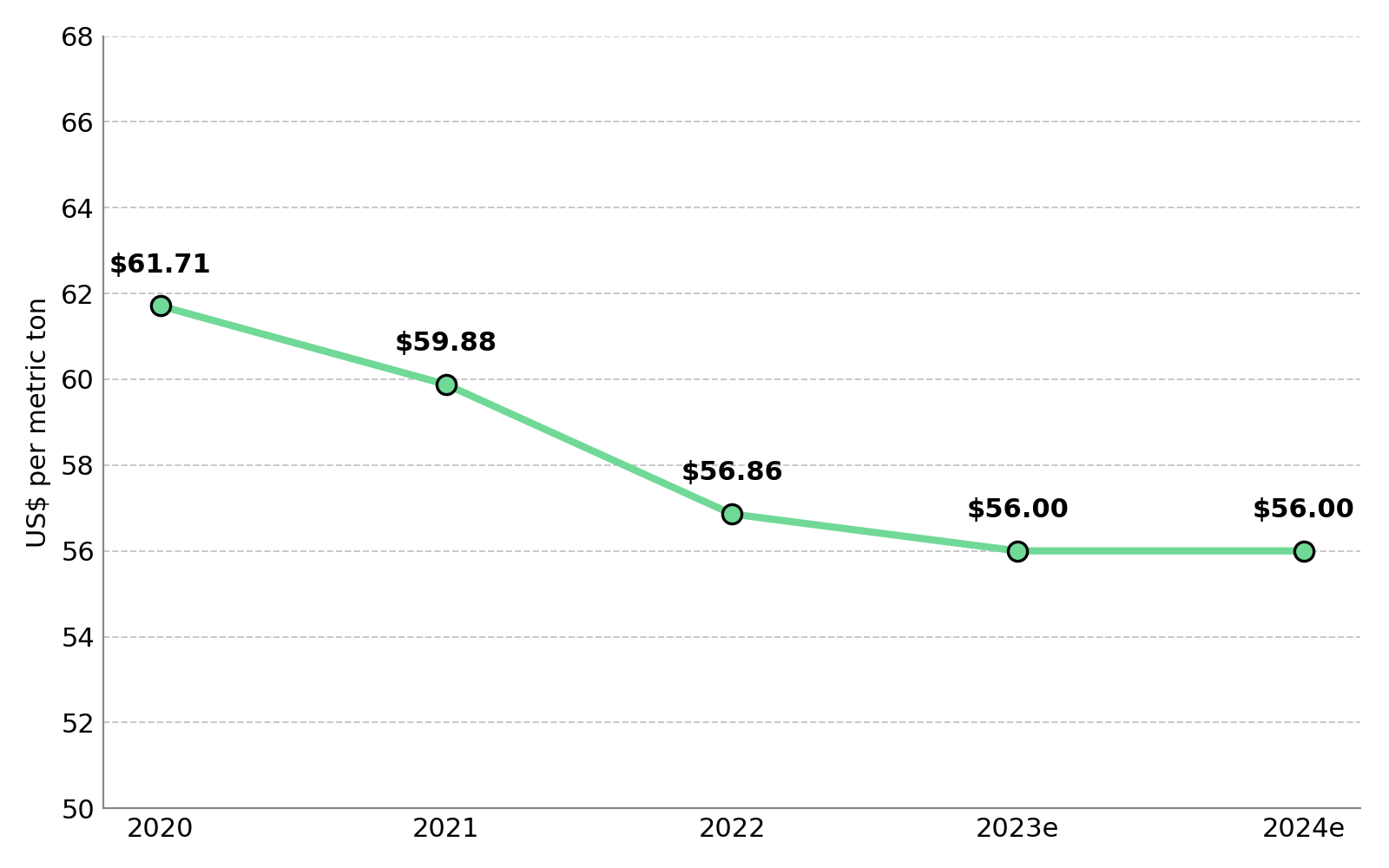
The tariff's financial impact depends on whether producers pass the additional duty to municipal buyers or absorb it through lower margins. If producers pass the additional duty through, municipal buyers face higher contract costs during a season when total deicing budgets already fluctuate with winter weather. If producers absorb the duty to protect market share ahead of next year's contract renewals, suppliers with Canadian-origin production, including the incumbent Goderich operation and new Canadian projects, would accept lower operating margins. Pricing from the 2026 summer bid season will show whether producers or municipalities ultimately absorb the new duty, providing the first measurable indication of its financial impact.
The Investment Thesis for Deicing Salt
- The removal of a decades-old tariff exemption raises the landed cost of Canadian-origin salt entering the US, while the lack of near-term substitute supply shifts the immediate impact toward lower producer margins rather than higher market share for competing suppliers.
- Financing access has become a key differentiator for developers because export credit agency due diligence indicates that a project's economics meet the threshold to advance financing discussions, reducing execution risk beyond resource size or grade alone.
- Jurisdictions with predictable permitting and regulatory timelines reduce execution risk by allowing developers to advance projects on schedule, an advantage in a market where no major North American salt mine has entered production in nearly three decades.
- Established producers and developers face different financial risks because producers can absorb higher costs through existing operating margins, while developers rely on financing terms that determine whether new projects can proceed to construction.
- Cost competitiveness across incumbent and emerging salt producers will depend on how much of the new duty is passed through during the 2026-27 municipal bid season, with contract pricing providing the first indication of the outcome before company financial results are reported.
- Demand for deicing salt depends primarily on winter weather rather than economic cycles, leaving trade policy and financing conditions as the primary variables affecting producer margins and new project economics.
- Predictable permitting and regulatory timelines reduce execution risk by helping developers move from feasibility to production on the schedule required to secure and maintain project financing.
For decades, the US deicing salt market relied on duty-free Canadian imports under USMCA, with the Goderich mine supplying a significant share of that volume. Section 338 removes that tariff exemption, while nearly three decades without a major new North American salt mine leave few alternative suppliers able to replace Canadian volumes in the near term. The financial impact will appear first in 2026-27 municipal contract pricing, which will show whether producers absorb the new duty or pass it through to buyers before company financial results reflect the change. The key question is not whether the tariff changes trade policy, but how much of the additional cost producers can recover through contract pricing. The 2026-27 municipal bid season will provide the first measurable evidence of that outcome for both established producers and developers seeking to add new Canadian supply.
TL;DR
The US has invoked Section 338 to impose a 50 percent duty on Canadian goods, ending the USMCA tariff exemption for deicing salt and increasing the landed cost of a key US supply source. With no major North American salt mine entering production in nearly three decades, alternative supply cannot expand quickly, making higher prices or lower producer margins the most likely near-term outcomes. Financing is becoming a key competitive advantage, highlighted by Export Development Canada's non-binding support for Atlas Salt's project. The 2026-27 municipal bid season will provide the first measurable indication of whether producers or municipalities ultimately absorb the new tariff costs.
FAQs (AI-Generated)
Analyst's Notes





Subscribe to Our Channel


.jpg)


Stay Informed


