




Selkirk Copper Mines: An Unburdened Concentrate Offtake as the Lever for Non-Dilutive Restart Financing



Selkirk's unburdened copper concentrate offtake is the key non-dilutive financing lever ahead of its mid-2027 FID.
- Selkirk's concentrate offtake is fully unburdened, with the Sumitomo offtake agreement and the Wheaton Precious Metals gold-silver stream both extinguished through the 2023 bankruptcy process.
- The Minto concentrate has historically graded 36 to 40% copper, placing it in the top 5% of concentrates sold globally.
- Management is engaging five counterparty categories, including direct smelters and trading houses, to structure non-dilutive offtake-backed financing.
- The restart targets approximately 25% of the cost of a comparable greenfield project by reusing more than $330 million in existing infrastructure.
- The Final Investment Decision (FID) is targeted for mid-2027, with first production in mid-2028.
Minto Concentrate: Grade Profile & Bankruptcy Clearance
Selkirk Copper Mines (TSXV: SCMI | OTCQB: SKRKF | FRA: IO20) controls a concentrate product that emerged from the 2023 bankruptcy process, with all prior financial claims against it removed. The Minto deposit has historically produced a copper-gold-silver concentrate ranging from 36% to 40% copper, 12 to 18 grammes per tonne gold, and 100 to 150 grammes per tonne silver, with low levels of deleterious elements sustained across the life of the mine. The 39% to 40% copper grade places the product in the top 5% of concentrates sold globally, compared with a current average global concentrate grade of 26 to 28% copper. Traders and smelters already familiar with the Minto product are well-positioned to reintroduce it into the supply chain once production resumes.
The bankruptcy process extinguished the two encumbrances that previously sat against this concentrate. The offtake agreement formerly held by Sumitomo was cleared in full, removing any counterparty claim on the physical product. A gold-silver stream formerly held by Wheaton Precious Metals, which paid out over US$250 million across the life of the mine, was also cleared, changing the realised value of each tonne of ore and improving net cash flow relative to the prior operating structure. The only encumbrance that survived the process is a 1.5% Net Smelter Return payable to the Selkirk First Nation.
President and Chief Executive Officer of Selkirk Copper, Colin Joudrie, is direct about where the Minto product sits in the global concentrate market:
"That 39% to 40% has been the historic concentrate grade on this asset through the life of mine. That's probably in the top 5% of concentrates globally."
A concentrate already recognised by the smelter market, carrying no offtake claim and no stream obligation beyond a single small royalty, is the asset Selkirk has available to negotiate from a position of leverage rather than necessity.
Non-Dilutive Financing: Structure & Counterparty Engagement
Selkirk has spent the months since December 2025 testing how far that leverage extends. Management has opened discussions across five counterparty categories: direct smelters, trading houses, traditional project financiers, private equity groups, and Indigenous and critical minerals funds operating in Canada. The company remains in the option-gathering phase, collecting the full range of available structures before committing to any single one.
Direct smelter interest in the offtake follows from the product characteristics already established: a 36% to 40% copper concentrate with low levels of deleterious elements, known to buyers who have handled it before. That recognition shortens the distance between Selkirk and a counterparty willing to pay for supply security rather than discovery risk, a dynamic that applies most directly to the smelter category among the five under discussion.
Joudrie frames the financing mechanism plainly:
"That's a really important part of this story as well, from the restart and for investors to understand is that we can use that concentrate off-take as a source of non-dilutive financing going forward for the restart. And the fact that it is that high grade, has that low sort of deleterious element, and it's well-known in the market, that just advantages us."
The breadth of counterparties under discussion gives Selkirk negotiating room before it settles on a structure, and the structure ultimately chosen will set the ceiling on how much of the restart can be funded without issuing new equity.
Capital Position & Financing Timeline
Selkirk's treasury was built specifically to outlast the period before financing decisions need to be finalised. Cash on hand stood at C$28,029,238 as of December 2025, following an initial C$4.5 million financing and an initial C$40 million offering completed earlier that year. In April 2026, the company closed an additional C$35 million equity raise, building a position that management states is sufficient to cover the lion's share of required work through to the planned Feasibility Study (FS) and Final Investment Decision (FID) in mid-2027.
Financing initiatives directed at the offtake began in December 2025, with the stated goal of securing full financing by the FID milestone, ahead of mill commissioning in the first quarter of 2028. Management has identified minimising further equity issuance as the preferred outcome for funding the restart, framing the objective specifically around protecting existing shareholders, including the Selkirk First Nation, from unnecessary dilution.
Joudrie is precise on the company's governing financing philosophy:
"Our ideal situation would be to minimise the amount of equity that we would be issuing. Our objective here is to keep shareholders whole as much as we can, particularly the First Nation, but also this will benefit all shareholders."
The treasury buys time rather than certainty. It covers the work required to reach FID, but the share of the remaining capital that comes from equity rather than the offtake will be decided in the months between now and that milestone, not in the cash position already on the balance sheet.
Brownfield Position & Capital Requirements
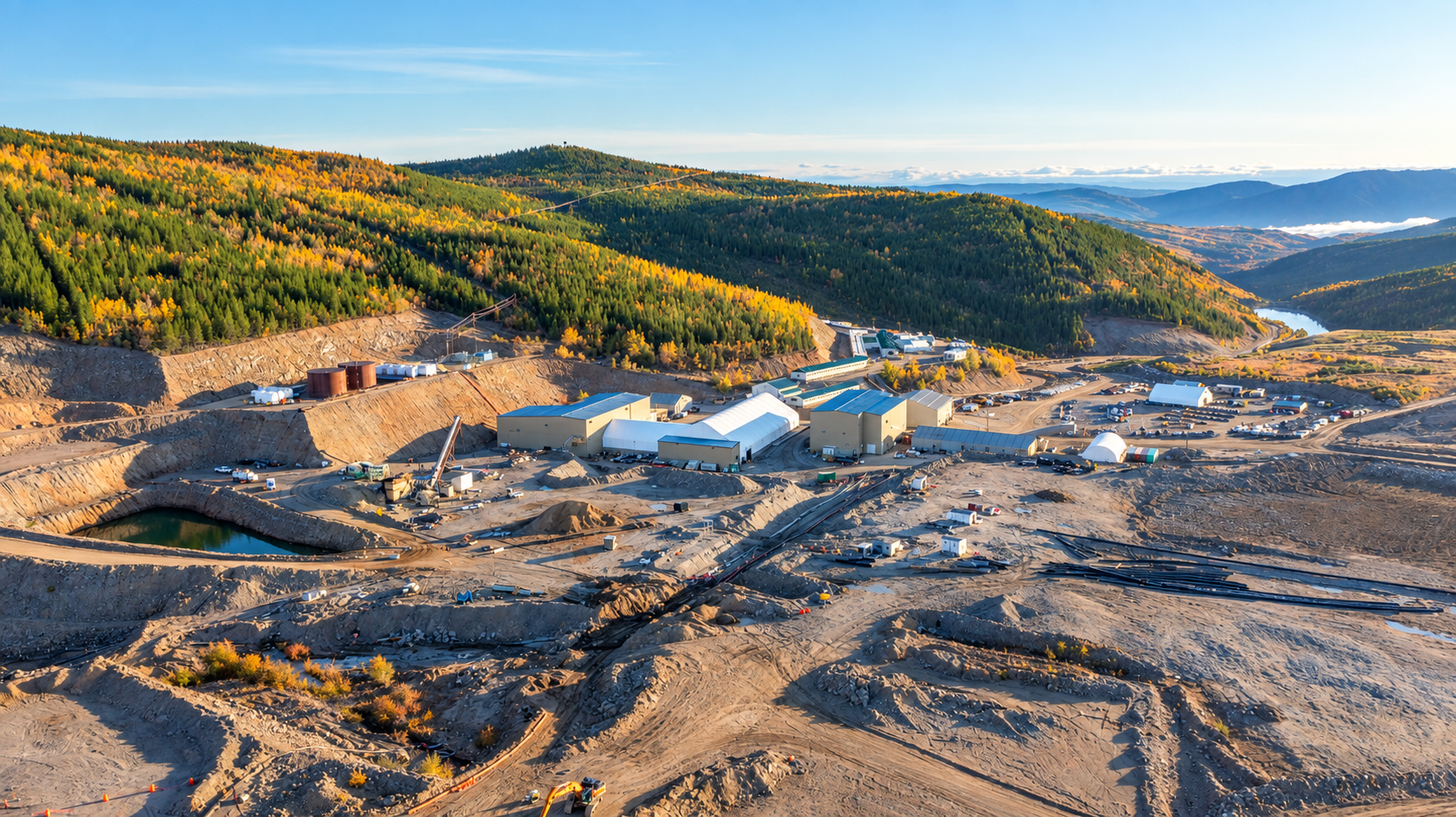
More than $330 million in above-ground infrastructure already exists at the site, including the processing plant, ancillary support buildings, roads, and underground development, and that base is why the restart costs a fraction of a greenfield build rather than the full cost of one. Management estimates a comparable greenfield project would cost US$800 to US$900 million today, and the restart is targeted to require approximately 25% of that figure by leveraging the inherited infrastructure rather than rebuilding it. The existing mill, rated at 4,100 tonnes per day or 1.5 million tonnes per annum, is the processing base carried into the Preliminary Economic Assessment (PEA) restart objectives, which target a 12 to 15-year mine life producing approximately 30,000 tonnes of copper equivalent per annum.
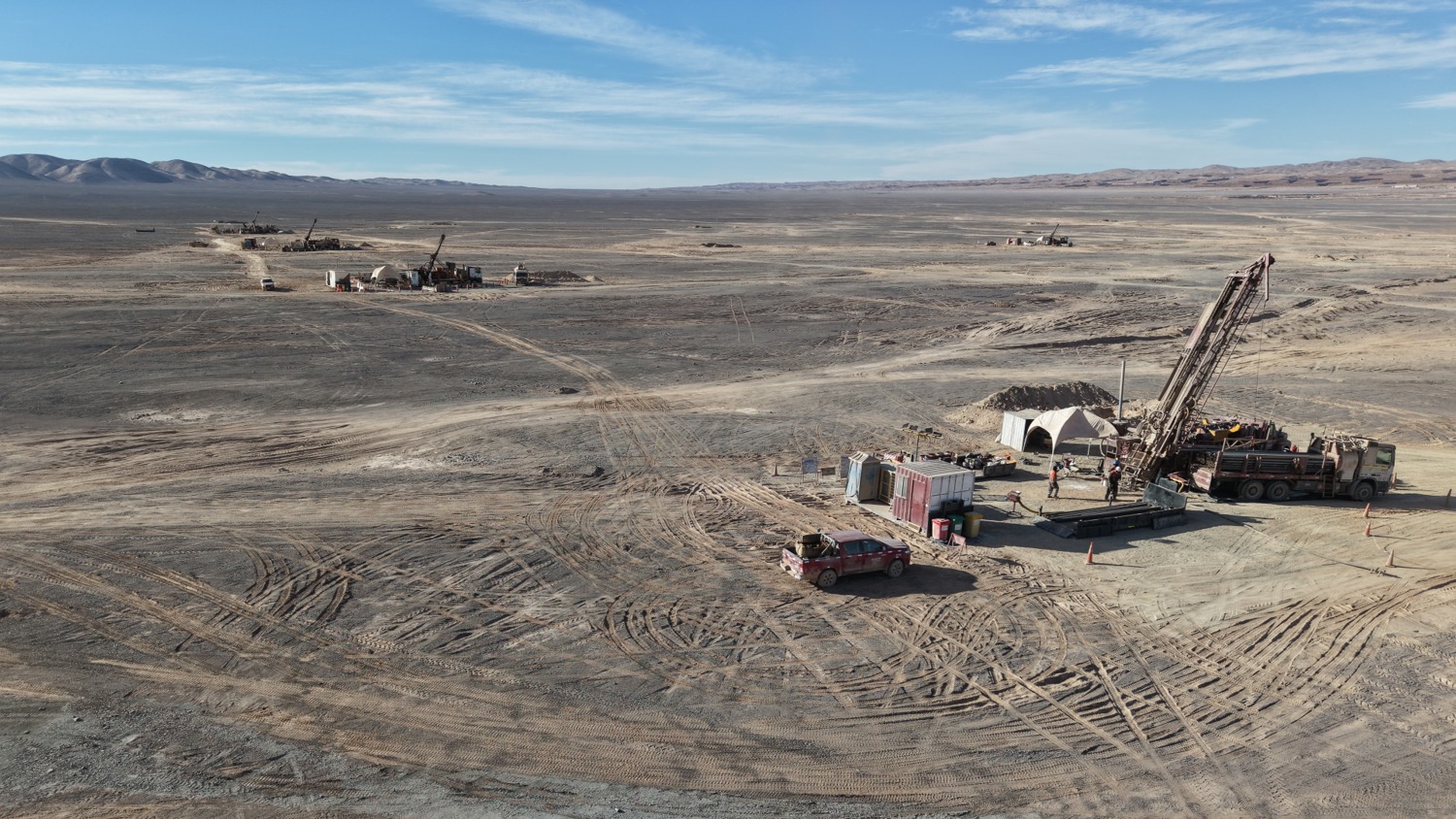
Incremental capital is directed at five specific items rather than a rebuild of the plant: a new permanent three-stage crushing circuit, updated tailings filtration equipment, open-pit pre-stripping at Ridgetop, new underground development at Minto North West, and water and tailings management facilities. Base operating costs used to constrain the current Mineral Resource Estimate shapes are C$4.10 per tonne for open-pit mining, C$45.42 per tonne for underground mining, C$30.00 per tonne for processing, and C$20.81 per tonne for general and administrative costs. Engineering for the Trade-Off and PEA studies is underway with Hatch Ltd. and SRK Consulting, supported by data from the completed Phase 1 drill programme. Concurrently, a 50,000-metre Phase 2 drill programme is actively focused on geotechnical, geometallurgical, and infill data collection to inform the subsequent Feasibility Study.
The capital intensity of the restart is therefore a function of how much of that $330 million base can be reused rather than how much needs to be built from scratch, the variable that separates Selkirk's funding requirement from a greenfield developer's.
Licensing Amendments & Site Transition
A restart decision at Minto depends on regulatory clearance that runs on its own timeline, separate from how financing is structured. The company must secure the amendment and modification of the existing Quartz Mining Licence, Exploration Licence, and Water Licence(s) before FID can be taken. Alongside the licence amendments, Selkirk must complete a transition of site care-and-maintenance responsibilities away from the Yukon Government, which currently manages the underground water stored at the site during the receiver process following the prior operator's bankruptcy.
The water management component of that transition is the open item within this workstream. Its scope and associated costs have not yet been fully defined, leaving a variable in the capital plan that sits alongside, rather than within, the brownfield capital estimate already disclosed. Resolution of that variable, not the licence amendments themselves, is the item most likely to move the financing requirement once it is defined.
Milestone Sequence to First Production
Every date on Selkirk's path to first production also marks a point at which a portion of the financing decision must be settled. The PEA and an updated Mineral Resource Estimate are targeted for completion in mid-2026, setting the technical basis against which any offtake-backed financing structure will be measured. The FS and FID are both slated for mid-2027, the point by which management has stated financing should be fully secured. Mill commissioning is targeted for the first quarter of 2028, with first production targeted for mid-2028.
The sequence compresses the window for negotiating an offtake-backed structure into the period between the current option-gathering phase and FID in mid-2027. Every counterparty conversation now underway must be converted into a committed structure before that date. The milestone sequence sets the clock against which the non-dilutive financing thesis must play out.
Investment Thesis for Selkirk Copper Mines
- Selkirk's concentrate offtake carries no prior claims following the extinguishment of the Sumitomo offtake agreement and the Wheaton Precious Metals gold-silver stream through the 2023 bankruptcy process, leaving only a 1.5% Net Smelter Return payable to the Selkirk First Nation.
- Management is engaging direct smelters, trading houses, traditional project financiers, private equity groups, and Indigenous and critical minerals funds in Canada to structure non-dilutive financing against that offtake ahead of the FID.
- The restart targets approximately 25% of the US$800 to US$900 million cost of a comparable greenfield project by reusing more than $330 million in existing above-ground infrastructure at Minto.
- Selkirk holds a total copper resource of 881 million pounds across Indicated and Inferred categories, positioning it within a North American copper developer peer group that includes Foran Mining, Firefly Metals, Trilogy Metals, and Western Copper.
- The FID is targeted for mid-2027, with first production in mid-2028, defining the window within which the offtake-backed financing structure must be finalised.
- Minimising further equity issuance ahead of the restart is management's stated objective, intended specifically to protect existing shareholders, including the Selkirk First Nation, from dilution.
The investment case for Selkirk turns on conversion, not optionality. An unburdened, top-tier concentrate and a brownfield base that already covers a substantial share of restart capital give the company more financing options than most restart developers can access, but none of those routes has been selected. The period between now and FID in mid-2027 is when that selection happens, and the structure chosen, not the resource size or the infrastructure already in place, will determine how much of the remaining capital requirement falls to existing shareholders.
TL;DR
Selkirk Copper Mines Inc. holds an unburdened, high-grade copper concentrate offtake, cleared of the Sumitomo agreement and the Wheaton Precious Metals stream through the 2023 bankruptcy process, that management is using as the primary lever for non-dilutive restart financing. Discussions span five counterparty categories and remain in the option-gathering phase, with no structure yet selected. A treasury built through two 2025 raises and an April 2026 C$35 million offering covers the bulk of work to FID, targeted for mid-2027, while over $330 million of existing infrastructure positions the restart at approximately 25% of comparable greenfield capital cost. Licensing amendments and a care-and-maintenance transition from the Yukon Government, including an unscoped water management component, remain open conditions ahead of that decision. The degree of equity dilution that shareholders ultimately absorb depends on which financing structure is selected before mid-2027, not on the existing resource or infrastructure base.
FAQs (AI-Generated)
Analyst's Notes





Subscribe to Our Channel



Stay Informed


