




Silver Pullback to $66 Leaves 25% Upside to RBC's 2027 Model Assumption


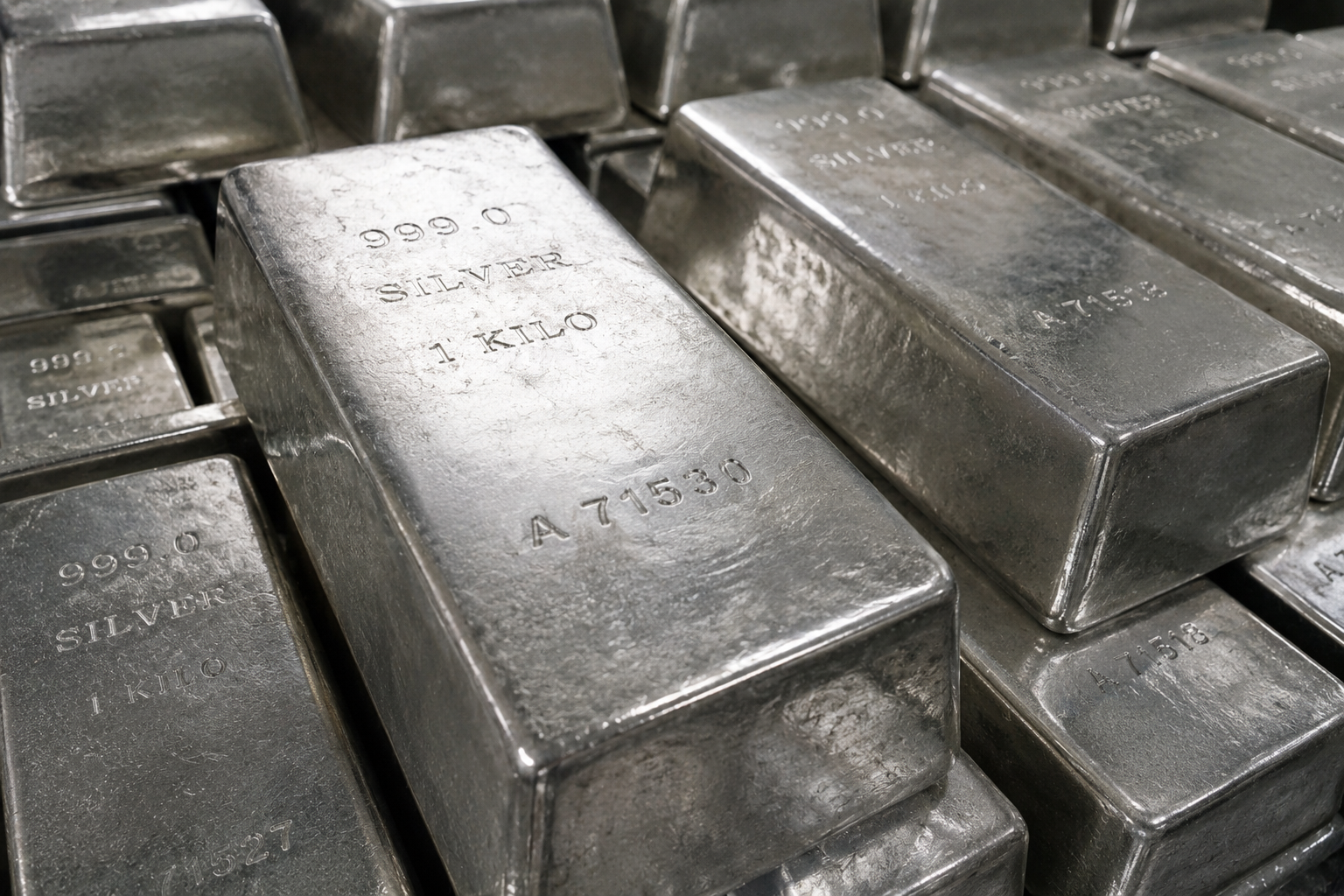
Silver rebounds above $66 ahead of Core CPI as physical demand holds and RBC's 2027 model assumption leaves about 25% upside from current spot.
- Silver traded near $66.25 an ounce, up about 2.5% on the day and 72.09% year-over-year.
- Silver fell toward $64 on profit-taking after a seven-week high, then recovered above $66 ahead of Core CPI, showing buyers returned before a key rate catalyst.
- RBC's Fresnillo model assumes silver averages $77.48 an ounce in 2026 and $83.13 in 2027, about 17% and 25% above current spot, respectively.
- Core CPI above the 0.2% consensus could strengthen Fed rate-hike expectations and pressure silver toward $60, while an in-line or softer print could support further gains.
- A close above $71.50 puts $89.40 in view, while sustained trading below $60 into the September Fed decision would weaken the bullish setup.
Core CPI Test & Silver's $66 Rebound Put Rate-Driven Selling in Focus
Silver rebounded above $66 an ounce, gaining about 2.5% after profit-taking from a seven-week high had pushed the metal toward $64. The recovery ahead of Core CPI, expected at 0.2% month-over-month, suggests short-term positioning drove the pullback rather than a change in silver demand.
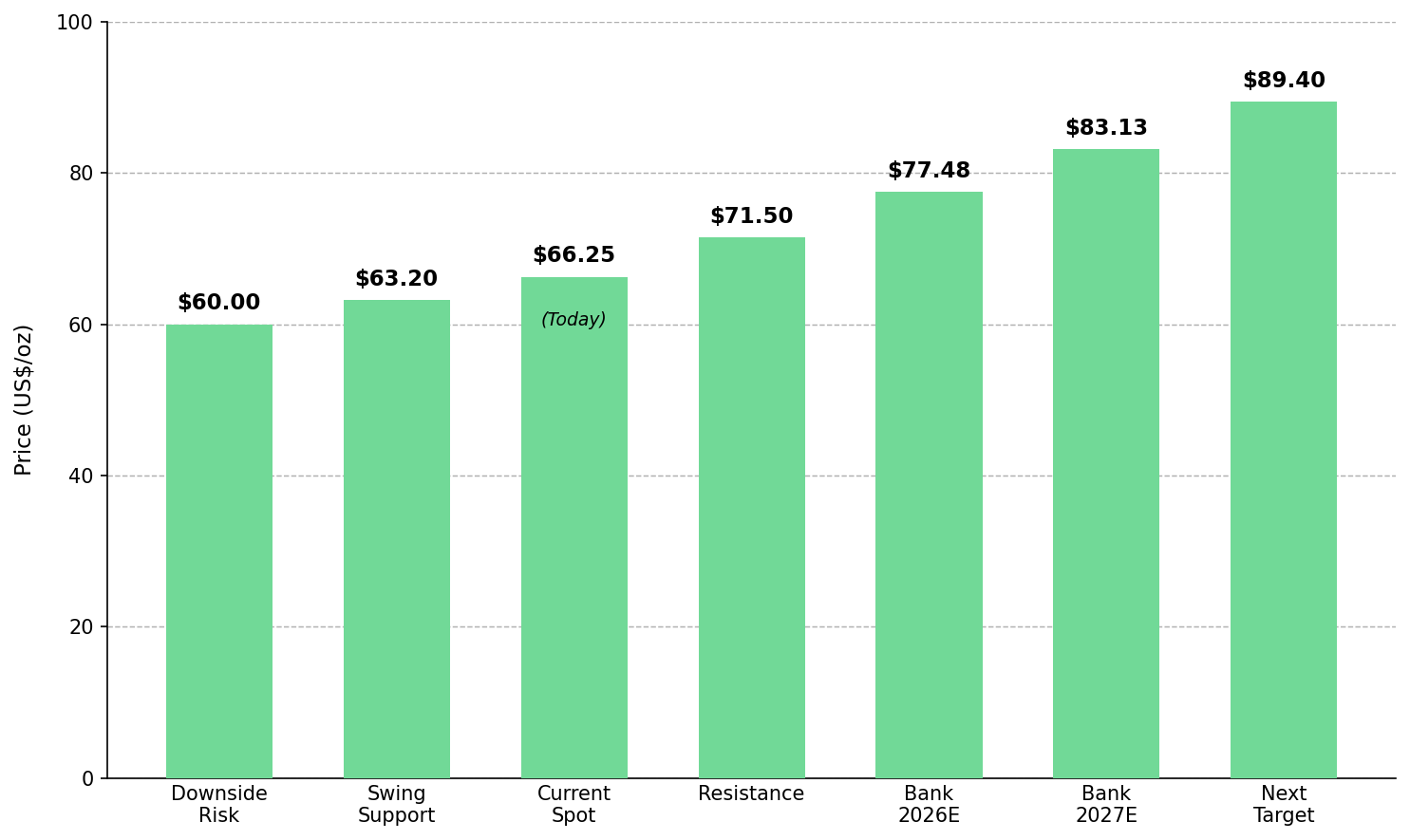
Silver remains 7.7% lower in 2026 despite gaining about 15% over the past month and 72% year-over-year. Rather than requiring a return to January's $120 peak, RBC's Fresnillo model assumes silver averages $77.48 in 2026 and $83.13 in 2027, leaving both assumptions above the current spot.
Fed Rate Risk Pressures Silver While Physical Demand Supports the Contrarian Case
Chinese imports of silver-bearing ore rose 62.5% year-over-year to 219,000 tonnes as solar manufacturing and grid development supported industrial demand. That demand does not respond directly to Fed policy, allowing industrial consumption to continue even when higher rates pressure financial demand for silver.
A potential 25-basis-point Fed rate hike in September could raise the opportunity cost of holding non-yielding silver, while progress toward reopening the Strait of Hormuz could reduce oil-driven inflation pressure and weaken the case for further tightening. RBC data show silver positioning remained cautious after the 2026 sell-off, leaving room for financial demand to return if rate concerns recede.
Cautious Silver Positioning & Higher Bank Price Assumptions Leave Room for Repricing
Silver near $66 is observed market data, while bank forecasts and valuation assumptions remain scenarios rather than guarantees.
RBC's Fresnillo model assumes silver averages $77.48 an ounce in 2026 and $83.13 in 2027, above current spot but below January's price above $120. Under those assumptions, RBC forecasts Fresnillo reaches $2.2 billion of net cash by year-end without major growth spending before 2028, despite all-in costs rising from $31.51 to $34.00 per silver-equivalent ounce in 2027.
UBS provides a more conservative benchmark at $65 by September and $70 by year-end. The contrarian case therefore does not require another $120 silver spike, but it weakens if inflation data sustain Fed tightening expectations and silver remains below $60 into the September Fed decision.
Silver Volatility Raises Concentration Risk & Position Sizing Limits Forced Selling
Silver's 2.45% daily gain shows why concentration and leverage can magnify portfolio outcomes when the metal moves quickly. The stronger contrarian screen is balance-sheet flexibility rather than dependence on an immediate price rebound.
RBC forecasts Fresnillo reaches $2.2 billion of net cash by year-end without major growth spending before 2028, creating capacity to defer spending or return cash if the forecast holds. That favors companies able to fund operations without requiring higher silver prices to finance growth.
Core CPI may determine the next price move, but the risk framework is already defined: a drop toward $60 tests the downside case, while a break above $71.50 strengthens the recovery case. Position sizing around both outcomes reduces the need to predict which one comes first.
A Break Above $71.50 Puts Silver's $89.40 Level in View
Silver's rebound remains intact above the $63.20 swing high, while $60 provides the clearer downside test. Core CPI above the 0.2% consensus could strengthen Fed rate expectations and push silver toward that level without directly changing the longer-term silver assumptions in RBC's Fresnillo model.
The contrarian setup therefore has defined boundaries. Sustained trading below $60 weakens the near-term case, while a close above $71.50 would strengthen the rebound and put the next technical level at $89.40 in view. Core CPI is the immediate catalyst, followed by PPI, jobless claims, Retail Sales, consumer sentiment, and Fed Chair Warsh's Jackson Hole remarks.
Analyst's Notes





Subscribe to Our Channel





Stay Informed






