




Americas Gold & Silver Drilling Beats Resource Grades: 9 Things You Need to Know


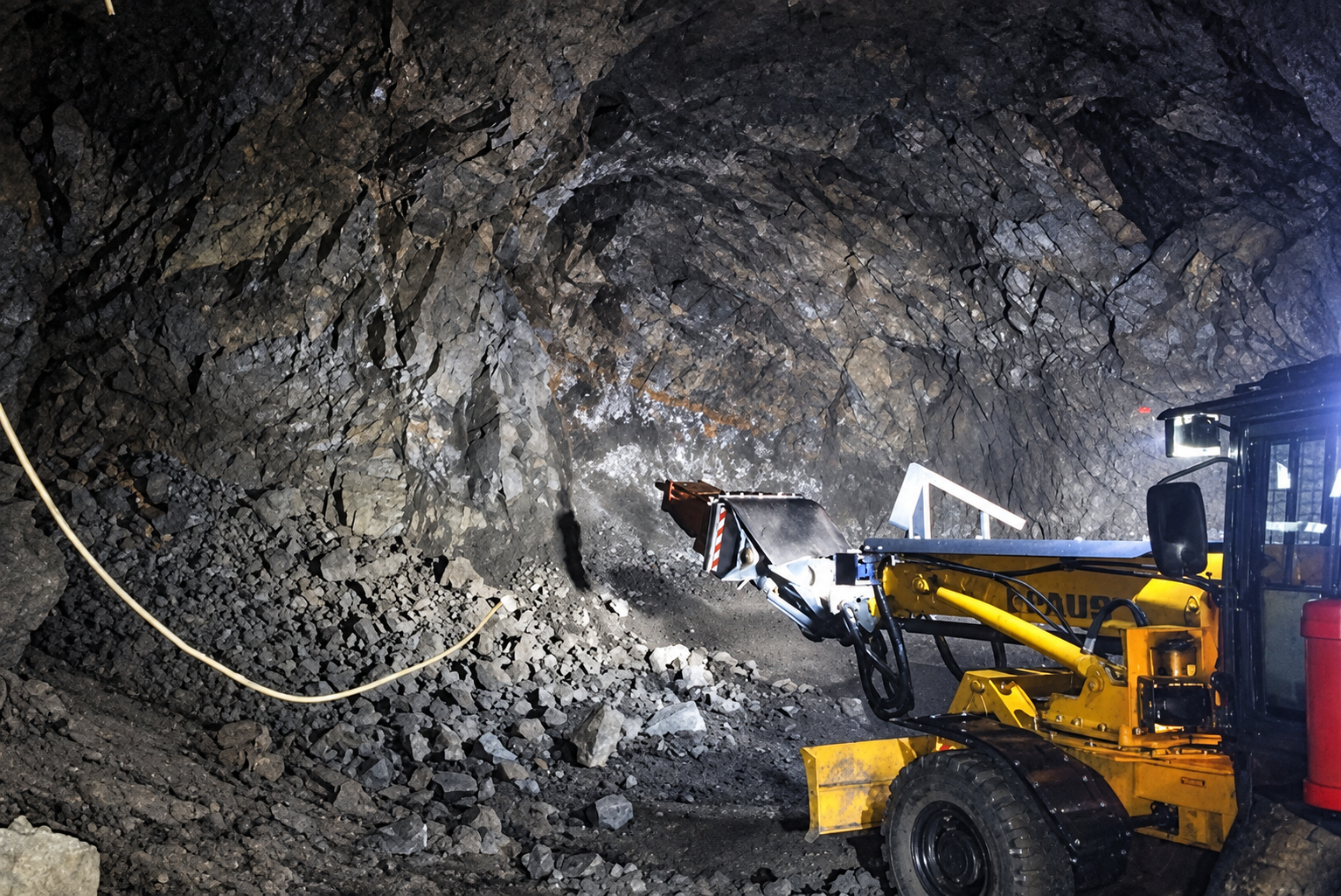
Americas Gold & Silver drilling at Cosalá, Galena & Crescent returns silver grades above resource models ahead of 2027 resource estimate updates.
Drill Results Ahead of the 2027 Resource Updates
Americas Gold and Silver Corporation (TSX: USA | NYSE American: USAS) released 2 sets of drill results on September 17 and 18, 2026. The first covered 44 holes at the Cosalá Complex in Sinaloa, Mexico. The second covered 88 holes across the Galena and Coeur mines in Idaho, plus the first 12 of 45 holes at the neighboring Crescent Mine. The company describes the Galena Complex campaign as its largest exploration and Mineral Resource conversion program to date.
None of the reported intercepts are included in the 2025 Mineral Resource and Reserve statement published on March 30, 2026. Resource conversion drilling is returning grades above the current models, new veins are being found inside and around operating mines, and infill drilling at Crescent is feeding mine planning ahead of mining in 2027.
1. Cosalá's Widest High-Grade Intercept Lies Outside the 2025 Resource Boundary
The standout Cosalá intercept came from San Rafael Upper. It covers an estimated true width of 20.5 meters, grading 654.7 grams per tonne silver, 1.5% copper and 0.5 grams per tonne gold. The intercept is 30 meters outside the 2025 inferred resource boundary. Management anticipates adding new ounces of silver to the Cosalá mine plan. A second San Rafael Upper hole returned 9.5 meters at 566.6 grams per tonne silver and 1.7% copper.
At 20.5 meters, the intercept is wider than any Idaho intercept reported the following day, where widths range from 0.1 to 2.3 meters. The company describes the Cosalá results as some of the best grade-widths drilled to date at the complex. The next test is whether follow-up drilling around the San Rafael Upper intercept confirms continuity strong enough to convert it into classified resources.
2. Resource Conversion Drilling Is Returning 2-3x Inferred Grades
Multiple holes in all 3 Cosalá zones returned silver grades well above the modeled resource. The zones are San Rafael Upper, 120 Upper, and 120 Lower. At 120 Lower, one hole returned 22.0 meters at 392.3 grams per tonne silver and 1.1% copper, and another returned 14.1 meters at 409.3 grams per tonne silver and 0.8% copper. At 120 Upper, drilling returned 17.3 meters at 404.1 grams per tonne silver.
Chairman and Chief Executive Officer Paul Andre Huet described how the new drilling compares with the existing model:
"Resource conversion drilling at the San Rafael Upper and 120 zones is consistently averaging 2-3x the previously reported inferred Mineral Resource grades."
The drilling also confirms the modeled thickness of the resource. With thickness in line with the model, the upside the company identifies in these zones is in grade. The company identifies this as a potential opportunity to raise average silver grades in both zones compared with the 2025 figures.
3. The 120 Zone Is Moving Toward Development
All reported Cosalá intercepts are directly adjacent to existing infrastructure, and parts of the San Rafael deposit are already in production. The company is preparing an optimized mine plan for the Upper and Lower 120 deposit. It is targeting mine development to access the zone in the second half of 2027.
Proximity to existing workings shortens the gap between a drill result and mill feed. Cosalá had not received a material exploration budget for many years before 2026. The 2026 program is now directly testing the 2025 resource model.
4. A New Galena Vein Is Close to Long Hole Stoping Width
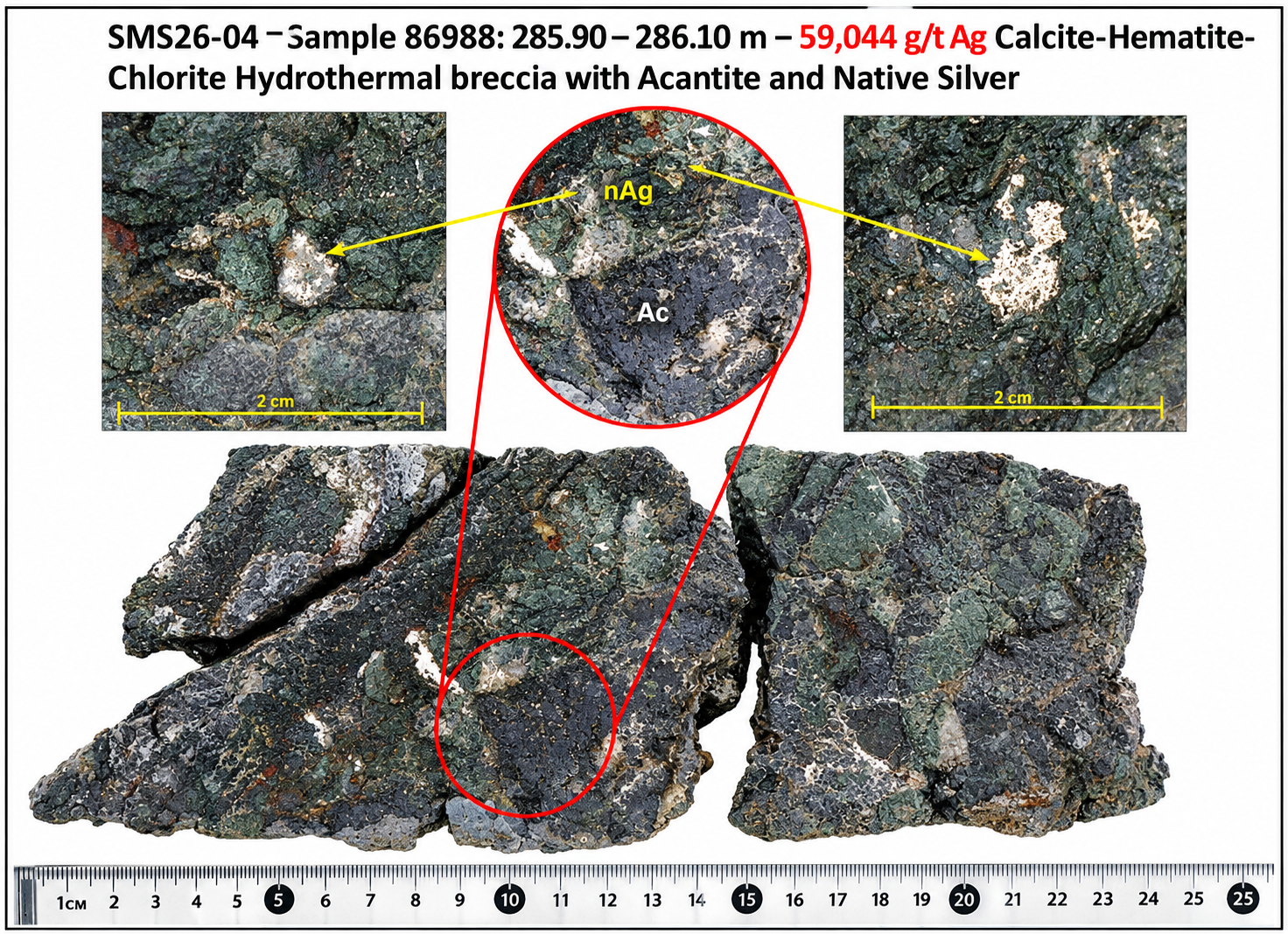
On the operating 49 level at Galena, drilling intersected a new vein grading 1,061 grams per tonne silver, 0.7% copper and 0.6% antimony over 1.2 meters. The intercept is close to the minimum mining width for the mine's ongoing transition to long-hole stoping. Other Galena holes returned 0.7 meters at 2,783.8 grams per tonne silver, 2.9% copper and 2.6% antimony, and 1.8 meters at 1,031.7 grams per tonne silver and 18.0% lead.
Width is the deciding factor at Galena. Many of the highest-grade Galena intercepts reported are 0.1 to 0.4 meters wide. Width determines which veins are suitable for long-hole stoping, the method the mine is transitioning to. Follow-up drilling on the new 49-level vein will show whether that width holds along strike.
5. The 9 Vein Points to Unmapped Veins Inside the Existing Mine
The 9 Vein was intersected by a utilities drift being developed for mine services. The area had no historical drilling or vein projections. A drill intercept on the vein returned 0.4 meters at 7,123 grams per tonne silver, 3.24% copper, and 1.81% antimony. The Galena team has since driven roughly 85 meters along the vein's strike and set up multiple drill bays to test it up- and down-dip.
The discovery came from an upper level with extensive historical mining, which suggests the vein model at Galena is incomplete even in well-worked ground. Infill drilling on earlier discoveries adds grade support elsewhere in the mine. On the 43L-TJ Vein, one hole returned 2.3 meters at 935.9 grams per tonne silver and 0.7% copper, and a second interval of 1.6 meters at 2,390.9 grams per tonne silver.
6. The Coeur 520 Vein Now Measures 200 Meters by 200 Meters
At the restart-stage Coeur Mine, which is connected to Galena, recent drilling extended the 520 Vein a further 45 meters up-dip of a previous intercept. The vein, discovered in 2025, now measures 200 meters along strike by 200 meters vertically and remains open in all directions. Intercepts on the vein include 1.1 meters at 619 grams per tonne silver, 1.1% copper and 0.7% antimony, and 0.1 meters at 4,323 grams per tonne silver, 9.0% copper and 4.5% antimony.
A vein of that size next to a mine being brought back into production gives the Coeur restart a defined target close to existing workings. The copper and antimony grades in the 520 intercepts add by-product content alongside the silver. The next drilling will show where the vein's limits lie, since none have been found in any direction so far.
7. Galena Drilling Has Not Yet Tested Below 6,000 Feet
Every 2026 drill hole at Galena has targeted in-mine exploration above the 6,000-foot level.
Huet set that against the depth of neighboring operations:
"I will also note that all our drilling at Galena in 2026 has focused on in-mine exploration above the 6,000-foot level. With neighboring operating mines along strike extending deeper than 10,000ft, we have good reason to believe in the further potential below our existing operations."
The discoveries and infill results reported to date all come from the upper part of the Galena system. Operations along the same trend reach below 10,000 feet. That leaves the ground between 6,000 feet and the depths reached by neighboring mines untested by drilling through 2026.
8. Crescent Combines Infill Drilling With 2 New Veins
At the fully permitted Crescent Mine, the company has completed 45 surface and underground core holes. Assays are back for 12, with 33 pending. Drilling has 2 aims: infill the Alhambra and South Veins for detailed mine planning ahead of mining in 2027, and test for new high-grade shoots. The best Alhambra hole returned 1.3 meters at 1,891.1 grams per tonne silver and 0.3% copper, plus a separate interval of 1.1 meters at 1,559.5 grams per tonne silver.
Drilling has confirmed historical vein projections at Crescent and identified 2 new veins near Alhambra. One hole cut 1.1 meters at 1,109.5 grams per tonne of silver on Alhambra, and a separate new-vein interval of 0.9 meters at 379.5 grams per tonne of silver. Other new-vein intercepts include 0.8 meters at 939.3 grams per tonne of silver, 0.3 meters at 1,533.4 grams per tonne of silver, and 0.2 meters at 3,514.7 grams per tonne of silver and 4.1% copper.
The infill results feed ongoing mine planning ahead of mining in 2027. The new-vein intercepts range from 0.2 to 0.9 meters wide and warrant follow-up drilling to define their scale and grade. The company is targeting an updated resource estimate for Crescent in 2027.
9. The Next Resource & Mine Plan Updates Will Show What Converts
The results across Cosalá, Galena, Coeur, and Crescent are all described as potential upside to future mine plans, and none are included in the current resource or reserve. At Cosalá, the company is targeting incorporation of the 2026 results into its next resource estimate and mine plan in 2027. At Crescent, the updated estimate is also targeted for 2027, following the current mine planning work.
Drilling results give grade and width. A resource estimate adds continuity, classification, and tonnage, and only a mine plan shows which of those tonnes are economic to extract. The 2027 Cosalá and Crescent updates are where these results can first be assessed for their contribution to updated resources and mine plans.
Catalysts to Watch
The nearest data points are assays. At Crescent, 33 holes are still pending, and the 2 new veins near Alhambra warrant follow-up drilling. At Galena, assays from the 034 Vein and Silver Vein drilling are also outstanding. Drilling from the new bays on the 9 Vein will test the discovery up- and down-dip. The Coeur 520 Vein remains open in all directions beyond its current 200-by-200-meter extent.
The company is targeting mine development to access the Upper and Lower 120 deposit at Cosalá in the second half of 2027. It is also targeting an updated resource estimate and mine plan for Cosalá and an updated resource estimate for Crescent, both in 2027. Those updates will show how much of the above-model silver grades carry into classified resources, and at what tonnage.
Analyst's Notes





Subscribe to Our Channel



Stay Informed






















