




Sovereign Metals Quarterly: Kasiya Rare Earths Study Shows US$722 Million NPV8% Uplift


Sovereign Metals' quarterly: Kasiya rare earths Scoping Study shows US$722 million NPV8% uplift, a maiden monazite resource and A$20.681 million cash.
- A Scoping Study outlines recovery of 2,626 tonnes per annum of monazite rare earth concentrate containing 1,485 tonnes per annum of total rare earth oxides at Kasiya, with no additional mining required.
- The Base Case shows an incremental pre-tax net present value (NPV8%) of approximately US$29 million, with incremental capital, at a 151% internal rate of return (IRR).
- Under a US Floor Price Case, the rare earths circuit generates US$183 million of incremental pre-tax NPV8% and a 43% IRR.
- A maiden monazite Mineral Resource Estimate (MRE) of 524.4 million tonnes at 0.0132% monazite, 74% in the Indicated category, is constrained to the existing feasibility study pits.
- Cash and cash equivalents stood at A$20.681 million as of September 30, 2026, with a Pre-Feasibility Study (PFS) integrating rare earths targeted for completion in 2027.
Company Overview
Sovereign Metals Limited (ASX: SVM | AIM: SVML | OTCQX: SVMLF) is developing the Kasiya Critical Minerals Project in Malawi. The Definitive Feasibility Study (DFS) released on April 16, 2026, and completed with input from Rio Tinto, outlines a 25-year initial mine life at 24 million tonnes per annum of ore throughput, producing 222,000 tonnes per annum of natural rutile and 275,000 tonnes per annum of natural flake graphite.
Rare Earths Scoping Study Results
On September 9, 2026, Sovereign released a Scoping Study on adding a third product stream at Kasiya: a monazite rare earth concentrate (REC) recovered from the rutile tailings stream. At steady state, the circuit would recover 2,626 tonnes per annum of REC containing 1,485 tonnes per annum of total rare earth oxides (TREO). The REC would come from mineral streams the DFS flowsheet already generates, with no additional mining, no additional front-end processing and no change to the DFS physicals. The study is prepared to an accuracy of ±30% over a potential 23-year initial life of mine (LOM), with years 24 and 25 of the DFS schedule excluded because they would rely solely on Inferred Resources.
The contained TREO comprises 310 tonnes per annum of neodymium-praseodymium oxide, 36 tonnes per annum of dysprosium and terbium oxides, 193 tonnes per annum of yttrium oxide and 82 tonnes per annum of samarium and gadolinium oxides. Sovereign states that neodymium-praseodymium and dysprosium-terbium output is sufficient for magnets in approximately 7 million humanoid robots over the LOM, and that yttrium output equals approximately 35% of average annual US consumption.
The Base Case, using Argus Media price forecasts at 50% payability and a basket price of US$39.45 per kilogram of REC, shows incremental capital to first production of approximately US$29 million, an incremental pre-tax net present value (NPV8%) of approximately US$722 million, an internal rate of return (IRR) of 151% and payback of approximately 1.5 years. Steady-state annual earnings before interest, taxes, depreciation and amortization (EBITDA) total approximately US$84 million at an operating margin of approximately 90%, with pre-tax, unlevered free cash flow of approximately US$1.8 billion over the LOM. The Western Supply Case, at 60% payability and US$47.34 per kilogram, lifts the NPV8% to US$883 million, the IRR to 172% and annual EBITDA to US$102 million. Total integrated pre-tax net present value for Kasiya is US$2.9 billion.
Maiden Monazite Mineral Resource Estimate
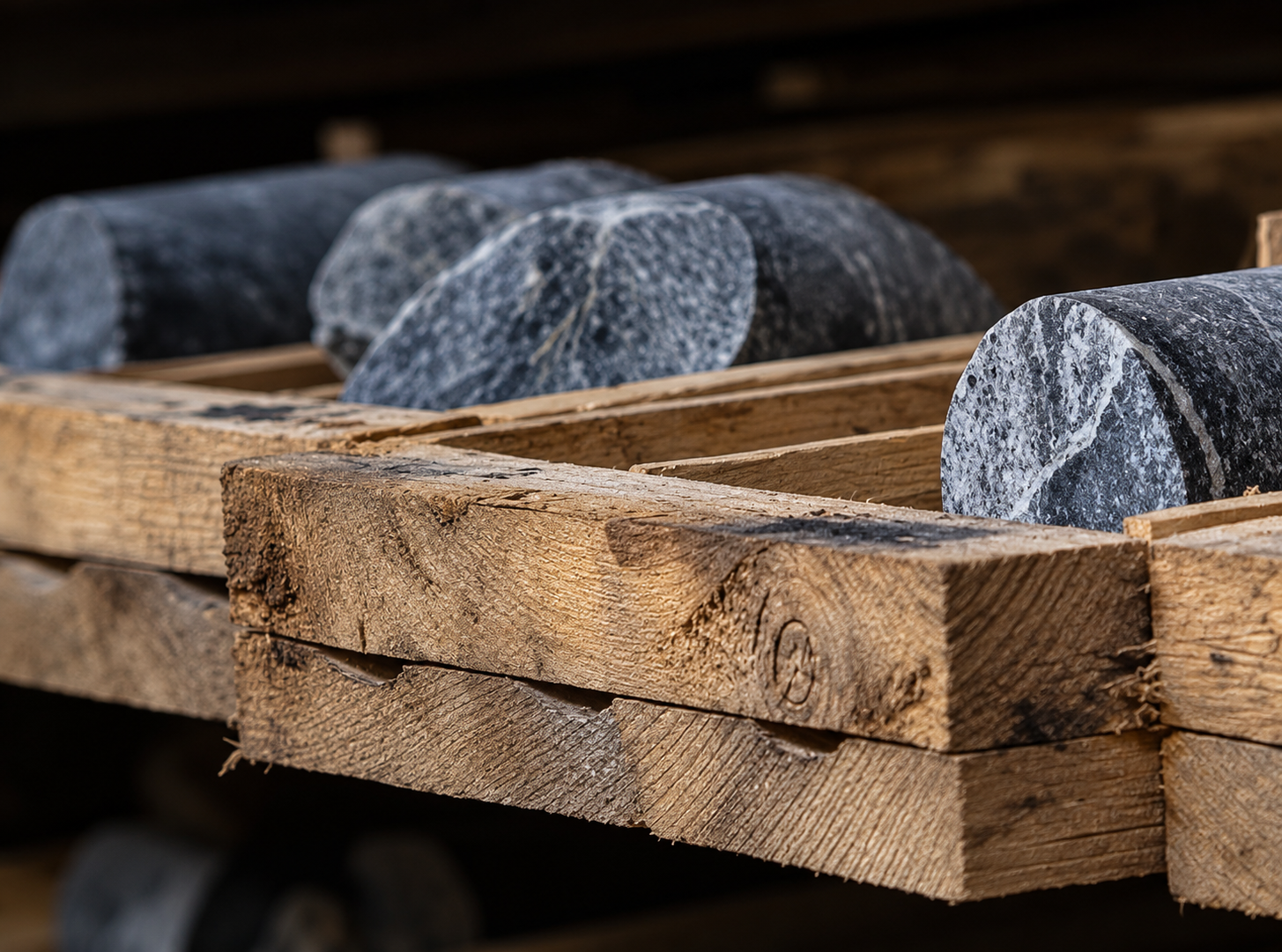
Monazite occurs within the same deeply weathered, near-surface residual heavy-mineral system that hosts the Kasiya rutile and graphite resource. To support the estimate, Sovereign submitted 3,250 magnetic heavy-mineral composites from 1,012 boreholes within the DFS pit areas for X-ray fluorescence analysis, with selected composites also analyzed for the full rare earth element suite.
The maiden by-product Mineral Resource Estimate (MRE) contains 69,000 tonnes of monazite within 524.4 million tonnes at 0.0132% monazite. Indicated Resources total 386.9 million tonnes at 0.0135%, and Inferred Resources total 137.5 million tonnes at 0.0125%, a 74% to 26% split. The MRE is constrained to the DFS open pits with no cut-off grade applied, as the full pit volume will be processed with monazite recovered as a by-product.
Incremental Costs & Price Cases
The only incremental processing is a monazite concentrate circuit using spiral gravity separation and flotation on the non-conductor stream from the Mineral Separation Plant, together with packaging and storage. The DFS already costed mining, ore transport, scrubbing, wet concentration, and electrostatic separation and attributed them to rutile and graphite production.
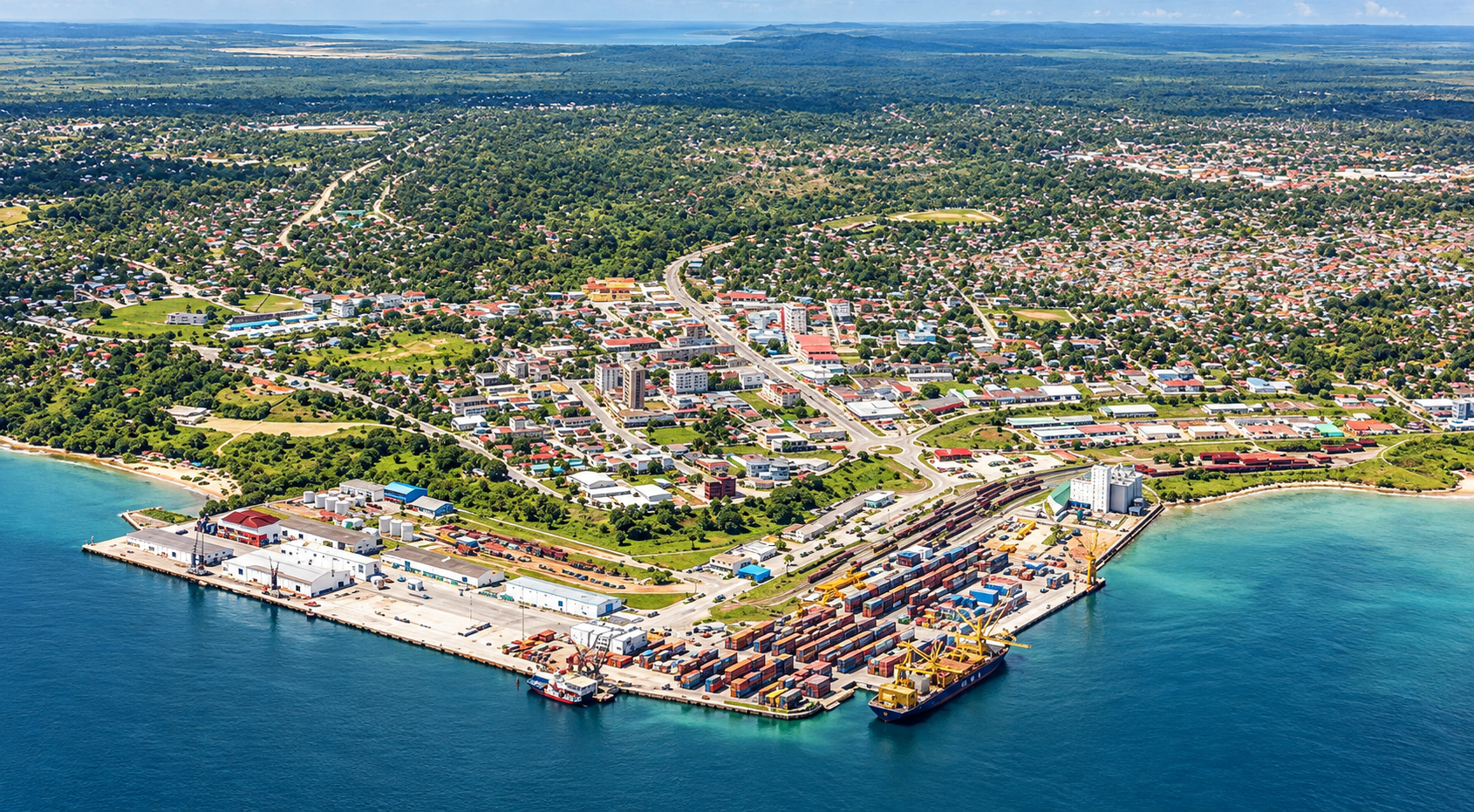
Incremental site operating costs are approximately US$0.90 per kilogram of REC at the mine gate, rising to approximately US$1.39 per kilogram free on board at Dar es Salaam and approximately US$3.68 per kilogram delivered to Houston, Texas, including ocean freight and insurance. Including all other regulatory fees, Sovereign can land REC in the US for US$3.85 per kilogram.
A third scenario, the US Floor Price Case, applies the US$110 per kilogram neodymium-praseodymium floor established with MP Materials and repeated with Lynas, together with floors of US$575 per kilogram for dysprosium and US$2,050 per kilogram for terbium, and 2025 average prices for yttrium, samarium and gadolinium. In this scenario, the circuit generates US$183 million of incremental pre-tax NPV8% and a 43% IRR. These floors arise under US Government arrangements with third parties and are applied as a downside assumption only, as Kasiya is not a party to any such arrangement.
China Export Controls & Western Supply
In April 2025, China introduced export controls on 7 medium and heavy rare earths, 5 of which (dysprosium, terbium, yttrium, samarium and gadolinium) are present in Kasiya's REC. Dysprosium, terbium and yttrium together make up approximately 15% of the TREO basket. China added 5 further rare earth elements to its controls in October 2025, and the US is 100% net import-reliant on yttrium.
New heavy rare earth separation capacity is being financed and built in the US (MP Materials, with Department of War (DOW) funding), Australia (Iluka Resources, with Export Finance Australia (EFA) funding, and Tronox Holdings, with Export-Import Bank of the United States and EFA funding) and Malaysia (Lynas Rare Earths, with DOW funding). The Kasiya REC is currently uncommitted.
US-Focused Strategy & Financing
Sovereign is prioritizing a US-focused strategy for Kasiya, which is positioned to supply natural rutile and natural graphite into supply chains serving the US and allied economies. Kasiya provides potential exposure to 3 minerals designated critical by the US: titanium through natural rutile, graphite and heavy rare earths through the REC by-product. The company intends to advance its existing non-binding rutile and graphite offtake memoranda of understanding with Mitsui & Co., Ltd. and Traxys North America toward binding agreements, subject to negotiation, and to continue engaging potential offtake partners and US Government stakeholders on the REC.
On financing, Sovereign holds a Collaboration Agreement with the International Finance Corporation (IFC), a member of the World Bank Group, to advance a development financing strategy for Kasiya. The company intends to pursue partnerships and financing arrangements with development-finance and export-credit institutions across the US and allied economies.
Corporate, Permitting & Cash Position
After the quarter ended, Dr. Julian Stephens resigned as a Non-Executive Director. Stephens served as Managing Director from June 2016 to October 2023, first identified rutile mineralization in Malawi and led the team that discovered Kasiya. He will continue to provide consulting services to the company.
Sovereign submitted a mining license application covering the DFS area in April 2026, which the Malawi Mining and Minerals Regulatory Authority has acknowledged and which remains pending; the underlying licenses remain in force while the application is processed. In September 2026, the Malawi Ministry of Mines began a nationwide consultation on proposed beneficiation regulations and amendments to the Mines and Minerals Act, 2023. The preliminary drafts include beneficiation requirements for rutile and graphite, a Government entitlement to acquire up to a 15% participation interest at no cost in large-scale mining projects, and a requirement for large-scale mining license holders to make at least 10% of issued share capital available for acquisition by Malawian citizens at fair market value within 5 years of obtaining a mining license. The drafts remain subject to change and may not be enacted.
Cash and cash equivalents stood at A$20.681 million as of September 30, 2026, compared with A$25.125 million at the start of the quarter. Net cash used in operating activities was A$4.367 million, including A$3.063 million of exploration and evaluation spending, of which A$1.167 million went to studies and A$1.320 million to project operations. The company reported no financing facilities and estimated 5 quarters of funding available.
Next Steps
Sovereign is targeting several workstreams over the quarter ending December 2026 and beyond. On rare earths, the company plans variability testwork on TREO distribution within the REC, along with product qualification using samples from its Lilongwe facilities provided to prospective customers for evaluation. REC marketing and offtake discussions with Western processors and government procurement programs will run alongside a Pre-Feasibility Study (PFS) integrating rare earths into Kasiya’s definitive development case, targeted for completion in 2027. Sovereign will also assess whether the monazite MRE can be extended, and Inferred material converted, beyond the 25-year DFS pits.
On the commercial and development side, Sovereign plans to progress toward binding rutile and graphite offtake agreements with Mitsui, Traxys and other strategic counterparties, and to advance post-DFS workstreams, including the Environmental and Social Impact Assessment. The company will also deepen its engagement with the US Government, development-finance institutions and export-credit agencies, and continue collaborating with the IFC on development financing.
FAQs (AI-Generated)
Analyst's Notes





Subscribe to Our Channel







Stay Informed


