




China’s Hold on Yttrium Processing Leaves Japan Short of Alternative Supply



Processing access, customer approval, and shared mining costs could help alternative rare earth suppliers turn supply security needs into sale.
- Uncertain Chinese yttrium deliveries give Japanese manufacturers a reason to secure alternative supply that reduces their exposure to costly production interruptions.
- Processing access and acceptance by the relevant buyer determine whether additional rare earth output can generate dependable commercial sales.
- Recovering monazite from material already scheduled for processing could add rare earth revenue without additional mining, provided the main operation can be funded and the recovery circuit is economically viable.
- Binding long-term purchase commitments can provide revenue visibility that supports project financing, while proposed public assistance remains conditional until funding is secured.
- Suppliers with competitive production and delivery costs are better placed to protect margins if Chinese shipments recover and overseas price premiums narrow.
Export Controls Encourage Alternative Rare Earth Sourcing
The Financial Times reported on October 20, 2026, that Japanese officials and trading executives warned of yttrium shortages as early as year-end unless Chinese deliveries improved or alternative supplies became available. Yttrium is used in engine coatings and semiconductor manufacturing equipment, so shortages could interrupt production and delay customer orders.
Paying more for qualified alternative material may be commercially justified when the additional purchase cost is lower than the production losses it helps prevent. Alternative suppliers must still meet buyers’ specifications, volume requirements, and delivery schedules to secure sales.
Chinese Processing Dominance Limits Alternative Yttrium Supply
The US Geological Survey (USGS) estimated US net import reliance for yttrium at 100% in 2025, with no fully commercial domestic facilities separating or refining the element. Nearly all imported yttrium metal and compounds were made from concentrates processed in China, including imports arriving through other countries.
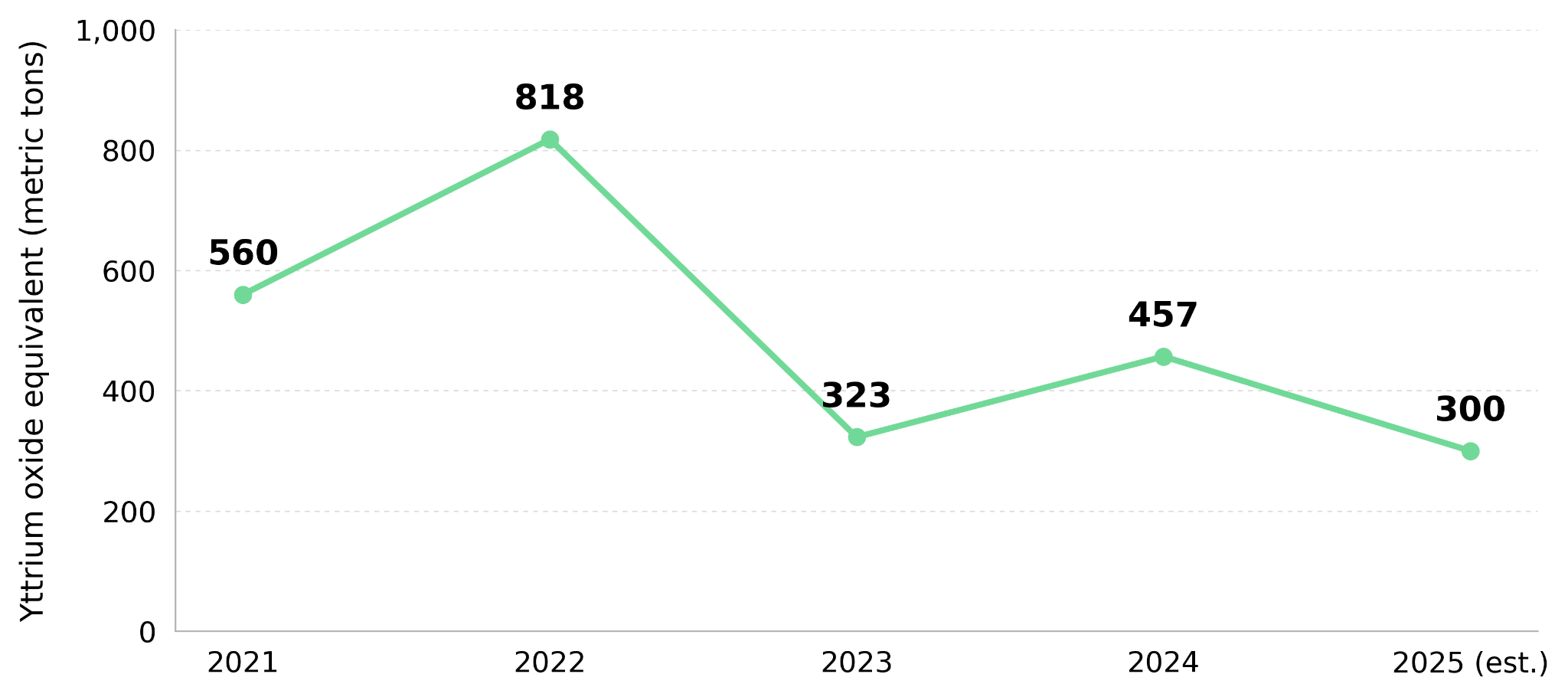
Buying through another country therefore may leave manufacturers exposed to Chinese supply restrictions, making the location of processing more important than the immediate shipping origin when assessing alternative suppliers.
China’s April 2025 export licensing requirements for yttrium oxide and related materials remained in place despite the suspension of selected October 2025 controls. Additional restrictions introduced in January 2026 targeted goods with both civilian and military uses supplied to Japanese military users or military-related end uses, rather than banning all civilian purchases. Uncertainty over shipment approvals can disrupt manufacturers’ production schedules, giving buyers a reason to qualify alternative suppliers before inventories run low.
Processing Capacity Opens a Route to Rare Earth Sales
Rare earth concentrates require chemical treatment and separation to produce individual oxides, with further conversion into metals or alloys for some applications. Each stage requires specialized equipment and technical expertise, adding costs beyond mining that product sales must cover. Additional mineral resources therefore improve supply security only when suppliers can access suitable processing capacity and deliver products that manufacturers approve for use.
The International Energy Agency (IEA), in its Global Critical Minerals Outlook 2026, estimates that existing and announced projects outside China could provide nearly 50,000 metric tons of magnet rare earth mining capacity by 2035 under its base case, compared with less than 40,000 metric tons of separation and refining capacity. Capacity for metals, alloys, and magnets reaches only about 18,000 metric tons.
These figures contained neodymium, praseodymium, dysprosium, and terbium, excluding yttrium. The gap means additional mines alone cannot establish a complete alternative supply chain, making access to processing and manufacturing essential to converting mineral output into commercial sales.
Shared Mining Costs Could Improve Rare Earth By-Product Returns
Sharing mining and infrastructure costs with the main operation could lower the cost of establishing this revenue stream, provided concentrated sales justify the additional recovery and processing costs.
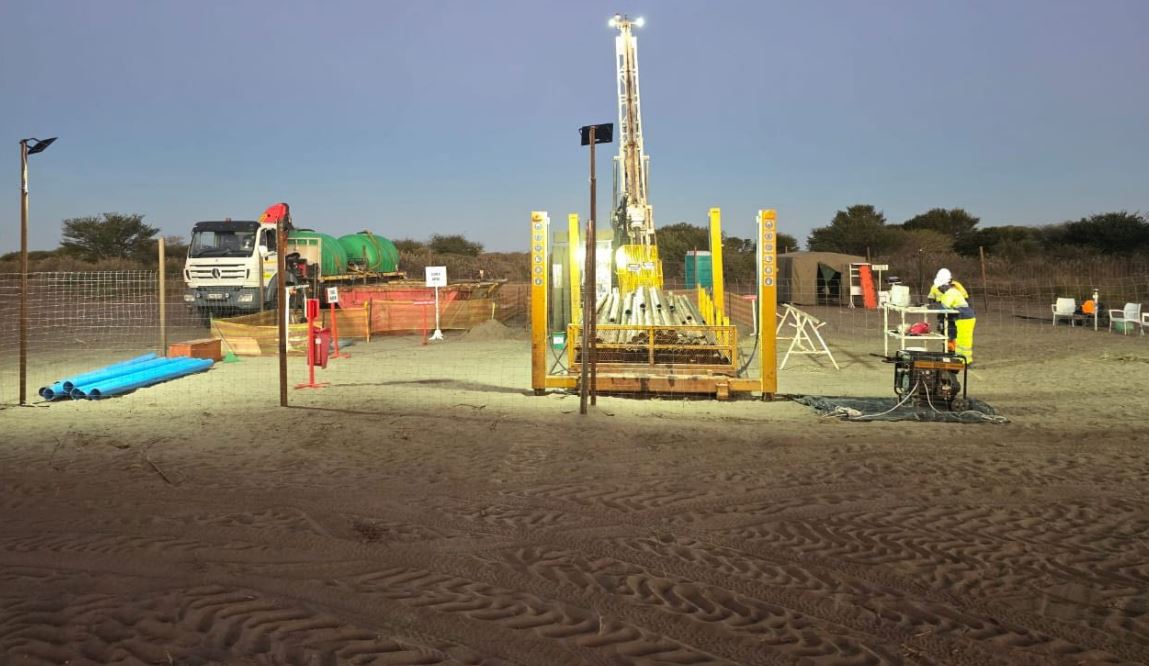
Sovereign Metals highlights potential yttrium revenue from Kasiya’s planned rutile and graphite processing streams without additional mining. Its September 2026 monazite scoping study targets concentrate containing 193 metric tons of yttrium oxide equivalent annually at steady state, for further refining. The proposed circuit requires an estimated US$29 million in additional capital, and product testing with Western refiners is underway.
Sapan Ghai, Chief Commercial Officer, explains where yttrium supply matters most:
“Our rare earth product will have enough to supply 35% of the US requirement… 100% of the heavy rare earths required by the US currently come from China.”
Concentrate revenue depends on payability, the agreed share of contained mineral value paid by the buyer, and on which elements can be recovered and sold. A mixed concentrate must therefore be assessed using its own sales terms and processing requirements, rather than the selling price of separated oxides. Customer processing tests and agreed purchase terms help establish whether the resulting revenue can cover recovery and delivery costs.
Supply Security Policies Could Improve Rare Earth Project Financing
Developers need funding before they can demonstrate commercial production, while buyers often seek proof of product quality before committing to long-term purchases. Public funding can help meet upfront capital needs, and binding purchase agreements give lenders volumes and pricing terms to assess when evaluating future cash flow.
On June 2, 2026, the US Department of Energy (DOE) announced US$134 million in proposed funding for two rare earth projects selected for award negotiations. The projects target commercially viable recovery and refining of rare earths from industrial waste. Selection does not guarantee an award or funding, and award amounts remain subject to negotiation. Recipients must cover at least 50% of project costs, so project teams need additional financing alongside any DOE award.
Binding contracts can support financing when creditworthy buyers commit to purchase volumes under clear pricing, product acceptance, and cancellation terms. The March 2026 US-Japan Action Plan for Critical Minerals Supply Chain Resilience calls for identifying projects for financing and policy support, alongside discussions of possible minimum prices for selected mineral imports. These proposals do not establish guaranteed sale prices for individual projects.
Competitive Costs Could Preserve Margins as Rare Earth Supply Expands
Higher Chinese exports, additional separation capacity, or more efficient material use could narrow the premium paid for rare earth products outside China. Lower production and delivery costs leave suppliers with a larger margin at the same selling price, supporting profitable production as supply options expand.
The IEA’s September 30, 2026 analysis estimates that tripling rare earth prices from their 2025 averages would increase the price of an internal combustion engine car by approximately 0.1%. This limited modeled impact supports considering higher-cost alternative supply. The estimate concerns the completed vehicle, however, and premiums for individual rare earth products still depend on what buyers agree to pay.
Supply Concentration Creates a Need for Rare Earth Investment
The IEA estimates in its 2026 outlook that diversifying magnet rare earth supply chains would require approximately US$60 billion over the following decade. This is an investment requirement rather than committed funding. Matching mining expansion with processing and manufacturing investment would allow additional mineral output to become products that industrial customers can use.
The same outlook reports that new US projects and higher Malaysian output reduced concentration in rare earth refining in 2025. Recycling, more efficient material use, and substitution can also reduce demand for newly mined material. As manufacturers gain more sourcing options, reliable production and binding purchase commitments can help determine which suppliers secure market share.
The Investment Thesis for Rare Earth Elements
- Producers with established processing routes and customer-approved products can supply manufacturers seeking alternatives to China, while binding sales agreements define the volumes and pricing terms that support revenue estimates.
- Developers recovering rare earths from planned processing streams could add revenue without additional mining, provided projected sales justify the additional capital and operating costs and the main operation can be funded.
- Processing partnerships can establish a route to products customers accept, while enforceable purchase agreements define payment terms and sales obligations that lenders can assess.
- Clear permit requirements, access to infrastructure, and costed plans for managing processing residues help developers assess construction schedules and funding needs before committing capital.
- Suppliers whose production, processing, and delivery costs remain below selling prices after shortage premiums decline can preserve operating margins as alternative supply expands.
Manufacturers’ need for dependable rare earth supply can support long-term purchase commitments that help finance alternative production. By-product recovery can improve project economics by sharing mining and infrastructure costs, while processing capability and customer approval establish a route to commercial sales. The investment opportunity lies in producers and developers that can translate these advantages into reliable deliveries and profitable sales across commodity cycles, giving supply diversification commercial value beyond the immediate shortage.
TL;DR
Japan’s uncertain yttrium deliveries strengthen the incentive to develop dependable rare earth supply outside China. Processing capacity and customer approval determine whether additional mineral output becomes commercial supply. Recovering monazite alongside other minerals could add revenue while sharing mining and infrastructure costs. Sovereign Metals’ preliminary monazite study illustrates different stages of this opportunity. Long-term purchase commitments and public support could help finance new capacity, although proposed assistance remains conditional. The investment case favors reliable deliveries, credible funding, and costs that support margins when exceptional price premiums narrow.
FAQs (AI-Generated)
Analyst's Notes





Subscribe to Our Channel








Stay Informed


