




The Permit Change That Could Accelerate Atlas Salt's Project



Atlas Salt advances construction at its Newfoundland salt project, reporting favourable ground conditions and streamlined permitting ahead of its 4 Mtpa target.
- Atlas Salt has moved from pre-development into feasibility-study capital spending, having started construction of the Great Atlantic Salt Project in February with activity continuing through the summer following a recently completed financing.
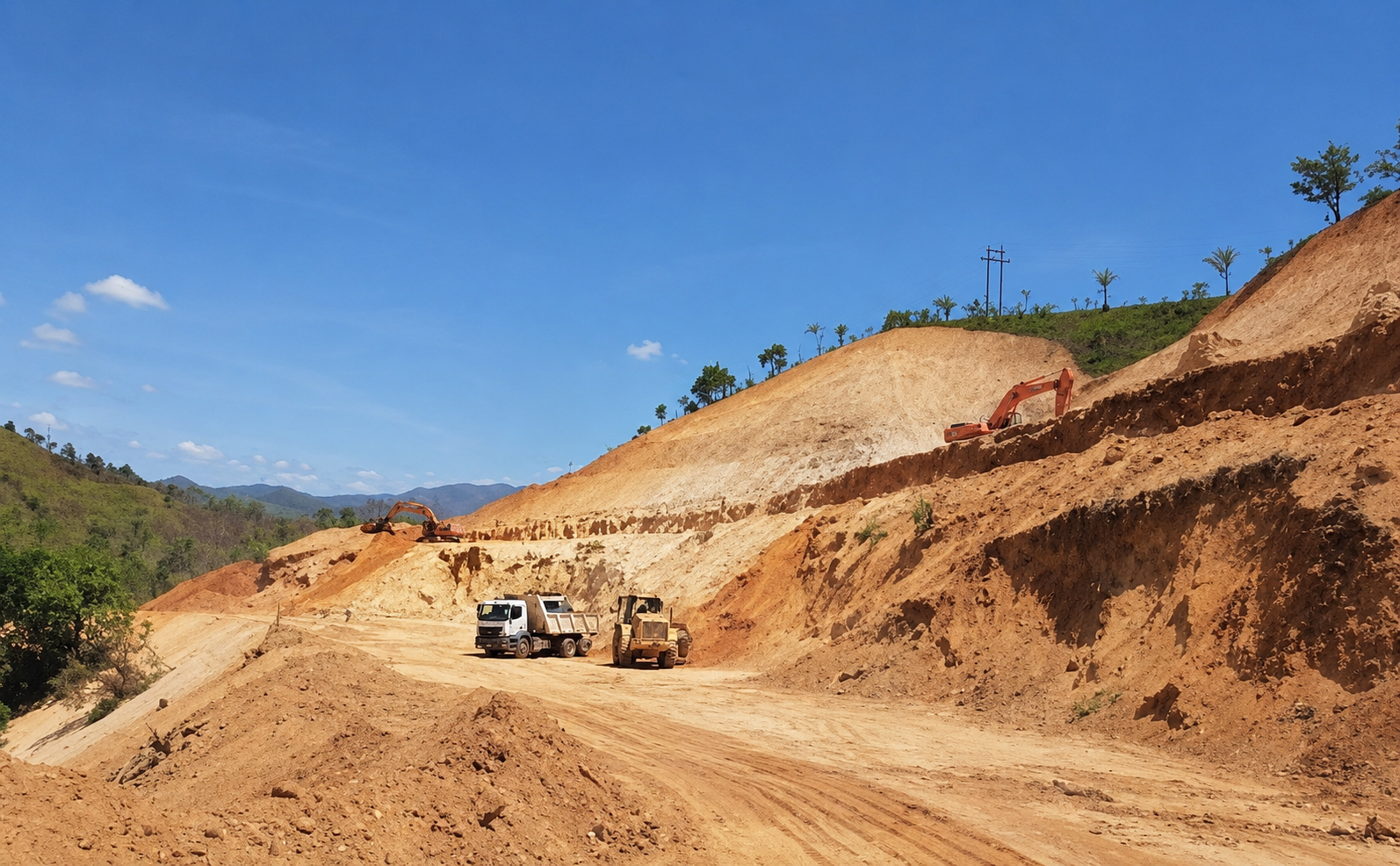
- Site clearing, overburden storage, subgrade preparation, and early road and drainage infrastructure work are underway; the box cut and 1.5-kilometre drift access as the major underground development milestone - remain several months away.
- Geotechnical conditions have so far come in drier and more competent than anticipated, which management says could translate into time and capital savings if the trend holds through the drift development phase.
- The provincial government has approved an early-works permit package covering more than $150 million of capital activities and the local town has now moved to a streamlined, bundled permitting process aligned with the province rather than a piecemeal, road-by-road approval system.
- The project is targeting 4 million tonnes per annum of steady-state production and is being executed with a core team of experienced engineers, an in-house site team, and Hatch as integrated project delivery partner for detailed engineering.
Atlas Salt (TSXV:SALT) is developing the Great Atlantic Salt Project on the west coast of Newfoundland, targeting supply of de-icing road salt into the northeast United States, eastern Canada, and the Atlantic provinces - markets the company describes as critically underserved. For investors evaluating development-stage mining stories, the distinction between "construction-ready" and "under construction" is significant, and Atlas Salt's latest update was framed around demonstrating that the project has crossed that line. CEO Nolan Peterson used a recent interview to walk through what has physically happened on site since construction began, the permitting relationship with the local town, and the technical questions that will determine how smoothly the project advances toward an underground mine.
Construction Milestone: From Pre-Development to Capital Works
According to Peterson, the company announced the start of construction in February, marking a shift from pre-development spending to capital that is formally part of the project's feasibility study. He described this as an important distinction:
"It was a very important milestone for the project that we had switched from, pre-development capital to the capital that's actually included in our feasibility study. This is now actual money that is actual permanent works, part of the actual project, not just getting ready for it."
Working capital raised in the fall allowed construction activity to continue through March, April, May, and June, and a recently completed financing has enabled the company to sustain and, in some cases, accelerate planned activities. Peterson noted that some work originally scheduled for after the financing closed was pulled forward to take advantage of the summer construction season.
Site Preparation & Early Works Progress
The early-works program has focused on clearing the site footprint, with cleared timber distributed to the local community for firewood. The company has also begun stripping and storing overburden, which Peterson said retains value both for near-term use and for eventual site reclamation decades from now. Subgrade preparation - excavating to bedrock, terracing, and installing water-retention ditch infrastructure - is underway, alongside planning for permanent roads, site power infrastructure, and future construction pads for permanent buildings.
The largest upcoming milestone is excavation of the box cut, which will provide access to the underground drift; Peterson indicated that this activity remains many months away. He emphasised that none of the current work is temporary: all early-works activity is intended as permanent, reusable infrastructure funded from the capital allocated in the feasibility study.
Geotechnical Conditions: Better Than Expected So Far
A central technical question for any underground project is ground stability, and Atlas Salt's updated feasibility study had already incorporated design accommodations after earlier geotechnical drilling found the ground less competent than initially assumed. Early results from current site work, however, have been encouraging. Peterson said,
"My engineers are saying it's a lot better than expected. The ground is a lot drier than we initially anticipated. Every 5% easier this project gets is a significant time savings, capital savings. It's looking very positive right now, a lot better than expected on the on the ground water and ground conditions."
He was careful to caveat that these are preliminary observations rather than conclusive results, noting the importance of surfacing any surprises early rather than encountering unexpected conditions once drift development begins. The project involves a 1.5-kilometre drift, and ground competency and water saturation will remain a focus of ongoing test work.
Interview with Chief Executive Officer, Nolan Peterson
Permitting Framework: Provincial & Municipal Alignment
Atlas Salt has received a full provincial early-works permit package covering more than $150 million in capital activity under the project's environmental assessment. Historically, the company also needed incremental sign-off from the local town for each discrete activity, such as individual road segments. Peterson said the town has since asked to move away from this piecemeal approach in favour of a single, streamlined process aligned with the provincial permits - a change he characterised as reducing administrative burden for both sides. He described the shift as a sign of local support:
"It just basically goes to show that all the stakeholders want to make this project advance as quickly as possible by removing the speed bumps along the way, rather than throwing up more which happens in a lot of jurisdictions elsewhere."
Peterson also noted that discretion at the permitting stage is limited once conditions from the environmental assessment are met, and that a standing committee connects the town's local government with Atlas Salt's engineers and on-site staff on an ongoing basis, supported by environmental monitoring disclosed in the company's recent press release.
Team, Delivery Partners, and the Road to 4Mtpa Production
Execution currently rests with a two-person in-house engineering team - Robert Booth, a 30-year construction veteran with prior experience at Vale, Hudbay, and Newmont, and project director Andrew Smith - supported by a growing site staff covering safety, contracts, and administration. Hatch is engaged as the project's integrated project delivery partner, leading detailed engineering and supplementing personnel capacity.
Peterson framed the current, gradual ramp-up in construction as deliberate: hiring and onboarding staff ahead of the large capital deployment phase allows the team to establish processes and site familiarity before the bulk of construction spending begins, rather than ramping simultaneously with a large capital injection. He indicated that detailed engineering currently underway will support the subsequent capital development permit required for drift development, and that translating feasibility-study estimates into contractor-ready engineered plans is the next step toward validating the schedule and cost required to reach 4 million tonnes per annum of steady-state production.
The Investment Thesis for Atlas Salt
- Construction has commenced, not just been permitted or planned - capital being spent is drawn directly from the feasibility study, distinguishing Atlas Salt from earlier-stage peers that have not moved past "shovel-ready" status.
- Recent financing supports continued site activity - proceeds are funding earthworks, geotechnical test work, and infrastructure preparation through the 2026 construction season.
- Early geotechnical results are trending favourably - drier, more competent ground conditions than assumed in the feasibility study could reduce time and capital requirements for the underground drift, though this remains preliminary.
- Permitting risk has been reduced through streamlined provincial-municipal alignment - a bundled, single-process approach with limited discretionary risk replaces a prior piecemeal system, supporting predictability of schedule.
- Over $150 million in early-works capital activity is already permitted, providing more than a year of approved runway for site development ahead of the major capital development permit for drift construction.
- Target market fundamentals remain a core driver - the project is positioned to supply de-icing road salt to what management describes as critically underserved markets in the northeastern US, eastern Canada, and the Atlantic provinces.
- Experienced execution team and delivery partner in place - engineering leadership with major-mining-company backgrounds, combined with Hatch as integrated project delivery partner, underpins the detailed engineering required to firm up cost and schedule for the 4 Mtpa production target.
- Deliberate, decompressed staffing ramp-up - management frames current hiring pace as a way to build organizational readiness ahead of peak capital deployment, intended to reduce execution risk once full-scale drift development begins.
Macro Thematic Analysis
Road salt demand in the northeastern United States, eastern Canada, and the Atlantic provinces is structurally tied to winter weather severity and existing supply infrastructure, much of which relies on imports or distant domestic sources. Atlas Salt's Newfoundland location is positioned to serve these markets directly, addressing what management describes as a critically underserved supply gap. Regional governments and municipalities generally have limited tolerance for de-icing salt shortages, given road safety implications, which supports steady underlying demand independent of broader commodity cycles. As CEO Nolan Peterson summarised the project's purpose:
"We're developing the Great Atlantic Salt Project on the west coast of Newfoundland aiming to supply de-icing road salt to critically underserved markets in the northeast US and eastern Canada and the Atlantic provinces."
TL;DR
Atlas Salt has transitioned from pre-development into active, feasibility-study-funded construction at its Great Atlantic Salt Project in Newfoundland, with site clearing, earthworks, and geotechnical test work underway following a recent financing. Early ground conditions appear more favourable than assumed, and the company has secured a streamlined, bundled permitting arrangement with both provincial and municipal authorities covering over $150 million in early-works capital. Key value drivers ahead include confirmation of ground stability through the box-cut and drift development phase, translation of feasibility estimates into contractor-ready engineering plans, and continued permitting alignment as the project advances toward its 4 million tonne per annum production target.
FAQs (AI-Generated)
Analyst's Notes





Subscribe to Our Channel





Stay Informed


