




US Fuel Economy Rollback Extends Autocatalyst Demand for PGMs



US fuel-economy rollback extends autocatalyst demand, supporting PGMs as gasoline and hybrid vehicles retain a larger role in the US mix.
- The National Highway Traffic Safety Administration (NHTSA) set the model year 2031 light-duty fleetwide fuel economy requirement at roughly 34.9 miles per gallon (mpg), down from 50.4 mpg, reducing pressure to replace gasoline and hybrid vehicles with battery electric vehicles (BEVs).
- Gasoline vehicles and hybrids require platinum group metal (PGM) autocatalysts, while BEVs do not, so slower US BEV adoption retains more platinum, palladium, and rhodium demand than a faster transition would.
- Palladium demand is closely tied to gasoline-vehicle volumes because catalytic converters are its predominant application, making drivetrain mix a direct demand driver.
- World Platinum Investment Council (WPIC) raised automotive platinum and palladium demand forecasts by averages of 1.5% and 1.9% per year, respectively, from 2026 through 2030 after lowering US BEV adoption assumptions.
- Higher autocatalyst demand relative to the previous US policy path extends the relevance of future PGM mine supply, while metallurgy, permitting, financing, and project economics determine which resources can advance toward production.
34.9 MPG Rule Extends US Autocatalyst Demand
The Safer Affordable Fuel-Efficient (SAFE) Vehicles Rule III resets the US light-duty compliance path through model year 2031, with the final Corporate Average Fuel Economy (CAFE) standards projected to correspond to an industry fleetwide average of roughly 34.9 mpg. The June 2024 rule projected approximately 50.4 mpg for the same model year, so the lower 2026 standard reduces the fuel efficiency improvement required for compliance and gives automakers more flexibility to retain gasoline and hybrid vehicles.
CAFE sets average fuel economy standards for passenger cars and light trucks rather than fixed sales quotas by drivetrain. Because gasoline vehicles and hybrids retain internal combustion engines and emissions control systems while BEVs eliminate conventional exhaust systems, greater flexibility to retain gasoline and hybrid models leaves more vehicles requiring autocatalysts than under the previous policy path.
Combustion Vehicles Preserve PGM Demand as BEVs Remove Catalysts
Automobile and truck catalytic converters, particularly in gasoline engines, are palladium’s predominant application, making drivetrain mix a direct demand variable because BEVs remove conventional autocatalyst demand. Johnson Matthey forecasts palladium demand falling 9% in 2026 as automotive consumption contracts with lower gasoline-car production, while rhodium demand is forecast to fall 6% as lower gasoline-car output reduces autocatalyst consumption. The lower US fuel economy requirement gives automakers more flexibility to retain gasoline vehicles than under the previous standard, supporting palladium and rhodium demand relative to the prior policy path.
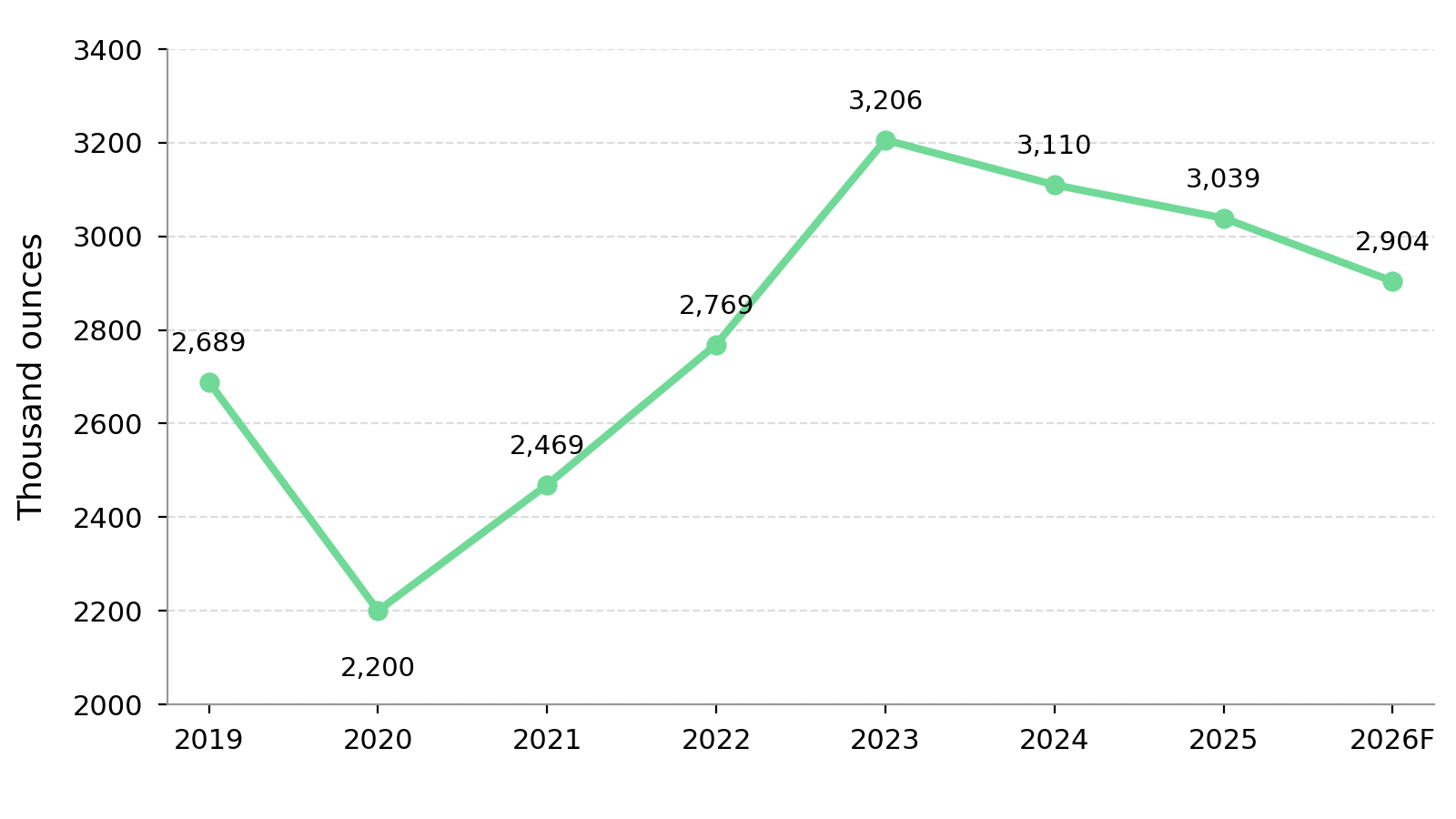
Hybrids extend this demand support to platinum because they retain internal combustion engines and emissions control systems while using electric assistance to reduce fuel consumption. WPIC forecasts global automotive platinum demand falling 4% year over year, or 136 koz, to 2.904 Moz in 2026, while hybridization, larger vehicles with higher platinum loadings, and stronger commercial vehicle production make North America a partial offset to the global decline. The lower US fleetwide requirement gives automakers more flexibility to retain hybrids, preserving platinum-bearing autocatalyst demand as global BEV adoption rises.
Lower US BEV Adoption Raises Medium-Term PGM Forecasts
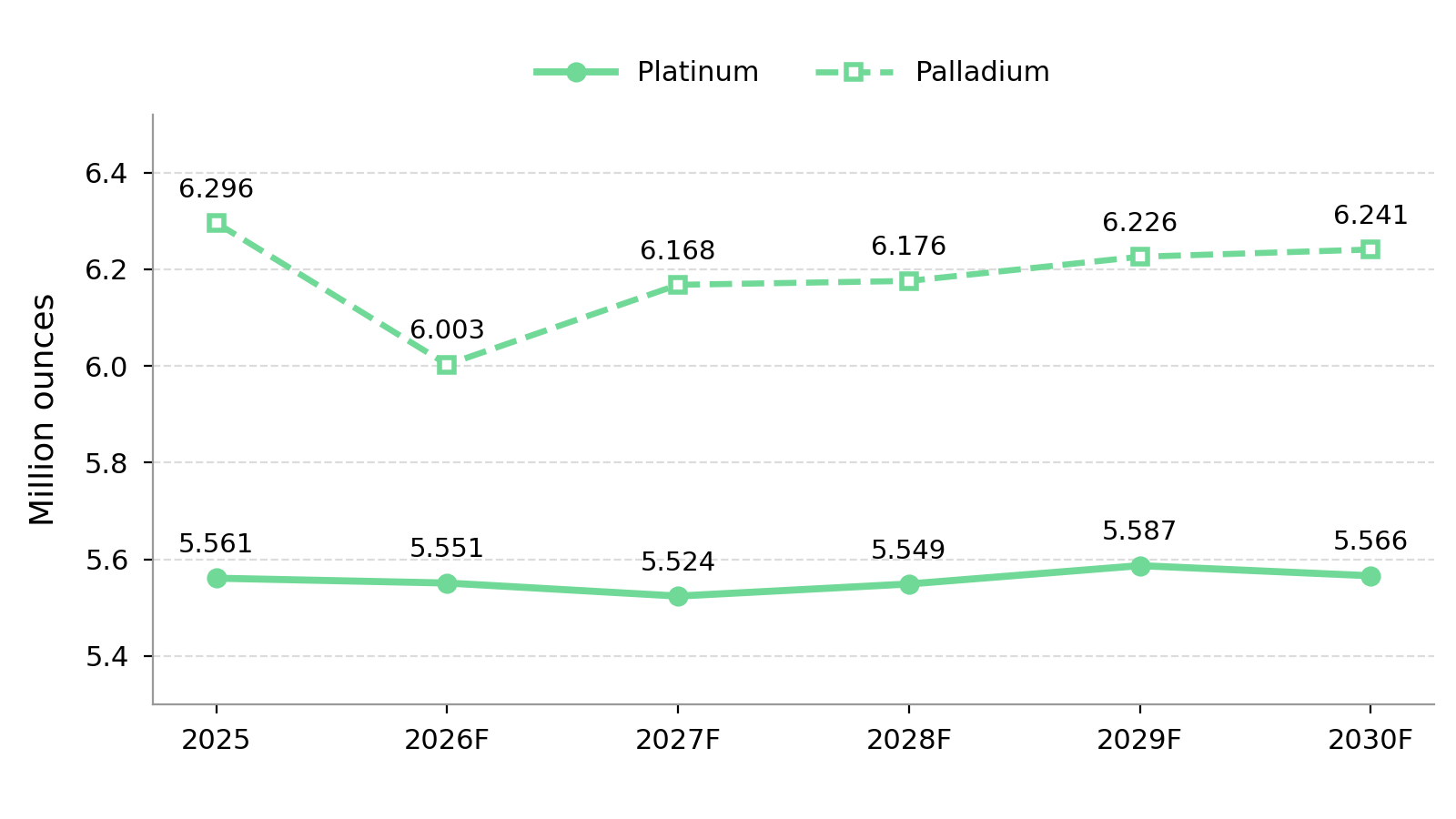
Regional BEV adoption can change automotive PGM demand even when the global adoption rate is unchanged because catalyst-loading intensity differs by market. WPIC raised its automotive platinum and palladium demand forecasts by averages of 1.5% and 1.9% per year, respectively, from 2026 through 2030 versus its previous outlook after revising regional BEV assumptions and underlying vehicle demand.
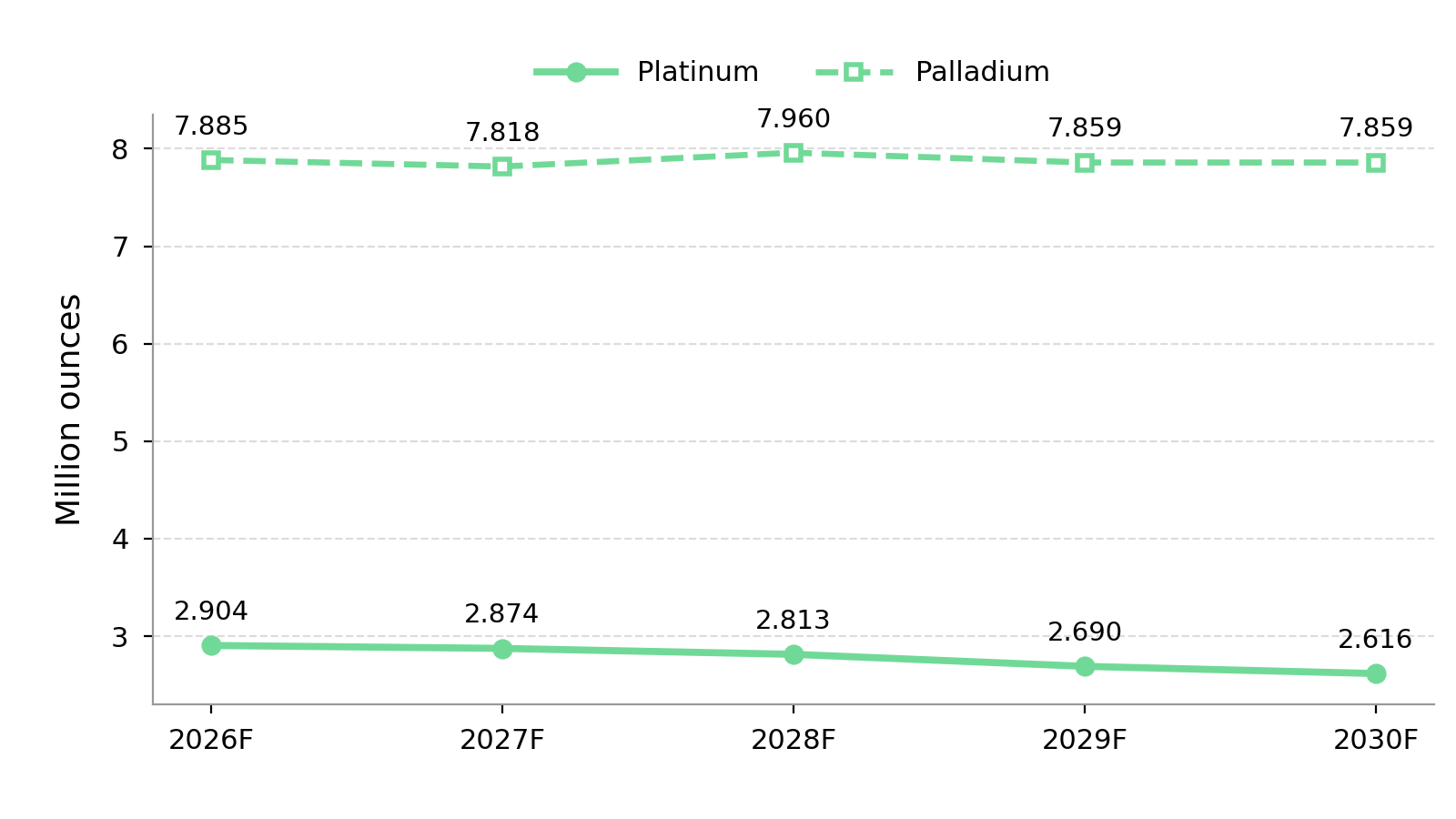
WPIC retained its global BEV market-share forecast for 2030 while lowering US adoption assumptions and increasing BEV volumes elsewhere, with the regional shift supporting PGM demand because larger US vehicles carry higher catalyst loadings. The September CAFE rule reinforces this effect by reducing compliance pressure for faster US BEV adoption, leaving more high-loading catalyzed vehicles in the regional mix than under the previous policy path.
Even with slower US adoption, WPIC forecasts BEVs rising from 16% of the global light-duty vehicle market in 2025 to 28% by 2030, continuing to reduce the number of vehicles requiring autocatalysts. WPIC forecasts 2026 automotive platinum demand at 2.904 Moz, down 4% year over year, reinforcing that the 34.9 mpg rule supports PGM demand relative to the previous US policy path rather than reversing the broader global transition.
Longer Autocatalyst Demand Raises Future PGM Supply Relevance
A longer automotive demand runway extends the period in which future platinum and palladium supply can serve the vehicle market, increasing the relevance of drilling, metallurgy, and economic studies that advance resources toward development.
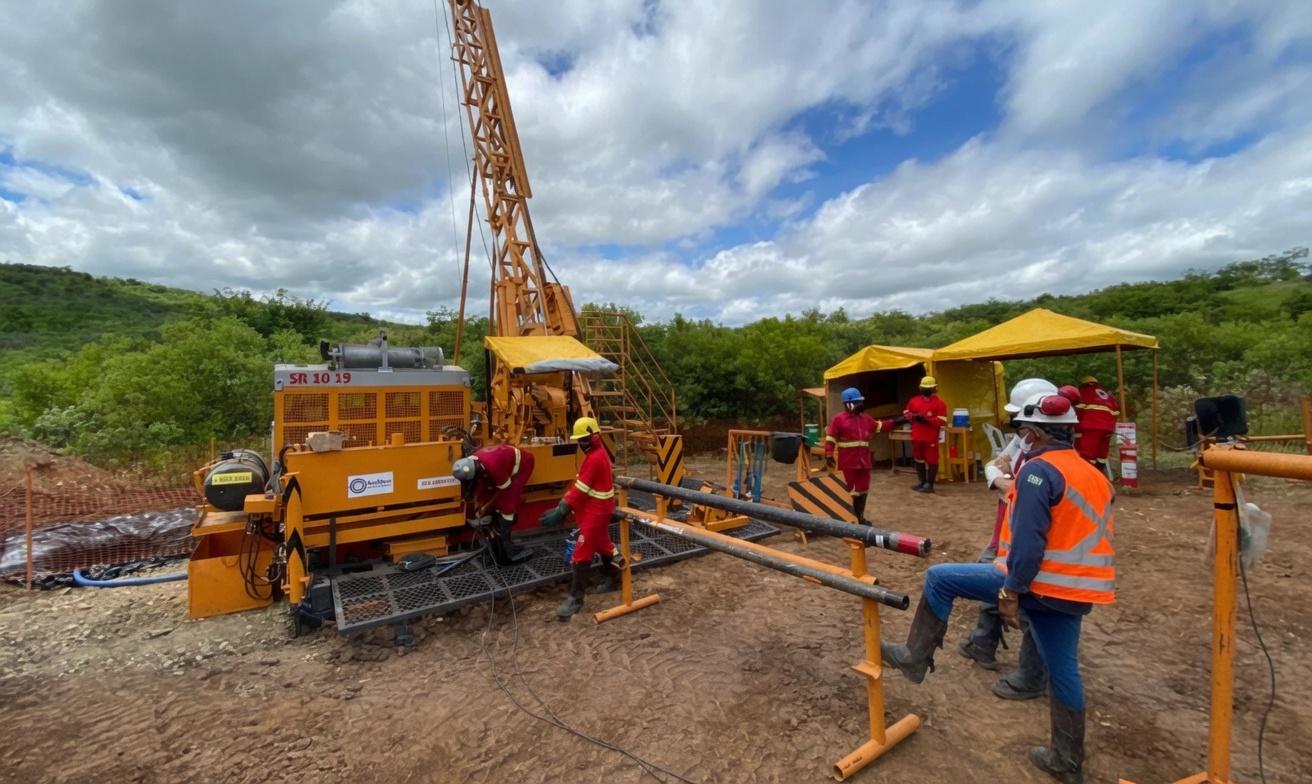
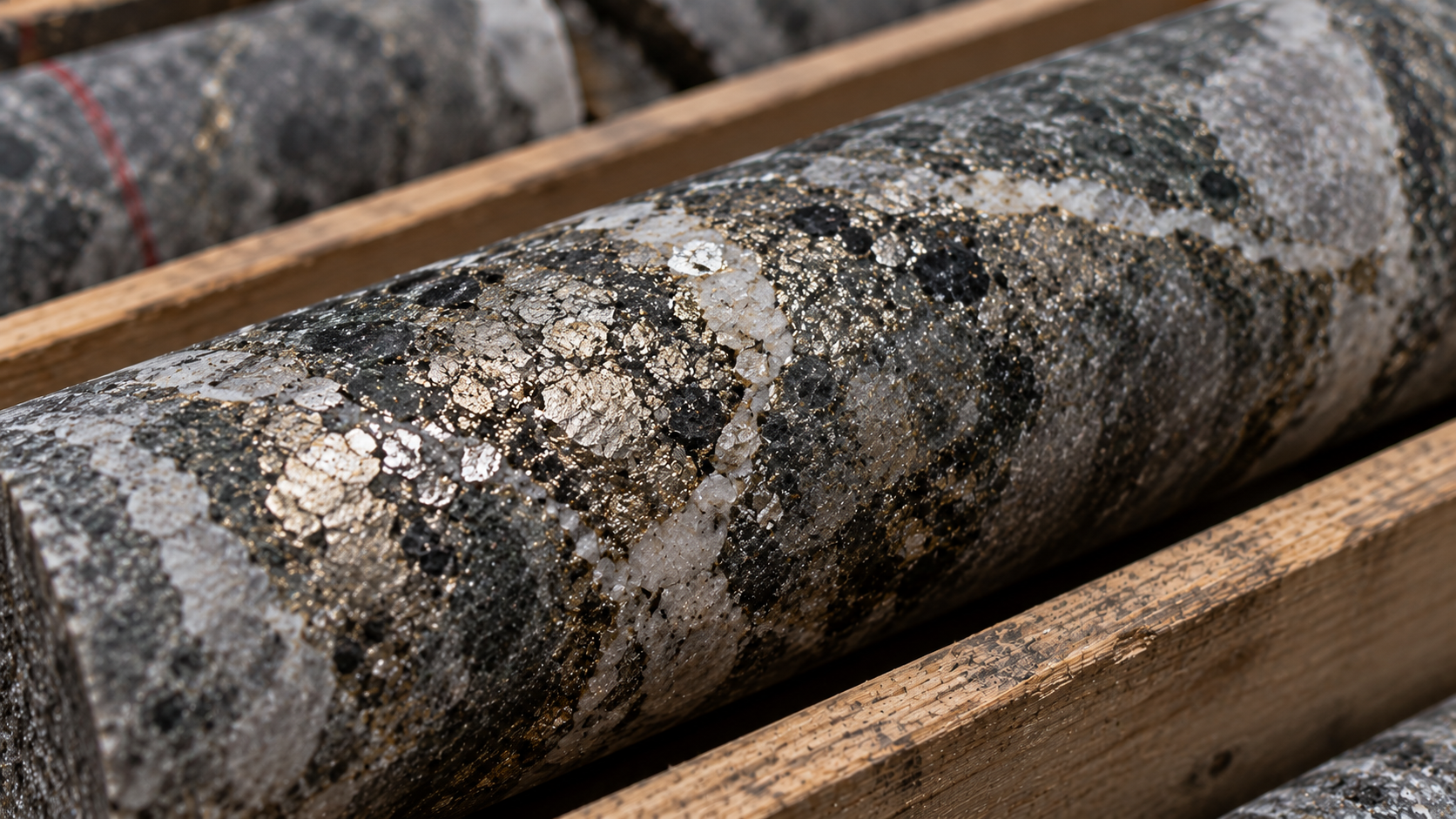
ValOre Metals drilled more than 6,000 meters across 5 new exploration zones in 2023 that remain outside the previous resource estimate, adding resource-growth potential at Pedra Branca. The drilling, together with ongoing metallurgical and engineering work, is feeding into a preliminary economic assessment (PEA) targeted for the fourth quarter of 2026, giving the project a defined near-term milestone for advancing its development plan.
Nick Smart, Chief Executive Officer of ValOre Metals, explains how vehicle mix sustains future PGM demand:
“We're seeing a steady and ongoing demand for those types of vehicles relative to battery electric vehicles, which don't use platinum and palladium. As we see continued new vehicles hitting the road that are still either hybrids or internal combustion engine vehicles, that gives a pipeline of future demand for the PGMs.”
Global Electrification Shapes Primary PGM Demand
WPIC forecasts BEVs rising from 16% of the global light-duty vehicle market in 2025 to 28% by 2030, so global electrification continues to reduce the number of vehicles requiring autocatalysts even as the US transition slows. WPIC also forecasts 2026 automotive platinum demand at 2.904 Moz, down 4% year over year, framing the CAFE change as relative demand support rather than a reversal of global electrification.
Catalyst thrifting and platinum-palladium substitution can reduce or redistribute PGM demand per vehicle, while higher PGM prices can raise secondary supply by accelerating catalyst-scrap collection. WPIC forecasts platinum recycling reaching 1.802 Moz in 2026, up 8% year over year, increasing the contribution of secondary supply to the platinum market.
The 34.9 mpg rule therefore extends the potential life of US autocatalyst demand relative to the previous policy path, while drivetrain shares, catalyst loadings, and recycling volumes determine how much primary platinum, palladium, and rhodium supply the vehicle market ultimately requires.
The Investment Thesis for Platinum Group Metals
- The reduction in the model year 2031 US fleetwide fuel economy requirement from approximately 50.4 mpg to 34.9 mpg reduces the efficiency improvement required for compliance, supporting more room for gasoline and hybrid vehicles than under the previous policy pathway.
- Palladium demand is closely tied to gasoline-vehicle volumes because gasoline-engine catalytic converters remain its predominant application, while BEVs remove conventional exhaust-catalyst demand.
- Platinum receives automotive support from hybrids, larger vehicles with higher catalyst loadings, and commercial-vehicle production, providing multiple demand channels even as global BEV penetration increases.
- Medium-term PGM research has already raised automotive platinum and palladium demand forecasts after trimming US BEV adoption assumptions, demonstrating that regional drivetrain changes can alter global commodity demand.
- Explorers with mixed platinum-palladium resources gain relevance when a major end market remains larger for longer, while grade, metallurgy, permitting, financing, capital intensity, and economic studies define the pathway for those resources to advance toward mine supply.
- Faster BEV adoption, lower catalyst loadings, metal substitution, and higher recycling can moderate primary PGM requirements even under the lower US fuel economy standard, so drivetrain trends and secondary supply need to be assessed alongside automotive demand.
The US fuel economy rollback gives gasoline and hybrid vehicles a larger role in the US compliance mix, supporting platinum, palladium, and rhodium demand even as global electrification continues. A slower transition in a major PGM end market extends the period in which automotive demand can support both existing production and advancing PGM projects, while drilling, technical studies, and development milestones move additional resources toward future supply. The broader investment case therefore rests on a longer automotive PGM demand window alongside continued advancement of new supply toward production.
TL;DR
The lower US fuel-economy requirement gives automakers more flexibility to retain gasoline and hybrid vehicles, extending demand for platinum, palladium, and rhodium used in autocatalysts. Palladium remains closely linked to gasoline vehicles, while hybrids, larger vehicles, and commercial vehicles support platinum demand. WPIC has raised medium-term automotive platinum and palladium forecasts after lowering US BEV adoption assumptions, although global electrification continues to reduce autocatalyst demand over time. A longer automotive demand window increases the relevance of future PGM supply, while drilling, technical studies, catalyst loading, substitution, and recycling continue to shape primary metal requirements.
FAQs (AI-Generated)
Analyst's Notes





Subscribe to Our Channel



.jpg)
.jpg)

Stay Informed


