




Contango Silver & Gold 's DSO Model Eyes 200,000 Oz Annual Gold Production


Contango (NYSE American:CTGO) uses direct-ship ore and Manh Choh cash flow to target 200,000 oz gold and 5 Moz silver without shareholder dilution.
- Contango's 30% share of Manh Choh delivered a $102 million distribution in 2025, and management expects about $100 million a year until around 2030.
- The direct shipping ore model avoids building mills and tailings facilities, which cut permitting time and capital at Manh Choh.
- Lucky Shot is fully permitted and targets 40,000 to 50,000 ounces a year, with Contango planning to keep 100% through an ore sales deal.
- Kitsault Valley's Indicated resource rose 93% to 89.55 million ounces AgEq, and an update including 2026 drilling is due in the first half of 2027.
- The key risk is the unresolved processing route for Johnson Tract and Kitsault, which the 200,000-ounce target depends on.
Junior miners rarely fail for lack of ore. More often they run out of time or capital while projects wait for permits. Contango Silver & Gold Inc. (NYSE American:CTGO, TSX:CTGO) has built its strategy around avoiding that trap. It holds 30% of the Manh Choh gold mine in Alaska, operated by Kinross Gold, and ships the ore to an existing mill rather than building its own. Speaking to Crux Investor in Colorado Springs, Chief Executive Officer Rick Van Nieuwenhuyse set out a plan to grow from about 60,000 ounces of attributable gold a year to 200,000 ounces of gold and 5 million ounces of silver within five years, across Alaska and British Columbia. The plan rests on existing cash flow, a lean share structure and a direct shipping ore (DSO) approach that the company says cuts permitting time and upfront capital.
Manh Choh: The Cash Engine
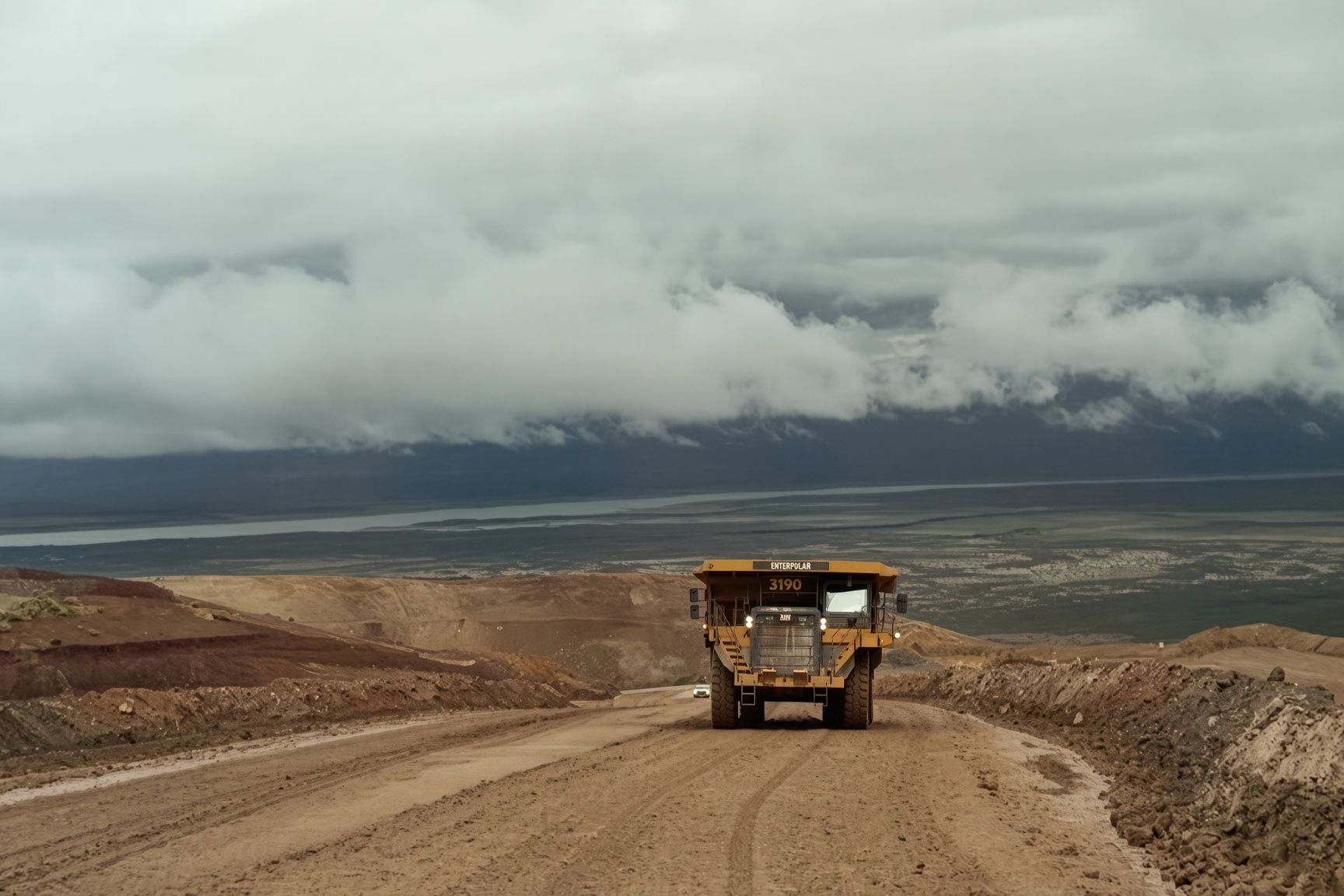
Manh Choh is a roughly 1 million ounce open-pit deposit grading about 8 g/t gold on a 100% basis. Rather than build a mill, tailings facility and power plant, Contango entered the Peak Gold joint venture with Kinross, which holds 70% and operates the mine. Ore travels about 240 miles by road to Kinross's Fort Knox mill. First gold was poured in July 2024.
Contango's share of production averages about 60,000 ounces a year over the mine life. In 2025 the company's share was 60,200 ounces, and it received a $102 million cash distribution. This year is lighter as pre-stripping during the move from the north pit to the south pit has raised costs and reduced output. Guidance for 2026 is 40,000 to 45,000 ounces at cash costs of $1,900 to $2,000 per ounce sold. Guidance for 2027 rebounds to 75,000 to 80,000 ounces at $1,200-1,300 per ounce.
Van Nieuwenhuyse described the arrangement as closer to a royalty than an operating stake. Kinross runs the mine and Contango receives quarterly distributions. These are net of all costs, including about $5 million a year of joint venture exploration. He expects distributions to average about $100 million a year over a five-year mine life, with production running to around 2030. Near-pit exploration may add about another year, but no new deposit has been found that would extend the mine materially.
Why Direct Shipping Ore
The DSO model separates mining from processing. Ore is mined, loaded into sealed containers and sent by road, rail or barge to a third-party mill. There is no onsite mill and no tailings facility. Van Nieuwenhuyse said Contango's share of Manh Choh capital was $65 million. He added that permitting took around nine months, compared with the five to ten years he associates with a new mill and tailings facility.
He was open about the price paid. Contango gave up 70% of Manh Choh because gold sat near $1,800 an ounce when the deal was struck and funding was scarce. He said the company does not plan to repeat that split. With cash flow in hand and gold around $4,000, future DSO projects are expected to rely on ore sales agreements that leave Contango with 100% ownership.
Van Nieuwenhuyse pointed to Donlin in Alaska as a cautionary example. He said the 40 million ounce deposit was found more than 25 years ago and is still not in production, still not fully permitted and still being litigated. For him, the binding constraint is time rather than capital.
"Rather than raise money and and go through the permitting nightmare of building a tailings facility specifically, we built a form a business partnership with Kinross and so we entered into a 70-30 joint venture them and took advantage of that existing capacity."
Interview with Rick Van Nieuwenhuyse, CEO of Contango Silver & Gold
Lucky Shot: The Next DSO Project
Lucky Shot is 100% owned, about 75 miles north of Anchorage, and fully permitted for mining on a DSO basis. Its current resource is about 110,000 ounces at 14.5 g/t gold. An underground drill programme aims to expand that to 400,000 to 500,000 ounces. Van Nieuwenhuyse expects a feasibility study to be largely complete by this time next year. The target is 40,000 to 50,000 ounces a year from an initial five-year mine plan, which he estimated could generate a further $100 million or so of free cash flow.
Processing options are broader than at Manh Choh, where Fort Knox was the only realistic choice. Lucky Shot's simple quartz-gold ore would likely blend with Fort Knox feed. Rail access also opens a route through Seward to processing in Taiwan, using term sheets that trader Ocean Partners is offering junior companies. That competition gives Contango leverage it lacked the first time.
Van Nieuwenhuyse noted that narrow-vein mines such as Greens Creek often run for decades as veins are followed at depth. Contango also controls the wider district. He put the total cost of reaching production at about $50 million, of which roughly $20 million has been spent.
Johnson Tract and Kitsault Valley: The Scale Step
The jump to 200,000 ounces depends on two larger polymetallic assets. Johnson Tract in Alaska hosts about 1.1 million ounces at 9.4 g/t gold equivalent. Van Nieuwenhuyse described it as averaging 40 metres wide and open at depth. A May 2025 Initial Assessment outlined a post-tax net present value (NPV5) of $615.4 million and an internal rate of return (IRR) above 60% at $4,000 gold, with a payback of about one year. Federal permitting is proceeding under FAST-41, a US programme for coordinating permits on major projects. The company plans to build a tunnel of about one mile in 2027 for underground drilling, then complete feasibility in 2028.
Kitsault Valley came to Contango through the merger with Dolly Varden Silver and sits in British Columbia's Golden Triangle. An updated mineral resource estimate (MRE) released lifted Indicated resources by 93% to 89.55 million ounces silver equivalent (AgEq) at 363 g/T. Inferred resources stand at 64.92 million ounces at 320 g/T. None of the more than 50,000 metres drilled in 2026 is included. Early results included 506 g/T AgEq over 13.90 metres at Torbrit and 807 g/T AgEq over 4.96 metres at North Star. A further MRE update is planned for the first half of 2027, followed by an Initial Assessment later that year.
Neither asset suits Fort Knox. Both need flotation circuits to produce copper, lead, zinc and pyrite concentrates. Contango is weighing whether to build a plant on an already-permitted site or to buy and upgrade an existing facility. That question remains unresolved.
The Investment Thesis for Contango Silver & Gold
- Manh Choh is expected to provide about $100 million a year in distributions to Contango, which funds growth without equity raises.
- Guidance of 75,000 to 80,000 ounces at $1,200 to $1,300 cash costs in 2027 marks a sharp recovery from this year's transition.
- Lucky Shot is fully permitted, and future DSO deals are planned as 100%-owned ore sales rather than a 70:30 split.
- Kitsault's 93% jump in Indicated ounces excludes more than 50,000 metres of 2026 drilling, so the H1 2027 update is a clear watch-item.
- Investors should monitor the Lucky Shot feasibility study and resource growth towards 400,000 to 500,000 ounces as the next production trigger.
- The unresolved processing route for Johnson Tract and Kitsault is the main gap in the 200,000-ounce plan and should be tracked closely.
Macro Thematic Analysis
Contango's growth plan leans heavily on silver, with gold at around $4,000 an ounce also supporting the case. Van Nieuwenhuyse stressed that Kitsault's silver-equivalent grade comes mostly from silver and gold rather than base metals summarised by the combined Indicated and Inferred base as roughly 150 million ounces at about 350 g/t, or around 10 ounces of silver per tonne. The Initial Assessment planned for later in 2027 will be the first formal test of Kitsault's economics.
Base metals add a second theme. Van Nieuwenhuyse noted that base metals are now labelled critical metals, and both major US political parties are focused on supply.
"We used to call them base metals, now they're called critical metals, which is I think is great because at least we've got in the United States both the Democrats and the Republicans thinking about metals, and the fact that we're 30 years behind China. So those are all good things for long-term development."
Van Nieuwenhuyse also pointed to tight sulphur and sulphuric acid markets, which he linked to recent supply disruptions. In his view, this makes pyrite and base metal concentrates more attractive to smelters, which could help sell Johnson Tract and Kitsault output.
Permitting reform is the third thread. FAST-41 coverage for Johnson Tract reflects a US push to shorten approvals for strategic mineral projects. That fits the DSO aim of reaching production before market interest fades.
TL;DR
Contango Silver & Gold holds 30% of Alaska's Manh Choh mine, operated by Kinross, and received a $102 million distribution in 2025. CEO Rick Van Nieuwenhuyse expects about $100 million a year until around 2030. The company plans to use that cash to grow to 200,000 ounces of gold and 5 million ounces of silver a year without dilution. It will do this through direct shipping ore, which sends ore to existing mills instead of building its own. Lucky Shot is permitted and heads to feasibility next. Johnson Tract and Kitsault Valley supply the scale, and Kitsault's Indicated resource has just risen 93%. The main open question is how the two polymetallic assets will be processed.
FAQ (AI-generated)
Analyst's Notes





Subscribe to Our Channel

.jpg)
.jpg)


Stay Informed






















