




Flat PGM Mine Supply Exposes a Growing Replacement-Ounce Problem


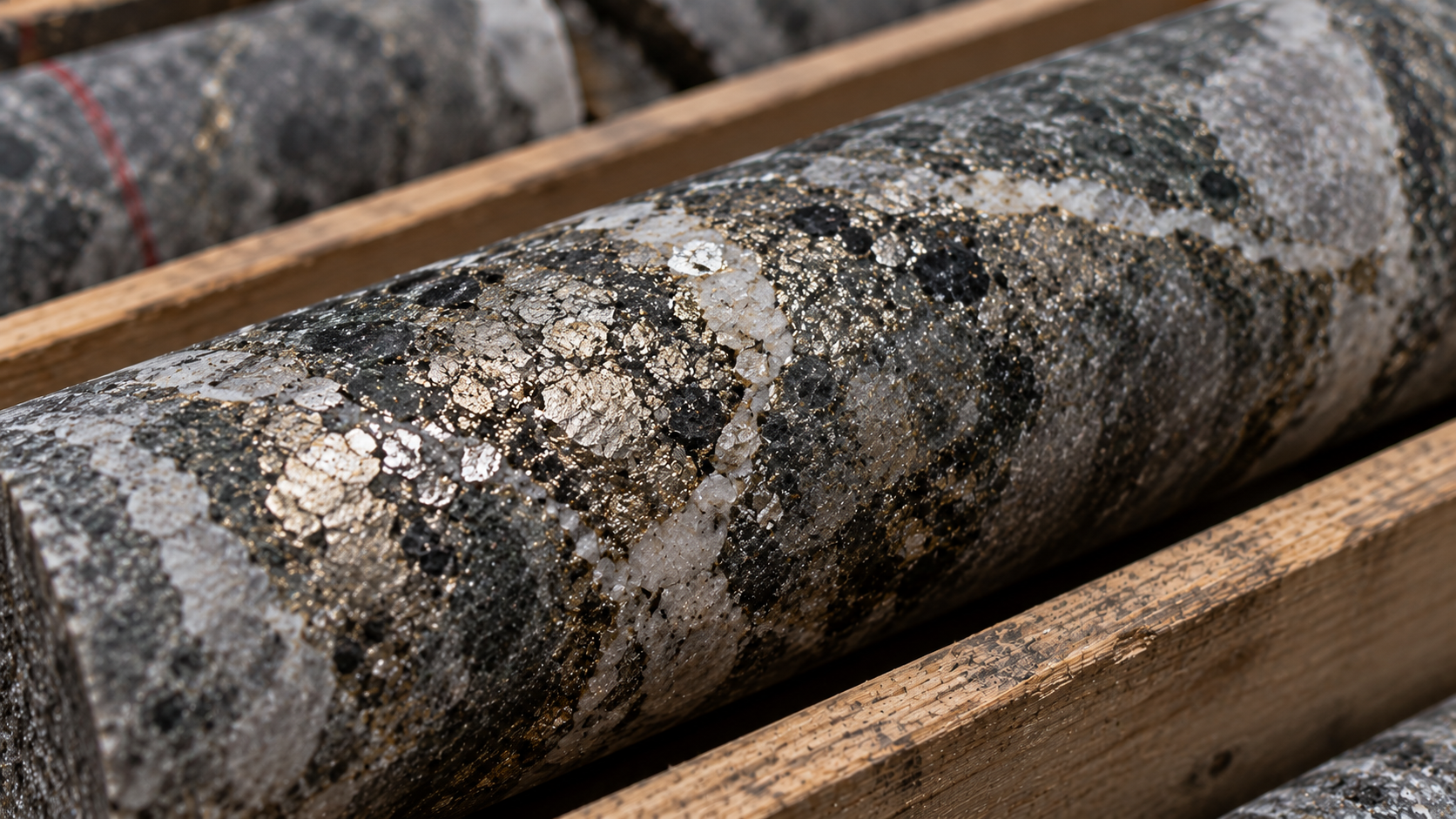
Platinum’s 2026 surplus reflects investment outflows and recycling, while flat mine supply increases reliance on undeveloped platinum group metal projects.
- World Platinum Investment Council (WPIC) now forecasts a 265,000 ounce platinum surplus for 2026, the first annual surplus since 2022, reversing a 297,000 ounce deficit forecast three months earlier.
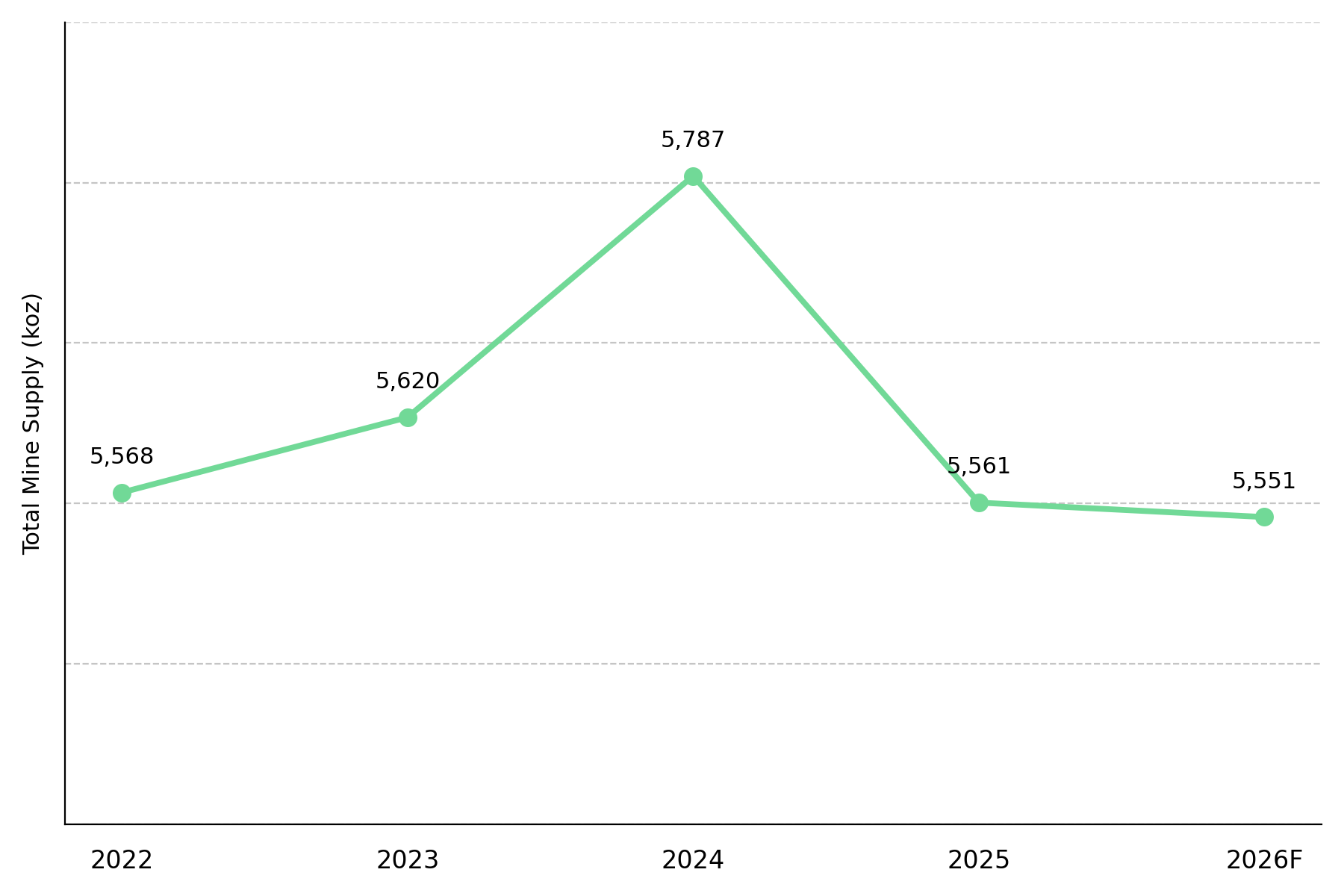
- Mine supply is forecast flat at 5,551,000 ounces for 2026, with WPIC stating that recycling supplies all of the year's 2% growth in total supply.
- US Geological Survey (USGS) attributes estimated 2025 platinum group metal (PGM) production declines of 9% in South Africa to higher deep-level mining costs and power disruptions, while lower ore grades and recovery reduced Russian output by 6%.
- Above ground stocks rebuild to only 2,010,000 ounces by year end, providing 3.4 months of demand cover, still well below 2022 levels after three straight years of deficit.
- With incumbent mines constrained by depth, grade, and cost, the PGM supply the market needs after 2026 increasingly depends on undeveloped resources advancing through metallurgy, economic studies, and permitting today.
Investment Outflows Turn Platinum's Deficit Into a 2026 Surplus
WPIC revised its full-year platinum balance forecast from a 297,000-ounce deficit to a 265,000-ounce surplus. The market recorded a 244,000-ounce surplus in the second quarter, lifting the first-half surplus to 548,000 ounces after three consecutive annual deficits from 2023 through 2025.
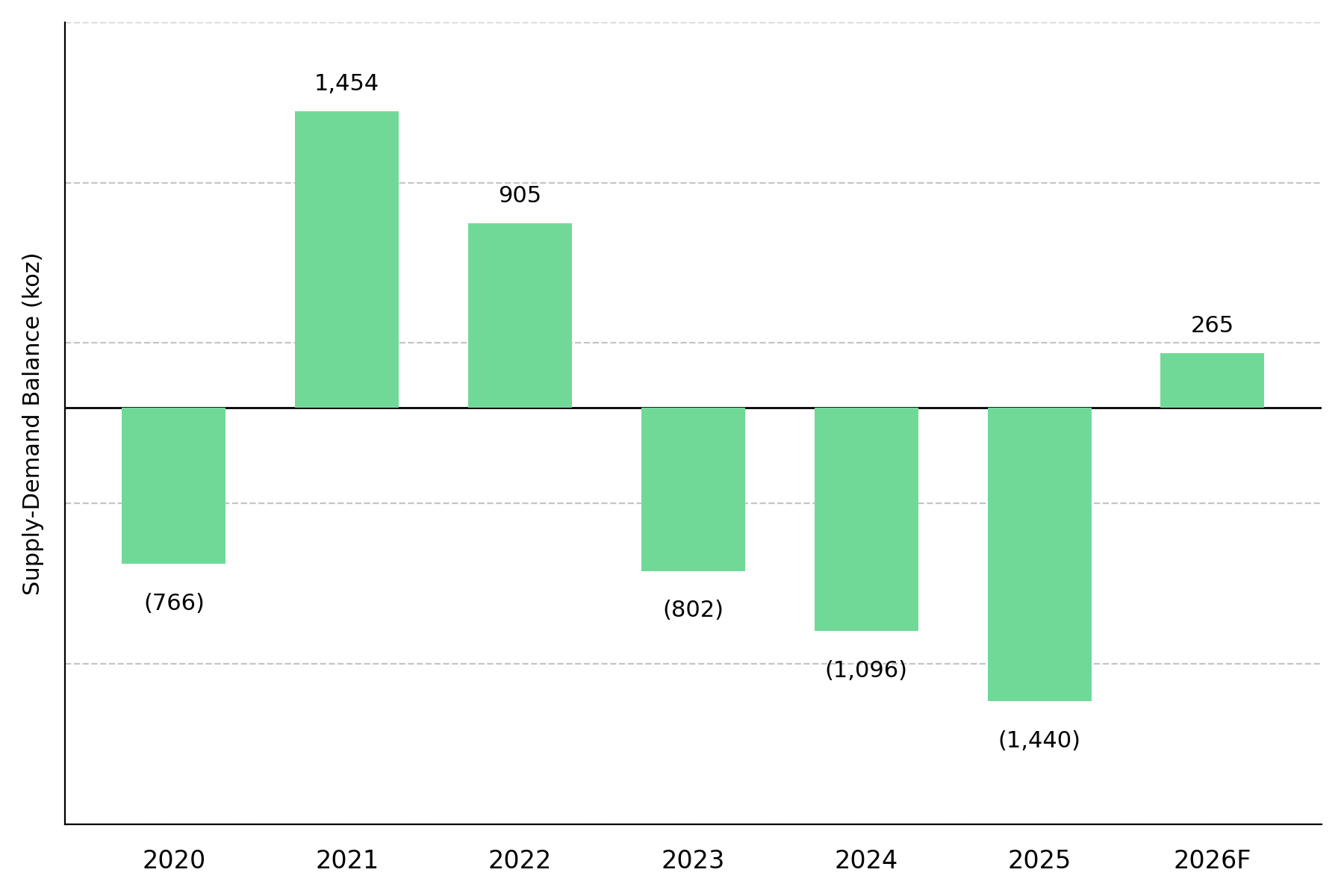
The 2026 surplus is driven by lower demand rather than new mine output, with total supply forecast to rise 2% year over year to 7,353,000 ounces as demand falls 18% to 7,089,000 ounces. Investment demand accounts for most of the decline, swinging by 1,235,000 ounces from an inflow of 1,152,000 ounces in 2025 to an outflow of 83,000 ounces in 2026 as exchange-traded fund (ETF) holdings and exchange stocks accumulated through 2025 were liquidated during the first half.
ETF outflows drove the forecast surplus as spot platinum traded near $1,840 per ounce, down 10% year to date and below its January 2026 record of $2,919 per ounce. A surplus caused by ETF liquidation can reverse if investment demand returns, making the 2026 balance less durable than a surplus created by new mine capacity.
Recycling Covers 2026's Supply Growth While Mine Output Stays Flat
WPIC forecasts recycling to provide all of the 2% growth in total platinum supply in 2026, rising 8% to 1,802,000 ounces as higher PGM prices improve scrap collection economics and increase autocatalyst recycling by 15%. Mine supply is forecast at 5,551,000 ounces, 10,000 ounces below 2025, leaving the year’s supply growth dependent on recovered metal rather than new production.
Autocatalyst recycling depends on PGM prices and available scrap, so its 2026 increase could slow if prices stabilize or stockpiled material is processed. New mine capacity requires reserve development, permitting, and capital spending, making recycling-led supply growth less durable than supply from new mines.
Declining Ore Grades & Rising Costs Keep Platinum Mine Supply From Growing
WPIC forecasts higher South African production to offset only part of the declines in Russia, North America, and Zimbabwe, leaving 2026 mine supply flat at 5,551,000 ounces. Lower PGM content reduces Russian output, reduced nickel production lowers North American by-product PGM supply, and lower ore grades constrain Zimbabwean production. Because these pressures arise from ore quality and by-product economics rather than temporary outages, they limit how quickly mine supply can respond to higher prices.
South African & Russian Output Declines Reduce Global Platinum Supply
USGS estimates that South African PGM production fell 9% in 2025 as lower palladium prices, higher deep-level mining costs, and power disruptions reduced output. Russian PGM production fell an estimated 6% as lower metal grades and ore recovery reduced output. Across the same data set, world platinum mine production fell 5% from 179,000 kilograms in 2024 to an estimated 170,000 kilograms in 2025, showing that country-level constraints reduced global supply.
Thin Above Ground Stocks Leave Platinum Exposed to the Next Supply Shock
WPIC forecasts above-ground stocks to rise from 1,745,000 ounces at the end of 2025 to 2,010,000 ounces by year-end 2026, equivalent to 3.4 months of global demand. This would be the first annual stock increase since 2022 after three consecutive years of deficits, but 3.4 months of demand cover leaves platinum exposed to supply disruptions or a recovery in industrial and jewelry demand.
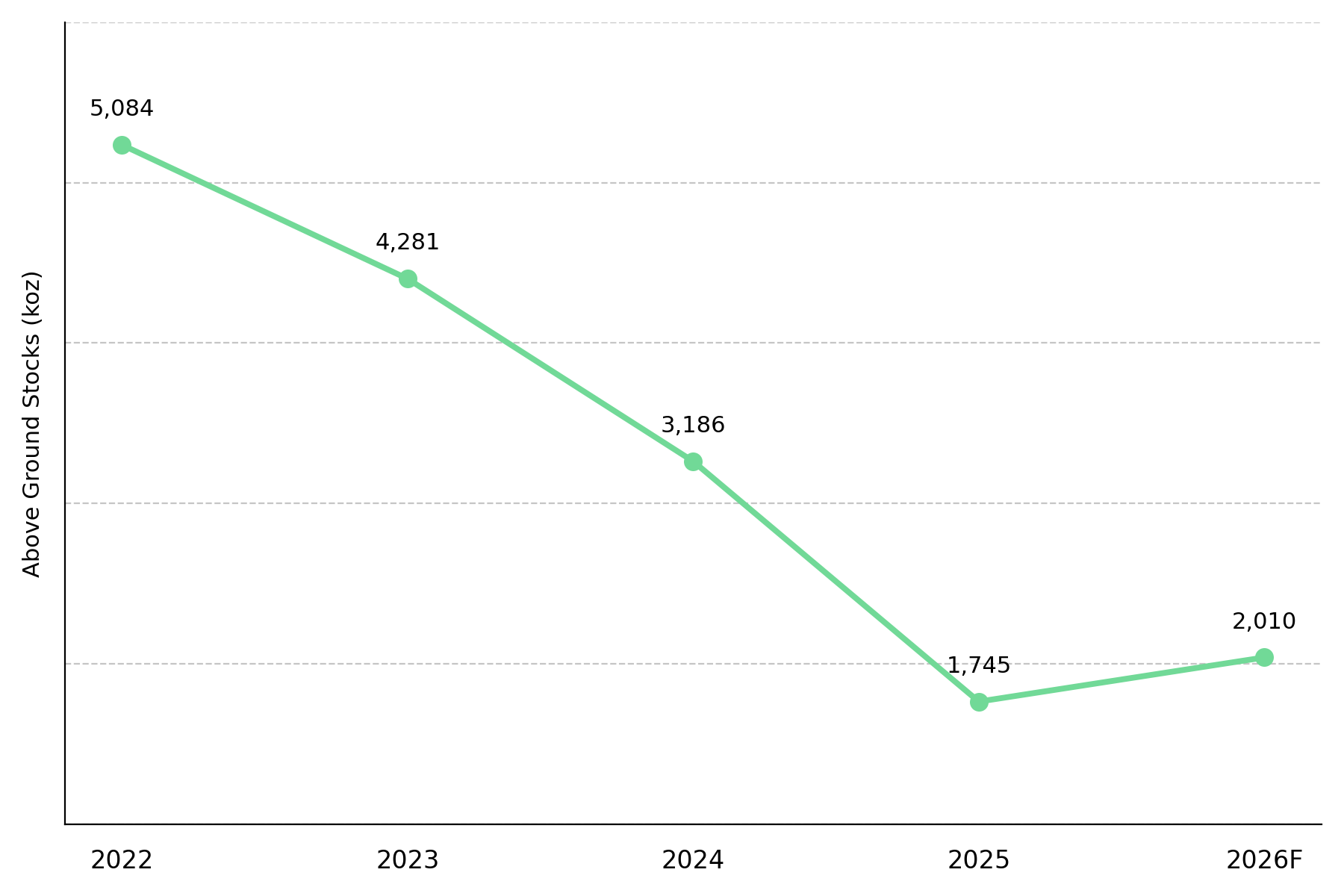
Within 2026, the platinum market moves from a 548,000-ounce surplus in the first half to a forecast 283,000-ounce deficit between July and December. Above-ground stocks would cover around 14 weeks of demand, leaving platinum prices sensitive to supply disruptions or a recovery in industrial and jewelry consumption.
Shared Orebodies Extend Platinum's Supply Problem Across the PGM Basket
Across South African and Zimbabwean deep-level mines and Russian nickel-linked operations, platinum is typically recovered alongside palladium and rhodium from shared orebodies and processing circuits. WPIC and USGS report lower ore grades in Russia and Zimbabwe, together with higher deep-level mining costs and power disruptions in South Africa, which can constrain co-produced palladium and rhodium supply alongside platinum.
Mine Constraints Push New Supply Toward Explorers
Lower ore grades, deep-level mining costs, and power disruptions limit output from existing operations, keeping WPIC’s forecast for 2026 mine supply flat at 5,551,000 ounces. Expanding supply therefore requires funding deeper development at existing mines or moving new deposits through drilling to define resources, metallurgical testing, economic studies, and permitting, increasing the time and capital needed before production can begin.
In Brazil, drilling that expands defined PGM resources can strengthen the pipeline of future supply outside the concentrated South African and Russian production base. Drilling beyond existing resource boundaries can support resource growth and advance a project toward economic assessment.
ValOre Metals has more than 6,000 meters of drilling across five new zones at its 100%-owned Pedra Branca PGM project that remains outside the 2022 inferred resource, giving the planned third-quarter 2026 update potential to expand the defined mineral base. This drilling upside complements an existing 2.2-million-ounce platinum, palladium, and gold resource and could strengthen Pedra Branca’s position among the limited number of PGM development projects globally.
Nick Smart, Chief Executive Officer of ValOre Metals, explains why limited PGM supply strengthens viable projects:
“You've got this growing demand and real limitations in terms of bringing more metal on, and so few projects. If you've got a viable, good project, that should give you a strong tailwind to be able to get that into production. You've got a compelling driver in terms of market pull.”
Demand & Recycling Drive Surplus While Platinum Mine Supply Stays Flat
The forecast 2026 surplus is driven by lower investment demand and higher recycling rather than mine growth, yet WPIC projects a 283,000-ounce deficit in the second half. USGS linked South Africa’s 2025 decline to deep-level mining costs and power disruptions, while lower grades and ore recovery reduced Russian output. These mine-level constraints mean the forecast surplus does not remove the need for replacement supply.
Quarterly PGM balances can change with investment flows and recycling, while mine supply depends on existing operations and projects advancing toward development. Lower grades and higher costs constrain current mines, making resource expansion and economic studies the milestones that indicate which undeveloped projects can contribute future supply.
The Investment Thesis for Platinum
- Platinum’s forecast 2026 surplus is driven by lower investment demand and an 8% increase in recycling, while mine supply stays flat, leaving the balance dependent on demand and scrap flows rather than new production.
- Producers operating aging, deep level mines in the leading supply countries face rising electricity and input costs that limit their ability to expand output even as prices recover, keeping incumbent supply inelastic to price.
- Above ground inventories remain thin even after the forecast surplus, leaving the platinum market sensitive to any renewed disruption or recovery in industrial and jewellery demand.
- Because platinum, palladium, and rhodium are extracted from the same aging ore bodies, the cost and depletion pressures facing platinum producers extend across the wider PGM basket.
- Limited PGM deposits and lengthy development timelines make metallurgical testing, economic studies, and permitting important valuation milestones for projects that could add supply as existing mines face lower grades and higher costs.
- PGM projects outside South Africa, Zimbabwe, and Russia can diversify future supply, while drilling beyond current resource boundaries and progress toward economic studies provide measurable development milestones.
Platinum’s forecast 2026 surplus does not remove the longer-term need for replacement supply because it reflects changes in investment demand and recycling rather than growth in mine output. Lower ore grades, deep-level mining costs, and power disruptions continue to limit production from existing mines. The longer-term PGM outlook therefore depends on which undeveloped resources advance toward production, making development progress more consequential than any single year’s market balance.
TL;DR
Platinum is forecast to record a 265,000-ounce surplus in 2026, but the shift reflects lower investment demand and higher recycling rather than new mine capacity. Mine supply remains flat as lower grades, deep-level mining costs, and power disruptions constrain major producing countries. Above-ground stocks recover to only 3.4 months of demand, leaving prices sensitive to disruptions or renewed industrial and jewelry consumption. Because platinum, palladium, and rhodium share orebodies and processing infrastructure, these constraints affect the wider platinum group metal market. Future supply increasingly depends on undeveloped resources advancing through drilling, metallurgical testing, economic studies, and permitting, making project progress a more durable signal than the annual market balance.
FAQs (AI-Generated)
Analyst's Notes





Subscribe to Our Channel







Stay Informed


