




ValOre Completes Uranium Restructure as Precious Metals Focus Sharpens But the Athabasca Exposure Has Not Disappeared


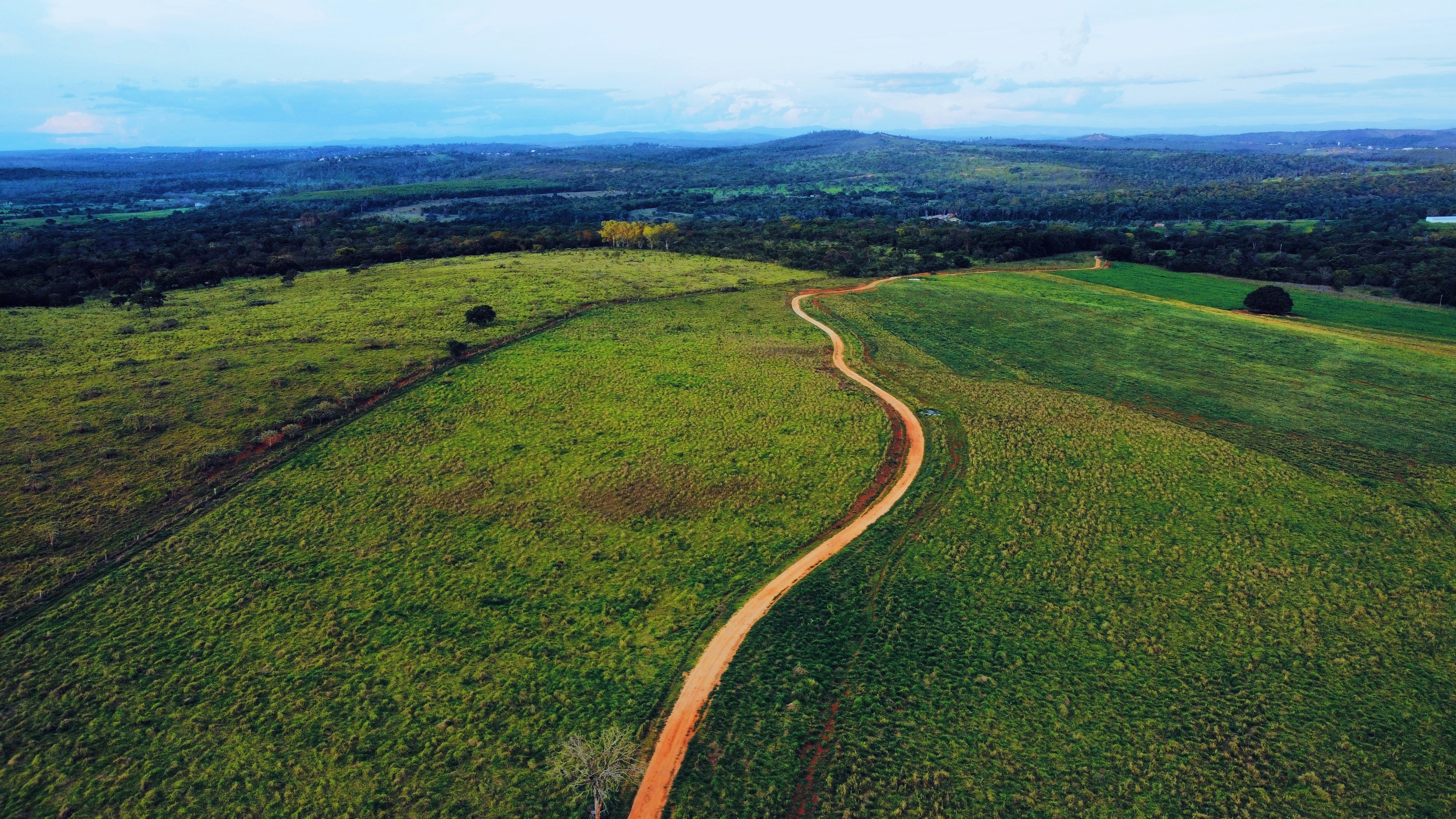
Pedra Branca PGM and Gold projects unite into a 100,000-hectare Brazil district as ValOre converts Hatchet uranium assets into Future Fuels equity.Pedra Branca PGM and Gold projects unite into a 100,000-hectare Brazil district as ValOre converts Hatchet uranium assets into Future Fuels equity.
- ValOre Metals completed the transfer of Hatchet Uranium Corp. to Future Fuels Inc. on May 29, 2026, converting a private uranium subsidiary into a publicly listed equity stake rather than exiting uranium exposure entirely.
- The deal was structured as an all-equity exchange with no cash consideration, leaving ValOre as a significant shareholder of Future Fuels with indirect access to an Athabasca Basin uranium portfolio spanning approximately 97,674 hectares across 5 project areas in northern Saskatchewan.
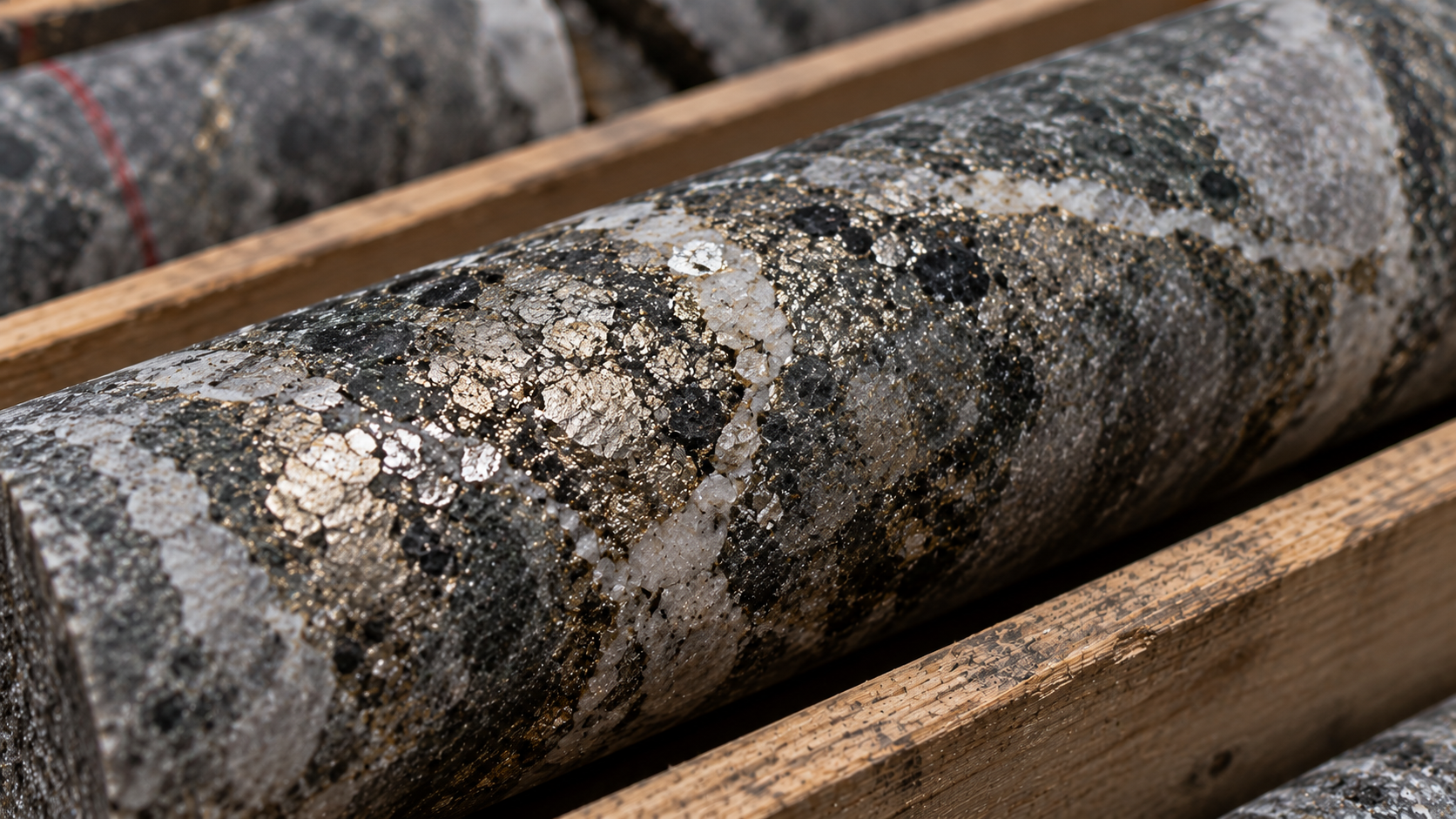
- ValOre's combined Pedra Branca PGM and Pedra Branca Gold projects now form a 100,000-hectare precious metals district in Ceará State, Brazil, with the PGM project carrying an independently verified resource of over 2.1 million ounces of platinum, palladium, and gold.
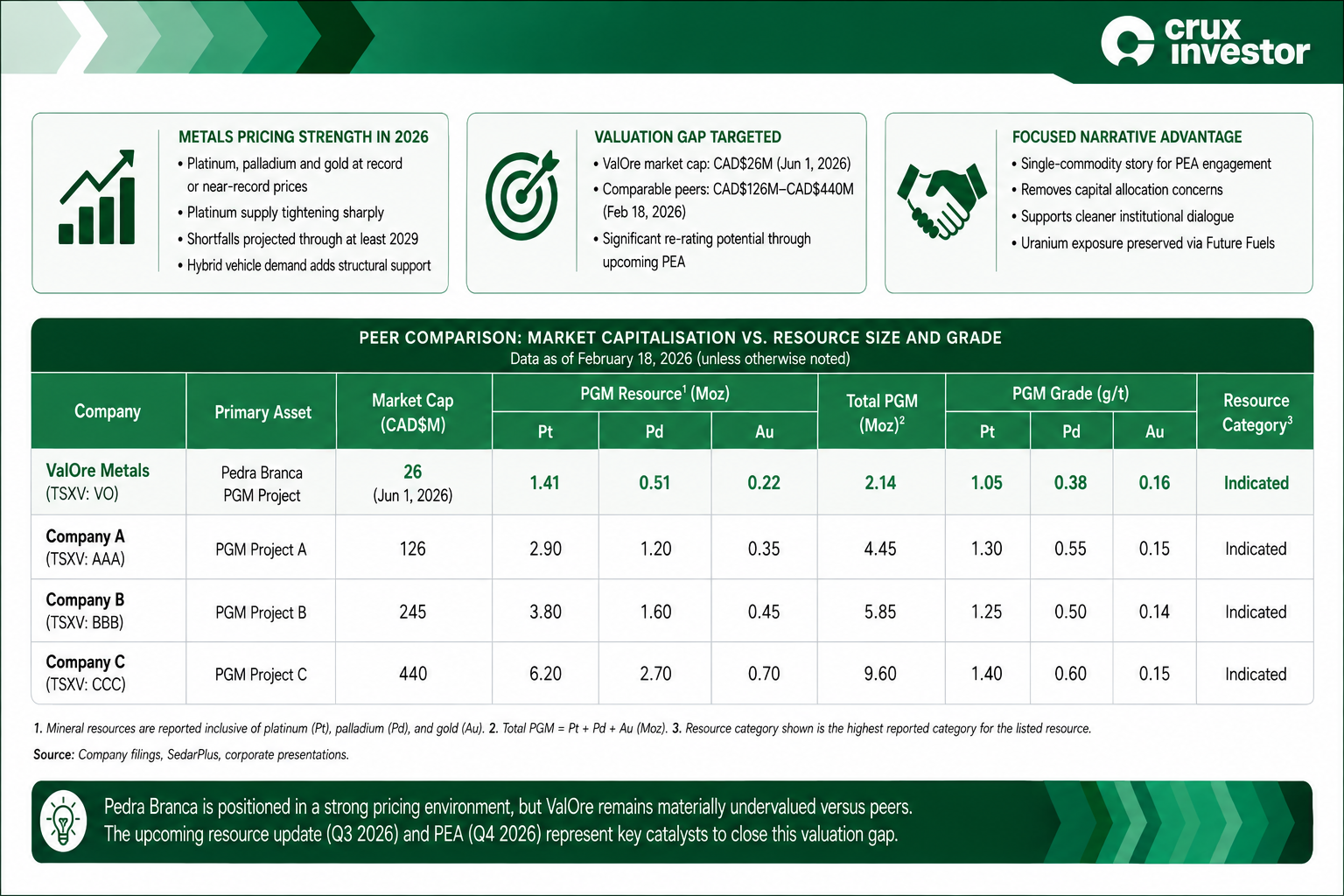
- All 3 metals hosted at Pedra Branca hit record or near-record prices in 2026, yet ValOre's market capitalisation of CAD$26 million as of June 1, 2026, sits well below comparable peers that carried market values ranging from CAD$126 million to CAD$440 million as of February 18, 2026.
- The Future Fuels equity position is subject to a staggered escrow release running up to 36 months from closing, creating a multi-year window during which ValOre retains uranium market exposure alongside its precious metals development story.
Opening Briefing
ValOre Metals (TSX-V: VO | OTCQB: KVLQF | FSE: KEQ0) closed a structural reorganisation of its uranium holdings on May 29, 2026, transferring Hatchet Uranium Corp. (HUC) to Future Fuels Inc. through a three-cornered amalgamation. The deal, pursuant to an amalgamation agreement dated February 25, 2026 and originally announced via joint news release on February 26, 2026, converts ValOre's majority ownership of a private uranium subsidiary into a publicly listed equity position in Future Fuels. The company framed the move as a strategic pivot toward its core precious metals district in northeastern Brazil, while management language in the joint press release acknowledged that ValOre will emerge as a "significant shareholder" of Future Fuels. For investors reading this as a clean commodity exit, the transaction structure tells a more layered story.
A Pivot, With Strings Attached
The conventional read of this transaction is straightforward: ValOre exits uranium, doubles down on platinum, palladium, and gold, and simplifies its story for a market that increasingly rewards focus. That reading is not wrong, but it is incomplete.
What ValOre has actually done is exchange private, illiquid uranium exposure for public, exchange-traded uranium equity. HUC's assets, 5 project areas in northern Saskatchewan including the Hatchet Lake, Highway, CBX/Shoe, Usam, and Genie properties, did not cease to exist. They moved into a vehicle with a TSXV listing, a separate management team, and a growing portfolio that also includes the Hornby Basin project in northwestern Nunavut. The practical effect is that ValOre shed operational responsibility for uranium exploration while retaining financial participation in the outcome.
Under the amalgamation terms, each HUC share was exchanged for a fixed ratio of Future Fuels common shares, with warrants converted on the same basis. Immediately prior to closing, a convertible debenture held by a financial consultant automatically converted into HUC shares, bringing total HUC shares outstanding to 19,715,165 before the exchange was applied. ValOre received no cash.
Chairman and Chief Executive Officer of ValOre Metals, Jim Paterson, framed the intent directly:
"In 2024, ValOre formed a plan to derive value from its Saskatchewan uranium exploration project in order to focus on its 100% held Pedra Branca PGM property located in Brazil. Upon closing of this transaction, ValOre will become a significant shareholder of Future Fuels Inc., a company with a strong team, a large and prospective project portfolio, and a highly financeable corporate structure."
The framing is notable. ValOre is not describing an exit. It is describing a transformation in the form of its exposure.
What the Escrow Structure Actually Creates
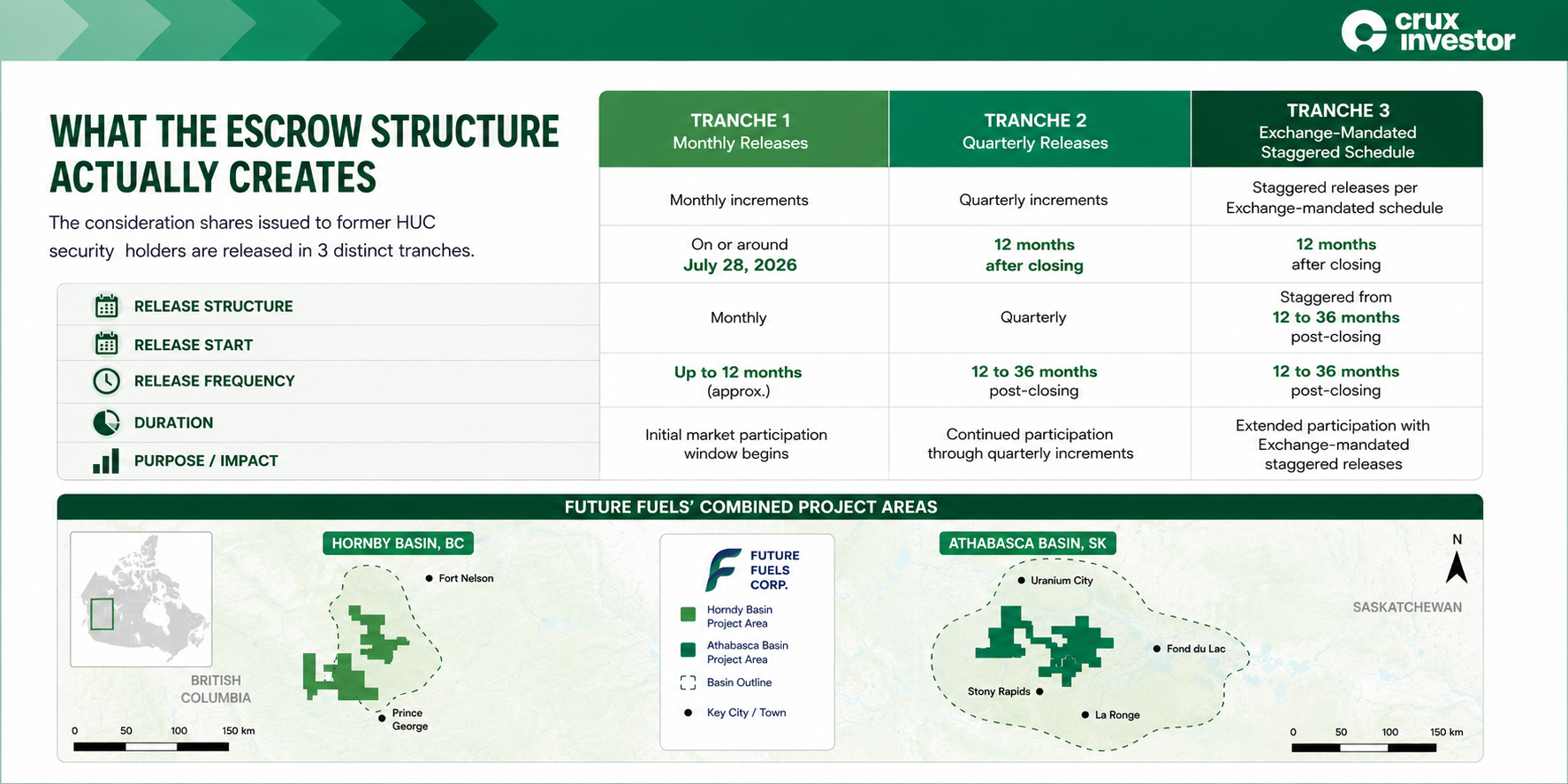
The consideration shares issued to former HUC securityholders are released in 3 distinct tranches. The first covers a portion of shares releasing in monthly increments beginning on or around July 28, 2026. The second releases in quarterly increments beginning 12 months after closing. The third follows an Exchange-mandated staggered schedule running from 12 to 36 months post-closing.
For ValOre, this creates a multi-year window of uranium market participation it did not fully relinquish. If uranium equities re-rate during the release period, whether driven by supply tightening, utility contracting cycles, or renewed policy support for nuclear energy, the value of the Future Fuels stake could appreciate before ValOre has the option to monetise it. There is also a potential funding angle: if Future Fuels' market value rises as exploration progresses and shares begin releasing from escrow, ValOre could in principle sell down that position to fund Pedra Branca development activity, without issuing new ValOre shares. Whether management pursues that path or treats the Future Fuels stake as a longer-term holding remains to be seen, but the optionality exists.
A District, Not Just a Deposit
The strategic logic behind ValOre's repositioning is grounded in a real gap between where the company's assets sit and where the market is currently pricing them, but it also rests on a part of the Pedra Branca story that has received less attention than the headline PGM resource.
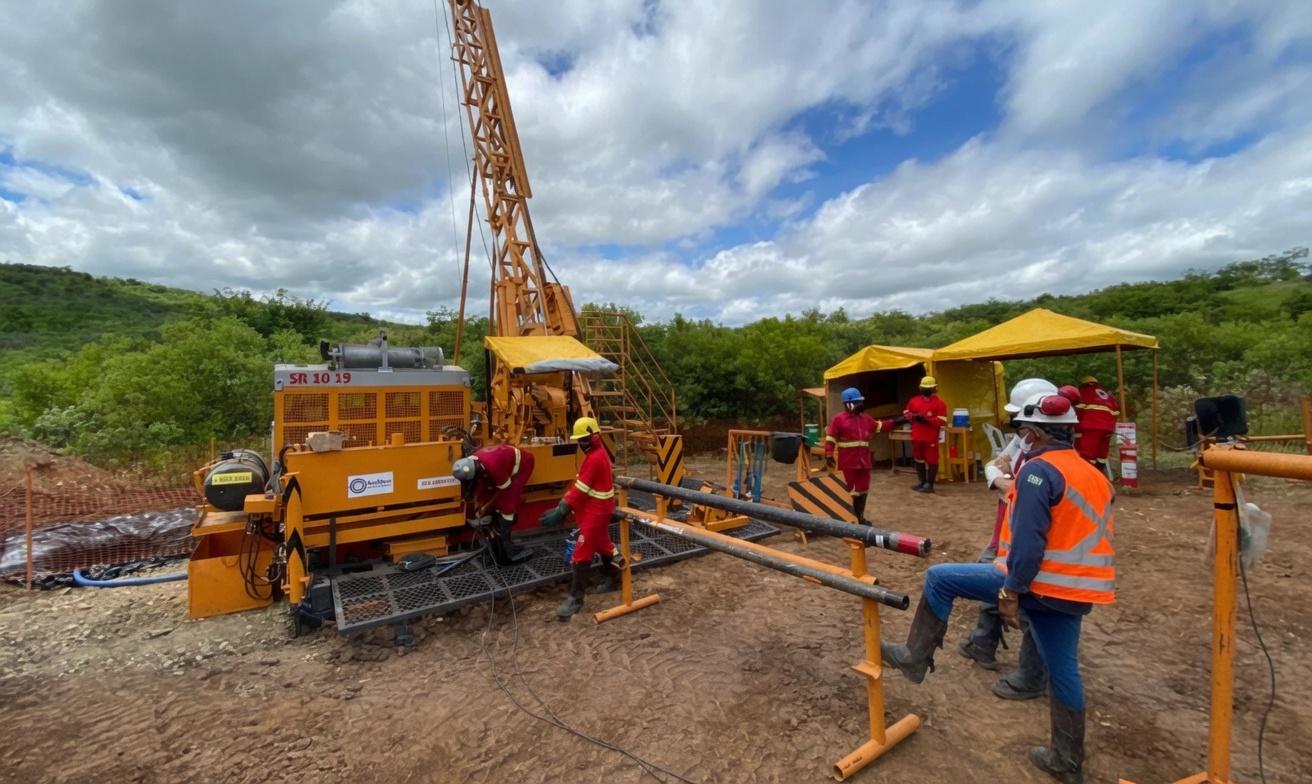
ValOre's PGM project, which independently verified geologists estimated holds over 2.1 million ounces of platinum, palladium, and gold, is no longer the company's only asset in the area. ValOre also brought in a separate gold project, the Pedra Branca Gold Project, through a combination with South Atlantic Gold Corporation. The 2 projects together form a 100,000-hectare precious metals district in Ceará State, Brazil. ValOre's Brazilian exploration team has worked the PGM side of that district for years, having completed more than 23,000 metres of drilling on top of 30,000 metres of historical drilling, along with trenching and soil sampling programs that helped define the existing resource.
The rationale for combining the 2 projects centres on shared infrastructure. ValOre's operational base in Capitão Mor is positioned to service both the gold and PGM properties, allowing personnel, logistics, and field support to be shared across what would otherwise be 2 separate exploration efforts.
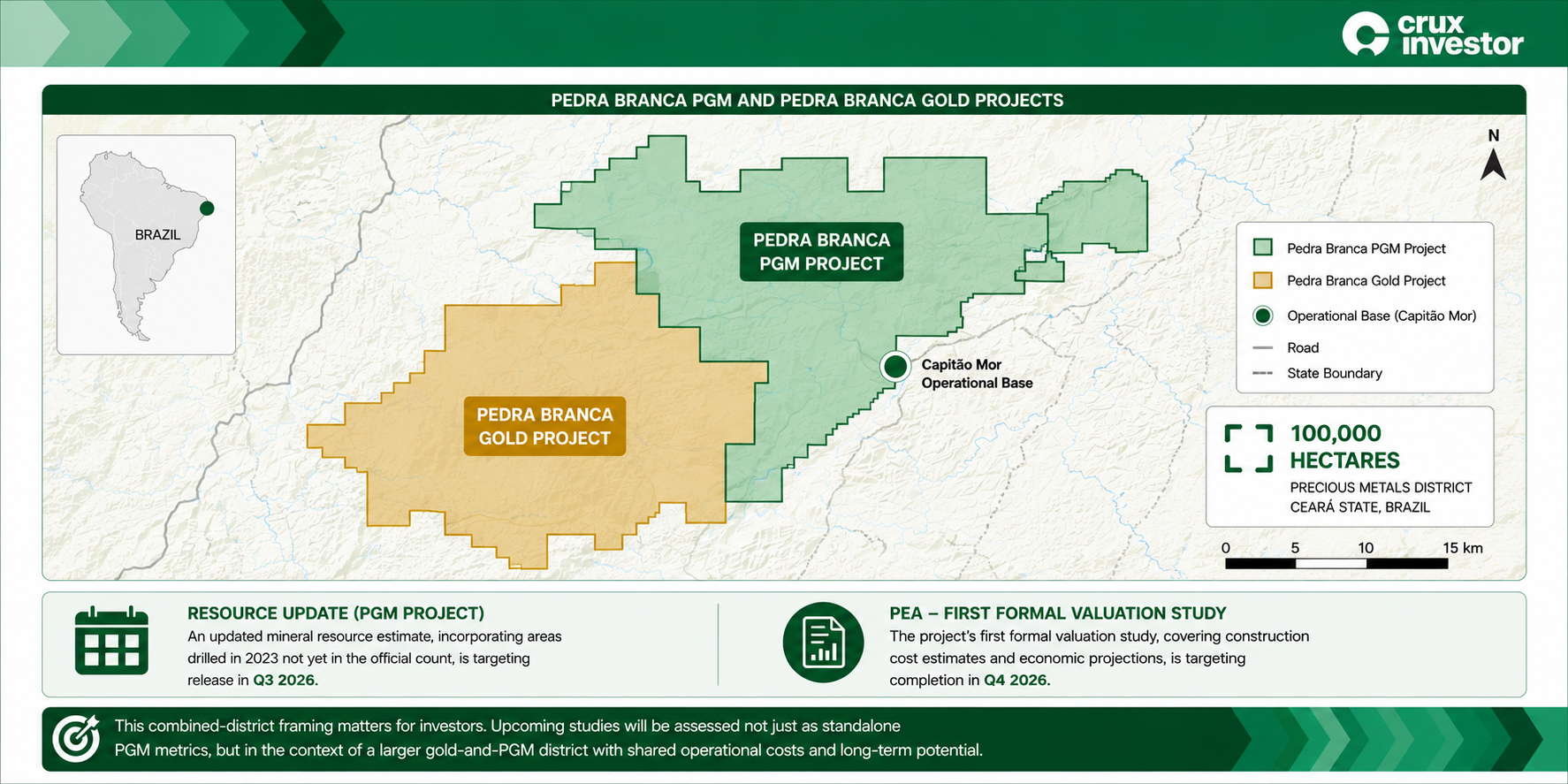
This combined-district framing matters for how investors should read the upcoming resource update and PEA. An updated mineral resource estimate for the PGM project, incorporating areas drilled in 2023 not yet in the official count, is targeting release in the third quarter of 2026. The project's first formal valuation study, covering construction cost estimates and economic projections, is targeting completion by the fourth quarter of 2026. Both studies are likely to be assessed by the market not just as standalone PGM metrics, but in the context of a larger gold-and-PGM district with shared operational costs.
The Pedra Branca Context
All 3 metals hosted at the PGM project hit record or near-record prices in 2026, with platinum supply tightening sharply and shortfalls projected through at least 2029. Demand from hybrid vehicle manufacturers, the fastest-growing segment of global new vehicle sales, adds a structural demand component to what might otherwise look like a purely cyclical price move. Against that backdrop, ValOre's CAD$26 million market capitalisation as of June 1, 2026, against comparable peers carrying CAD$126 million to CAD$440 million as of February 18, 2026, points to a gap that management is now directly targeting through the PEA process.
A company presenting a maiden PEA to institutional investors benefits from a clean, single-commodity narrative. A uranium subsidiary, even a private one, introduces questions about capital allocation and strategic coherence that can delay the kind of institutional engagement that re-ratings typically require. The Hatchet transfer removes that complication from the conversation even as it preserves financial exposure to uranium in a different form.
What the Deal Signals for the Sector
The structural approach ValOre took with its uranium holdings reflects a broader pattern in junior mining. Companies sitting on multi-commodity portfolios are under increasing pressure to disaggregate, either through spin-outs, option agreements, or asset-for-equity exchanges that preserve financial upside without requiring management to run 2 operationally distinct businesses. The pressure is partly investor-driven: funds increasingly prefer focused single-commodity stories that are easier to model and easier to exit.
Future Fuels is absorbing a Saskatchewan portfolio that positions it alongside Athabasca Basin operators in one of Canada's most established uranium jurisdictions, while retaining its primary Hornby Basin focus.
Rob Leckie, Chief Executive Officer of Future Fuels, noted that the Athabasca assets:
"Afford us a more extended field season, allowing our teams to maintain operational momentum and advance exploration activities throughout much of the year.”
A logistical advantage over remote Arctic projects where the working season is compressed. The transaction also highlights the increasing role of non-cash, equity-based deal structures in junior mining, allowing companies to restructure portfolios without cash outflows or direct share dilution.
What to Watch Next
The updated PGM mineral resource estimate, targeting a third quarter 2026 release, is the most immediate catalyst. A higher ounce count would strengthen the case for a market re-rating ahead of the PEA. The PEA itself, targeting the fourth quarter of 2026, is the single most important near-term milestone for the stock, and will be the first published economic framework investors can use to assess the project against peers.
On the uranium side, Future Fuels' field programs across both Saskatchewan and Nunavut will determine whether the equity ValOre holds appreciates with broader uranium markets or underperforms on exploration risk. The first scheduled release of consideration shares, beginning on or around July 28, 2026, will signal whether ValOre treats the Future Fuels stake as a near-term funding resource or a longer-term call option on uranium. On the gold side of the Pedra Branca district, investors should watch for updates on the regional reconnaissance and follow-up exploration program that ValOre planned to develop following the South Atlantic combination, which was intended to outline new drilling and trenching targets.
The second half of 2026 is shaping up as a period of meaningful news flow for a company that has spent much of the past 2 years quietly repositioning. The uranium chapter may be closing operationally, but financially it is still very much open, and the Pedra Branca story is now wider than a single PGM resource.
FAQs (AI-Generated)
Analyst's Notes





Subscribe to Our Channel







Stay Informed


