




US Puts Over $2 Billion Behind Critical Minerals, Accelerating Domestic Processing



US funding shifts critical-mineral value toward processing-ready PGM, REE, graphite, and rutile projects with qualified products and offtake.
- The White House’s August 7, 2026 announcement allocated more than US$2 billion to US mining and mining-related projects, including magnets, battery materials, and processing capacity, favoring projects that can convert mined material into customer-qualified industrial products.
- The International Energy Agency’s (IEA) Global Critical Minerals Outlook 2026 reports that China controlled 85% of rare earth refining in 2025, while diversified refining and magnet capacity could cover only two-thirds and one-third of projected mined supply by 2035, respectively.
- Concentrated platinum group metal (PGM) and magnet rare earth elements (REE) supply favors alternative projects, while graphite oversupply and rutile’s pigment exposure make costs and offtake decisive.
- Producers with operating infrastructure can convert policy support into revenue before developers and explorers, which still require proven metallurgy, permits, customers, and financing.
- Product specifications, binding offtake, and competitive processing costs indicate commercial viability more reliably than contained mineral resources alone.
US Funding Expands Processing Capacity, Favoring Financeable Critical Mineral Projects
Critical-mineral supply depends more than just mine output because manufacturers require separated, refined, and qualified products. The IEA’s 2026 project pipeline shows refining and manufacturing capacity lagging planned mine supply, making downstream conversion the principal commercial constraint. This bottleneck directs government funding toward processing even as subdued graphite prices and opaque rutile pricing limit broad commodity re-ratings.
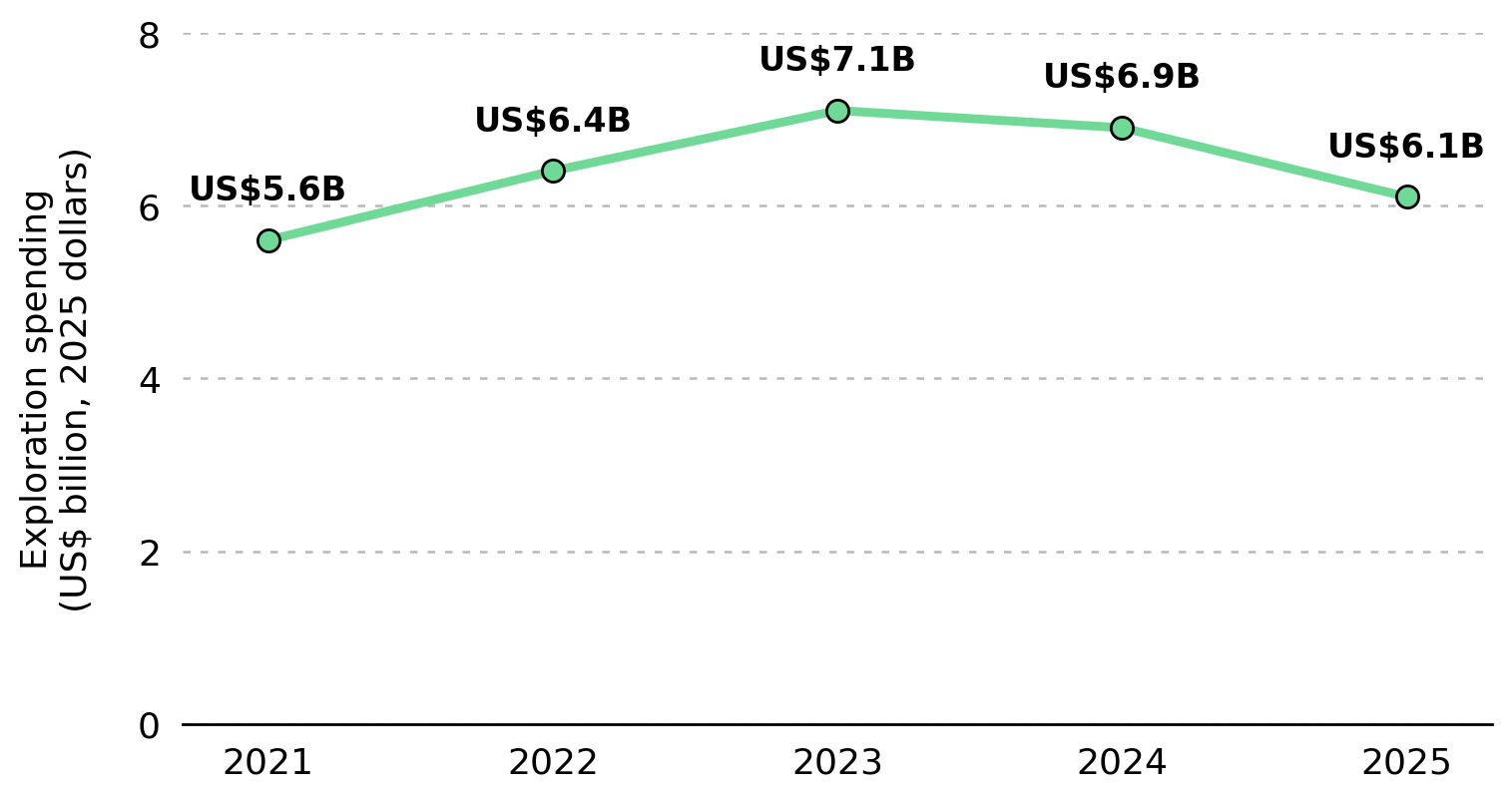
The IEA reported that sector investment declined 9% in 2025, while exploration spending fell by more than 10%. Price volatility, geopolitical risk, and higher construction costs raised financing thresholds, restricting capital for pre-revenue projects. This decline favors producers with operating cash flow and developers with completed economic studies over explorers without demonstrated project economics.
Public Finance Backs Processing Capacity, Favoring Permitted Projects With Qualified Products
On August 7, 2026, the White House announced more than US$2 billion for mining and mining-related projects, plus more than US$180 million for mining education and workforce development. The package included US$150 million for rare-earth-free magnets, US$400 million for an integrated scandium chain and US$25 million for the Coosa graphite deposit and associated Alabama processing capacity. These allocations favor projects linked to processed materials and manufacturing capacity over deposits without defined processing routes.
The IEA’s Global Critical Minerals Outlook 2026 reports that public finance commitments in advanced economies reached approximately US$65 billion in 2025, more than 4 times the 2023 level. This capital cannot diversify supply until funds are disbursed, facilities are completed, and products meet customer specifications. The gap between commitments and operating supply favors companies with permits, proven processing, and contracted customers over deposits requiring several unfunded development steps.
China’s REE Refining Dominance Limits Supply Options, Favoring Integrated Non-Chinese Capacity
China’s July exports rose 23.9% year over year, while high-technology exports increased 40.7% during the first 7 months of 2026. REE export volumes declined in July while export value increased 58%, showing that lower shipments coincided with higher aggregate export revenue. Product-level data must confirm whether controlled REE products or magnets caused the decline before the figures support higher valuations for non-Chinese capacity.
Refining Gaps Limit Mine-Led Diversification, Raising Non-Chinese Project Costs
The IEA reports that China’s share of rare earth refining declined from more than 90% in 2023 to approximately 85% in 2025 as US and Malaysian output increased. If announced projects proceed as scheduled, China’s share could fall to 70% by 2035, while diversified refining would cover only two-thirds of projected mine output and magnet production only one-third. New mines can therefore increase concentrate availability without removing dependence on Chinese conversion technology or magnet manufacturing.
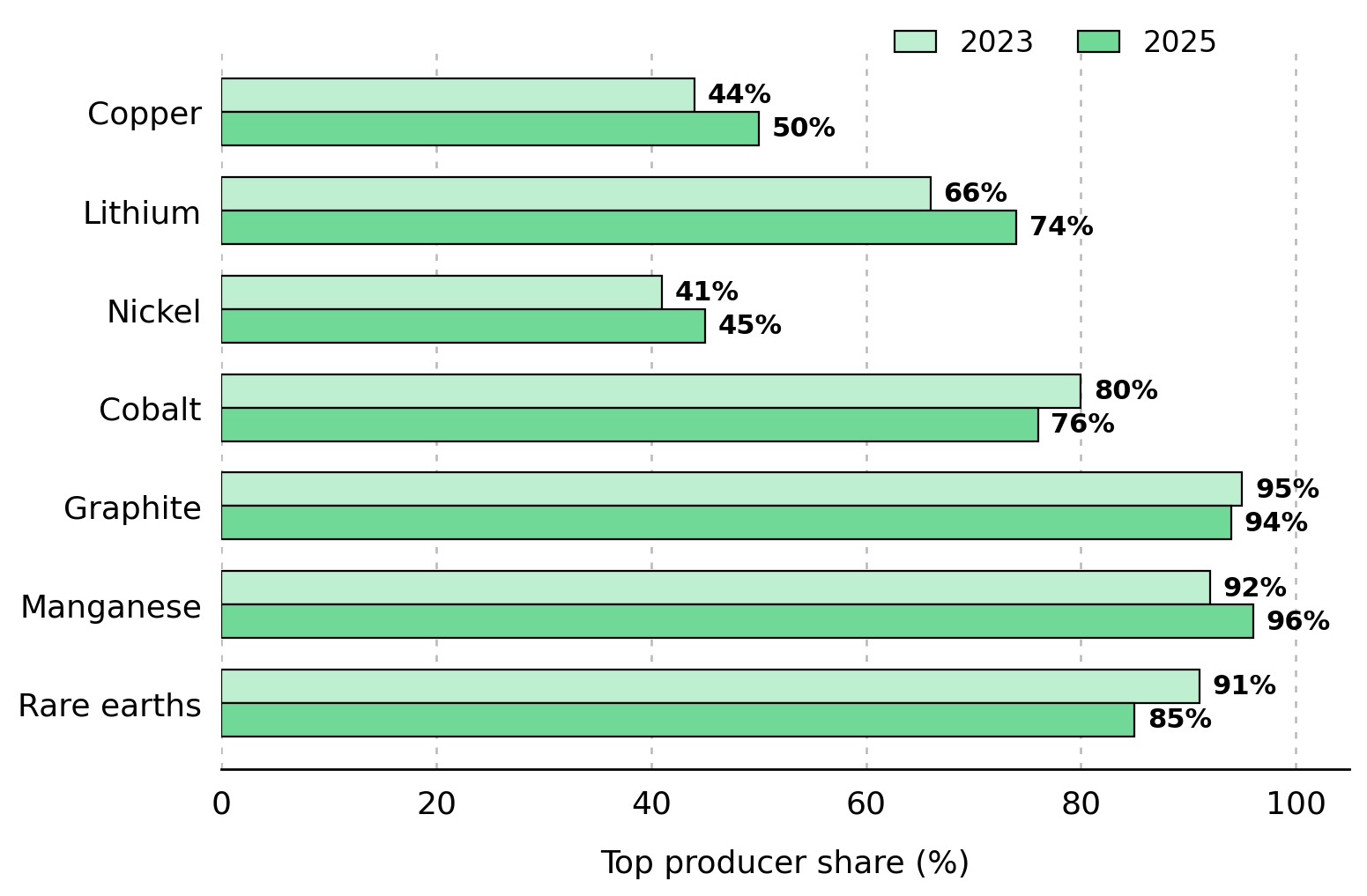
Refining projects outside the dominant supplying country face capital costs 20% to more than 150% higher and operating costs approximately 50% higher than projects inside it because of feedstock and energy expenses. Grants and concessional loans can reduce upfront costs, while price floors, offtake backstops and customer commitments can reduce price and volume risk.
Operating Cash Flow Advances REE Integration, Supporting Commercial Readiness
Positive operating cash flow can fund engineering, plant expansion, and customer qualification while reducing reliance on equity issuance. This flexibility can help integrated REE products reach commercial markets sooner.
Energy Fuels reported US$996 million of working capital, providing substantial capacity to advance its REE expansion. The company is connecting Australian monazite with separation at the White Mesa Mill and downstream metal, alloy, and magnet production. Its proposed US$1.9 billion acquisition of Vacuumschmelze (VAC) would add an operating South Carolina plant with 2,000 tonnes of annual magnet capacity, scalable to 12,000 tonnes, positioning the company to capture more value across the mine-to-magnet supply chain. Mark Chalmers, President and Chief Executive Officer of Energy Fuels, highlights buyer demand for non-Chinese REE supply:
“A lot of the off-takers are also wanting non-China supply, ex-China. There’s an option there with regard to supplying them with floor prices, and then you’ve got the US government in the mix.”
Commodity Balances Split Price Support, Making Project Economics Decisive
Critical minerals do not share one supply-demand balance, so policy support cannot justify uniform price or valuation assumptions. Concentrated production of PGM and refining of REE increase supply risk, while graphite oversupply and rutile’s reliance on pigment demand limit broad price support. Processing quality and development stage therefore determine whether an asset can reach production at competitive costs.
South Africa supplied approximately 70% of mined platinum in 2025, while Russia supplied about 12% of platinum and 45% of palladium, according to the IEA. Recycling rose 17% in 2025 but only partially offset lower mine output from major producers, keeping supply concentrated. Platinum traded at US$1,740.37 per ounce and palladium at US$1,365.60 per ounce on August 11, while declining internal-combustion-engine demand limits long-term palladium consumption.
Explorers outside major producing regions can attract funding from governments and companies seeking alternative supply. However, inferred resources carry greater geological uncertainty, and contained ounces alone do not prove recoverable metal or profit. Metallurgical testing, higher-confidence resources, and a Preliminary Economic Assessment (PEA) are needed to support valuation comparisons, while equity funding reduces existing ownership.
ValOre Metals outlines a 51,096-hectare PGM district in Ceará, Brazil, containing an inferred resource of 2.198 million ounces of platinum, palladium, and gold within 63.3 million tonnes grading 1.08 grams per tonne. Five zones drilled in 2023 remain outside that estimate, supporting a targeted resource update in the third quarter of 2026. A targeted PEA in the fourth quarter of 2026 would provide the project’s first economic assessment, creating 2 milestones that could strengthen Pedra Branca’s development case. Thiago Diniz, Vice President of Exploration at ValOre Metals, explains why geographic concentration supports alternative PGM projects:
“I think palladium-platinum is well known and produced only in certain regions of the globe. Being able to advance a project outside of that small space is actually an opportunity.”
Graphite Oversupply Caps Prices, Favoring Low-Cost By-Product Projects
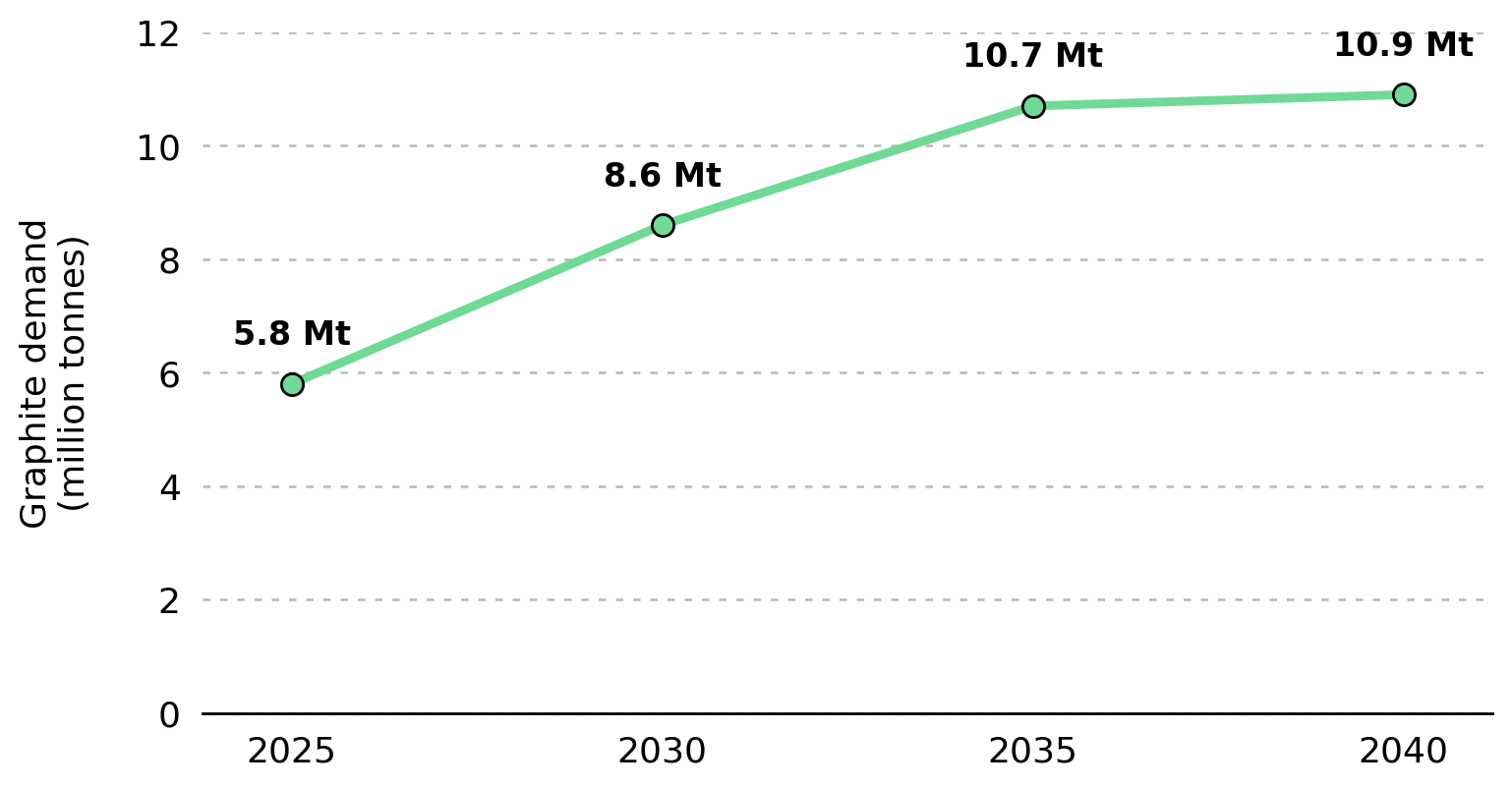
Graphite prices remain subdued because Chinese producers retain idle synthetic-graphite capacity within an oversupplied market. Its outlook places 2035 demand at nearly twice the 2025 level, but China controls more than 90% of processed output and accounted for virtually all supply growth from 2023 to 2025. Policy funding can support selected Western facilities, but it does not remove price and margin risk for high-cost flake-graphite developers.
Developers with a Definitive Feasibility Study (DFS) give lenders a base case for project value, returns, costs, and mine life. These results depend on prices, recoveries, freight, and production ramp-up. Binding offtake agreements can support debt financing by defining enforceable pricing, product specifications, and delivery terms.
Sovereign Metals presents DFS steady-state production of 275,000 tonnes per annum of graphite grading 96% total graphitic carbon and 222,000 tonnes per annum of natural rutile grading at least 95% titanium dioxide. On a 100%-project, real, pre-tax basis, the DFS reports a net present value at 8% discount rate (NPV8%) of US$2.204 billion, a 23% IRR, and US$727 million of capital to first production, giving Kasiya a 3-times NPV-to-capital ratio and exposure to 2 critical-mineral markets. Ben Stoikovich, Chairman of Sovereign Metals, quantifies graphite resource abundance against current demand:
“Graphite isn’t scarce. In 2023, natural graphite demand was 1.6 million tonnes, but global known resources were over 800 million tonnes, so there’s enough resources known in the world for 500 years of supply.”
Aircraft Titanium Demand Supports High-Purity Rutile, but Pigment Dominance Limits Defense-Led Upside
Titanium can account for approximately one-third of some advanced military aircraft by weight, compared with 10% to 15% for passenger aircraft, supporting defense demand for high-purity rutile. However, the US Geological Survey (USGS) estimates that approximately 95% of titanium mineral concentrates are consumed in titanium dioxide pigments for paints, paper and plastics. Defense procurement can therefore support a premium segment, but pigment consumption remains the main volume driver for rutile.
China REE Exports & US$90 Brent Test Scarcity Premiums & Processing Margins
China’s product-level exports show whether restrictions are constraining raw materials, controlled heavy REE products, or finished magnets, while energy and freight costs determine whether diversified processors can compete with established suppliers.
China’s July Product-Level REE Data Clarifies Supply Restrictions, Guiding Capital Allocation
China’s detailed July REE and permanent-magnet trade data are due around August 20, with product-level volumes and destinations that aggregate figures exclude. A contraction in controlled REE-product or magnet shipments would strengthen the commercial case for qualified non-Chinese capacity. Higher shipments would reduce near-term scarcity premiums but leave the IEA’s projected refining and magnet-capacity gaps unresolved.
Assessing supply restrictions requires data on each product’s export volume, value, and destination. Higher value with lower volume may reflect prices, product types, or licensing rather than a heavy REE shortage. Capital decisions therefore require evidence that restrictions affect the materials and customers targeted by each project.
Higher Energy & Freight Costs Pressure Processing Margins, Favoring Low-Cost Facilities
Brent reached US$89.60 per barrel on August 12 as attacks on shipping raised regional freight and energy disruption risk. Higher diesel, electricity, and freight prices raise operating costs for mineral-sands handling, graphite purification, REE separation, and South African PGM production. Hydropower and existing logistics reduce energy and transport exposure, while by-product revenue can offset cost increases, favoring diversified projects over single-product developments requiring new infrastructure.
Government grants can lower initial capital requirements, but they cannot guarantee operating margins after commissioning. Cost resilience must come from ore characteristics, recovery rates, energy contracts, logistics, and saleable co-products. These variables determine whether policy-backed facilities remain profitable after grant funding is spent or commodity prices decline.
The Investment Thesis for Critical Minerals
- Producers with operating infrastructure, customer-qualified products, and sufficient liquidity can convert government support into revenue faster than pre-revenue companies, although construction and integration delays can postpone cash flow.
- Developers with completed feasibility studies, binding sales agreements, approved permits, and committed construction financing have a clearer path to construction and cash flow than projects supported mainly by critical-mineral classifications.
- Explorers require higher-confidence resources, metallurgical recovery data, and positive preliminary economic assessments before geological scale supports a defensible valuation, while limited cash can require equity issuance that dilutes existing ownership.
- Concentrated PGM production and REE refining favor projects outside dominant supply regions, but declining internal-combustion-engine demand and higher Chinese REE exports can weaken scarcity premiums.
- Graphite oversupply and rutile’s reliance on pigment demand favor projects with competitive costs, multiple revenue sources, qualified products, and binding sales agreements.
- Jurisdictional quality depends on permitting timelines, infrastructure, skilled labor, and access to capital because each factor affects construction schedules and project returns more directly than country reputation.
The critical-minerals outlook remains Neutral because concentrated PGM and REE supply is offset by graphite oversupply and rutile’s reliance on pigment demand. Government support strengthens the case for qualified non-Chinese processors and financeable developers, but it cannot replace competitive costs, binding offtake agreements, permits, and committed capital. Portfolio exposure should therefore favor companies capable of converting mineral resources into customer-qualified products and sustainable cash flow.
TL;DR
More than US$2 billion of US funding is prioritizing processing capacity, magnets, and battery materials over undeveloped mineral resources. China’s control of 85% of REE refining makes qualified non-Chinese capacity commercially important, while concentrated PGM production supports alternative supply. Graphite oversupply and rutile’s reliance on pigment demand require greater cost and customer selectivity. Producers offer the shortest route from public funding to revenue, while developers and explorers need feasibility studies, metallurgy, permits, binding offtake, and financing. The sector outlook remains Neutral, favoring projects that can convert resources into customer-qualified products at competitive costs.
FAQs (AI-Generated)
Analyst's Notes





Subscribe to Our Channel











Stay Informed



