

Weaker Dollar Lifts Gold 2.4%, Supporting Unhedged Producer Recovery


The post-election rebound improves bullion selling prices, while US payrolls could determine whether lower yields sustain the recovery.
- Spot gold rose 2.4% to US$4,021.68/oz on November 4, 2026, as Democratic congressional victories weakened the dollar, making bullion cheaper for overseas buyers.
- Central banks bought 321 metric tons in Q3, but today’s rebound followed dollar weakness, highlighting how currency moves can change bullion prices despite continued official buying.
- Gold fell below US$4,000 in October 2026 despite central bank buying, as Fed hike expectations made interest-paying assets more attractive.
- November 4 spot gold stood about 6% below the Q3 average, strengthening the case for producers that remain profitable at lower selling prices.
- The November 6 US payrolls report could shift Fed rate expectations; lower yields would support gold, while higher yields could limit producers’ revenue recovery.
Democratic Midterm Wins Lift Gold Through a Weaker Dollar
Spot gold rose 2.4% to US$4,021.68/oz after Democrats won both chambers of Congress, while December futures gained 2.3% to US$4,031.20. The dollar fell to a one-month low, making bullion cheaper for overseas buyers.
Gold had fallen almost 7% in October, dropping below US$4,000, and lost about 25% since the US-Iran conflict began in late February. Yet central banks bought a net 321 metric tons in Q3, their highest quarterly purchases since Q4 2024, showing official demand continued despite falling prices.
Higher Interest Rates Weigh on Bullion Despite Central Bank Buying
Central bank net purchases rose from 57.7 metric tons in Q1 to 296.3 in Q2 and 321.2 in Q3, while quarterly average gold prices fell from US$4,872.90/oz to US$4,506.30/oz and US$4,262.20/oz, respectively. Physically backed gold ETFs added 211 metric tons in Q3, lifting holdings to a record 4,256. Bar-and-coin demand fell 19% year over year to 268 metric tons, while jewelry demand dropped 17% to 313 metric tons, its weakest third quarter on record.
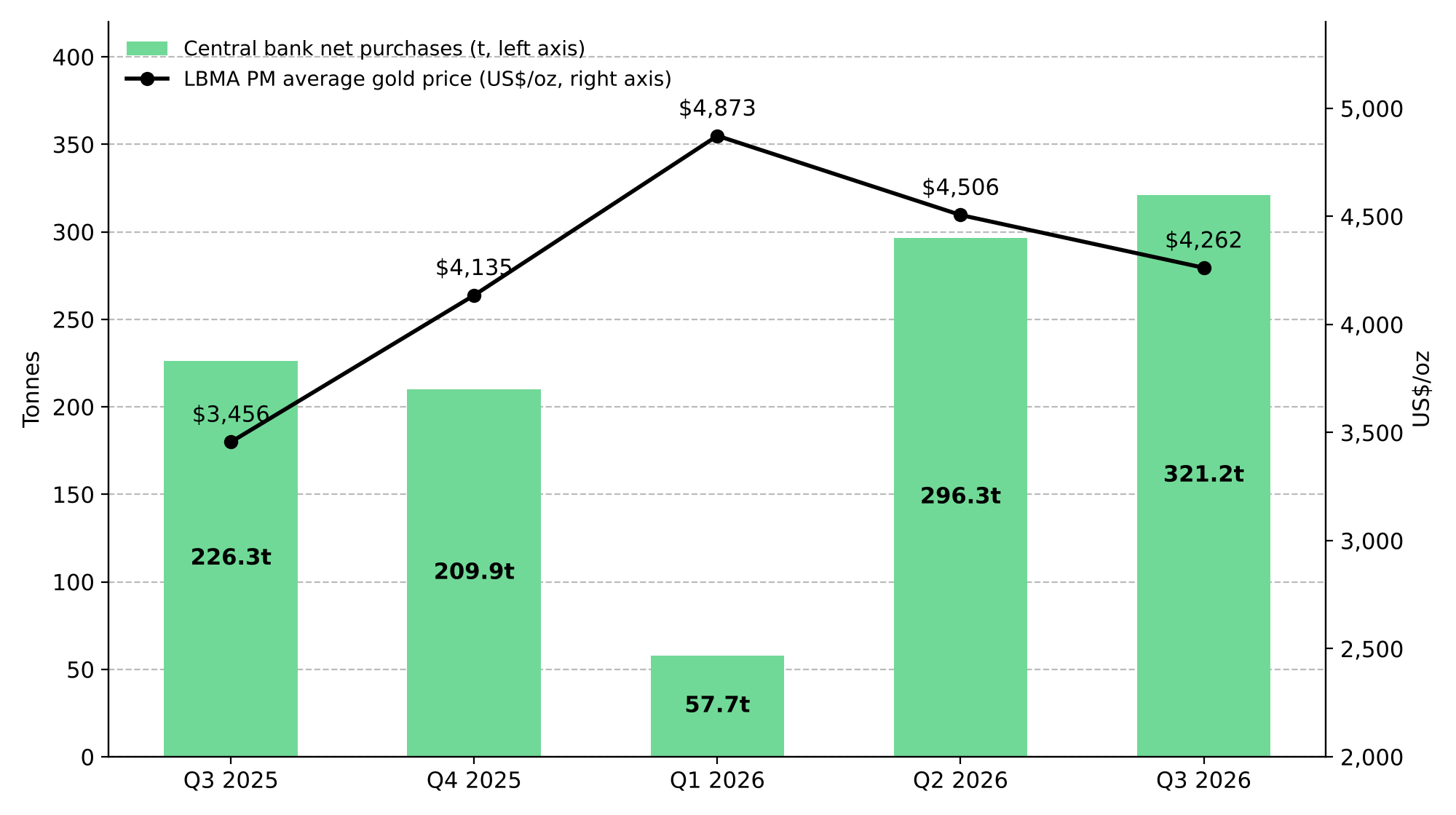
Higher interest rates make interest-paying assets more attractive than gold, while gold sales to cover losses on artificial intelligence (AI) holdings can deepen price declines. Central bank buying can support prices during selloffs, but cannot guarantee a price floor or protect producers’ margins.
Softer US Jobs Data Could Support Gold’s Recovery
Spot gold remained about 6% below the Q3 average, but producers’ Q4 realized prices depend on sales throughout the quarter. Louise Street, Senior Markets Analyst at the World Gold Council, said higher rates could weigh on gold through year-end, while geopolitical risk and financial stress could support demand.
Lower yields and a weaker dollar could support producers’ selling prices. Kyle Rodda, Senior Financial Market Analyst at Capital.com, said expectations that divided government would constrain US spending had lowered yields and the dollar, supporting gold. Strong jobs data could instead raise Fed hike expectations and pressure bullion.
Friday’s US payrolls report could shift rate expectations, while Q4 producer results will show realized prices and costs. A recovery above US$4,262/oz would improve prices on subsequent unhedged sales, but would not erase earlier sales at lower prices or guarantee a recovery in quarterly margins.
Lower Selling Prices Favor Producers With Lower Costs
Unhedged producers’ revenue per ounce falls with gold prices, while costs may adjust more slowly. Lower-cost operations therefore have more room to preserve profits during a downturn.
Producers that cover operating costs and sustaining investment below US$4,000/oz depend less on a price recovery to fund existing mines. Central bank buying can support gold, but provides no guaranteed price floor, making cash generation at lower prices a stronger basis for assessing potential value.
Friday’s payrolls report and US-Iran talks could shift gold prices through changes in rate expectations and geopolitical risk. Q4 results will show realized prices, hedging effects and costs, helping identify producers that preserved margins through the selloff.
What to Watch Before Counting on Gold’s Rebound
The official sector has become gold's most dependable buyer and still does not set its price. Central banks add on weakness and hold, while the price producers realise moves with rate expectations and the dollar day to day. Official demand gives the market depth, not a floor.
The weaker dollar gives unhedged producers a route to higher selling prices after October’s decline. Softer payrolls could reinforce that recovery by reducing Fed hike expectations, while stronger employment could reverse the support. Higher prices would improve revenue on subsequent sales, with the benefit to margins depending on costs.
Analyst's Notes





Subscribe to Our Channel








Stay Informed