




When Ounces Are No Longer the Question: How Large-Scale Deposits Graduate From Resource Stories to Mine Design Problems


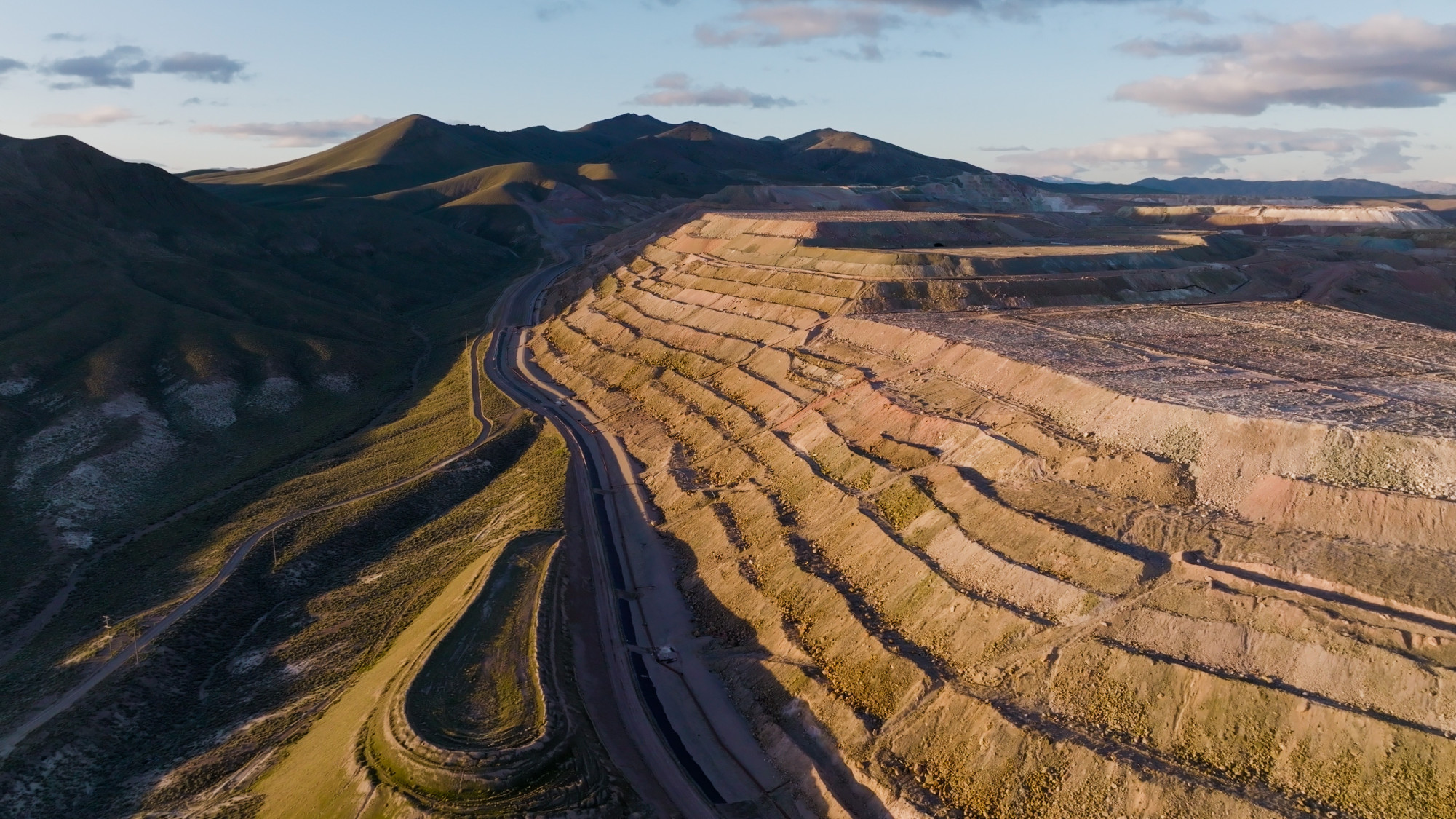
Hycroft Mining's June 2026 Initial Assessment establishes a 51-year mine plan targeting 15.1 million ounces gold equivalent and a post-tax NPV of $4.3 billion at base case prices.
- The Hycroft Mine in Nevada carries a 2026 Measured and Indicated Mineral Resource Estimate (MRE) of 16.4 million ounces of gold and 562.5 million ounces of silver, with a further 5.0 million ounces of gold and 132.8 million ounces of silver in the Inferred category
- A June 2026 S-K 1300 Technical Report Summary (TRS) and Initial Assessment establishes a 51-year mine plan targeting payable production of 10.4 million ounces of gold and 347.5 million ounces of silver, or 15.1 million ounces gold equivalent
- The base case post-tax net present value (NPV) at a 5% discount rate is $4.3 billion, rising to $10.0 billion at spot prices as of May 25, 2026, with a post-tax internal rate of return (IRR) of 16.9% and a payback period of 4.7 years
- The mine plan uses pressure oxidation (POX) to recover refractory sulfide mineralization, achieving mill recoveries of 82.8% for gold and 77.5% for silver, compared to 40.0% gold and 12.0% silver from the heap leach stream
- The TRS is an Initial Assessment under S-K 1300 and does not constitute a pre-feasibility or feasibility study, does not demonstrate economic viability, and does not support a development decision
Hycroft Mining Holding Corporation (NASDAQ: HYMC) is a US-based gold and silver company exploring and developing the Hycroft Mine in northern Nevada. There is a moment in the development of certain large-scale mining projects when the conversation quietly shifts. The resource is no longer the variable. The deposit has been drilled, modelled, estimated, and re-estimated, and the question that defines the next phase of investment is no longer geological. It is engineering, sequencing, and economic: how do you get those ounces out of the ground in a way that returns capital? The Hycroft Mine in northern Nevada has entered that second phase. The release of a TRS and Initial Assessment in June 2026, prepared by Ausenco Engineering South USA Inc., Independent Mining Consultants Inc., and WestLand Engineering & Environmental Services, Inc., provides, for the first time, a formal mine plan and economic framework for the project. It signals not so much a discovery as a reconfiguration: the project's resource credentials are not new, but the engineering architecture that defines how those resources might be extracted is.
The Resource Problem & the Engineering Answer
The Hycroft deposit, situated on the western flank of the Kamma Mountains approximately 54 miles west of Winnemucca in Humboldt and Pershing Counties, Nevada, has never lacked for scale. The 2026 MRE of 16.4 million ounces of gold and 562.5 million ounces of silver (Measured and Indicated) ranks it among the largest precious metals deposits in the world by contained ounces. The constraint has always been metallurgical: a significant proportion of the gold and silver is refractory, locked within sulfide minerals such as pyrite and marcasite that prevent direct cyanide contact. For deposits of this character, the engineering pathway to production is longer, more capital-intensive, and subject to greater technical uncertainty than for oxide or transitional systems amenable to straightforward heap leaching.
The June 2026 TRS resolves that question with a dual-stream processing design. Sulfide and transition mineralization is treated through flotation followed by POX of the concentrate, then cyanide leaching. Oxide material is directed to a run-of-mine heap leach. The mill is designed to process 57,100 tons per day of mineralised material over a 51-year mine life, with life-of-mine payable production of 10.4 million ounces of gold and 347.5 million ounces of silver, or 15.1 million ounces gold equivalent. The financial result is a post-tax NPV5 of $4.3 billion at base case prices ($3,600 per ounce gold, $48.00 per ounce silver) and $10.0 billion at spot prices as of May 25, 2026, with a post-tax IRR of 16.9% and a payback period of 4.7 years. Initial capital is estimated at $2.4 billion, with $3.1 billion in sustaining capital across the mine life.
What POX Commits the Project To
The selection of POX as the primary processing route is a direct consequence of the deposit's mineralogy, and it defines the project's economic character more than any other single design decision. Mill process recoveries of 82.8% for gold and 77.5% for silver are achievable through the POX circuit, compared to 40.0% gold and 12.0% silver from the heap leach stream. Without POX, the majority of the metal value in this deposit cannot be economically recovered. The trade-off is a substantially higher capital cost and operational complexity relative to conventional heap leach infrastructure, justified only by the scale and longevity of the resource base.
The mine plan is structured to leverage existing brownfield infrastructure at the site, including a crushing facility, existing heap leach pads, a North Merrill-Crowe processing facility, maintenance buildings, an assay laboratory, and site access roads. An east-west railway passes adjacent to the property, enabling a planned rail spur for reagent and fuel delivery. Additional transmission capacity of 160 megawatts (MW) will be required to support the new processing plant, including the POX oxygen plant. The first 10 years of the mine plan are projected to deliver average annual production exceeding 330,000 ounces gold equivalent, substantially above the 51-year life-of-mine average of 295,000 ounces gold equivalent per year, reflecting a sequencing strategy designed to maximise early NPV.
Optionality Not Yet in the Base Case
The TRS economic analysis does not capture several potential sources of upside. The Brimstone and Vortex high-grade silver systems, announced in 2023 and currently under active drilling with 2 core drill rigs increasing to 4 over the next quarter, remain open in all directions and at depth. The technical study notes that accelerated access to these high-grade zones early in the mine life, through targeted optimisation, could improve project economics beyond what the existing plan reflects. The potential integration of underground mining alongside the open pit is also identified as an option for bringing high-grade ounces forward. The current MRE covers less than 15% of the 64,000-acre land position, leaving the majority of the property undrilled. Roasting test work is also pending as an alternative processing option that could potentially add sulfuric acid as a third revenue stream.
Industry Outlook
Investors and analysts assessing the Hycroft TRS must be precise about its regulatory standing. Under S-K 1300, an Initial Assessment is a preliminary technical and economic study that demonstrates the economic potential of a deposit. It does not constitute a pre-feasibility or feasibility study, does not demonstrate economic viability in the legal or regulatory sense, and does not support a development decision. The material in the production schedule is potentially minable material and does not constitute mineral reserves. The $4.3 billion post-tax NPV is a measure of economic potential, not a bankable project valuation. The pathway from Initial Assessment to pre-feasibility, then feasibility, permitting, financing, and construction, involves further studies, decisions, and capital expenditures that will refine and potentially revise the numbers presented here.
The broader implication for the mining sector is that projects like Hycroft represent a specific analytical inflection point. A large resource estimate is necessary but not sufficient for investment value creation. The tools required to evaluate mine-design-stage projects (capital cost estimation, operating cost benchmarking, mine plan sensitivity to metal prices, sequencing optionality, permitting timeline) are different in character from those applied to early-stage exploration, and as more large undeveloped deposits move through this transition, the ability to evaluate projects on mine design merit, rather than resource size alone, will become an increasingly important discipline for the sector.
FAQs (AI-Generated)
Analyst's Notes





Subscribe to Our Channel







Stay Informed






















