




Why Lifezone Metals Is Using Sustainability to Reduce Future Project Risk


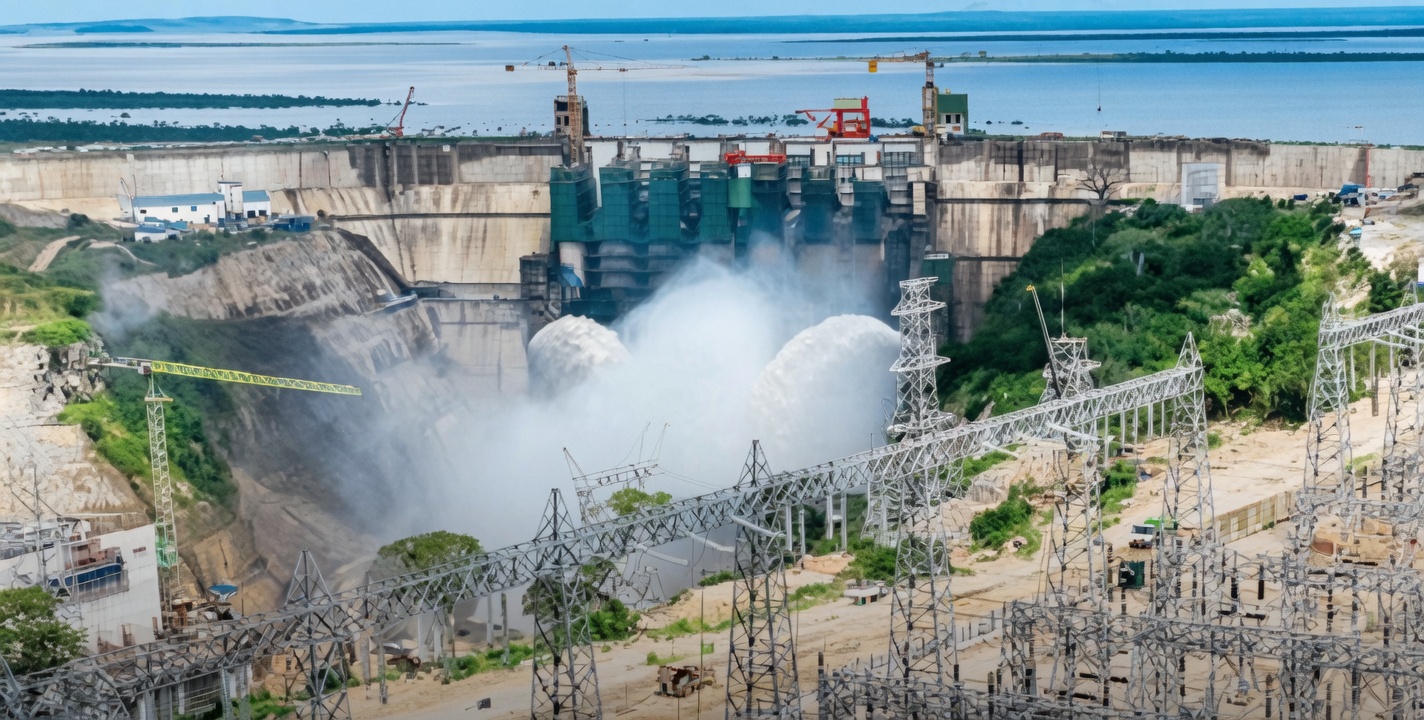
Lifezone Metals is using sustainability to reduce Kabanga's future operating risk through lower energy costs, infrastructure readiness and execution ahead of FID.
- Lifezone Metals' 2025 Sustainability Report shows that sustainability is functioning as a cost lever at the Kabanga Nickel Project, not just an Environmental, Social, and Governance (ESG) exercise.
- Diesel use at Kabanga fell 49% year over year (95,481 litres in 2025 versus 188,961 litres in 2024) as the site shifted onto Tanzania Electric Supply Company Limited (TANESCO) grid power, now 64.8% renewable, up from 32.4% in 2024.
- Kabanga's carbon footprint of 3.7 tonnes of carbon dioxide equivalent per tonne of nickel positions it among the lowest of any primary nickel source.
- Resettlement, safety, and governance metrics are converging toward completion rather than remaining open risks ahead of a targeted 2026 Final Investment Decision (FID).
- Together, these factors support a more predictable, structurally lower-risk operating cost base for Kabanga ahead of the targeted 2026 FID.
A Cost Advantage Hiding in the Sustainability Report
Lifezone Metals' (NYSE: LZM) 2025 Sustainability Report points to a cost story as much as an Environmental, Social, and Governance (ESG) one. The clearest evidence is at the Kabanga Nickel Project in Tanzania, where a shift away from diesel power is already showing up in lower fuel consumption and a more predictable input cost base.
Cutting Diesel, Cutting Cost Volatility
Kabanga ran on diesel generation before 2024. Since the site connected to the Tanzania Electric Supply Company Limited (TANESCO) grid, with the majority of that electricity now coming from hydropower, diesel consumption has dropped 49%, from 188,961 litres in 2024 to 95,481 litres in 2025. The renewable share of Kabanga's grid power rose to 64.8% over the same period, up from 32.4%.
That is not an emissions statistic dressed up for a sustainability report. Diesel is a fuel-price-linked cost that a mine operator does not control. Hydropower-backed grid electricity is a materially more predictable input. For a project that sits in a first quartile position on the global nickel cost curve, with an all-in sustaining cost of $3.36 per pound of payable nickel net of cobalt and copper credits, according to the July 2025 Kabanga Feasibility Study Technical Report Summary, cutting diesel exposure removes a volatile line item from the cost base before construction even starts.
Infrastructure Doing the Heavy Lifting
A 49% cut in diesel use only holds up if the grid behind it continues to grow. Tanzania's Power System Master Plan is doing exactly that, targeting 5 gigawatts of national generation capacity, with 60% hydropower, up from roughly 4 gigawatts today. The 80-megawatt Rusumo Hydroelectric Power Station and the 2.1-gigawatt Julius Nyerere Hydropower Station are already operating; the 88-megawatt Kakono Hydroelectric Power Station is expected to come online in 2028. A planned 220-kilovolt, 88-kilometre transmission line will supply Kabanga's full operational power, building on the 33-kilovolt line already connecting the site to the grid. That buildout suggests Kabanga's future cost base will be tied increasingly to hydropower already underway rather than to imported fuel.
A Carbon Footprint That Could Become a Differentiator
That grid connection is also what makes Kabanga's carbon numbers credible rather than aspirational. Following the Kabanga Feasibility Study (FS) in July 2025, Lifezone engaged Minviro Ltd. to conduct an independent Life Cycle Assessment (LCA) in accordance with ISO 14040 and ISO 14044. The cradle-to-gate result, covering extraction through to nickel concentrate including sea freight, is 3.7 tonnes of carbon dioxide equivalent per tonne of nickel, among the lowest of any primary nickel source globally.
That figure could become a commercial differentiator rather than merely a disclosure item. Indonesia supplies 64% of 2025E global nickel production through a supply chain dominated by Chinese-backed investment, with a different emissions and jurisdictional profile than Kabanga's grid-connected, hydropower-backed operation. As battery and stainless steel buyers place greater weight on carbon accounting, Kabanga's LCA result may provide a hedge against future carbon costs and a point of differentiation, though the commercial impact will depend on how buyers and financiers price that difference.
Schedule Certainty, Condensed
A low-carbon, grid-powered mine still has to get built on schedule, and the remaining execution risks are narrowing there too. By the end of 2025, Lifezone had made 100% of the cash compensation payments due under the Resettlement Action Plan (RAP), with 97% of Project Affected Households (PAHs) signed and paid, and had recorded zero environmental incidents for a third consecutive year. The Sustainability Committee, chaired by Beatriz Orrantia, reported 100% attendance for the year and a new sustainability-linked incentive metric at 100%. As of the company's July 2026 Investor Presentation, Kabanga has logged more than 2.9 million hours worked without a Lost Time Injury (LTI). Taken together, these reduce the odds that resettlement disputes, safety incidents, or governance lapses will cause a 2026 construction timeline to slip.
What This Means Heading Into Construction
The picture that emerges from Lifezone's 2025 Sustainability Report and its July 2026 Investor Presentation is less about a single catalyst and more about compounding structural changes to the cost base underlying Kabanga. The diesel-to-grid transition, the hydropower infrastructure supporting it, the independently verified low-carbon footprint, and the near-completion of resettlement, safety and governance work are separate initiatives that point in the same direction: a more predictable, lower-risk operating cost profile as the project approaches a targeted 2026 Final Investment Decision (FID).
The watchpoint for investors is whether that trend continues to compound as construction nears, through further reductions in diesel use, further gains in the renewable share of grid power, and a carbon footprint that holds or improves on its 3.7 tonne benchmark. If it does, Kabanga would enter construction with a cost and emissions position that is structurally, rather than cyclically, differentiated from higher-emission competitors, an outcome that rests on execution through 2026 rather than on nickel price movements alone.
FAQs (AI-Generated)
Analyst's Notes





Subscribe to Our Channel

.png)
.png)








Stay Informed


