




14% Distillate Deficit Keeps Diesel Tight Despite Ample Crude Supply


A 14% US distillate deficit keeps diesel tight despite ample crude supply, as high refinery runs and exports limit fuel-cost relief.
- On August 27, 2026, October Brent rose 0.7% to $88.46 a barrel and West Texas Intermediate (WTI) rose 0.2% to $82.38, reversing earlier losses while Brent remained down about 7.5% for the week.
- US commercial crude inventories reached 428.9 million barrels in the week ending August 21, 2026, putting stocks 1% above the five-year average.
- Distillate inventories fell 2.2 million barrels to 103.4 million in the week ending August 21, 2026, widening the deficit to 14% below the five-year average from 13% a week earlier.
- Refineries operated at 97.4% of operable capacity in the week ending August 21, 2026, the highest rate of 2026, while distillate production fell to 5.1 million barrels per day for a third straight week.
- The US average retail diesel price rose $0.198 to $5.652 per gallon on August 24, 2026, up $1.944 from a year earlier.
Hormuz Talks Lift Brent & 7.5% Weekly Loss Leaves Rebound Upside
October Brent reversed an earlier 1.4% decline from $86.66 to rise 0.7% to $88.46 a barrel, while West Texas Intermediate reversed a 1.6% decline from $80.94 to rise 0.2% to $82.38. Brent remained down around 7.5% for the week, showing the intraday rebound has not reversed the broader selloff.
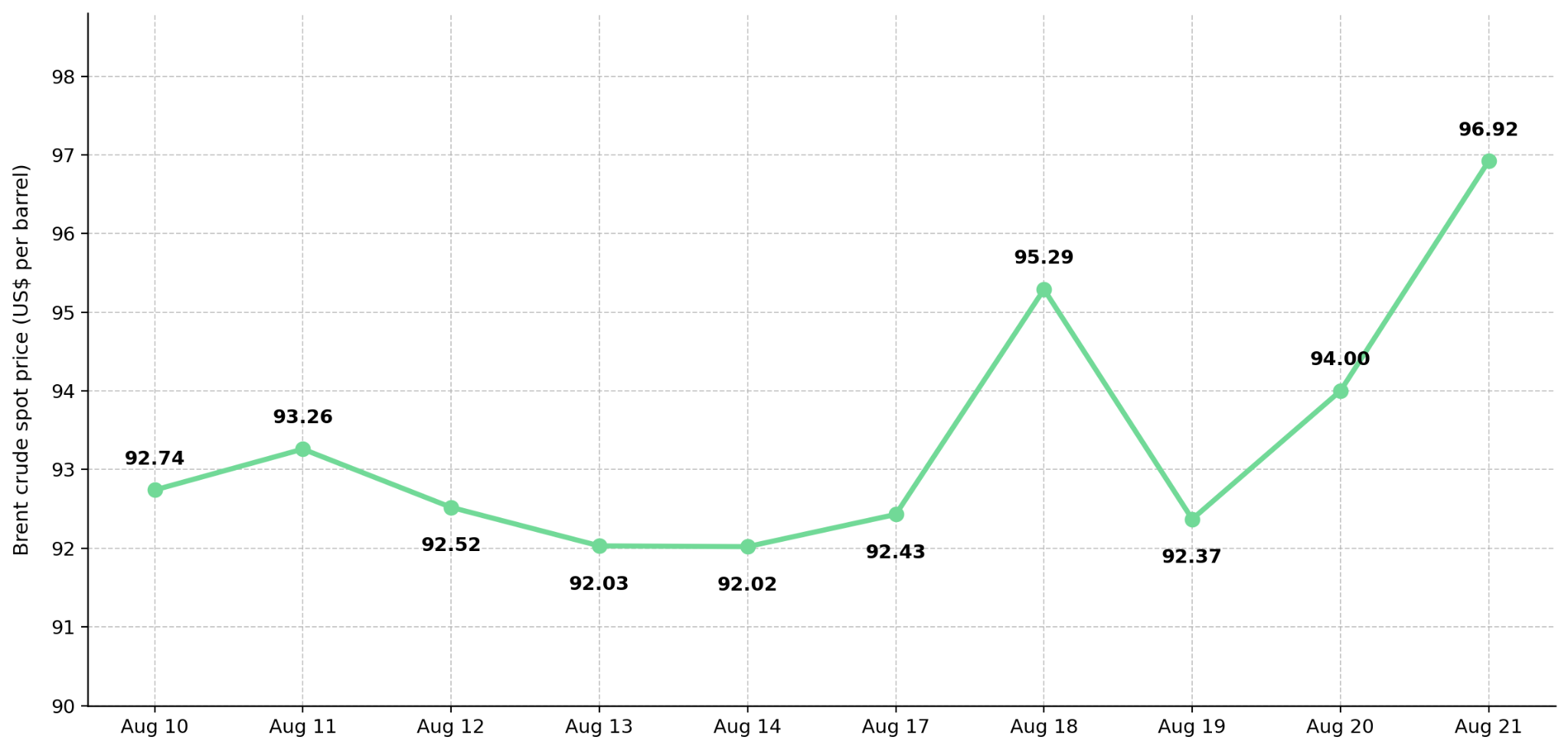
The price rebound reflects expectations of a temporary Hormuz shipping framework rather than restored oil flows. Oman and Iran discussed a temporary route through the strait, and Iranian state media reported a revenue-sharing agreement, but officials said reopening would still require US involvement, leaving actual supply unchanged.
97.4% Refinery Utilization Fails to Restore Distillate Supply
Refinery utilization reached a 2026 high even as distillate output fell, showing the diesel shortfall was not caused by weak refinery runs. Refineries operated at 97.4% of operable capacity with crude inputs of 17.4 million barrels per day, while gasoline production rose to 9.8 million barrels per day and distillate production fell to 5.1 million barrels per day.
Across three EIA reports, distillate production fell from 5.280 million barrels per day to 5.226 million and then 5.135 million, while refinery utilization rose from 96.2% to 97.2% and 97.4%. Rising refinery runs alongside falling distillate output indicate that higher crude throughput alone is not restoring diesel supply. A Hormuz reopening framework would therefore not resolve the diesel shortfall unless refinery economics also shift output toward distillates.
Higher Crude Inventories Leave Diesel Supply Pressure Intact
Strait reopening talks have improved oil-market sentiment without restoring physical supply. Ole Hansen, Analyst at Saxo, said the market is pricing better supply conditions before any physical improvement. US commercial crude inventories reached 428.9 million barrels, 1% above the five-year average, while distillate inventories fell 2.2 million barrels to 103.4 million, about 14% below the five-year average and down from 114.2 million a year earlier. The gap keeps diesel supply tight even as crude inventories remain ample, supporting the contrarian case that weaker crude prices do not yet imply lower fuel costs.
Rising Diesel Exports Increase Mine Fuel Exposure to Global Pricing
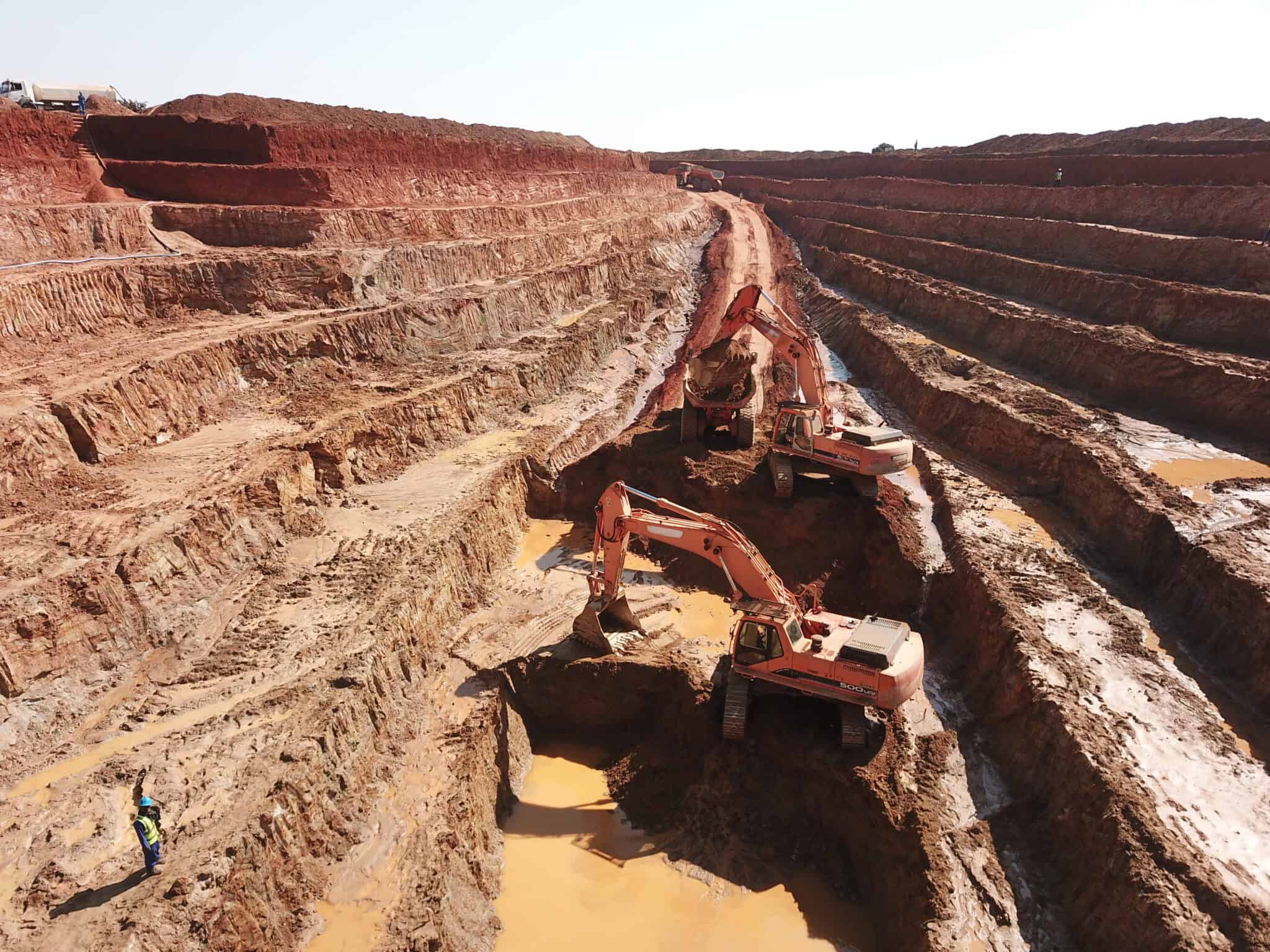
Higher US diesel exports add competition for the same supply used by fuel-intensive mining operations, which can keep delivered fuel costs elevated. Distillate exports rose from 1.601 million to 1.790 million barrels per day while domestic inventories fell 2.2 million barrels. Rising exports during a domestic draw show that overseas demand continued pulling diesel from the US market despite already tight inventories.
Remote mine sites compete for diesel with domestic trucking, agriculture, and an export market pulling more barrels from US supply. Retail diesel rose $0.198 to $5.652 per gallon even as crude prices fell that week, showing that weaker crude does not automatically reduce mine fuel costs. Regional exposure also varies, with diesel at $5.481 per gallon on the Gulf Coast, $5.537 in the Rocky Mountain district, and $7.040 in California.
A crude-price forecast alone cannot determine a mine’s delivered diesel cost because fuel contracts can reference different product benchmarks. Mine operators can assess this exposure by checking whether contracts track a domestic rack price or a waterborne benchmark, which determines how directly export demand feeds into fuel costs.
103.4M Barrel Distillate Stocks Set the Trigger for Fuel-Budget Repricing
Delivered fuel costs remain supported by tight distillate supply, with inventories at 103.4 million barrels, about 14% below the five-year average, while crude inventories sit 1% above their five-year average. This imbalance helps explain why ample crude supply has not translated into lower diesel costs.
A clearer reversal in diesel tightness would require a distillate inventory build alongside production above 5.2 million barrels per day and weekly exports below 1.6 million barrels per day. Together, those moves would indicate more diesel remaining in the domestic market and less pressure on fuel costs.
Use the September 2 EIA Weekly Petroleum Status Report as the next decision point by comparing distillate inventories with 103.4 million barrels, production with 5.1 million barrels per day, and exports with 1.790 million barrels per day. Keep fuel budgets unchanged unless inventories and production rise while exports fall, which would signal more diesel remaining in the US market and a stronger case for lower delivered fuel costs.
Analyst's Notes





Subscribe to Our Channel







Stay Informed


