




$150M Funding Aggressive Multiphase Copper Exploration with Near-Term Development Opportunity


Atex: 2B tons copper in Chile, $150M cash, high-grade breccia 50% larger than $2.8B comps, Agnico 15% stake, 3-4 targets untested, district-scale potential, interim CEO search underway
- Atex Resources has $150 million cash to continue a comprehensive multiphase copper exploration campaign.
- The Valeriano project hosts 2 billion tons at 0.8% copper equivalent, with recent Phase 6 drilling (30,000+ meters) expanding the B2B breccia zone and discovering significant lateral mineralization in rhyolite, a new geological dimension showing nearly 1 kilometer of continuous copper-gold mineralization.
- The company pursues both a high-grade breccia target (50+ million tons at >1.5% copper equivalent) suitable for near-term development and a massive underlying porphyry system (500 million tons at 1% copper equivalent), creating optionality for different investor profiles and development scenarios.
- With 25,000 hectares consolidated and 3-4 additional Valeriano-like targets identified within 6 kilometers, Atex aims to prove a multi-billion ton copper district comparable to established Chilean mining camps, with major backing from Agnico Eagle (>15% ownership).
- As a directional drilling pioneer in the region with industry-leading costs, the company benefits from proximity to existing infrastructure (power within 50km, desert access routes, nearby population center) and improving Chilean regulatory environment.
Atex Resources finds itself at a pivotal juncture in early 2026, combining robust financial positioning with significant exploration momentum at its Valeriano copper-gold project in Chile. With $150 million in cash and an interim leadership structure following the departure of CEO Ben Pullinger, the company faces the dual challenge of maintaining operational continuity while positioning itself for the next phase of development. The current interview with interim CEO Chris Beer, formerly chair of the audit committee, provides insight into how the company plans to leverage its recent discoveries and substantial treasury to unlock value in what it believes could become a major new copper district.
Leadership Transition & Strategic Direction
The company entered 2026 with a leadership change, as founding CEO Ben Pullinger stepped down at the end of January for personal reasons. Chris Beer, who joined the board in spring 2024 as audit committee chair, has assumed the interim CEO role while the board conducts what Beer describes as a "far-reaching CEO executive search." The search parameters reveal the company's strategic priorities: a candidate with "exploration background, certainly ability to deal with major mining companies" and engineering background, given the emerging giant copper porphyry system and the presence of major players like Antofagasta and Glencore in the region.
This transition occurs from a position of financial strength rather than distress. The company's $150 million cash position provides a runway for 2.5 to 3 years of drilling at current activity levels with five to six rigs operating, according to Beer's estimates. This timeframe aligns with the company's stated goal of testing multiple Valeriano-scale targets across its 25,000-hectare land package.
Geological Evolution: From Buried Porphyries to High-Grade Breccias
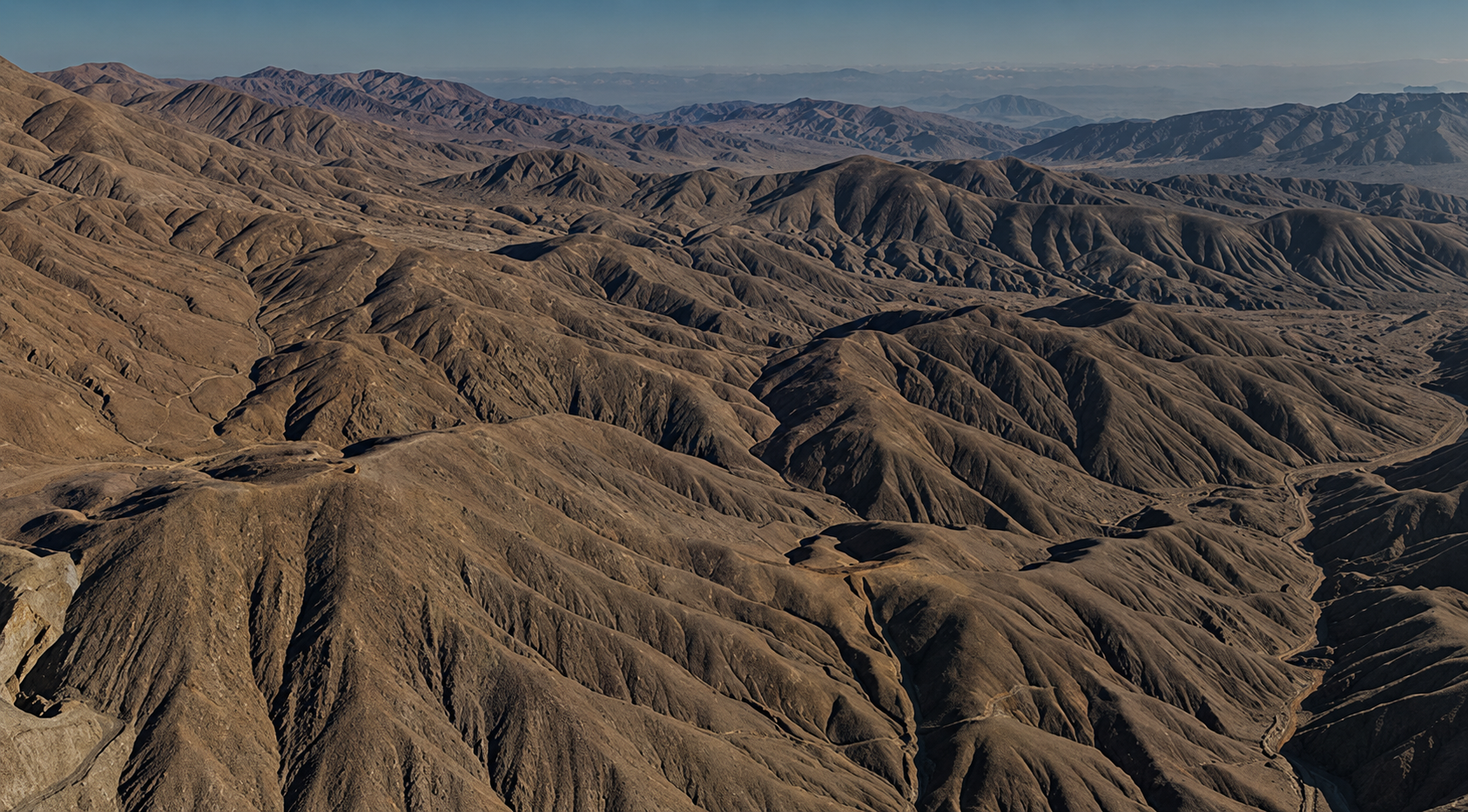
The Valeriano discovery represents a significant addition to Chile’s copper inventory, occupying what had been an under-explored 80-kilometer gap between the Maricunga district to the north and the El Indio district to the south. Historical exploration avoided this zone because geological indicators suggested mineralization would be deeper than in adjacent districts where porphyry systems reached the surface. This depth barrier kept the area unexplored until modern drilling technology, specifically directional drilling, made systematic testing economically viable.
The current geological model has evolved substantially over the past 12 months. The project now delineates a billion and a half tons of porphyry mineralization grading 0.75% copper equivalent in the inferred category, with an additional 500 million tons in the indicated category at 0.88% copper equivalent. However, the discovery that has catalyzed market interest sits above this massive porphyry system: the B2B breccia zone.
This high-grade breccia currently measures approximately 400 meters in strike by 400 meters in dip, containing 30 to 40 million tons of material. The company aims to expand this to at least 50 million tons at grades exceeding 1.5% copper equivalent. Beer emphasizes the significance:
"The B2B breccia at 50 million tons is 50% bigger than what sold for its clearing price," referring to the Foran transaction that valued a smaller high-grade deposit at approximately $2.8 billion USD.
Recent Drilling Success: Expanding the System Laterally
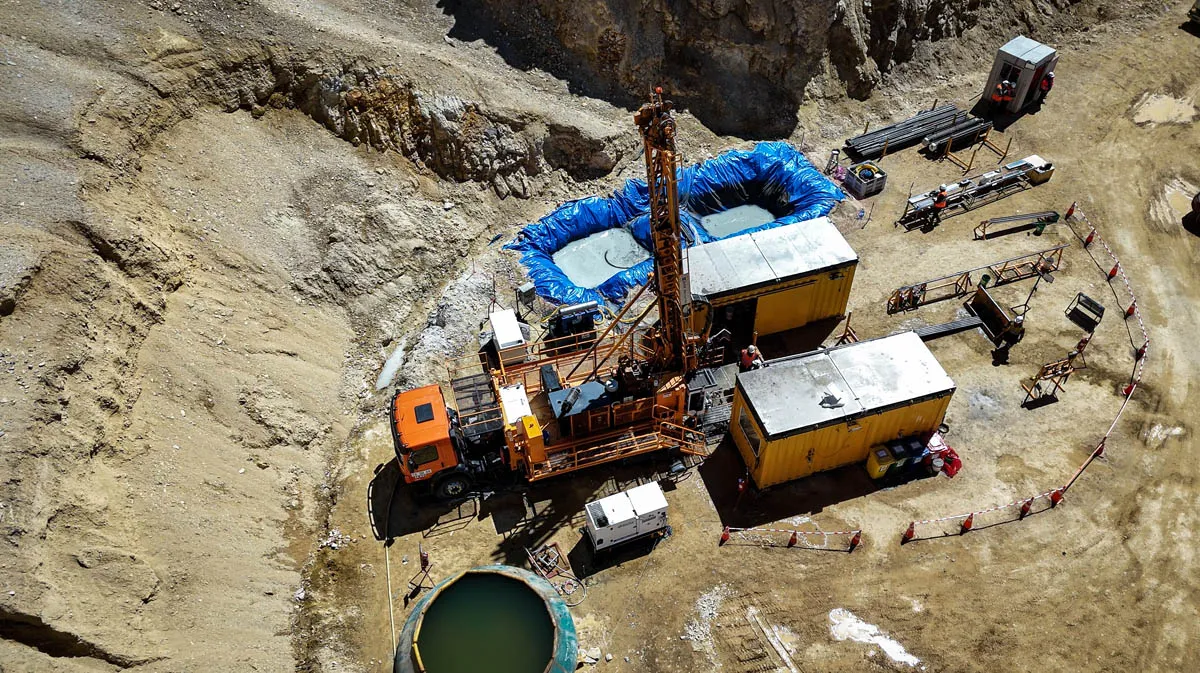
Phase 6 drilling, which began targeting 25,000 meters but has been extended beyond 30,000 meters due to strong productivity, has yielded unexpected geological insights. Hole 34, a 135-meter stepout to the east, intercepted nearly one kilometer of continuous mineralization averaging 0.7% copper equivalent but in rhyolite rather than the expected breccia. This represents the first significant rhyolite-hosted mineralization the company has encountered. Beer explained:
"Rhyolite is a very permeable, permissive felsic rock, so mineralization fluids go into that readily, and this is the first time that we're seeing that kind of mineralization in the rhyolite."
While the grade in this lateral extension runs approximately half that of the core B2B breccia (0.8% versus approximately 1.5%), the intercept effectively increased the B2B tonnage by roughly 70% in a single hole and extended the mineralized envelope by 500 meters laterally. This discovery raises questions about the fundamental geometry of the system. The company is now reassessing whether it faces a cluster of discrete breccia bodies, the original working model or a more continuous mineralized envelope with variable grade distribution controlled by lithology and structure.
Interview with Chris Beer, Interim President & CEO of Atex Resources
Metallurgy & Product Quality: A Clean Concentrate Story
Beyond tonnage and grade, Atex has completed two rounds of metallurgical testing that demonstrate favorable processing characteristics. The test work produced a 33% copper concentrate carrying 15 grams per ton gold with no deleterious elements, a particularly important consideration in the current market environment where penalties for impurities have increased significantly.
The copper-to-gold ratio in the mineralization runs approximately 75% copper and 25% gold by value, creating a high-grade gold "kicker" that enhances project economics. This metallurgical profile compares favorably to producing operations in the region and suggests the potential for premium treatment terms.
Strategic Positioning: Two-Pronged Development Optionality
Beer articulated a dual strategy that creates optionality for different development pathways and investor profiles. The high-grade breccia zone, sitting between 3,000 and 3,600 meters above sea level, presents a potential near-term development target accessible to a broader range of mining companies than the deep porphyry alone would attract.
"The breccia makes the mineability of this available to a bigger suite of investors or potential miners than just the Antofagastas of the world."
Highlighting how the high-grade zone could support development economics even for mid-tier producers.
The underlying porphyry system, by contrast, represents a world-class block cave opportunity comparable to Red Chris in Canada (approximately 500 million tons at 0.3% copper and 0.6 g/t gold) or Carrapateena in Australia with similar grades and tonnage. This massive, lower-grade envelope would require major mining company expertise and capital but offers decades of production potential. Beer suggested a potential development sequence where the breccia zone at a hypothetical 20,000 tons per day throughput could generate more than 300 million pounds of copper annually, providing cash flow to finance development of the larger porphyry system below.
District-Scale Ambitions: Multiple Valeriano Targets
The recent land consolidation that expanded Atex's holdings to 25,000 hectares reflects district-scale ambitions. The company has identified three to four additional targets with geophysical signatures and geological characteristics similar to Valeriano, all within six kilometers of the main discovery. Historical drilling on some of these targets intersected encouraging grades (2.3% copper equivalent) but failed to reach the core of the porphyry systems.
Beer indicated that with improved geophysical understanding and the company's directional drilling capabilities, these targets represent high-priority tests for the next 12 months. The goal is not simply to expand the known Valeriano resource but to prove multiple centers of mineralization that could support the "10 billion ton district" thesis, a scale that would place this region among the world's major copper provinces.
Competitive Context
The timing of Atex's advancement coincides with intense strategic activity in the broader copper sector. Agnico Eagle holds more than 15% of Atex's outstanding shares, providing both capital backing and technical expertise. To the north, Antofagasta controls a similar 2 billion ton deposit at comparable grades, though Beer notes they have not employed directional drilling techniques and have been inactive for the past two years.
The Filo transaction, which saw a high-grade deposit sell for approximately $2.8 billion USD, provides a valuation benchmark that Beer references repeatedly. The Vicuna and Josemaria projects to the north, operated by Newmont and Teck, are approximately 40 kilometers away and represent emerging infrastructure that could eventually service the broader district.
Infrastructure Advantages for Future Development
The Valeriano project benefits from relatively favorable infrastructure access for a high-altitude discovery. Power lines extend to within 50 kilometers of the project, and the site is accessible by vehicle within two hours from Arequipa, a city of 50,000 people. Desalination routes and existing mine infrastructure in the region provide additional optionality for eventual development.
On the jurisdictional front, Beer noted encouraging signs from both the outgoing and incoming Chilean governments regarding permitting efficiency, driven in part by competitive pressure from Argentina's more streamlined regulatory approach. This represents a potential tailwind for eventual permitting and development timelines.
The Investment Thesis
- Exceptional Discovery Momentum: Recent drilling has expanded both the high-grade breccia target and discovered lateral mineralization in new geological settings, demonstrating ongoing resource growth potential with 2.5-3 years of funded exploration remaining
- Dual-Pathway Development Optionality: The combination of 50+ million tons of high-grade breccia (>1.5% copper equivalent) and 500+ million tons of 1% porphyry material creates multiple development scenarios, appealing to different buyer profiles from mid-tier producers to super-majors
- Favorable Peer Comparables: The B2B breccia alone is 50% larger by tonnage than deposits that have transacted at $2.8 billion USD, while the underlying porphyry system compares favorably to Red Chris and Carrapateena both tier-one assets
- Strategic Backing and District Potential: Agnico Eagle's >15% ownership stake provides validation and technical support, while 3-4 additional Valeriano-like targets within 6 kilometers offer district-scale upside
- Operational Excellence: Pioneer status in directional drilling within the region has established Atex as among the lowest-cost drillers in the high Andes, maximizing exploration efficiency and resource definition per dollar spent
- Clean Metallurgy: 33% copper concentrate with 15 g/t gold and no deleterious elements addresses a key technical risk and positions the project favorably for eventual offtake negotiations
- Strong Financial Position: $150 million cash treasury funds 2.5-3 years of aggressive drilling without near-term dilution risk, allowing the company to advance exploration on its own timeline
- Valuation Discrepancy: Trading at significant discount to peer companies despite comparable or superior grades, tonnage, and metallurgy, creating potential re-rating opportunity as resource confidence increases
The Atex discovery validates a geological thesis that has existed for decades: the 80-kilometer corridor between the Maricunga district to the north and El Indio district to the south held significant copper porphyry potential, but the systems were too deep for conventional exploration economics. Directional drilling technology has fundamentally changed this equation, allowing systematic testing of buried porphyry systems that "escaped modern exploration" precisely because they didn't outcrop at surface like their neighbors. Beer emphasizes the company is "5 to 8 years behind the Vicuna district" in terms of development timeline, yet the grades being encountered suggest this lag may work in Atex's favor:
"When you pioneer a new district it's really interesting when you see the tenor of the grade right now close to 1% copper equivalent, which is more than double the global copper equivalent grade."
The clean metallurgy—33% copper concentrate with 15g/t gold and no deleterious elements further distinguishes these discoveries. With Agnico Eagle holding over 15% and multiple major mining companies operating nearby, the area appears positioned to evolve from exploration frontier to established mining district, potentially reaching the "10 billion ton district" scale that would rank it among significant global copper provinces.
TL;DR
Atex Resources controls what could become a tier-one copper district in Chile, with 2 billion tons of 0.8% copper equivalent resources anchored by a high-grade breccia zone (50+ million tons at >1.5% copper equivalent) that is 50% larger than comparable deposits that have sold for $2.8 billion. With $150 million in cash funding 2.5-3 years of exploration, Agnico Eagle holding >15% strategic stake, and 3-4 additional Valeriano-like targets to test within 6 kilometers, the company offers exposure to both near-term resource growth and district-scale discovery potential at what management views as a significant valuation discount to advanced peers.
FAQ's (AI Generated)
Former CEO Ben Pullinger resigned for personal reasons, creating an opportunity for the board to conduct a comprehensive search for a leader with exploration, engineering, and major-company experience to guide the next development phase.
The high-grade breccia (50M tons at >1.5% copper equivalent) creates potential for earlier development than the underlying porphyry alone, potentially funding later block cave development of the larger, lower-grade system.
The mineralization sits at depth in buried porphyry systems that couldn't be economically tested with vertical drilling. Directional drilling allows efficient testing from fewer platforms while achieving industry-leading costs per meter.
Hole 34 found nearly 1 kilometer of continuous mineralization in rhyolite rather than expected breccia, potentially expanding the B2B tonnage by 70% in a single hole and revealing new geological dimensions to explore.
With 2.5-3 years of funded drilling and 3-4 additional Valeriano-like targets identified, management believes maximizing resource discovery across the district creates greater shareholder value than premature economic studies on a single deposit.
Analyst's Notes





Subscribe to Our Channel



Stay Informed






















