




Kabanga's EU Strategic Project Filing Adds a Regulatory Track to Lifezone's Financing Case


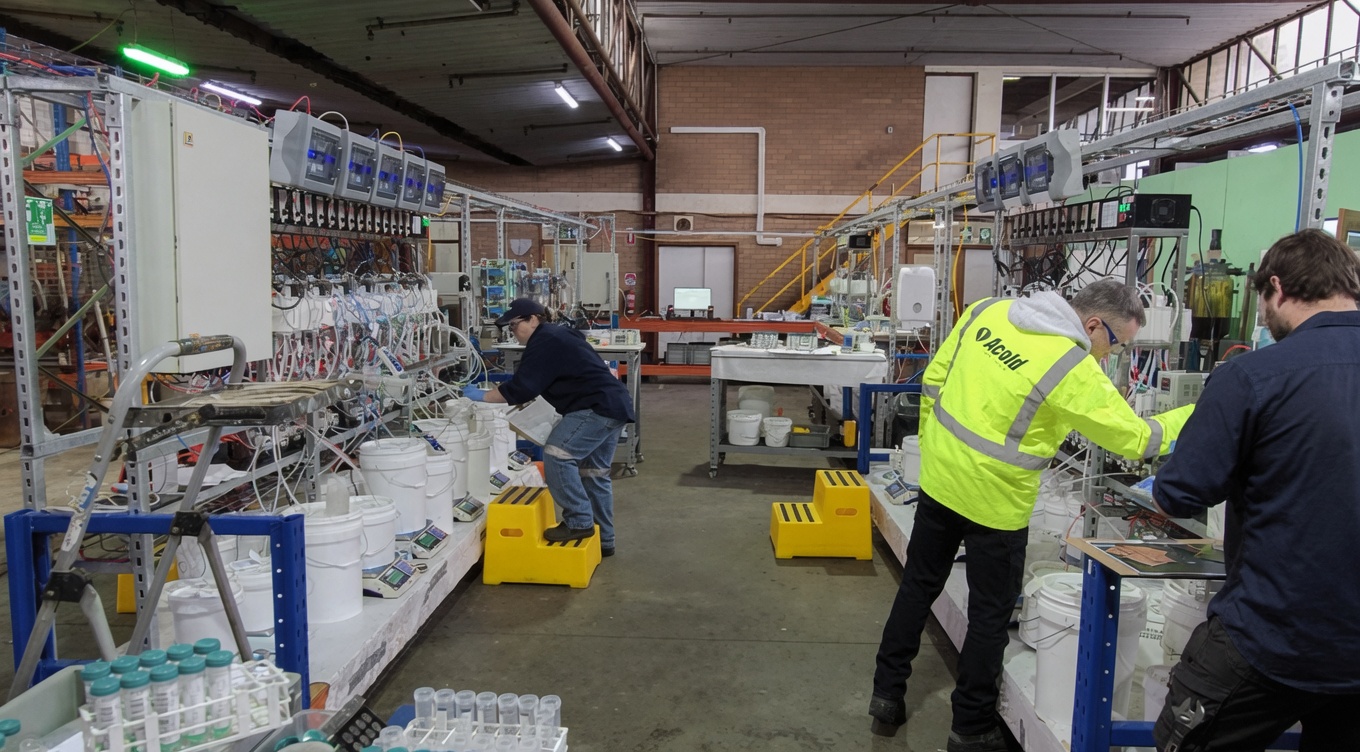
Lifezone has filed to have Kabanga designated an EU Critical Raw Materials Act Strategic Project, adding a regulatory channel alongside its debt and equity financing tracks.
- Lifezone Metals filed an application with the European Commission to register the Kabanga Nickel Project as a Strategic Project under the EU's Critical Raw Materials Act, as disclosed in the company's half-year results on July 29, 2026.
- Lifezone also disclosed a newly completed ISO-compliant Life Cycle Assessment confirming a low climate-change emissions impact for Kabanga's nickel concentrate, with a standalone release of that assessment planned for the third quarter of 2026.
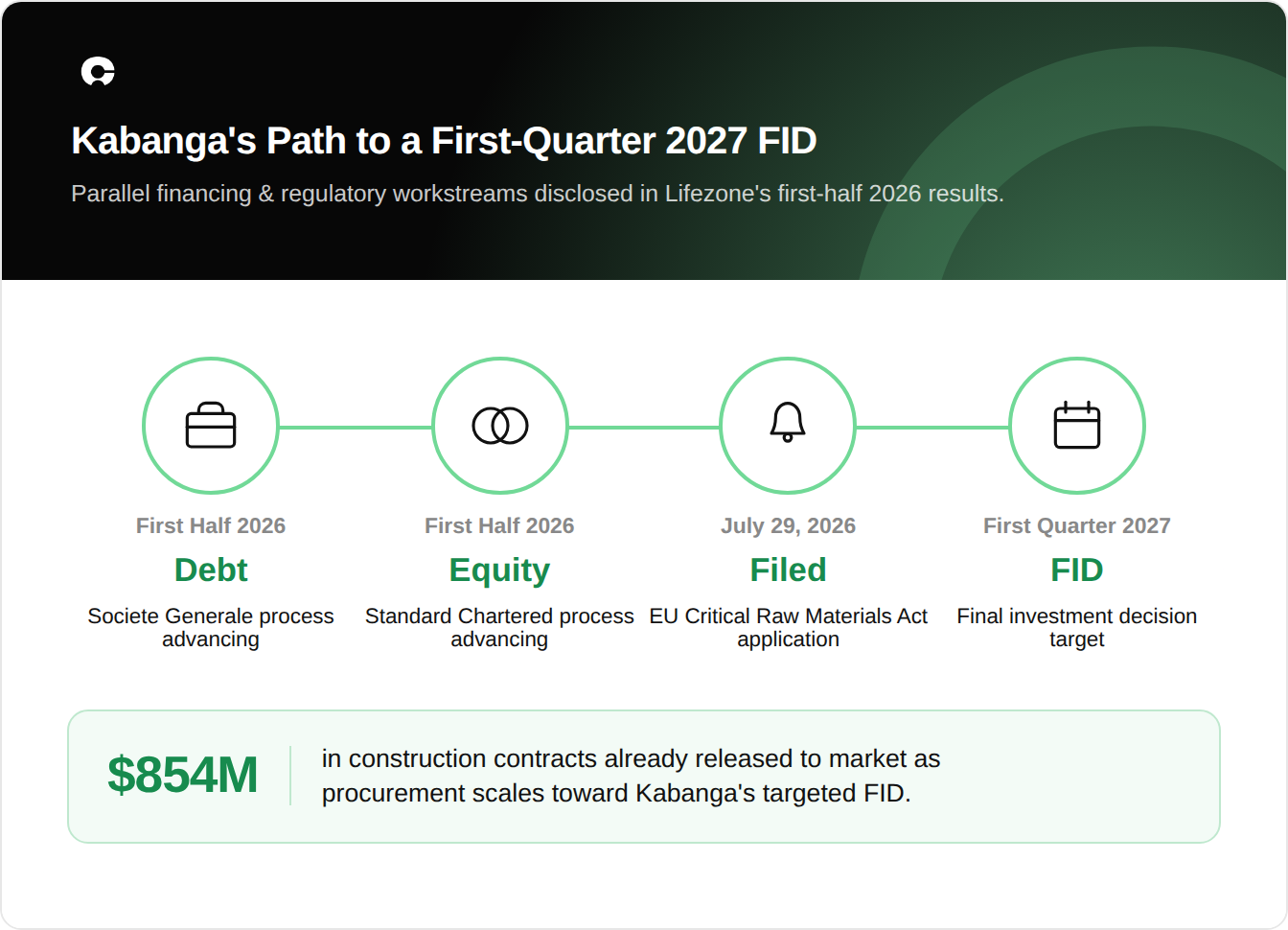
- The application arrives alongside 2 active financing tracks - a debt process led by Societe Generale and a strategic equity process led by Standard Chartered Bank - with final investment decision now targeted for the first quarter of 2027.
- The US Development Finance Corporation completed political-risk-insurance due diligence during the first half of 2026, one of several institutional channels now running in parallel with the European Commission filing.
- The pace and outcome of the European Commission's review will be one of the clearer signals to track as the application moves forward.
What Has Happened
Lifezone Metals Limited (NYSE: LZM) disclosed 2 developments in its July 29, 2026 half-year results for the Kabanga Nickel Project in Tanzania: an application filed with the European Commission for Kabanga to be registered as a Strategic Project under the EU's Critical Raw Materials Act, and the completion of an ISO-compliant Life Cycle Assessment confirming a low climate-change emissions impact for the project's nickel concentrate. A standalone release of that assessment is planned for the third quarter of 2026.
Both disclosures sit inside a results package that also pushed Kabanga's final investment decision to the first quarter of 2027, after Framework Agreement negotiations with the Government of Tanzania progressed more slowly than expected. The European filing arrives as Lifezone works through several institutional and regulatory channels at once, rather than treating any single one as the deciding factor for Kabanga's path to construction.
The European Commission's review process for Strategic Project applications will follow its own timeline. As that unfolds, the more detailed Life Cycle Assessment due in the third quarter should give investors a clearer basis for the emissions figures Lifezone has disclosed.
Why the Filing, Not the Chemistry, Is the News
Lifezone has now put Kabanga's emissions profile in front of a specific EU regulatory process, with a specific designation attached, rather than presenting it only as a general project characteristic.
The underlying basis for the claim is Lifezone's hydrometallurgical processing route, which runs leaching under controlled, higher-pressure conditions rather than the atmospheric or heap leaching more commonly used for base metal and platinum group metal ores.
Chief Financial Officer Ingo Hofmaier described the link between that processing environment and Kabanga's emissions position:
"The big advantage is you can run it in an environment like in Tanzania. Power is an important implement, hydropower, and you have much more control from an emission perspective."
Referring to the sulfur emissions historically associated with conventional smelting, Hofmaier added:
"In a controlled environment, you basically don't have that."
What turns that technical characteristic into a company-specific catalyst is filing. A Strategic Project application is a formal step inside an EU process with its own review and outcome, distinct from publishing a sustainability disclosure, and Lifezone's results did not specify what a successful designation would change for Kabanga's financing, permitting, or offtake position - so the near-term significance is the filing itself rather than any confirmed benefit attached to it.
Financing Context: One More Track Among Several
The Critical Raw Materials Act filing is not a standalone financing lever. Lifezone's half-year results describe project financing advancing on 2 parallel tracks: a debt process led by Societe Generale, which has selected pathfinder development finance institutions and export credit agencies across Africa, Europe, and North America that have provided indications of liquidity, and a strategic equity process led by Standard Chartered Bank, described as being at an advanced stage with multiple offers received.
Alongside these 2 tracks, the US Development Finance Corporation completed its due diligence on a political-risk-insurance workstream during the first half of 2026, with commercial engagements continuing to progress. The European Commission application adds a third regulatory type of institutional engagement running in parallel with the debt and equity processes rather than replacing either.
Lifezone reported a cash balance of $37.3 million as of June 30, 2026, and had released approximately $854 million in construction contracts to market during the first half as procurement activity scaled up ahead of the targeted first-quarter-2027 final investment decision. The company's results did not draw a specific link between the Critical Raw Materials Act application and the terms being negotiated on either the debt or equity tracks.
What to Watch Next
The standalone Life Cycle Assessment release, targeted for the third quarter of 2026, will be the first point at which more detailed emissions data becomes available. Investors will also want to track how the European Commission's review of the Strategic Project application progresses from here.
Separately, the debt process led by Societe Generale and the equity process led by Standard Chartered Bank remain the more immediate variables for Kabanga's path to a first-quarter-2027 final investment decision. Future disclosures will need to clarify whether the Critical Raw Materials Act designation, if granted, changes the terms or pace of either process.
FAQs (AI-Generated)
Analyst's Notes





Subscribe to Our Channel





Stay Informed


