




40+ US Mineral Pacts Open New Funding Routes for Battery Metals Projects


US mineral partnerships connect battery metals projects with export-credit financing, where qualifying offtakes could reduce reliance on equity funding.
- S&P Global identified more than 40 US critical minerals agreements signed since January 2025, opening potential routes to government-backed financing for nickel, lithium, and graphite projects.
- Critical minerals investment in US partner countries reached $3.19 billion in the second quarter of 2026, providing evidence of substantial investment activity alongside expanding mineral diplomacy.
- The US-Australia critical minerals framework has generated more than A$6 billion in announced support, linking diplomatic cooperation with export-credit and other financing institutions.
- US export-credit rules tie certain overseas mineral loans to signed offtake contracts serving American manufacturers, giving qualified sales agreements a direct role in financing eligibility.
- Public critical minerals finance commitments reached approximately US$65 billion in 2025 while battery-metals capital spending fell more than 20%, highlighting the role government-backed funding could play in supporting new projects.
US Mineral Pacts Draw Public Lenders into Mine Development
The US has signed more than 40 bilateral and multilateral critical minerals agreements since January 2025, more than double the 16 reached during the preceding nine years, according to S&P Global. Several partnerships have since been followed by funding initiatives, connecting mineral supply policy with institutions capable of financing extraction, processing, and trade.
S&P Global recorded US$3.19 billion in critical minerals investment in US partner countries during the second quarter of 2026, its highest quarterly total. The figure measures investment in those countries rather than funding directly attributable to the new agreements. For nickel and lithium developments requiring substantial upfront capital, access to additional financing institutions could support construction and reduce shareholder dilution.
Mineral Partnerships Expand Financing Through US Offtake Requirements
On November 10, Australian Resources Minister Madeleine King reported more than A$6 billion in critical minerals support announced during the first year of the Australia-US Critical Minerals Framework. An October government update identified conditional financing support for more than a dozen projects, involving export-credit and public investment bodies. The partnership also brought the Export-Import Bank of the US (EXIM) and Australian financing agencies together to explore transactions linked to US manufacturing demand.
Separately, the US government's September framework with Argentina contemplated mobilizing up to US$7 billion by 2027 across multiple sectors, including critical minerals and processing, rather than allocating the full amount to mining. These financing channels could reduce developers' reliance on share issuance, depending on loan terms and eligibility.
Under EXIM's Supply Chain Resiliency Initiative, overseas mineral projects must have signed long-term offtake agreements supplying US manufacturers to qualify for financing. Loan amounts depend on qualifying US sales, with restrictions on Chinese ownership, technology, and customer exposure. EXIM indicates that projects directing all qualifying offtake toward US manufacturing could secure their entire eligible debt requirement, subject to agency approval.
Indonesia's Nickel Quota Plans Strengthen Case for Public Mine Funding
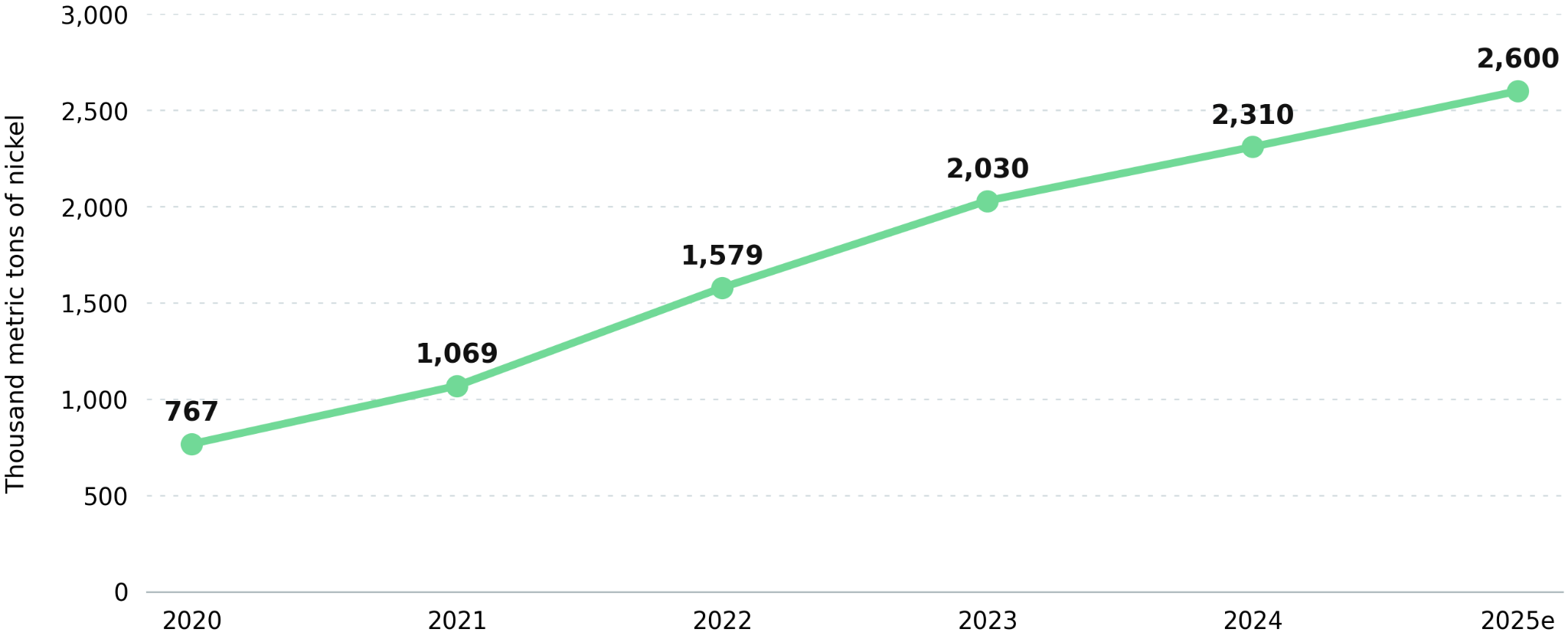
S&P Global reported nickel trading near US$15,800 per tonne on November 2 as Indonesia considered further ore quota cuts for 2027, after raising its 2026 allocation to approximately 290 million to 300 million tonnes. These changing quota plans demonstrate Indonesia's influence over global nickel supply expectations. This strengthens the case for financing nickel projects outside Indonesia that have already advanced through major regulatory reviews.
Canada Nickel received a federal impact assessment decision for its Crawford project in Ontario in July 2026, advancing a development containing approximately 3.8 million tonnes of nickel in proven and probable reserves. Its engineering study estimates US$2.8 billion in after-tax net present value at an 8% discount rate (NPV8%), against roughly US$2 billion in initial capital costs. The company confirmed ongoing discussions with offtake and joint venture partners and federal and provincial funding programs, supporting its preparations for a construction decision in 2027.
Mark Selby, Chief Executive Officer of Canada Nickel, explains how government funding could support mine construction:
“This is a once-in-a-generation opportunity where governments are providing significant, effectively low-cost leverage to be able to get these projects built. You would have had to go back to the 1950s and '60s to see similar government efforts.”
Lithium Supply Growth Raises Value of Offtakes for Construction Finance
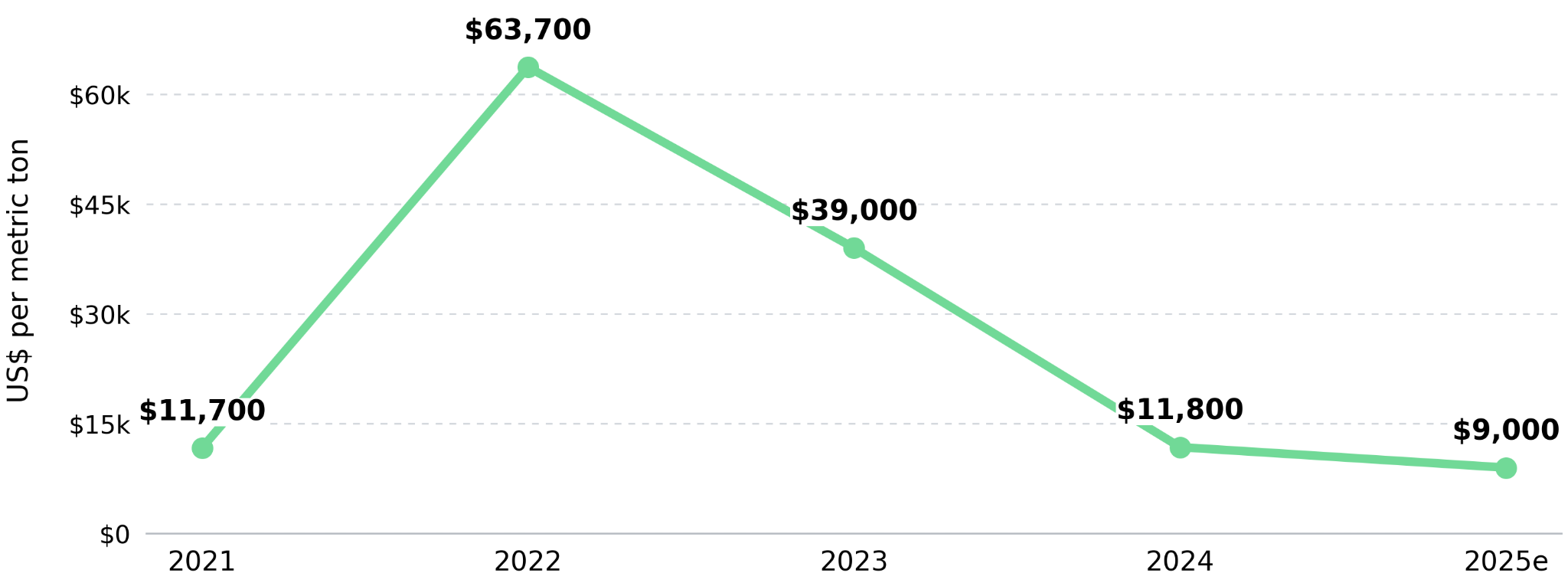
S&P Global projected global lithium raw-material supply to rise 26.8% in 2027 to approximately 2.5 million tonnes of lithium carbonate equivalent, following a 19% decline in Chinese lithium carbonate prices during October. Faster supply growth increases competition among lithium suppliers, making contracted selling prices more important for maintaining predictable revenue. Projects with binding offtake agreements and minimum price protections can therefore offer lenders greater confidence when assessing construction financing.
Lithium Ionic has advanced its Bandeira lithium project in Brazil, with a feasibility study estimating US$191 million in initial capital costs and US$1.45 billion in after-tax NPV8%. In March 2026, the company secured binding five-year offtake agreements covering approximately 170,000 tonnes of concentrate annually, with a US$1,000-per-tonne price floor based on a 6% lithium oxide reference grade. It also received US$30 million from its Salinas asset sale in August, strengthening its cash position alongside contracted sales as it advances toward final permits and a 2027 construction decision.
Blake Hylands, Chief Executive Officer of Lithium Ionic, outlines plans to fund construction primarily through debt:
“We've had support from institutional shareholders for years who want to continue to be a part of that and always wanted to be part of the construction financing, and this is a moment for them to step in.”
China's Graphite Refining Dominance Supports Funding for New Supply
The International Energy Agency (IEA) reports that China accounts for more than 90% of graphite refining, while processing capacity outside dominant suppliers lags projected mining output. This concentration creates additional financing opportunities for alternative graphite supply, with commercial viability depending on access to qualified customers and the processing needed to meet their requirements.
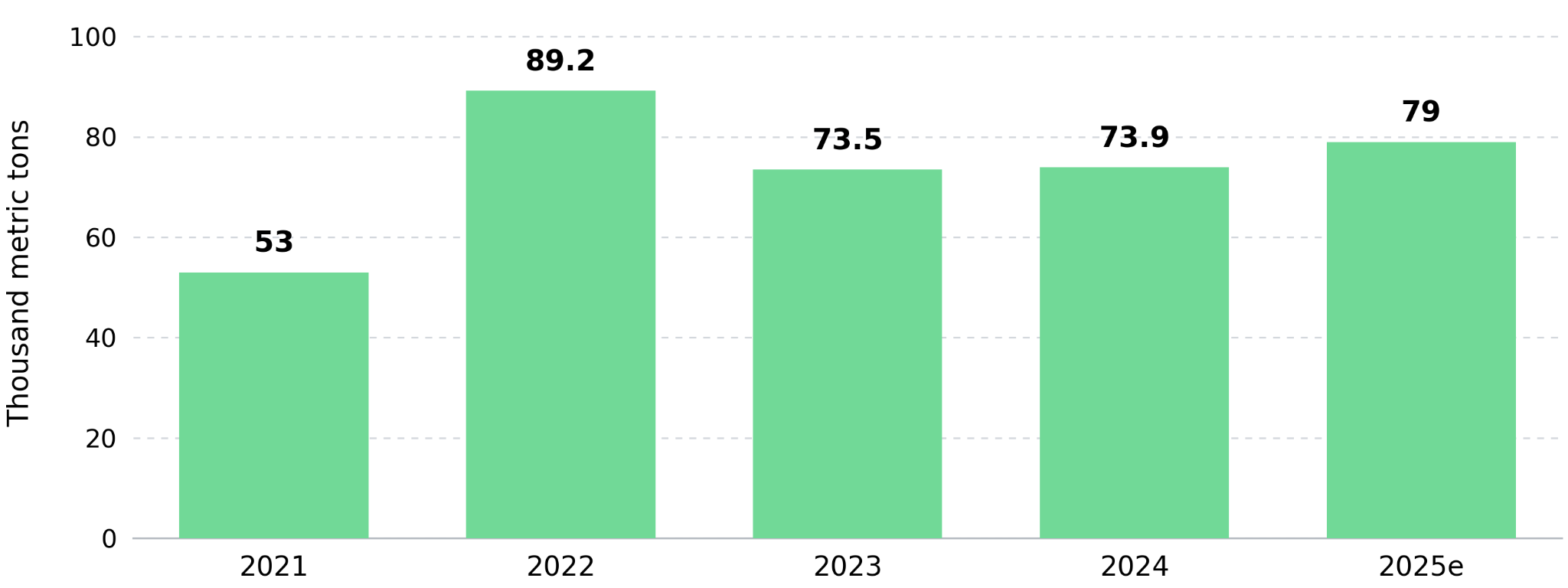
In August 2026, EXIM announced a US$25 million loan for domestic graphite development, while the US International Development Finance Corporation (DFC) proposed financing changes involving graphite operations in Mozambique and the US. These initiatives extend government support across graphite production and processing, creating potential financing opportunities for overseas projects with established US commercial relationships and defined project economics.
Sovereign Metals is advancing its Kasiya graphite and rutile project in Malawi, which projects annual production of 275,000 tonnes of graphite and 222,000 tonnes of rutile. The company has also established a nonbinding arrangement to market industrial graphite into the US and is pursuing discussions with development finance institutions, providing potential commercial and funding pathways toward construction.
Sapan Ghai, Chief Commercial Officer of Sovereign Metals, links proposed US-oriented supply arrangements directly to funding discussions.
“The second piece, and more pertinent for us, is obviously funding. If DC would like these molecules in the ground to end up in something useful in the US, then we would like them to help us build it.”
Public Finance Growth Shifts Focus to Committed Mine Capital
The IEA reported approximately US$65 billion in public critical minerals finance commitments across advanced economies in 2025, more than four times the 2023 level. During the same year, capital spending by battery-metals-focused companies fell more than 20%, including a roughly 40% decline among lithium-focused companies. This contrast increases the importance of government-backed financing for projects that meet funding requirements and demonstrate viable commercial returns.
US mineral partnerships can expand financing opportunities, but their impact depends on converting announced support into committed capital. Feasibility studies establish project costs, while commercial contracts help lenders assess revenue and repayment capacity. Binding financing agreements and available funds ultimately determine whether nickel, lithium, and graphite projects can proceed toward construction.
The Investment Thesis for Battery Metals
- Developers with completed feasibility studies, advancing permits and competitive project economics may secure government-backed financing to support construction.
- Explorers with defined resources and credible commercial agreements can strengthen their eligibility for development funding as projects advance.
- Nickel projects in established mining jurisdictions may attract strategic financing as governments seek to diversify critical mineral supply.
- Lithium projects with binding offtakes and price protection can provide lenders with greater confidence in future revenue.
- Graphite projects with qualified processing partners may benefit from financing initiatives supporting alternative battery supply chains.
- Investors should prioritize projects converting government support into committed financing while maintaining capital discipline and limiting unnecessary shareholder dilution.
The expansion of US mineral partnerships is broadening financing opportunities across nickel, lithium, and graphite, giving companies additional ways to secure capital beyond traditional equity funding. Government-backed financing, supported by sound project economics and commercial agreements, could reduce reliance on new share issuance while strengthening financial flexibility. The lasting investment value will depend on how effectively these financing arrangements support profitable operations, reliable revenue, and long-term shareholder returns.
TL;DR
US critical minerals agreements are creating additional opportunities for government-backed financing across nickel, lithium, and graphite. Australia's mineral partnership with the US demonstrates how international agreements can attract public financing commitments, while EXIM's lending requirements emphasize the importance of binding offtake contracts serving US manufacturers. Indonesia's influence over nickel supply, increasing lithium competition, and China's dominance in graphite refining create different financing considerations for developers. With public financing commitments expanding as private-sector capital spending declines, companies with sound project economics and established commercial relationships may gain greater financial flexibility. The critical measure is whether announced government support translates into committed capital that can support construction while limiting shareholder dilution.
FAQs (AI-Generated)
Analyst's Notes


Subscribe to Our Channel







Stay Informed


